Drive ninety minutes north of Atlanta on GA-400 and the land does something abrupt: the pine and strip malls of the Piedmont give out, the road starts climbing, and within twenty miles you are at 2,000 feet with hardwood on both sides. The North Georgia mountains are the tail end of the southern Appalachians — lower than the Smokies, greener for longer, and close enough to a major city that half the cabins in them are booked from Atlanta on a Thursday afternoon.
That proximity is the region’s best feature and its central problem. On an October Saturday, the main streets of Helen and Blue Ridge are gridlocked, the GA-515 four-lane backs up for miles, and every cabin within an hour of a decent restaurant was reserved in March. Which is why the most useful thing this page can do is not list attractions but help you choose: which base town fits the trip you actually want, which roads are worth driving, when the color really peaks, and what to do instead when everyone else has had the same idea.
Prices, fees and dates were checked in September 2026 and are date-stamped. Distances assume you are starting from Atlanta, because most people are, and drive times are honest rather than optimistic — which is to say they include the bit where GA-400 stops being four lanes.
North Georgia at a Glance
| Question | Short answer |
|---|---|
| How far from Atlanta? | Dahlonega about 1 hr 15; Blue Ridge, Helen and Blairsville about 1 hr 45; Clayton and Hiawassee about 2 hours. |
| Best base for a first visit | Blue Ridge for walkable town plus cabins. Helen if you have children. Dahlonega for wine and the shortest drive. |
| Peak fall color | Late October above 3,000 feet in Rabun, Towns, Union and Fannin counties; early November lower down. |
| Highest point | Brasstown Bald, 4,784 ft. $8 per person 10:00–17:00, $5 after hours. Forest Service, not a state park. |
| Best single drive | The Richard B. Russell Scenic Highway (GA-348), 14 miles between Helen and US-129. |
| Tubing in Helen | Memorial Day to Labor Day only — around $14 weekdays, $16 weekends. It is over before Oktoberfest starts. |
| Oktoberfest 2026 | 10 September to 1 November. Festhalle $10 Mon–Thu, $15 Fri–Sat, free Sunday. |
| Biggest rookie error | Booking an October cabin in September. The good ones go six to twelve months ahead. |
Choosing a Base Town
This is the decision that shapes everything else, because the mountains are spread across eight counties and driving between them eats a day. Pick one base and radiate from it.
Blue Ridge
Fannin County, about an hour forty-five from Atlanta up I-575 and GA-515 — the fastest road into the mountains, four lanes nearly all the way. Downtown is two genuinely walkable blocks of restaurants, galleries and outfitters wrapped around the Scenic Railway depot, and the county has thousands of rental cabins in the hills around it. Lake Blue Ridge and the Toccoa River are ten minutes out; the Cohutta Wilderness is up the road.
It is the best all-round base and it knows it — prices reflect that, and on autumn weekends the sidewalks are full. If you want one town that does town, cabin, lake and trail without a long drive between them, this is it.
Helen
White County, about an hour forty-five via GA-400 and GA-75. Helen is a Bavarian theme town and the most-visited small place in the state. What it has going for it, genuinely: Unicoi State Park on its edge, Anna Ruby Falls two miles up the road, the Chattahoochee running through the middle of town for summer tubing, the Nacoochee Valley just south, and the Russell Scenic Highway starting at its northern edge. For families it is the easiest base in the region by some distance.
Dahlonega
Lumpkin County, an hour and fifteen minutes straight up GA-400 and the shortest drive of the lot. A real town square around the 1836 courthouse — now the Dahlonega Gold Museum — a university, and the center of the Dahlonega Plateau wine country. This was the site of America’s first major gold rush in 1828, twenty years before California, and the phrase “there’s gold in them thar hills” is attributed to a local assayer talking miners out of leaving.
Choose it for a short trip, a wine weekend, or an easy first taste of the mountains. It is the least mountainous of the base towns — you are still in the foothills at around 1,500 feet.
Ellijay
Gilmer County, about an hour thirty. The apple capital of Georgia, with a dozen working apple houses that run from late August into November and peak in October. Cabins are noticeably cheaper than Blue Ridge, twenty minutes away, and the town is quieter. If Blue Ridge is booked or over budget, stay here.
Clayton and Rabun County
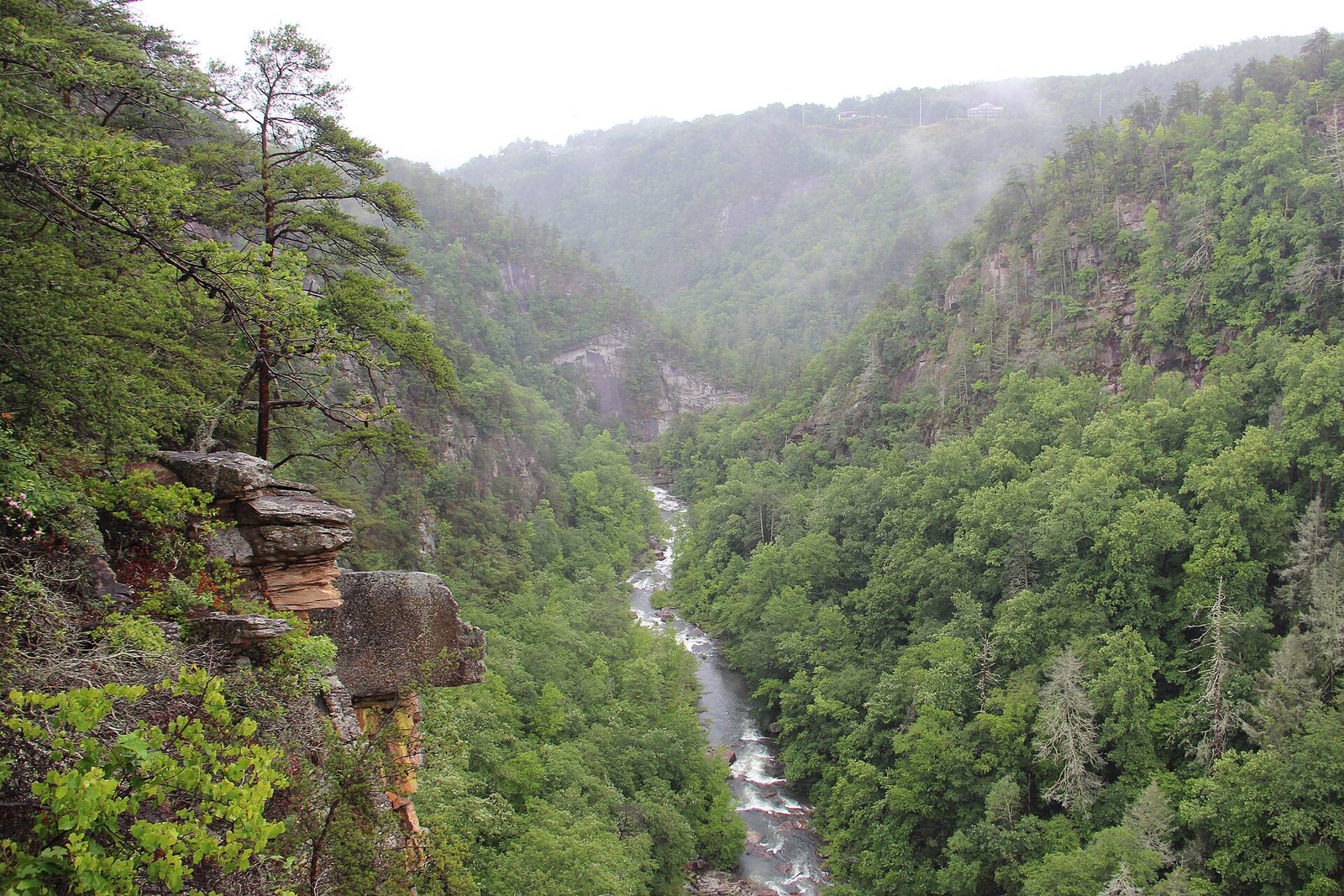
About two hours northeast, and the wildest corner of the state. Tallulah Gorge, Black Rock Mountain, Lake Burton, the Chattooga River on the South Carolina line, and a cluster of restaurants in Clayton that punch far above the town’s size. Farther from Atlanta, less crowded, better for people who want trails rather than shops.
Blairsville and Hiawassee
Union and Towns counties, around an hour forty-five to two hours, and the quiet option. Vogel State Park and Blood Mountain sit between them; Brasstown Bald is above Hiawassee; Lake Chatuge and Lake Nottely are both here. Fewer restaurants, more mountain.
| Base | From Atlanta | Best for | Walkable town? | Crowds |
|---|---|---|---|---|
| Dahlonega | ~1 hr 15 | Wine, short trips, town square | Yes | Moderate |
| Ellijay | ~1 hr 30 | Apples, value cabins | Partly | Low–moderate |
| Blue Ridge | ~1 hr 45 | All-rounder, cabins, railway | Yes | High |
| Helen | ~1 hr 45 | Families, tubing, Oktoberfest | Yes | Very high |
| Blairsville | ~1 hr 45 | Hiking, Vogel, quiet | Small | Low |
| Hiawassee | ~2 hr | Brasstown Bald, lakes | Small | Low |
| Clayton | ~2 hr | Gorge, river, good food | Yes | Moderate |
The Roads, and What They Are Actually Like
Three arteries carry almost all the traffic. GA-400 runs north from Atlanta and is the route to Dahlonega, Helen and Blairsville; it is four lanes as far as Dahlonega and then becomes an ordinary two-lane highway, which is where the Sunday afternoon queue forms. I-575 into GA-515 — the Appalachian Highway — is four lanes all the way to Blue Ridge and is the fastest way into the mountains by a wide margin. US-76 runs east to west across the top of the state and links the northern towns to each other.
The drive worth doing for its own sake is the Richard B. Russell Scenic Highway (GA-348), fourteen miles of switchbacks and overlooks from just north of Helen over Hogpen Gap to US-129 near Blairsville. It is the best road in Georgia, it takes about forty minutes if you stop, and it closes in ice. US-129 over Neel Gap is the other one: the Appalachian Trail crosses the road here at Mountain Crossings, the only place in its 2,000 miles where the trail passes through a building, and the tree outside is hung with boots abandoned by thru-hikers who quit in the first three days.
Two practical warnings. Mountain roads here are narrow, unlit and heavily used by motorcyclists — GA-60 through Suches in particular — so overtake carefully and expect to be overtaken. And phone signal is unreliable across most of Rabun, Towns and Union counties; download your maps before you leave the four-lane.
Fall Color: Getting the Timing Right
This is the single most searched question about the region and most answers are too vague to use. The pattern is elevation-driven and reasonably consistent.
Color starts at the top. Above 3,000 feet — Brasstown Bald, Black Rock Mountain, the ridges in Rabun, Towns, Union and northern Fannin counties — the turn begins in the second week of October and peaks in the last ten days of October. Between 1,500 and 3,000 feet, which is most of the towns and cabins, peak runs roughly 25 October to 8 November. Below that, in the foothills around Dahlonega and Ellijay, you are looking at the first two weeks of November. Atlanta itself does not peak until mid-November.
North Georgia runs a little later than the higher Smokies, which is useful: if you miss peak in Tennessee you can often catch it here. Dry summers pull the whole schedule forward and mute the color; a wet September pushes it back and improves it. Watch a foliage forecast in the fortnight before you go rather than booking to a fixed date a year out.
The crowd advice matters as much as the timing. The last two Saturdays of October are the busiest days of the year in these mountains. Go midweek if you can. If you cannot, be on the road by seven, do your driving and your overlooks before eleven, and spend the afternoon somewhere with a porch.
Cabins: How the Rental Market Actually Works
Cabin rental is the region’s largest industry and Fannin and Gilmer counties between them hold thousands of units. The market splits three ways, and knowing which one you are in saves both money and disappointment.
Purpose-built rental cabins — log construction, hot tub, pool table, fire pit, sleeps eight — are the bulk of the stock. They are comfortable and largely interchangeable, and the differentiator is the view and the road. Read carefully for “gravel access” and “steep driveway”: a fair number of these are up unpaved switchbacks that a low car will struggle with in rain, and that four-wheel drive is genuinely advised in winter.
State park cottages at Vogel, Unicoi, Black Rock Mountain, Amicalola Falls and Fort Mountain are cheaper, plainer and better located — you wake up inside the park. The 1930s stone cabins built by the Civilian Conservation Corps at Vogel are the best of these. The booking window opens 13 months ahead, 14 for Georgia residents, and the good dates go immediately.
Lakefront houses on Burton, Chatuge, Blue Ridge and Nottely are a different price bracket again and usually come with a dock.
Timing: for an October weekend, book six to twelve months out. For summer and spring weekends, two to three months. Midweek in January you can often book on the day, and rates fall by half. Most operators want two nights minimum, three on holiday weekends.
Hikes, Waterfalls and High Points
Brasstown Bald, at 4,784 feet, is the highest point in Georgia, and on a genuinely clear day the 360-degree deck sees into four states. It is Forest Service land, so your state ParkPass is no use: it costs $8 per person during opening hours of 10:00 to 17:00 and $5 per person after hours (checked September 2026). A shuttle runs from the parking area to the summit — there is no shuttle between 12:30 and 13:10, and the last one up leaves at 16:30 — or you can walk the steep half-mile paved trail.
Blood Mountain, 4,458 feet, is the highest point on Georgia’s 78 miles of Appalachian Trail and the classic day hike: a little over four miles round trip from Byron Reece with a serious final climb and a stone shelter at the top. Springer Mountain, further southwest, is the trail’s southern terminus, and thousands of people start walking to Maine from it each spring.
On waterfalls: Amicalola Falls is the headline at 729 feet, with 604 stairs and a state park around it. Anna Ruby Falls, two miles above Unicoi State Park, is a double waterfall reached by an easy paved half-mile, and it is Forest Service land charging $3 per person aged 16 and over, daily 09:00 to 18:00. Toccoa Falls, on a small college campus near Toccoa, free-falls 186 feet — taller than Niagara, which is a genuinely true and slightly startling fact — and carries a sober history: the dam above it failed in 1977 and thirty-nine people died. Dukes Creek, Raven Cliff and Minnehaha round out the short list.
Beyond the Headline Trails
Almost every list of north Georgia hikes gives you Blood Mountain, Amicalola and Brasstown Bald, which are the three most crowded trails in the region. There is a great deal more, and most of it is empty.
The Cohutta Wilderness, northwest of Blue Ridge, is one of the largest designated wilderness areas in the eastern United States, and it is almost entirely unvisited by day-trippers. The Jacks River and Conasauga River trails run up the riverbeds themselves, which means dozens of fords and wet feet from the first mile — genuinely one of the strangest and best walks in the Southeast, and not one to attempt after heavy rain.
The Benton MacKaye Trail shadows the Appalachian Trail north from Springer Mountain and gets a tiny fraction of the traffic; its Toccoa River swinging bridge is one of the longest footbridges on any eastern trail. The Pinhoti Trail runs southwest into Alabama through the Cohuttas. And the Aska Adventure Area, ten minutes from downtown Blue Ridge, has seventeen miles of interconnected trail with lake views and is the region’s best trail network for people who do not want to drive to a trailhead.
For mountain biking, north Georgia is quietly excellent. The Aska trails, the Bull Mountain and Jake Mountain network near Dahlonega, and the long Pinhoti singletrack around Ellijay are the core of it, and several outfitters rent bikes locally rather than making you bring your own.
For fishing, the tailwater below the Blue Ridge dam on the Toccoa River is cold enough to hold trout year round and is stocked heavily; Dukes Creek at Smithgall Woods is a managed catch-and-release stream requiring advance booking; and the Chattahoochee headwaters above Helen fish well in spring. A Georgia fishing license plus a trout stamp is required, both available online.
Eating in the Mountains
Adjust expectations and you will eat well. This is not a restaurant region in the way that Asheville is, and outside Blue Ridge, Clayton and Dahlonega the choice narrows quickly — but the good places are genuinely good.
Clayton has the strongest concentration for its size, a run of serious kitchens on and around Main Street that draw people up from Atlanta for dinner. Blue Ridge has the widest range, from barbecue to a couple of ambitious dining rooms, all within a few blocks. Dahlonega‘s square does reliable Southern cooking and the wineries increasingly serve proper food rather than a cheese plate. Helen is German-themed restaurants in every direction, which is fine once and repetitive twice.
Three practical points. Book ahead on autumn weekends — this is not a region where you turn up at seven and get a table in October. Many mountain restaurants close on Mondays and Tuesdays, and a few shut entirely for several weeks in January or February. And if you are in a cabin, buy groceries in Blue Ridge, Ellijay or Dahlonega on the way in rather than at the small stores near the cabin, where the range is thin and the prices are not.
Helen: An Honest Verdict
Helen needs a straight assessment, because it divides visitors more than anywhere else in Georgia and the marketing is no help at all.
The facts: Helen was a dying timber town in the 1960s. In 1969 a group of local businessmen commissioned an artist to redraw the storefronts as an alpine village, the buildings were refaced, and within a few years it had become the third most visited city in Georgia. The Bavaria is entirely invented, roughly as old as the moon landings, and there is no German settlement history underneath it.
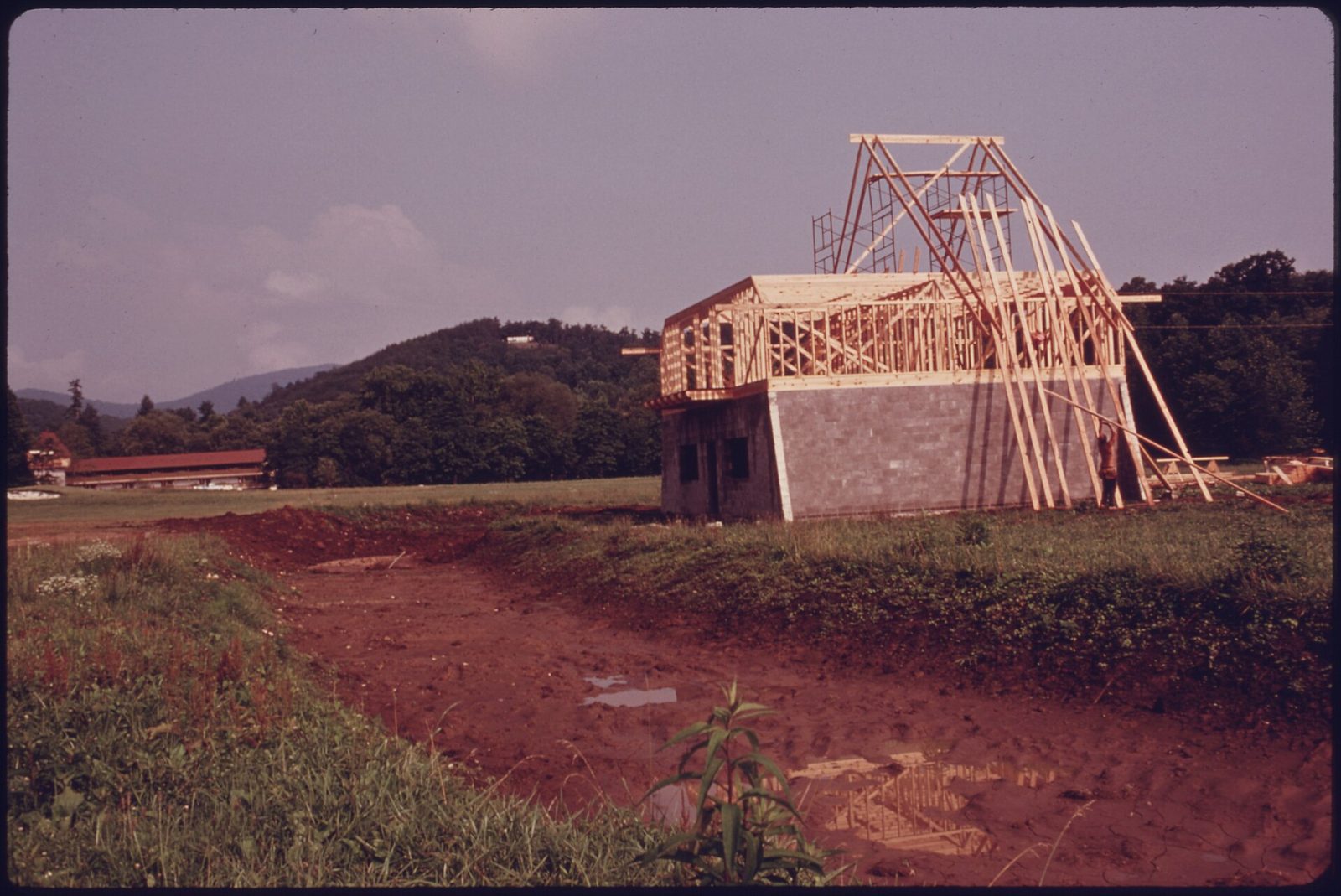
None of which makes it bad. It makes it a successful piece of civic reinvention, and if you go expecting a themed main street rather than an authentic one, it delivers exactly that: a compact, pedestrian, slightly absurd place with river frontage, good ice cream and a genuinely fun festival. Children love it without reservation. Adults hoping for a picturesque mountain village will feel misled, and that is the tourist board’s fault rather than theirs.
Oktoberfest 2026 is the 56th, running from 10 September to 1 November — Thursday to Sunday through September, then daily from 1 October. Festhalle admission is $10 for adults Monday to Thursday, $15 Friday and Saturday, and free on Sunday; children 6 to 12 pay $5 or $7 and under-6s are free. It is the longest Oktoberfest in the United States and the town is very full for all of it.
The scheduling trap worth knowing: tubing season ends before Oktoberfest begins. The Chattahoochee tubing operators run from Memorial Day to Labor Day only, at roughly $14 on weekdays and $16 at weekends, shuttle included. People book a September weekend expecting both and get one.
The Blue Ridge Scenic Railway
The railway runs from the depot in the middle of Blue Ridge along the Toccoa River to the twin towns of McCaysville, Georgia and Copperhill, Tennessee, with the state line painted down the middle of a sidewalk. Adult Coach Express fares start around $45 and rise for peak foliage dates and for the better carriages (checked September 2026).
There are two trips and the difference matters. The 2-hour Express goes out and comes back with no layover — fine for small children, unsatisfying for everyone else. The 4-hour Extended gives you about two hours off the train in McCaysville, which is the point of the exercise: lunch, the state-line sidewalk, a wander. The season runs mid-March to December, and the Fall Foliage Train dates for 2026 are 19 September to 3 November. Those sell out first. The operator also runs motor-assisted rail bikes and holiday trains.
Wine, Apples and the Small-Town Circuit
The Dahlonega Plateau became a federally recognized wine region in 2018, and there are now well over a dozen wineries within half an hour of Dahlonega and Cleveland. The honest verdict: Georgia wine has improved enormously in fifteen years and the best of it is genuinely good, but the product you are really buying is a terrace with a view over a vineyard and the Blue Ridge behind it. Go for the afternoon rather than the bottles, use a designated driver or a tour van, and book tastings at weekends because several of the bigger estates fill up.
Apples are Ellijay’s business. The apple houses run from late August into November, with October the peak, and the larger ones — Mercier Orchards north of Blue Ridge is the best known — have grown into full agritourism operations with cider, fried pies, wagon rides and enormous weekend queues. Go on a weekday morning in October and it is delightful. Go at noon on a Saturday and you will spend forty minutes parking.
For the small-town circuit, the Dahlonega square, the Clayton main street and Blairsville’s courthouse square are all worth an hour. Babyland General Hospital in Cleveland, where Cabbage Patch Kids are “born”, is free, genuinely strange, and a reliable rainy-afternoon answer with children.
Lakes and Rivers
The mountain lakes are reservoirs, mostly Tennessee Valley Authority or Corps of Engineers, and they are beautiful in a steep-sided way. Lake Burton in Rabun County is the prettiest and the most expensive to stay on; Lake Chatuge at Hiawassee straddles the North Carolina line; Lake Blue Ridge is the accessible one, ten minutes from that town; Lake Nottely at Blairsville is the quiet one; Carters Lake, west toward Ellijay, is the deepest in Georgia and has almost no private development on it, which makes it the best for paddling.
For moving water, the Toccoa River below the dam is cold, clear and excellent for trout and for a gentle float. The Chattooga, on the South Carolina line, is a federally designated Wild and Scenic River and the real whitewater in this region — Sections III and IV run commercially from spring through autumn. It is also where Deliverance was filmed, a fact the local outfitters have long since stopped finding funny.
Winter in the Mountains
January and February are the region’s secret. Cabin rates fall by half, the trails are empty, the leafless woods open up views you cannot get in summer, and the waterfalls run hard. Amicalola and Anna Ruby in January, with ice on the rocks, are better than in October.
The caveats are real, though. Mountain roads ice over and GA-348 closes when they do; several mountain restaurants shut midweek or take a few weeks off entirely; and a serious ice storm can cut power to a cabin on a gravel road for a day or two. Carry chains or take a vehicle with four-wheel drive if you are going high, check the forecast rather than the calendar, and bring more warm clothing than you think Georgia requires — it is routinely 10 to 15 degrees Fahrenheit colder up here than in Atlanta.
Sky Valley, in the far northeast corner, is Georgia’s only ski area. It is small, its season depends on snowmaking, and it is not a reason to travel. If you want to ski, you want North Carolina.
Loops That Work
Two days
Base in Blue Ridge. Saturday: the 4-hour Extended train to McCaysville, afternoon in town. Sunday: Lake Blue Ridge or the Toccoa River in the morning, Mercier Orchards on the way home if it is apple season. Minimal driving, maximum sitting still.
Three days
Base in Helen or Blairsville. Day one: Unicoi and Anna Ruby Falls, then the Russell Scenic Highway over Hogpen Gap in the late afternoon light. Day two: Brasstown Bald in the morning while the haze is thinnest, Vogel and Neel Gap after lunch. Day three: Dahlonega square and two wineries on the way south.
Five days, the full loop
Atlanta to Dahlonega, Dahlonega to Helen over the Russell highway, Helen to Hiawassee for Brasstown Bald, Hiawassee to Clayton for Tallulah Gorge and the Chattooga, Clayton across US-76 to Blue Ridge for the train, and home down GA-515. That is about 300 miles, takes in every base town worth stopping in, and is the single best week’s driving in the state. Book the middle nights first — Hiawassee and Clayton have the least accommodation.
What North Georgia Is Not
It is not the Smokies, and expecting Smokies scale leads to disappointment. The peaks are lower, the views are shorter, and there is no single road like Newfound Gap. What it has instead is density — six base towns, four state parks, a national forest and several hundred miles of trail inside a two-hour radius of a major airport.
It is not remote, either. You are rarely more than twenty minutes from a gas station, and the cabin in the woods almost certainly has a Wi-Fi password and a neighbor. That is a feature for most visitors and a disappointment for a few.
And it is not cheap in autumn. October in these mountains is peak-rate for cabins, restaurants are fully booked, and the roads are full. The same trip in April costs noticeably less and the waterfalls are running harder. If the color is not the point, do not come for the color.
Frequently Asked Questions
When do the leaves peak in the north Georgia mountains?
Above 3,000 feet, the last ten days of October. Between 1,500 and 3,000 feet — which covers most towns and cabins — roughly 25 October to 8 November. In the foothills around Dahlonega and Ellijay, the first two weeks of November. Check a foliage forecast a fortnight ahead, because a dry summer pulls it earlier.
What is the best town to stay in?
Blue Ridge for an all-rounder with a walkable downtown and the widest cabin choice. Helen for families, tubing and Oktoberfest. Dahlonega for the shortest drive and the wine country. Clayton or Hiawassee if you want trails and quiet more than shops.
How far are the mountains from Atlanta?
Dahlonega is about an hour fifteen on GA-400. Blue Ridge, Helen and Blairsville are about an hour forty-five. Clayton and Hiawassee are around two hours. GA-515 to Blue Ridge is four lanes the whole way and by far the fastest road in.
Is Helen, Georgia worth visiting?
Yes, if you know what it is: a Bavarian theme town designed in 1969 to rescue a failing timber economy, with a real river, a good state park and Anna Ruby Falls next door. It is excellent with children and disappointing if you expected an authentic mountain village. The setting around it is the genuine article.
Do I need to pay to visit Brasstown Bald?
Yes. It is Forest Service land, so a Georgia ParkPass does not cover it. Admission is $8 per person during opening hours of 10:00 to 17:00 and $5 per person after hours. A shuttle runs to the summit, with no service between 12:30 and 13:10 and the last one up at 16:30, or you can walk the steep paved half-mile.
When can you go tubing in Helen?
Memorial Day to Labor Day only. Rates are around $14 on weekdays and $16 at weekends, with a shuttle included. The season finishes before Oktoberfest begins, so a September trip gets the festival but not the river.
How far ahead should I book a cabin?
Six to twelve months for October weekends, and the best properties go at the longer end. Two to three months for spring and summer weekends. Midweek in winter you can often book days ahead at half the rate.
Is there skiing in Georgia?
Technically. Sky Valley in the far northeast has a handful of runs dependent on snowmaking. It is a novelty rather than a ski trip; North Carolina has the real thing two hours further north.
What is the best drive in north Georgia?
The Richard B. Russell Scenic Highway, GA-348, fourteen miles from north of Helen over Hogpen Gap to US-129. Allow forty minutes with stops, go in late afternoon for the light, and check conditions in winter because it closes in ice.
Most of what is above gets used as a two-night trip rather than a holiday, and a mountain weekend lives or dies on when you leave Atlanta on Friday. Our guide to weekend getaways in Georgia ranks fourteen of them by what you can actually fit between a realistic Friday arrival and a Sunday departure, with the fixed costs laid out, the booking windows that matter, and a rain plan for each.
Cabin rental is the industry that funds most of this region, and the listings are written to fill inventory rather than to inform you. The thing they never mention is the arithmetic: a $5-per-night state fee, 4% state sales tax charged on the cleaning fee as well as the rate, and a county excise of 6% to 8% on top. Our independent guide to cabins in Georgia works a real total, compares the counties, and lists the eight things in a listing that decide whether the week works.
The trails above are the headline ones, and they are also the ones whose parking lots fill by nine on a Saturday morning. Our guide to the best hikes in Georgia normalizes distance and difficulty across thirty-eight routes, lists a quieter equivalent for each crowded classic, and covers the things the trail apps leave out — deer season dates, the Blood Mountain bear canister order, and where to check conditions before you drive two hours.
Waterfalls are the region’s other great draw, and they cluster into four loops you can do in a day each: Helen, Blairsville, Rabun County and the northwest. Our guide to waterfalls in Georgia maps those loops, gives the access road condition for every trailhead, and is specific about the season — December to April is when the water actually runs.
Most of what is worth seeing up here is strung along roads rather than gathered in towns, which is why the mountains reward a driving itinerary more than a base-and-day-trip one. The Russell–Brasstown Scenic Byway, the climb to Brasstown Bald and the run up US 441 through Tallulah Gorge all sequence neatly into a two- or three-day loop, and our guide to Georgia road trips and scenic drives sets out the mileage, the wheels-moving times and the seasonal closures that decide whether a mountain route is worth attempting on the day you have.
The lakes up here divide sharply between the ones you can walk onto and the ones ringed entirely by private docks, and knowing which is which saves a wasted morning. Our guide to lakes in Georgia sorts Burton, Rabun, Blue Ridge, Carters and the rest by manager and public access, with the ramps, rentals and license rules for each.
Six weeks of the mountain year, from mid-September to early November, carry almost the whole of north Georgia’s event calendar — Oktoberfest at Helen, the Apple Festival at Ellijay, the foliage trains out of Blue Ridge. Our guide to Georgia festivals has the confirmed dates, the admission prices and the honest warning about the two-lane approach roads on an October Saturday.
Two of Georgia’s three designated agricultural draws are up here: the Dahlonega Plateau and Upper Hiwassee Highlands wine regions, and the Gilmer County apple houses that run from late August into November. Our guide to Georgia wineries covers both, with the harvest calendar, the October traffic problem on the roads into Ellijay, and the liability law behind the sign at every farm gate.
Most visitors to these mountains stay in a cabin, and which county you book in changes the weekend more than which cabin you book. Union and Towns give the long views, Fannin puts you within walking distance of dinner in Blue Ridge, Rabun delivers genuine seclusion. Our guide to romantic cabins in north Georgia compares them properly, with the fee structure that catches people out at checkout.
Winter is the underrated season up here, and the reason is sitting on a deck at 3,000 feet with the air at 30°F and the ridges visible through bare trees. Our guide to north Georgia cabins with hot tubs compares Blue Ridge, Ellijay, Helen, Dahlonega, Blairsville and Clayton on privacy, road access and total cost, and explains why the satellite view is the most useful two minutes of the booking process.
The Blue Ridge Scenic Railway is the best thing of its kind in the state — an open-sided car along the Toccoa River to the twin towns on the Tennessee line — and it is also the hardest ticket in these mountains in mid-October. Our guide to the best scenic train rides in Georgia has the fares, the difference between the two-hour and four-hour trips, the 2026 foliage dates and what the layover towns are actually like.
Of the mountain towns, Helen is the one that needs the most calibration before you arrive: a themed village of two blocks wrapped around a genuinely lovely stretch of the Chattahoochee, best given a couple of hours and used as a base for Anna Ruby Falls, Unicoi and Brasstown Bald. Our Helen first-time visitor guide has the parking, the weekday-versus-weekend arithmetic and an honest verdict on the shops.
The single best day in these mountains is a clear morning on the Russell-Brasstown Scenic Byway in the third week of October — 40.6 miles of GA 348, GA 180 and GA 17/75, the only National Scenic Byway in Georgia, with no fuel or cell coverage anywhere on it. Our fall foliage drive guide has the running order, the overlooks and the parking problem.
Wine country here is small — 110 planted acres in the flagship appellation — and the trip works beautifully once you judge it on setting rather than scale. Our guide to the best North Georgia wineries for first time visitors sets out which cluster suits which kind of day, what actually grows on these slopes, and why three tasting rooms beats six.
Deciding where to stay for an autumn weekend up here is really a question about elevation and dates: the high counties turn in the second and third weeks of October, the mid-elevation towns a week later, and Dahlonega and the foothills into November. Our guide to fall weekend getaways in Georgia compares the six mountain bases on that basis, with booking windows and the traffic windows worth avoiding.
Related Georgia Guides
- Best Georgia state parks — Vogel, Unicoi, Amicalola, Black Rock Mountain and Tallulah Gorge, with the ParkPass rules and the permits you need to arrive early for.
- Best places to visit in Georgia — how the mountains fit against the coast, the cities and the south.
- Atlanta travel guide — the city almost every mountain trip starts from.
- Best things to do in Georgia — the statewide overview, region by region.
Photo Credits
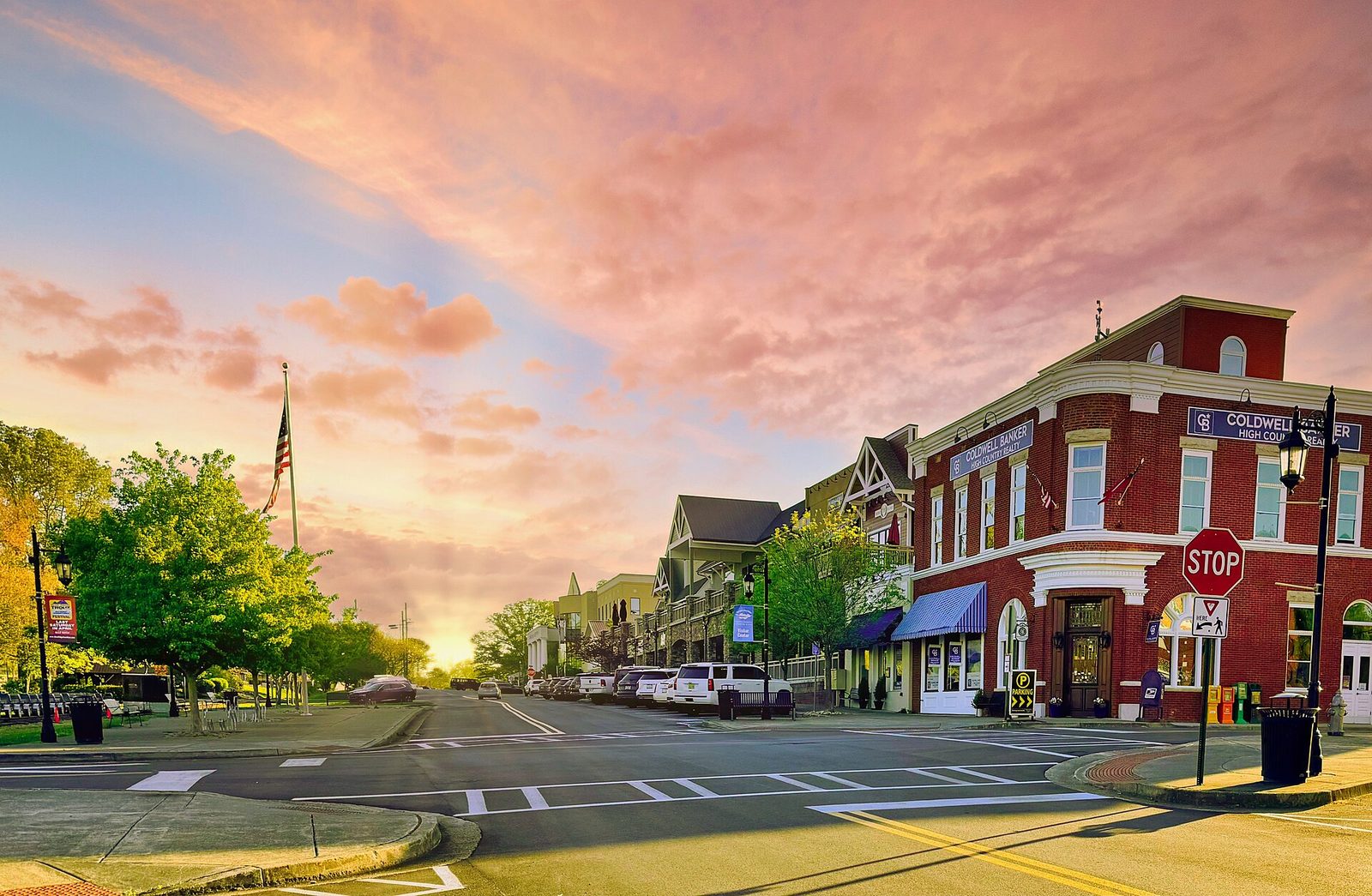
Downtown Blue Ridge at sunset (featured image): photo by Harrison Keely / Wikimedia Commons (CC BY 4.0)
Alpine village under construction outside Helen: photo by Al Stephenson / Wikimedia Commons (Public domain)
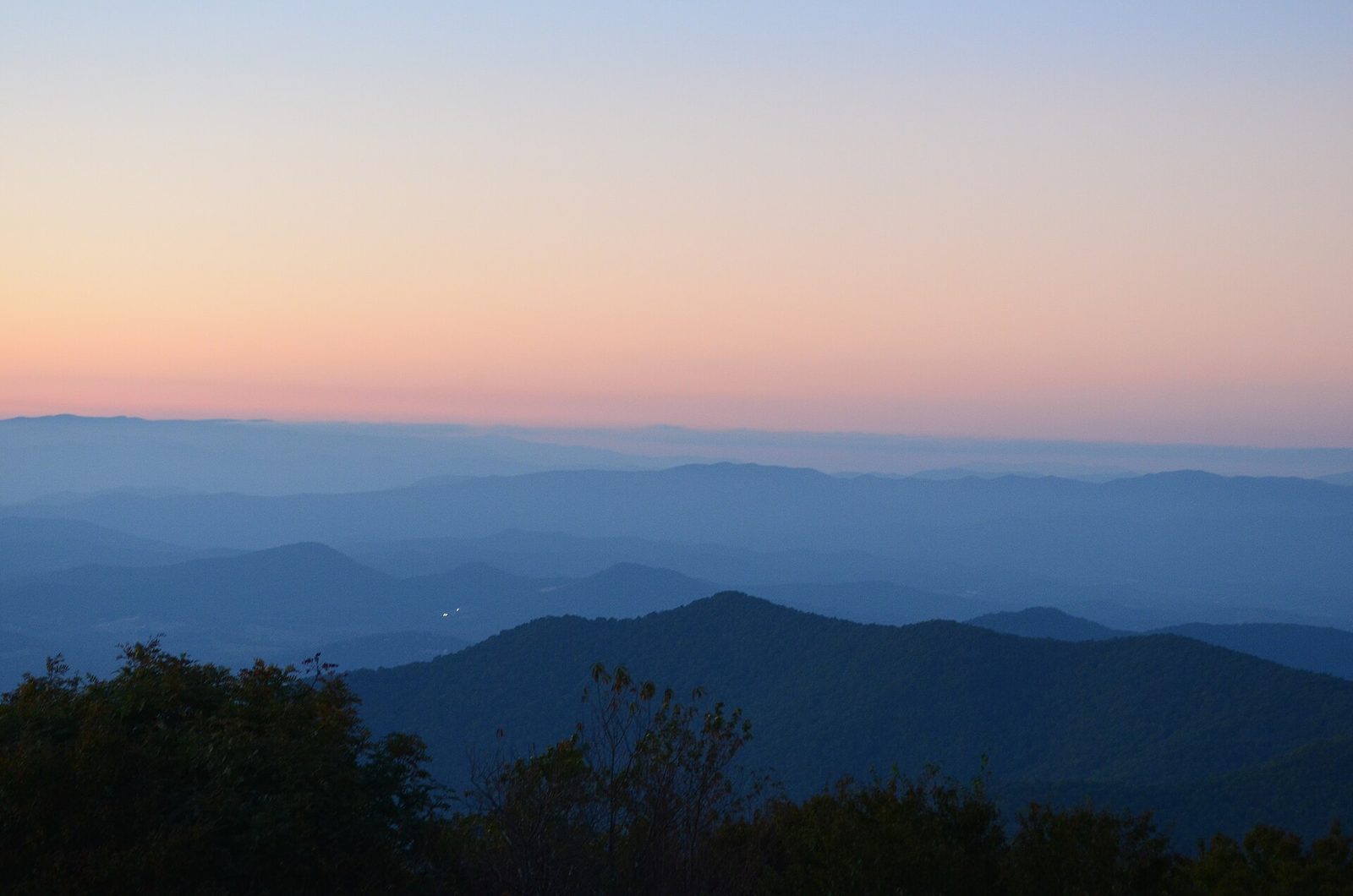
Blue Ridge ridgelines from Brasstown Bald: photo by Anthony Rizzo / Wikimedia Commons (CC BY-SA 4.0)
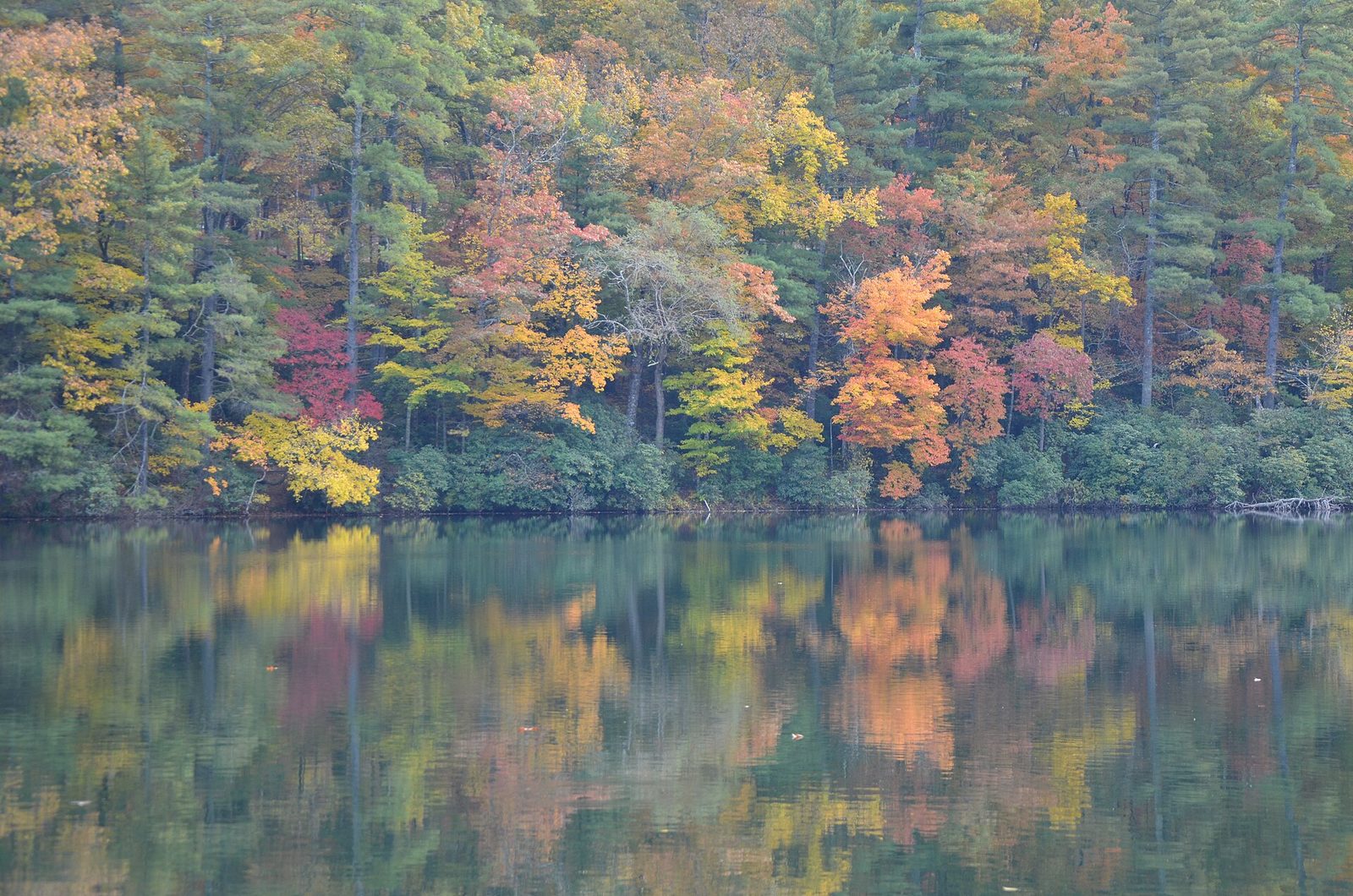
Autumn colors on Lake Trahlyta, Vogel State Park: photo by ChattOconeeNF / Wikimedia Commons (CC BY 2.0)
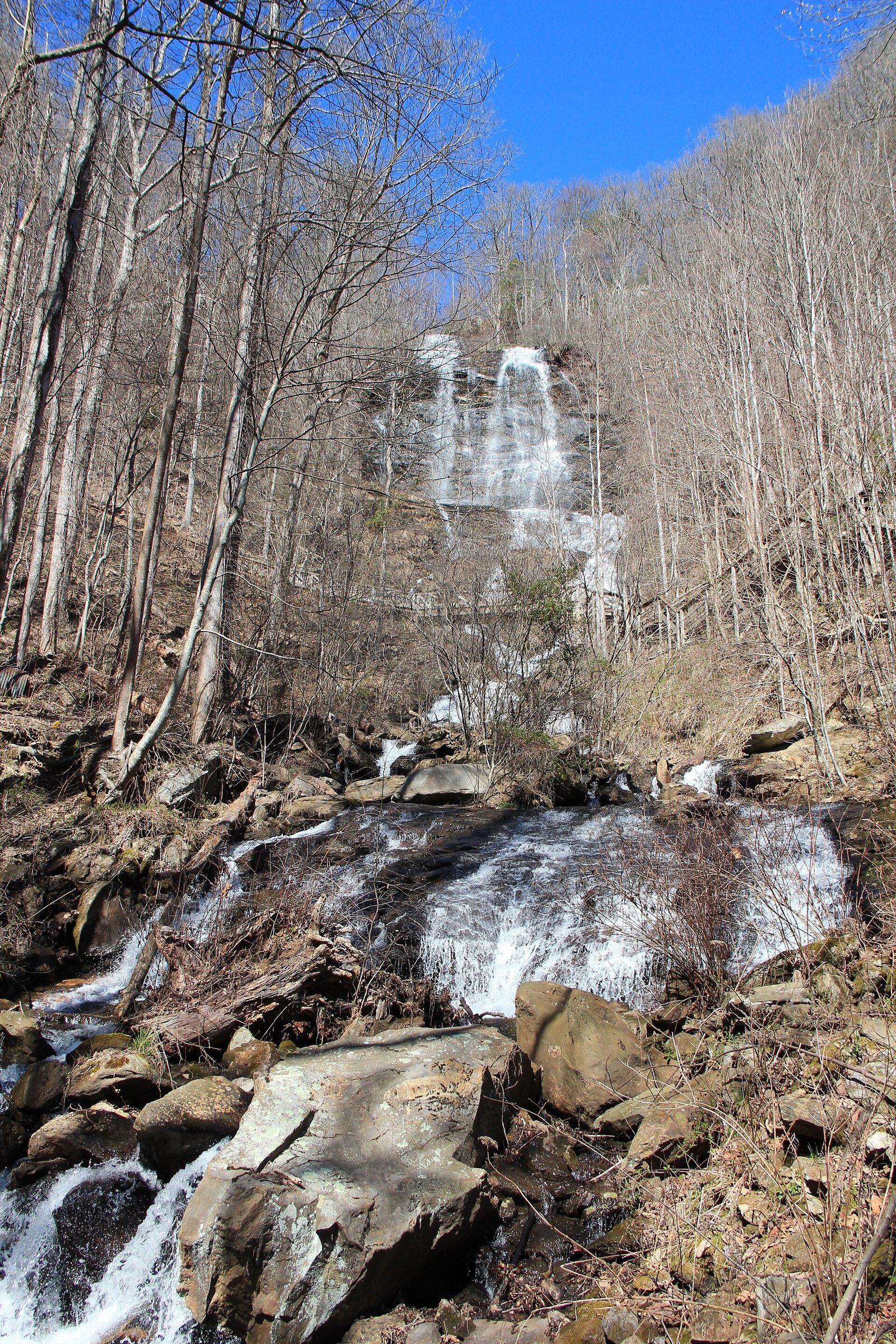
Amicalola Falls: photo by Thomsonmg2000 / Wikimedia Commons (CC0)
Tallulah Gorge from an overlook: photo by Thomson200 / Wikimedia Commons (CC0)
Sources and Corrections
Helen Oktoberfest dates and Festhalle admission were checked in September 2026 against the Helen Chamber of Commerce and Explore Georgia. Blue Ridge Scenic Railway fares, trip lengths and the 2026 Fall Foliage Train dates are from the operator and its published schedule. Brasstown Bald and Anna Ruby Falls fees and hours are per the US Forest Service. Georgia State Parks cabin booking windows are per the Department of Natural Resources. Tubing rates are operator figures for the 2026 season. Cabin rental prices vary too widely by property and date to publish, so none are given. Drive times assume normal traffic and are optimistic on autumn weekends. Fees change; if you find something here out of date, we want to know.
Georgia Tourism Guide is an independent publication. We are not affiliated with Explore Georgia, the Georgia Department of Natural Resources, the National Park Service or any attraction listed here.