Georgia’s flagship wine appellation contains 110 acres of planted vineyard. That is the most useful number anyone can give you before a first tasting trip, because it sets expectations correctly and saves the disappointment that ruins a good day out. Choosing the best North Georgia wineries for first time visitors is therefore not a matter of finding the region’s Napa equivalent — there isn’t one — but of working out which of four distinct clusters suits the day you actually want: a long view with a glass in it, a proper lunch, a short drive from Atlanta, or somewhere quiet. This guide compares the clusters, explains how tastings here work, and covers the part most lists skip, which is getting home safely. Checked September 2026.
One clarification, because it matters here more than on most pages: this is the American state. Searches for Georgian wine return the country in the Caucasus, which has an 8,000-year winemaking tradition and is a genuinely great destination. This is north Georgia, an hour and a half from Atlanta, with an industry measured in decades.
The short answer
| If you want… | Go to | Base | Drive from Atlanta |
|---|---|---|---|
| The most tasting rooms in one day | The Dahlonega Plateau | Dahlonega | 1 hr 15 |
| Big views with the wine | Cleveland and Sautee, under Yonah | Helen or Cleveland | 1 hr 30 |
| Wine plus orchards and a town | Ellijay and Blue Ridge | Blue Ridge | 1 hr 30–1 hr 45 |
| Quiet and high | Young Harris, Hiawassee, Clayton | Blairsville or Clayton | 2 hr |
| A free tour | Montaluce, Dahlonega | Dahlonega | 1 hr 15 |
| Not to drive | A booked tour from Atlanta or Dahlonega | Either | — |
The one-line version: a first visit should be the Dahlonega Plateau, two or three tasting rooms, a proper lunch, and a driver who is not drinking.
The honest scale of it
Georgia has two American Viticultural Areas, both in the mountains, and the published figures do more to calibrate a visit than any amount of tasting-note prose.
| AVA | Established | Size | Planted | Vineyards | Wineries |
|---|---|---|---|---|---|
| Upper Hiwassee Highlands | 2014 — Georgia’s first | 441,600 acres, shared with North Carolina | 54 acres | 26 | 9 |
| Dahlonega Plateau | 2018 | 85,120 acres, in Lumpkin and White counties | 110 acres | 8 | 7 |
Read those planted-acreage columns again. The Dahlonega Plateau — Georgia’s flagship wine region — has 110 acres under vine, which is roughly the size of a single mid-sized estate in a major European appellation. The Upper Hiwassee Highlands has 54 across two states.
This is not a criticism and it does not make the trip less worthwhile. It means you should judge north Georgia wine country on setting, hospitality and proximity to a major city, and not on scale, depth of cellar or breadth of style. Visitors who come expecting the former have an excellent day. Visitors who come expecting the latter write disappointed reviews about a place that never claimed to be what they wanted.
It also means that much of what you will be poured is not made entirely from grapes grown on the property. Georgia’s growing conditions are difficult — humidity, fungal pressure, late frosts — and many producers supplement with fruit bought in from elsewhere. Good ones tell you. Ask, and take a straight answer as a mark in the winery’s favor rather than against it.
What you are actually choosing between
Four questions settle it.
- Is the view the point, or is the wine? Be honest. On most north Georgia tasting days the view, the terrace and the company are doing more work than the glass, and the wineries with the best outlooks are not always the ones with the best winemaking. If you know which you care about, you can choose properly.
- Do you want lunch on site? A handful of properties run proper restaurants; most have a cheese board and a bag of crackers. A tasting day without food planned is a tasting day that ends badly.
- How much driving? The Dahlonega Plateau’s tasting rooms are spread across two counties on winding roads, not clustered in a walkable village. “Ten minutes from the wineries” in a rental listing usually means ten minutes from one of them.
- Who is driving? This is the question that decides the shape of the day, and it is covered properly below.
The four clusters
The Dahlonega Plateau — Lumpkin and White counties
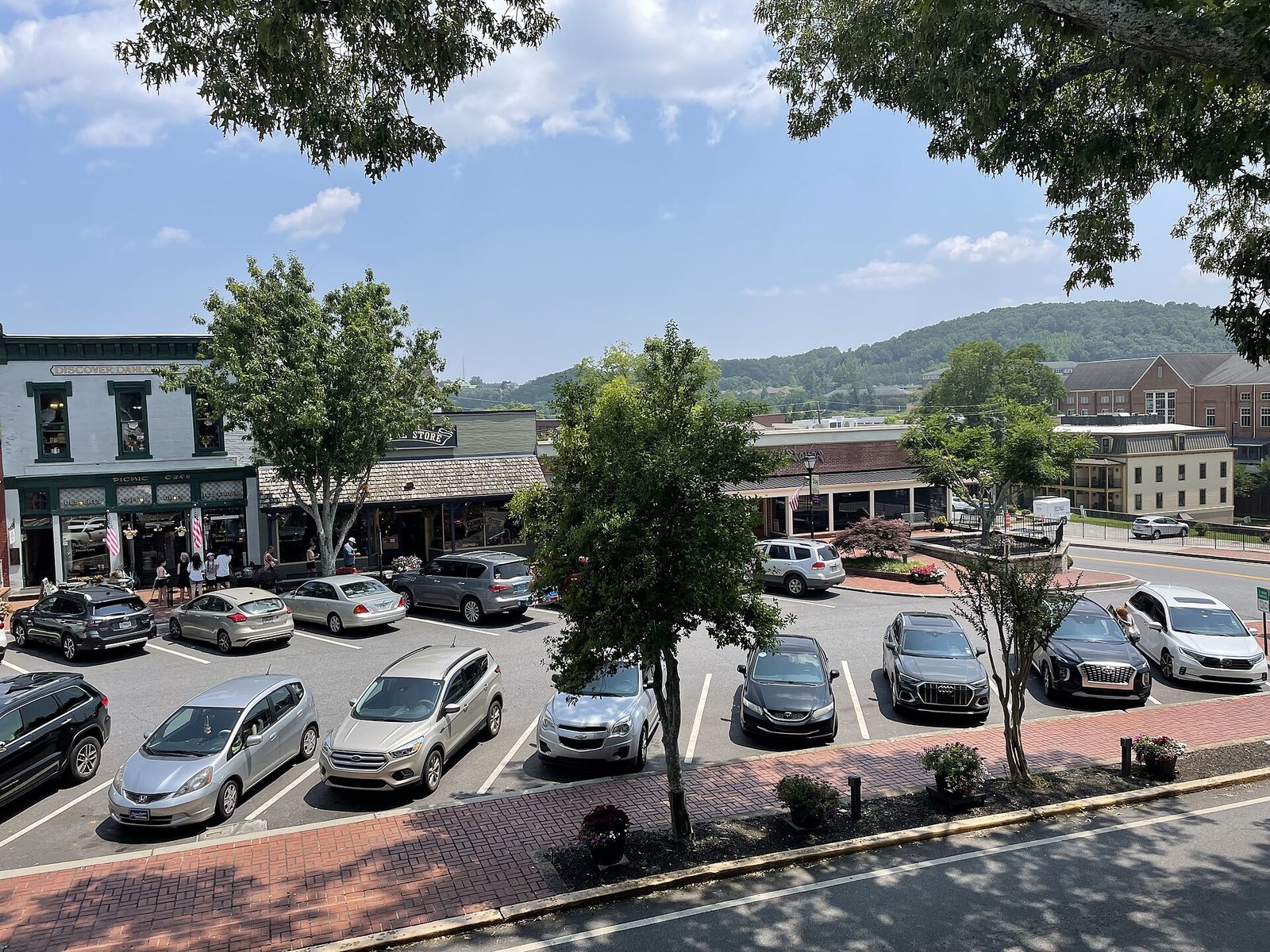
This is the obvious first visit and the right one. It has the highest concentration of tasting rooms in the state, the best-established producers, the shortest drive from Atlanta at about an hour and a quarter up GA 400, and a town square at the center of it that is genuinely one of the most pleasant in Georgia.
The vineyards sit on slopes between roughly 1,300 and 1,800 feet, which is the whole reason viticulture works here at all — the elevation gives cooler nights than the Piedmont below and better air drainage than the valley floors. The long-established names on the plateau include Wolf Mountain, Frogtown, Montaluce, Three Sisters, Cavender Creek and Kaya, and each has a different personality: some are architecture-led with terraces and events, others are working farms with a tasting bar in a shed.
The one fixed detail worth planning around: Montaluce runs free tours daily — weekdays at 2 p.m. and weekends at noon, with guided wine hikes through the property bookable at weekends for an additional fee. A free tour is unusual here and it is a good way to understand the region before you taste.
Budget three, not six. The temptation on a first visit is to queue up a list. Three tasting rooms and a long lunch is a better day than six and a blur, and the driving between them is twenty minutes each way on roads that reward attention.
Cleveland, Sautee and the Yonah country — White County
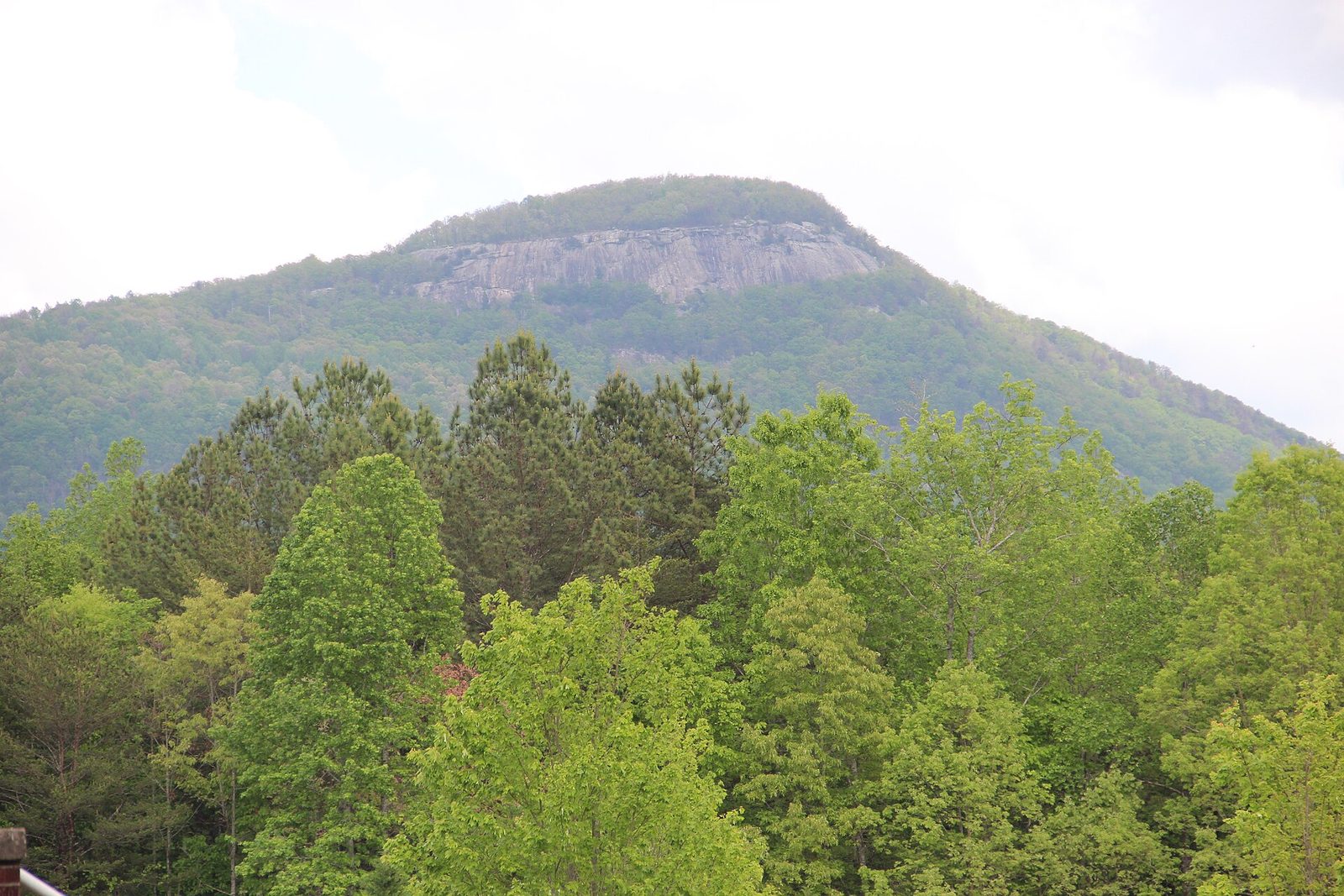
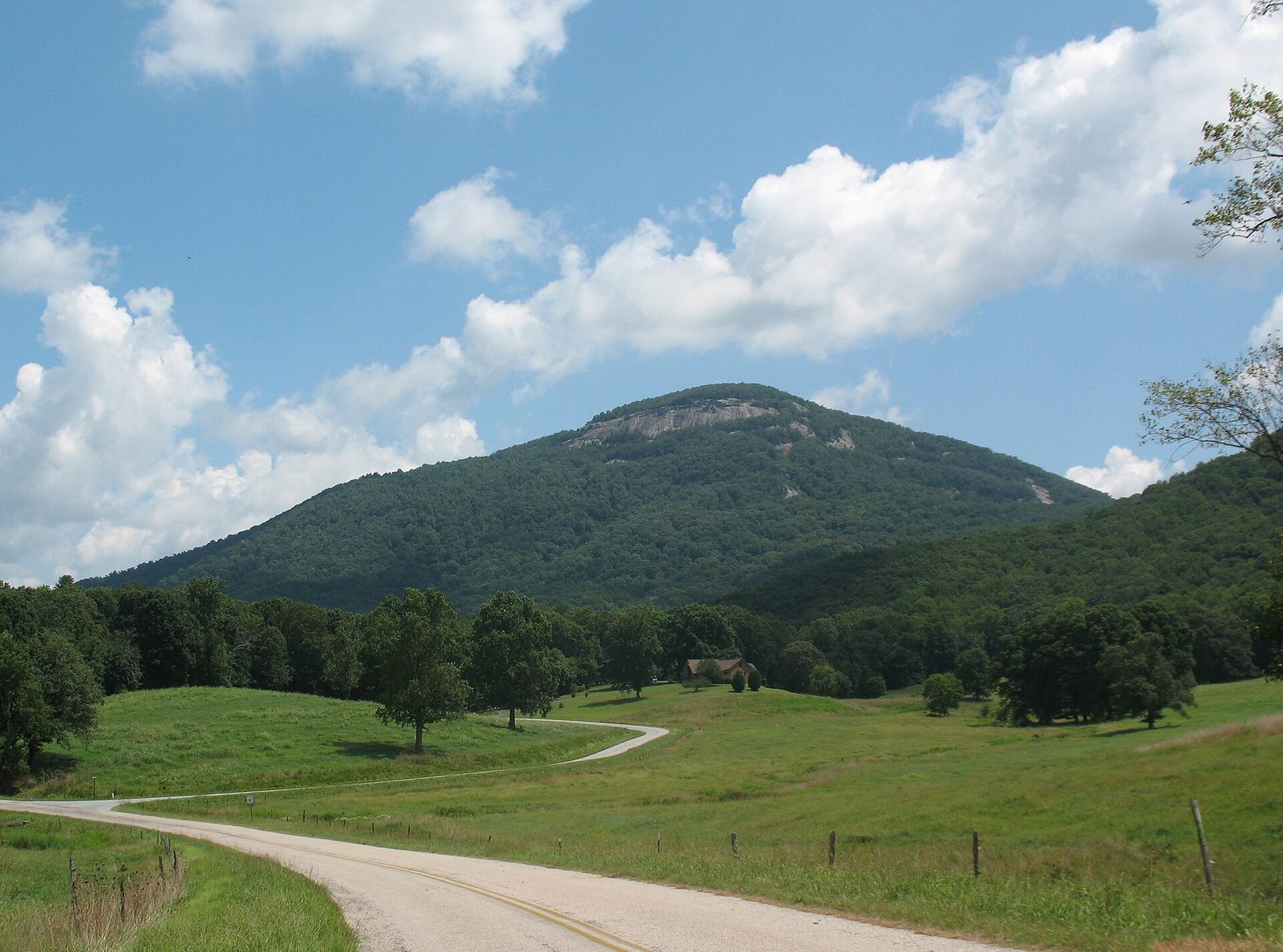
Fifteen to twenty-five minutes east of the plateau, in the country between Cleveland, Sautee Nacoochee and Helen, the landscape opens into broad pasture under the bare granite dome of Yonah Mountain. Several tasting rooms here are built specifically to face it, and on a clear afternoon the terraces are the single best place to drink a glass of anything in north Georgia.
It pairs naturally with Helen, ten minutes north, which is where you will find the hotels and most of the dinner options — though our Helen guide is honest about what the village is and is not. The Nacoochee Valley in between, with its mound, its old schoolhouse arts center and its farms, is the prettiest driving in the area.
Book here if the photograph matters, or if you are already staying in or around Helen.
Ellijay and Blue Ridge — Gilmer and Fannin counties
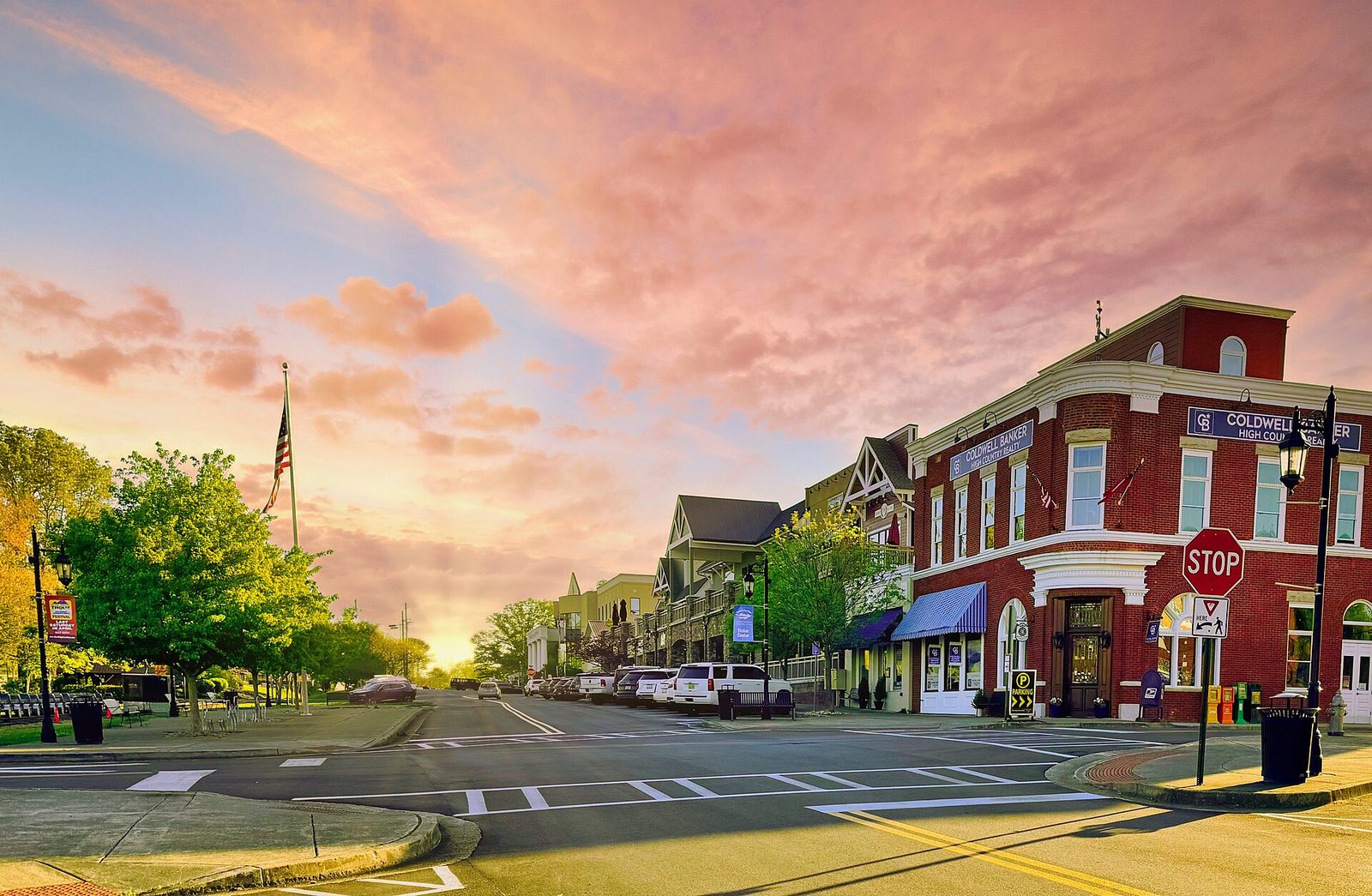
An hour and a half from Atlanta on I-575 and GA 515, the Ellijay and Blue Ridge cluster is smaller than the plateau but sits inside a much wider agritourism landscape — apple houses, pick-your-own orchards, farm stands and a walkable downtown in Blue Ridge with its own tasting rooms and the scenic railway.
The practical advantage is that a day here does not have to be all wine. An apple house in the morning, a tasting room at lunch, the town in the afternoon: that is an easier day with children, with a mixed group, or with anyone who does not want six flights. Autumn is the season — the Georgia Apple Festival runs over two separate October weekends in Ellijay rather than one continuous stretch.
Book here if you want wine as part of a day rather than the whole of it.
Young Harris, Hiawassee, Blairsville and Clayton
The Upper Hiwassee Highlands AVA straddles the Georgia–North Carolina line and covers a great deal of ground with very little planted in it — 54 acres across 690 square miles. What that means on the ground is a scattering of small, family-run tasting rooms at high elevation, an hour further from Atlanta than the plateau, with the best views and the fewest people.
Clayton and Rabun County to the east have their own small cluster and a better restaurant scene than their size suggests. This is a two-hour drive from the city and works best as part of a cabin weekend rather than a day trip.
Book here if you are staying up here anyway, or if quiet matters more than choice.
Why wine works here at all
North Georgia sits at roughly the same latitude as North Africa, which is not obviously promising for wine. What makes it possible is elevation and air drainage. The Dahlonega Plateau’s vineyards sit on slopes above the valley floors, where cold air sinks away on spring nights and frost pools below rather than in the rows, and where summer nights drop far enough to let acid hold in the fruit. Take away those four or five hundred feet of elevation and the region does not exist.
What works against it is humidity. Georgia summers are wet and warm, which is ideal weather for the fungal diseases that attack grapes, and the canopy management and spray programs here are considerably more demanding than in a dry climate. It is also why hybrid varieties bred for disease resistance appear on so many tasting lists alongside the familiar European grapes.
The third constraint is simply land. The plateau’s 110 planted acres are spread across eight vineyards on ground that is steep, wooded and increasingly valuable for houses. There is no obvious mechanism by which this becomes a large region, which is part of why the wineries that exist have leaned so hard into hospitality — terraces, restaurants, weddings, events. The visitor is the business model rather than an afterthought to it, and that is worth knowing, because it explains both the quality of the welcome and the shape of the wine list.
What you will be poured
North Georgia’s conditions — humid summers, fungal pressure, the risk of late frost at elevation — suit some grapes far better than others. The varieties you will most often see, and which have generally done well here, are Cabernet Franc, Chardonnay, Viognier and Merlot, along with a good deal of Norton and other hybrids that handle the humidity, and a great many sweet and semi-sweet blends aimed squarely at the visitor market.
Three honest observations from the tasting bar:
- The sweet wines are there because they sell. Most tasting rooms lead with something semi-sweet because it is what the majority of visitors want. If it is not what you want, say so at the start and ask for the dry flight — you will usually get a different and better selection.
- Cabernet Franc is the one to try. If any grape has found a natural home in these hills it is this one, and it is where a first-time visitor is most likely to be genuinely impressed.
- Ask what is estate-grown. With 110 planted acres in the whole flagship AVA, not everything in the glass came off that hillside. The answer tells you a lot about the operation.
How tastings work here
- Fees vary. Expect a fee, expect it to vary by flight and day, and expect it to be waived or credited against a bottle purchase at some properties. Ask when you book.
- Book at weekends. Reservations are increasingly normal, particularly for groups, terraces and anything with food. Turning up on an October Saturday without one is how a day gets short.
- Groups over six are a different conversation. Most properties have a policy, several require advance notice, and a few decline large parties outright at peak. Call ahead.
- Buses and limousines are frequently not welcome without prior arrangement. Check before you book transport, not after.
- Food varies from a full restaurant to a bag of crackers. Two of the plateau’s properties run proper kitchens; most do not. Plan lunch deliberately.
- Children and dogs are welcome at some properties and not others, and the policy is frequently different on the terrace from inside. Check each.
- Outside food and drink is almost universally prohibited. The picnic you packed will have to happen somewhere else.
- Hours are shorter than you expect. Many tasting rooms close at 17:00 or 18:00, and some are shut Monday and Tuesday entirely. Build the day backward from the last pour, not forward from breakfast.
Getting home: the part that matters
Six tasting flights is a substantial amount of wine, and the roads between these properties are two-lane, winding, unlit after dark and shared with deer. Georgia’s legal limit is 0.08% blood alcohol and enforcement in these counties is not casual.
- A designated driver is the simplest answer and most tasting rooms will pour them something soft without charging for a flight.
- Tour operators run from Atlanta and from Dahlonega, and for a group they frequently work out cheaper than the alternative once you count the cost of a bad decision. Prices vary widely and move, so ask for a quote when you book.
- Rideshare coverage is thin. It works reasonably in and around Dahlonega and Blue Ridge and is unreliable out at the vineyards themselves. Do not assume you can summon a car from a terrace at 5 p.m.
- Stay over. The single best structural fix is to book a cabin or a room within a short drive, taste in the afternoon, and not get in a car at all. Our guides to north Georgia cabins with hot tubs and romantic cabins in north Georgia cover the options.
- Spit. Nobody in a tasting room will think less of you, and the buckets are on the bar for a reason.
One more piece of Georgia-specific context. You will see a legalistic warning sign at the entrance to farms and agritourism properties across the state, in black letters at least an inch high. That is O.C.G.A. § 51-3-31, which gives a landowner charging admission immunity from civil liability for injuries arising from the inherent risks of agritourism, for participants aged 18 and over, provided the sign is posted and the conduct is not gross negligence or willful misconduct. It is not a scare tactic; it is the statute’s prescribed wording.
Doing it with a group
Most north Georgia tasting days are groups — a birthday, a bachelorette party, four couples — and that is where the friction appears, because the properties are small and the infrastructure was never built for coaches.
- Six is the number above which everything changes. Below six you are a walk-in at most places midweek. Above it you need a reservation, and several properties will put you in a separate space with a set flight.
- Tell them what kind of group it is. Tasting rooms are far more accommodating about a large booking when they know in advance what they are getting, and far less so when a party of fourteen arrives unannounced on an October Saturday.
- Check the transport policy before you book the transport. Buses and limousines are not universally welcome without prior arrangement, and a few properties decline them outright.
- Split the day. Two tasting rooms and a long lunch works far better with a group than three or four rushed stops, and it removes most of the driving.
- Nominate the driver before anyone opens anything. This sounds obvious and is the single most common failure mode of a group wine day.
Three routes that work
A first day trip from Atlanta
Leave by 09:00 up GA 400. First tasting room at 11:00 on the Dahlonega Plateau. Lunch on site or on the Dahlonega square at 13:00. Second tasting room at 15:00. Home by 18:30, before the Sunday southbound crush on GA 400 gets serious. Two properties, one good lunch, and a driver who tasted nothing.
A weekend based in Dahlonega or Helen
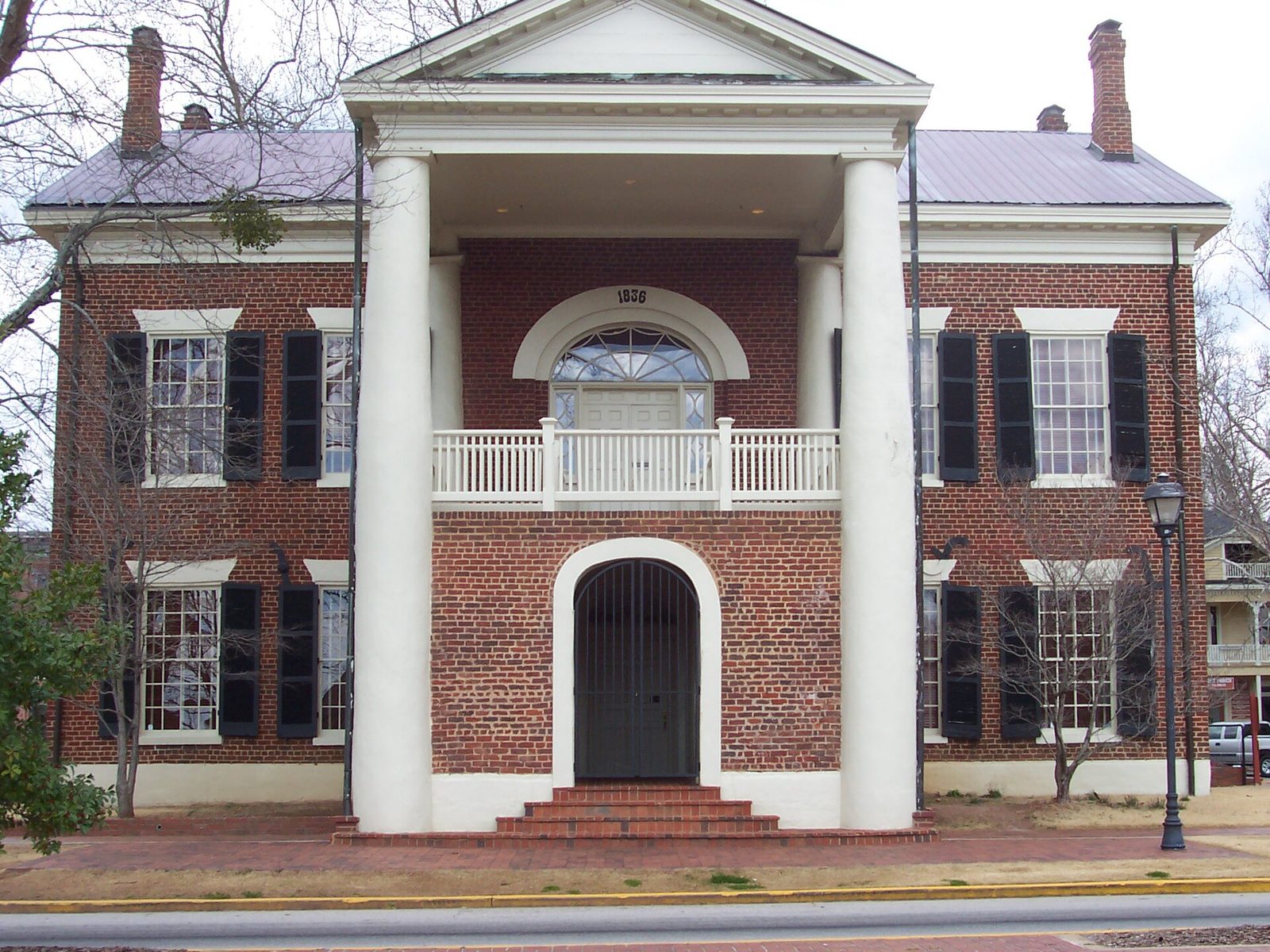
Saturday: three tasting rooms across the plateau with a booked lunch in the middle. Sunday morning: the Dahlonega Gold Museum in the 1836 courthouse — the oldest surviving courthouse building in the state, and a reminder that the first American gold rush happened on this ground two decades before California — and the square, then one of the Yonah-facing terraces near Cleveland on the way home. This is the best two days available in Georgia wine country and it involves almost no driving after lunch on either day.
A wider north Georgia weekend
Pair wine with everything else the region does. Friday evening in Blue Ridge, Saturday split between an apple house, a tasting room and the scenic railway, Sunday on the Russell–Brasstown byway with the color if the season is right. Our fall foliage drive guide and our scenic train rides guide cover those two.
What a tasting day actually costs
Fees vary by room and by day, so this is a shape rather than a quote — but the shape is stable and worth budgeting against.
- Tastings are the smallest line. Expect a modest per-person fee at each room, varying by flight and by day, sometimes waived or credited against a bottle.
- Lunch is the biggest line at the two or three properties with proper kitchens, and it is worth it. Elsewhere a board and a glass is the format.
- Bottles are where the day gets expensive, because tasting rooms sell well and you will buy more than you meant to. Georgia wine is not cheap relative to its quality; this is a small industry with high costs and no economies of scale.
- Transport — a tour for a group is the line people forget, and the one that most improves the day.
- A room, if you stay, at north Georgia October rates. See our where to stay guide.
The honest summary: a tasting day here costs less than the equivalent in a major wine region and delivers a different thing — a scenic afternoon on a terrace rather than a deep dive into a cellar. Budget for the lunch and the bottles rather than the flights.
When to go
| Season | What it is like |
|---|---|
| April–May | Vines budding, mild, mountain laurel out, quiet terraces |
| June–August | Green and humid; indoor tasting rooms are more comfortable than terraces |
| September | Harvest; the most interesting time to visit a working vineyard |
| October | Peak everything — color, crowds, rates and reservations |
| November–December | Quiet, cold, fires lit, and the best value of the year |
| January–March | Bare vines; several properties reduce hours or close midweek |
October is when everyone comes, and it is genuinely lovely — but it is also when you will queue for a tasting bar and pay the most for a room. Late April and mid-November are the two windows where you get most of the experience and almost none of the crowd. Our best time to visit Georgia guide has the month-by-month detail.
What to skip
- A six-winery itinerary. It is too much wine, too much driving and not enough of anything. Three is the number.
- Comparing it to Napa or Bordeaux. The flagship AVA has 110 planted acres. Judge it on what it is.
- Turning up at a weekend without a booking. Particularly in October, and particularly with more than four people.
- Assuming there is food. Most tasting rooms have a cheese board and nothing else. Book lunch.
- Planning around a bus. Several properties do not accept them without prior arrangement.
- Relying on a rideshare from a vineyard. Coverage out in the county is unreliable.
- Booking a cabin advertised as “minutes from the wineries.” It will be minutes from one of them and half an hour from the rest.
Frequently asked questions
Which is the best winery in north Georgia for a first visit?
We deliberately do not rank individual properties — ownership, winemakers and quality move, and a ranked list decays fast. For a first visit, choose the Dahlonega Plateau cluster, pick two or three tasting rooms with different personalities, and use Montaluce’s free tour — weekdays at 2 p.m., weekends at noon — to understand the region before you taste. The Georgia Department of Agriculture’s agritourism map is the current directory.
How much does a tasting cost?
Expect a fee that varies by flight and by day, and expect some properties to waive or credit it against a bottle. Ask when you reserve.
Do I need a reservation?
At weekends, yes, especially in October and for groups of more than four. Midweek you can usually walk in, though several tasting rooms close on Mondays and Tuesdays.
Is north Georgia wine actually good?
Some of it is genuinely good, particularly Cabernet Franc and some of the Chardonnay and Viognier. Much of what is poured is sweet or semi-sweet because that is what sells to visitors. Ask for the dry flight and ask what is estate-grown, and you will have a much better tasting than the default.
How far is wine country from Atlanta?
Dahlonega is about an hour and a quarter up GA 400. Cleveland and Helen are an hour and a half. Ellijay and Blue Ridge are an hour and a half to an hour and three quarters via I-575. Blairsville, Hiawassee and Clayton are around two hours.
Can I visit without driving?
Only on a booked tour from Atlanta or Dahlonega, or by staying within walking distance of a tasting room, which is possible in Blue Ridge and Dahlonega town center but not out at the vineyards. Rideshare coverage in the county is unreliable. See our Georgia trip planning guide.
Are the wineries family friendly?
It varies by property and frequently by area within a property. Some welcome children on the terrace; others are adults-only. Dogs are similarly hit and miss. Check each one rather than assuming.
What is the Dahlonega Plateau AVA?
Georgia’s flagship wine appellation, established in 2018, covering 85,120 acres across Lumpkin and White counties with about 110 acres planted, eight vineyards and seven wineries. The state’s other AVA, Upper Hiwassee Highlands, was established in 2014 and is shared with North Carolina.
When is harvest?
Generally late August into September, varying by variety and vintage. It is the most interesting time to visit a working vineyard, and several properties run harvest events — though the tasting rooms are busier and the staff more distracted than in spring.
If Dahlonega is your first stop, our guide to the best wineries in Dahlonega goes estate by estate: which days each one opens, where you need a reservation (Wolf Mountain and Cavender Creek both change their rules around eight people), which have a real kitchen, and which welcome children or dogs. It also covers the downtown tasting rooms, for a day when nobody wants to drive.
Related Georgia Guides
- Georgia wineries and agritourism — the full picture, including orchards and farm stays.
- North Georgia mountains — the towns and the geography behind the clusters.
- Helen, Georgia — the base for the Yonah-facing terraces.
- North Georgia cabins with hot tubs — where to stay so you are not driving after a tasting.
- North Georgia fall foliage scenic drive — the October pairing.
- Romantic getaways in Georgia — wine weekends that work.
- Georgia trip planning — driving, distances and why you need a car.
Photo Credits
Yonah Mountain in summer, White County, Georgia: photo by Tclo8899 / Wikimedia Commons (CC BY-SA 3.0)
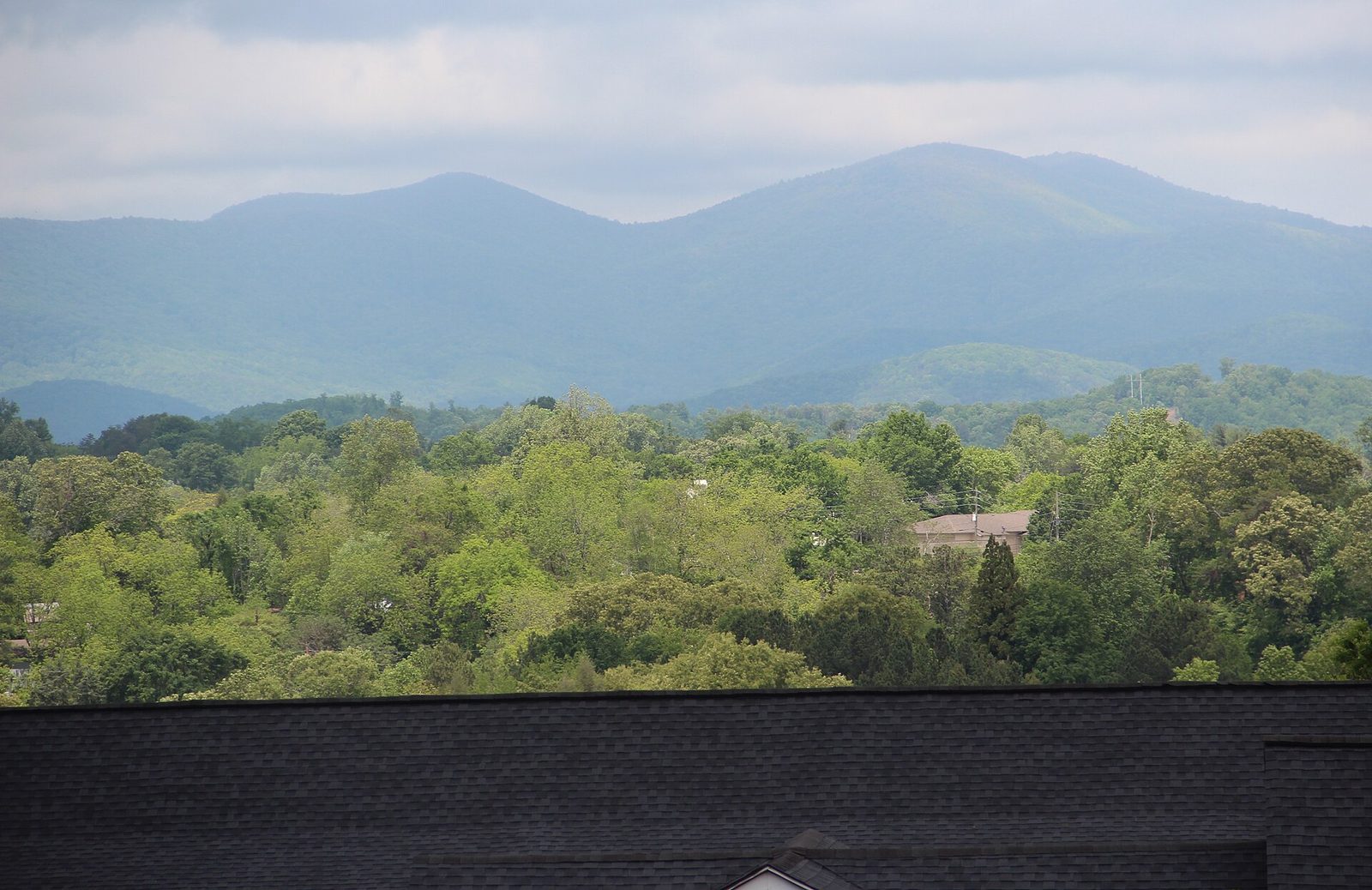
Long Mountain and Gooch Mountain viewed from near Dahlonega: photo by Thomson200 / Wikimedia Commons (CC0)
The Dahlonega Gold Museum in the 1836 Lumpkin County courthouse: photo by HowardSF at English Wikipedia / Wikimedia Commons (CC BY-SA 3.0)
Sources: Alcohol and Tobacco Tax and Trade Bureau via the Federal Register for the Dahlonega Plateau and Upper Hiwassee Highlands AVA establishment, boundaries and planted acreage; Georgia Code O.C.G.A. § 51-3-31 for the agritourism liability signage requirement; Montaluce Winery for tour times; the Georgia Department of Agriculture agritourism map as the current directory of operating properties. Tasting fees vary by winery, so ask when you book. Checked September 2026.
Georgia Tourism Guide is an independent publication. We are not affiliated with Explore Georgia, the Georgia Department of Natural Resources, the National Park Service or any attraction listed here.