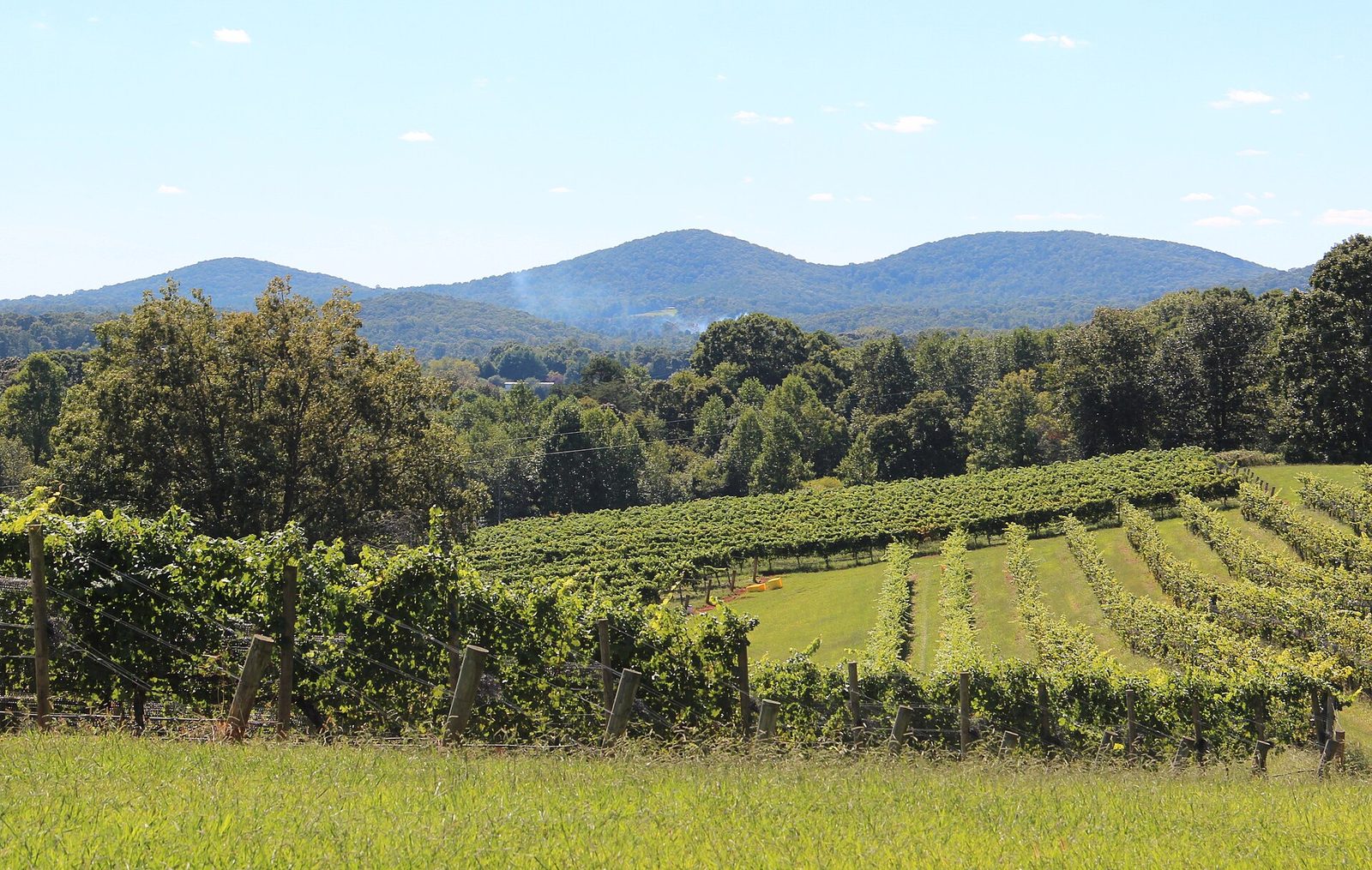
Dahlonega has more places to taste wine than it has vineyards to grow it. The local visitor bureau counts 12 tasting rooms and eight wineries in and around town, seven of those tasting rooms in the historic downtown, while the 2018 federal ruling that created the Dahlonega Plateau wine region cited a petition counting about 110 acres of commercial vineyards. That mix of hillside estates and downtown counters is why choosing among the best wineries in Dahlonega Georgia takes a little thought. This guide compares them on what matters on the day: which days they open, whether you can book, what there is to eat, who’s welcome (groups, children, dogs) and what kind of wine you’ll be pouring. Hours and policies were checked against the wineries’ own sites on November 19, 2026. Tasting fees vary by flight and season, so check each winery’s site for the current price before you go.
This is Dahlonega in the north Georgia mountains, 65 miles north of Atlanta by road, which is to say the American state rather than the country in the Caucasus with its own, rather older, wine tradition.
The short answer
| Winery | Best for | Food | Open (November 2026) | Groups, children and dogs |
|---|---|---|---|---|
| Wolf Mountain | Big views, estate reds and sparkling, Sunday brunch | Vineyard Café Thursday to Saturday, noon to 3; Sunday brunch | Thursday to Sunday, 11 a.m. to 5 p.m. | Reservations required for 8 or more |
| Montaluce | A Tuscan-style estate with a proper restaurant | Restaurant plus a separate trattoria | Daily restaurant hours; ask about tastings | Tastings are first come, first served |
| Kaya | A ridge-top tasting with food, and cottages to stay in | Flights with a small bite; grazing menu | Tuesday to Sunday; closed Monday | Check the winery |
| Cavender Creek | A relaxed adults-only stop with a sweet flight | Snacks and light meals; no outside food | Daily | 16 and over; no bookings for buses or groups over 8; no pets |
| Three Sisters | A working family farm winery pouring “fine” and “fun” wines | Check the winery | Check the winery | Check its pet policy |
| Accent Cellars | Families and dog owners, minutes from downtown | Charcuterie; picnics welcome | Daily | Children and dogs welcome on the deck and lawn |
If you only have time for one: Wolf Mountain for the view and the reds, Montaluce if lunch matters as much as the wine. With children or a dog in tow, Accent Cellars. For a quiet afternoon with the sweeter end of the list, Cavender Creek.
Estate or downtown? How to choose
Hillside estates
The estates are why most people come. They sit on ridges and slopes outside town, with vines running downhill from the tasting room and the mountains stacked up behind, and the setting is a large part of what you’re paying for. The catch is the driving. The wineries are spread around the county on winding two-lane roads, and nearly every one of them means a driver who isn’t drinking, or a booked tour.
Downtown tasting rooms
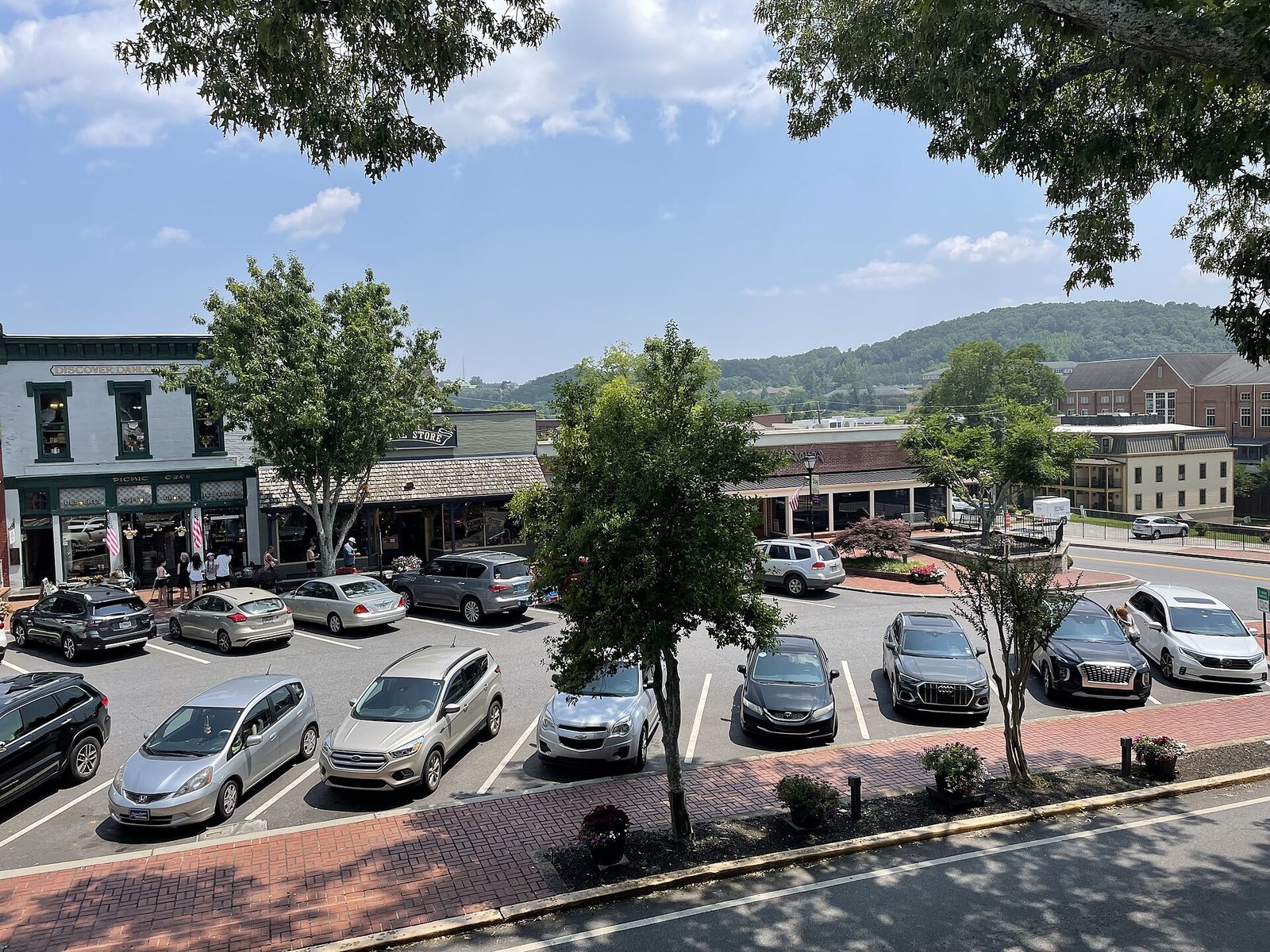
The downtown tasting rooms solve the driving problem. The visitor bureau counts seven in the historic downtown, close enough to walk between, so you can park once, taste in two or three, eat on the square and walk back to your room. What you give up is the vineyard: the view is of a street, not a slope, and the wine is poured with less of the story attached. Many visitors split the difference, with an estate or two by day and a downtown room before dinner.
Six questions that decide it
- What day is it? Not every winery opens every day. Wolf Mountain’s tasting room is open Thursday to Sunday, and Kaya closes on Mondays, while Cavender Creek and Accent Cellars open daily.
- How many of you? Groups of eight or more need a reservation at Wolf Mountain, and Cavender Creek won’t take bookings for buses or groups over eight. A big group should call ahead everywhere.
- Who’s coming? Cavender Creek admits guests 16 and over only, while Accent Cellars welcomes children and dogs on its deck and lawn.
- Do you need lunch? Montaluce has a full restaurant and a trattoria, Wolf Mountain runs a café and Sunday brunch, and Kaya serves a grazing menu. Cavender Creek has snacks and light meals but no restaurant, and allows no outside food.
- Red, white or sweet? Wolf Mountain leans toward estate reds and sparkling, Cavender Creek offers a sweet flight alongside red and white, and Three Sisters splits its list into “fine” and “fun” wines.
- Who’s driving? If nobody wants to, start downtown, or book a driver before you arrive.
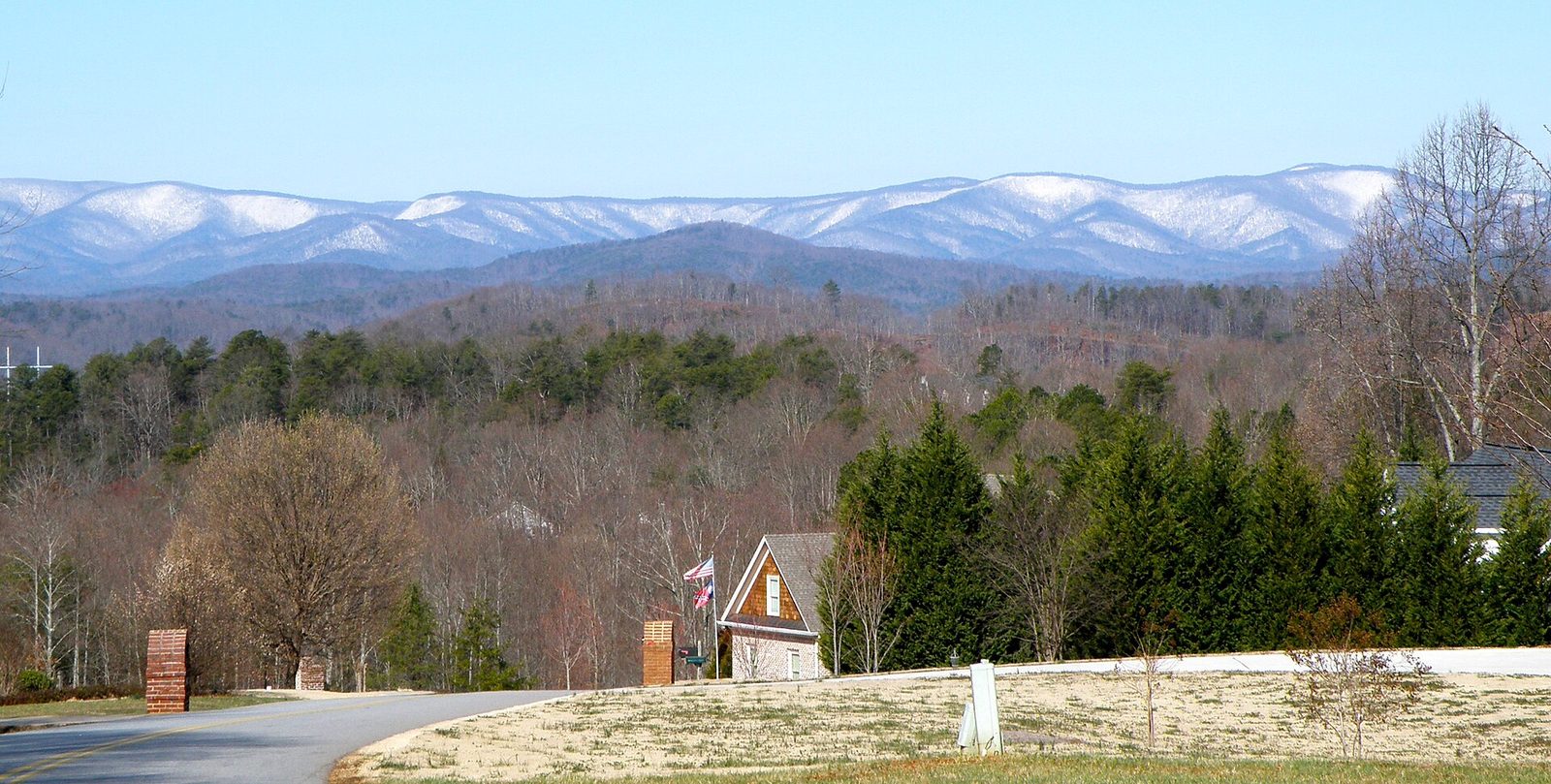
The wineries
Wolf Mountain Vineyards
Wolf Mountain is the estate to choose if you care most about the wine in the glass and the view behind it. The winery says it sits at 1,800 feet, and its estate plantings read like a warm-climate wish list: Cabernet Sauvignon, Malbec, Syrah, Mourvèdre, Tannat and Touriga Nacional, alongside sparkling wines made in the traditional Champagne method. It describes itself as the first Georgia winery to win Best-in-Class and Double Gold at the San Francisco Chronicle and Los Angeles International competitions, with more than 200 medals in all.
The tasting room opens Thursday to Sunday, 11 a.m. to 5 p.m., and groups of eight or more need a reservation. Food is the other draw. The Vineyard Café serves lunch Thursday to Saturday from noon to 3 p.m., and Sunday brunch has two seatings, at 12:30 and 2:30. Both need reservations, so book early for a fall weekend. If you want one winery meal on your trip, Wolf Mountain’s Sunday brunch is the one to book first.
Montaluce Winery & Restaurant
Montaluce, at 501 Hightower Church Road, is a Tuscan-style estate, run as much as a restaurant as a winery. The main restaurant serves farm-to-table food with Italian leanings, and since 2021 a sister restaurant, Trattoria di Montaluce, has added brick-oven pizza and simpler Italian cooking. Montaluce’s posted hours run daily, from 11 a.m. Monday to Saturday and 10 a.m. on Sunday, with the last seating an hour before closing.
Tastings work differently. They take about an hour, they’re first come, first served, and Montaluce doesn’t take reservations for them. Private events, especially in spring and fall, can limit what’s available, so the estate’s own advice is to call ahead on 706-867-4060. For anyone who wants a long lunch with the wine, rather than wine with a bag of crackers, Montaluce is the strongest choice here.
Kaya Vineyard & Winery
Kaya sits on a ridge the winery puts at 1,600 feet and describes itself as one of the first and largest of the current vineyards around Dahlonega. It’s open Tuesday to Friday from noon to 7 p.m., Saturday from 11 a.m. to 7 p.m. and Sunday from 12:30 to 7 p.m., and closed on Mondays, which makes it a natural last stop of the day. Flights come with a small bite, and a grazing menu covers anyone who wants more.
Kaya also has cottages on the property, which solves the driving question in the most pleasant way possible: taste, eat, and walk to bed. If you’re planning a winery weekend rather than a day trip, ask about them when you book.
Cavender Creek Vineyards
Cavender Creek is the low-key option, and it’s deliberate about it. The tasting room opens seven days a week, closing only on Thanksgiving, Christmas Eve and Christmas Day, and runs strictly first come, first served. It offers four flights: red, white, sweet and a mixed one. There’s no restaurant, but snacks and light meals are available, and no outside food or alcohol is allowed.
The house rules shape the crowd. Guests must be 16 or older, pets aren’t allowed (ADA service dogs excepted), RVs aren’t permitted, and the winery won’t take bookings for buses or groups over eight. If you want a quiet, adult afternoon, that’s exactly the point. If you’re traveling with teenagers under 16, a dog or a big group, go elsewhere.
Three Sisters Vineyards
Three Sisters, at 439 Vineyard Way, calls itself Dahlonega’s first family farm winery, and the visitor bureau describes it as the first winery to take root in the region. It’s a working farm, and the winery warns that heavy machinery may be running while you visit. Tastings happen in a rustic tasting room built around a hand-crafted cherry wood bar, surrounded by Southern folk art and pottery, and the visitor bureau points visitors to the rock wall patio when the weather allows.
The list is split into “fine” wines and “fun” wines, which is a cheerful way of saying there’s something here for both the Cabernet drinker and the friend who likes it sweet. Check the winery’s site or call 706-865-9463 for current tasting hours and its pet policy before you go.
Accent Cellars
Accent Cellars, at 215 Auraria Road, is the easiest winery to fit into a downtown weekend; it says it’s three minutes from the square. It’s also the friendliest to families: children and dogs are welcome on the deck and lawn, picnics are allowed, and charcuterie is on sale for anyone who forgot to bring one. Tastings run seven days a week, and it lists events on its site, so check its calendar. Call 706-867-0123 to confirm the day’s hours.
Frogtown Cellars
Frogtown Cellars is the other estate the visitor bureau features, crediting it with double-gold medals at San Francisco competitions in 2016, 2017, 2018 and 2019. Contact the winery directly for its current tasting hours and booking arrangements before you build a day around it.
Just outside the county: Yonah Mountain Vineyards
If you’re coming from the Helen side, Yonah Mountain Vineyards, at 1717 Highway 255 South near Cleveland, also offers tastings and pairs easily with a Helen weekend. Our Helen first-time visitor guide covers that end of the mountains.
Downtown tasting rooms
Dahlonega’s downtown tasting rooms are the answer for anyone who wants to taste without anyone having to drive. The visitor bureau counts seven in the historic district, and a 2015 state Senate resolution named Lumpkin County the Wine Tasting Room Capital of Georgia. Downtown rooms come and go, so start with the visitor bureau’s current list rather than an old blog post.
The best way to use them is at the end of the day. Spend the afternoon at an estate with a driver, get dropped back in town, and finish with a tasting on foot before dinner. You’ll get a sense of how much variety there is in such a small region without anyone having to get back in a car.
What the wine is like
Set your expectations by the numbers. The Dahlonega Plateau was established as an American Viticultural Area by a federal ruling published on June 29, 2018, covering about 133 square miles of Lumpkin and White counties. The petition behind it counted seven wineries and eight commercial vineyards on about 110 acres. That’s a young, small region, and part of the pleasure of tasting here is watching it work out what it does best.
The grapes planted on the estates give you a clue. Wolf Mountain’s list of Cabernet Sauvignon, Malbec, Syrah, Mourvèdre, Tannat and Touriga Nacional leans on varieties that ripen fully in a warm summer and keep their structure, and the estates’ altitude keeps summer nights cooler than they are down in the Piedmont. At the other end of the range, sweet wines are part of the scene here too, which is why you’ll see a sweet flight at Cavender Creek and a “fun” list at Three Sisters. Try both ends before you decide what Dahlonega wine is.
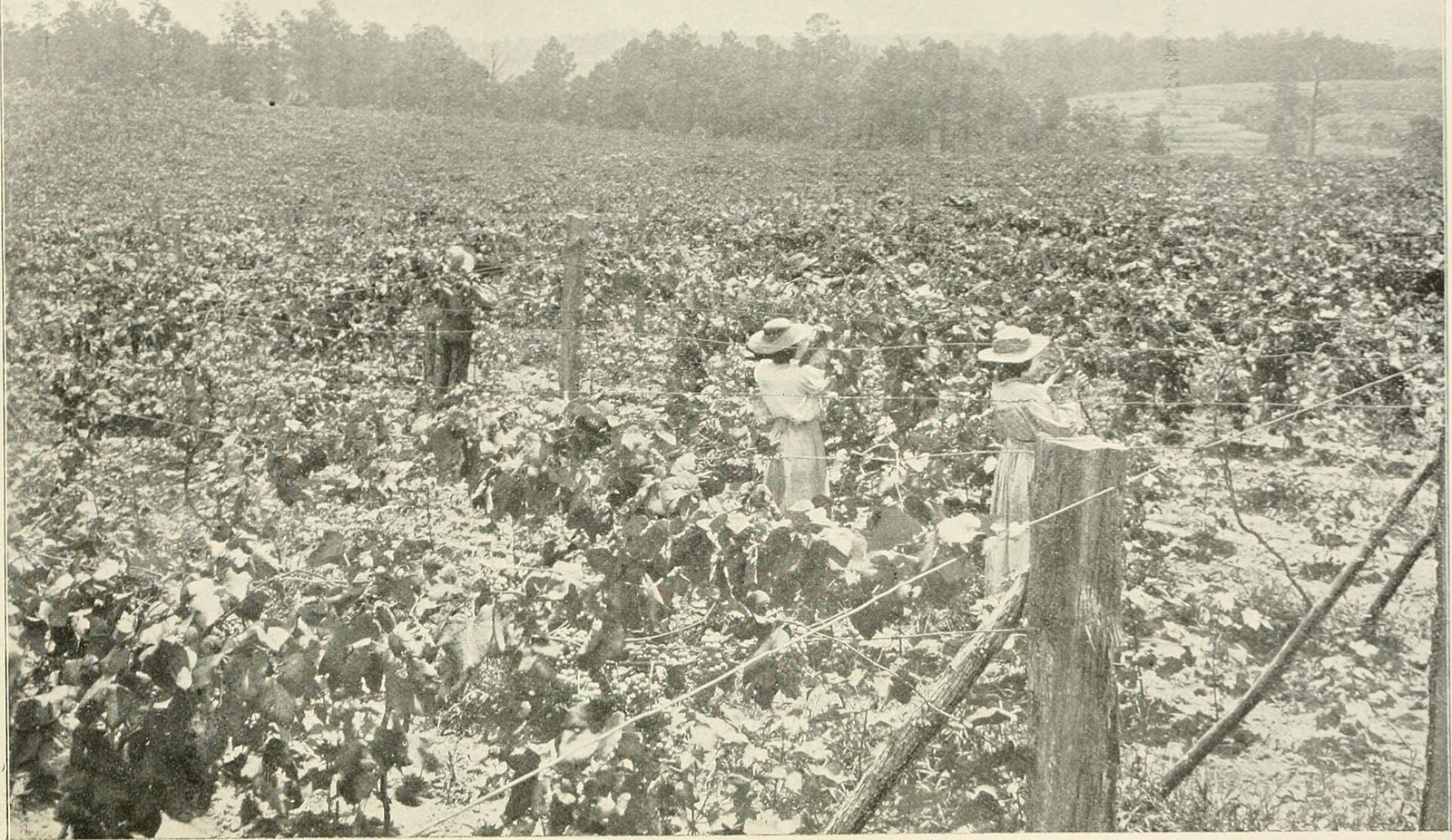
Grapes aren’t new to the state. Georgia’s Department of Agriculture was photographing vineyards for its promotional books at the start of the twentieth century, long before anyone drew the boundaries of a wine region on a map. For the regional picture, including Georgia’s other wine region in the Upper Hiwassee Highlands, see our guide to Georgia wineries and agritourism.
How to read the label
One question is worth asking at every tasting bar in north Georgia: where were these grapes grown? Not every wine poured in a Georgia tasting room is made from Georgia fruit, and the label tells you more than the tasting notes do. Federal labeling rules set the floor. A wine labeled with an American Viticultural Area, such as “Dahlonega Plateau,” must come at least 85% from grapes grown inside that area. A wine labeled “Georgia” must come at least 75% from grapes grown in the state. A wine labeled “American” can come from grapes grown anywhere in the country.
None of that makes a wine better or worse, and a well-made blend from elsewhere can be a perfectly good bottle. But if the reason you drove up the mountain was to taste this place, look for “Dahlonega Plateau” or an estate-grown note on the label, and ask the person pouring which wines on the list came from the vineyard outside the window. The estates that grow their own fruit are usually glad to tell you. Wolf Mountain publishes its estate plantings, and the visitor bureau says Three Sisters uses only Georgia-grown fruit.
When to go
Spring
Spring is the quietest of the good seasons. The vines are waking up, the patios open, and the visitor bureau says the Arts and Wine Festival takes place on the third weekend in May. Montaluce warns that private events in spring and fall can limit tasting availability, so call ahead on a Saturday.
Summer
Summer is hot, even at 1,600 or 1,800 feet, so aim for the late afternoon and a shaded patio rather than the middle of the day. The visitor bureau says the Dahlonega Wine Trail Weekend is held every August, and the bureau calls it the most celebrated and attended of the local wine events.
Fall
Fall is when the hills turn and the grapes come in. It’s a popular time to go and the hardest to plan. Book lunch, book a driver, and if you can, go on a Thursday or Friday rather than a Saturday.
Winter
Winter is the insider’s season: quieter tasting rooms, more time with whoever is pouring, and fireside tables where the wineries have them. Check hours carefully, though. Wolf Mountain’s tasting room is open Saturday and Sunday only in January and February, Kaya closes on Mondays, and Cavender Creek closes on Thanksgiving, Christmas Eve and Christmas Day.
Planning a winery day
Tasting fees
Fees depend on the flight and change with the season, so check each winery’s site or call before you go, and expect to pay more for a premium or reserve flight than for the standard one. Some wineries put a bite of food in with the flight, as Kaya does, which changes the value of what looks like the same price.
Reservations and groups
For couples and small parties, most tastings work on a walk-in basis; Montaluce and Cavender Creek are explicitly first come, first served. Groups are a different matter. Wolf Mountain requires reservations for eight or more, and Cavender Creek won’t book buses or groups over eight at all. If you’re organizing a bachelorette party or a birthday, call every winery on your list before you commit to a plan.
Winter hours and Sundays
Check hours for the exact day you’re going, especially in winter and around holidays. Cavender Creek closes on Thanksgiving, Christmas Eve and Christmas Day, Wolf Mountain’s tasting room is open Saturday and Sunday only in January and February (Thursday to Sunday the rest of the year), and Kaya doesn’t open on Mondays. Sunday mornings start late: Kaya opens at 12:30 p.m. on Sundays, and Wolf Mountain’s first brunch seating is at 12:30.
Children, dogs and accessibility
Policies vary more than people expect. Accent Cellars welcomes children and dogs outdoors; Cavender Creek admits no one under 16 and no pets other than service dogs; Three Sisters publishes its own pet policy. Accessibility details aren’t consistently published, and tasting rooms on sloping hillside sites can involve steps and gravel, so call ahead if anyone in your party uses a wheelchair or has trouble with uneven ground.
Getting around without driving
This is the part of the plan people skip and regret. The estates are spread around the county on winding roads with little lighting, and Georgia’s drunk-driving laws are no more forgiving in wine country than anywhere else. You have three options. Nominate a driver who tastes little or nothing. Stay downtown and stick to the tasting rooms you can walk to. Or book a driver: the visitor bureau’s tours page lists local drivers and wine tour operators, and on a busy weekend they’re worth reserving well before you arrive.
Where you sleep matters too. Downtown inns put the tasting rooms within walking distance, and Kaya’s cottages put you at the winery itself. Our where to stay in Georgia guide covers the trade-offs, and for a romantic trip built around the wine, see romantic getaways in Georgia.
A realistic winery day
Two estates and a downtown tasting room is a full, enjoyable day. Three estates is possible with a driver and an early start, but by the third you’ll be tasting less and remembering less, and the drives between them eat more of the day than the map suggests. A Saturday might look like this:
- Late morning: Wolf Mountain when the tasting room opens at 11, with a café lunch booked for noon.
- Early afternoon: Three Sisters or Cavender Creek for a second, more relaxed tasting.
- Late afternoon: Kaya, which stays open until 7 p.m., for a flight with a bite and the evening light on the ridge.
- Evening: dinner on the square, with a downtown tasting room on foot if you still have the appetite.
On a Sunday, flip it around: Wolf Mountain’s 12:30 brunch, then Kaya, open until 7 p.m., then Accent Cellars on the way back into town. If you’re coming up from Atlanta for the day, don’t plan on more than two wineries; it’s 65 miles each way, and the person driving home deserves a short day too.
If you have the whole weekend
A weekend lets you slow down, which is the point. Arrive on Friday afternoon, check in downtown or at one of Kaya’s cottages, and spend the evening on the square with a downtown tasting room before dinner. Give Saturday to the estates with a driver, using the plan above. On Sunday, book Wolf Mountain’s brunch, then finish at Accent Cellars on the way out of town, where a picnic on the lawn makes a gentler end to the trip than one more flight. Two nights is enough to see the best of Dahlonega’s wine without ever feeling rushed, and it leaves room for the town itself; our north Georgia mountains guide covers what to do between tastings.
Wine events through the year
The visitor bureau says the Dahlonega Wine Trail Weekend is held every August, and that the Arts and Wine Festival takes place annually on the third weekend in May. Check dahlonega.org for the 2027 dates of both, and check the individual wineries for their own concerts, release parties and holiday events. If you’d rather avoid crowds than join them, those are the weekends to skip.
For the rest of the state’s festival calendar, see our guide to Georgia festivals and events.
What isn’t worth it
- Four or five wineries in a day. You’ll spend more time in the car than at the tasting bar, and the last two will blur.
- Turning up at Wolf Mountain on a Tuesday. The tasting room opens Thursday to Sunday. Check the day before you drive.
- A big group without calling ahead. Wolf Mountain asks groups of eight or more to reserve, and Cavender Creek won’t book groups over eight.
- Bringing a fifteen-year-old to Cavender Creek. It’s 16 and over.
- A fall Saturday without a lunch reservation. Wolf Mountain’s café and brunch need booking, and the walk-in tables elsewhere go early.
- Judging the region on one sweet wine, or one Tannat. Try both ends of the list before you decide.
- Driving yourself between estates after a full day of tastings. Book a driver or stay downtown.
Frequently asked questions
How many wineries are there in Dahlonega?
The local visitor bureau counts 12 tasting rooms and eight wineries in and around Dahlonega, with seven of the tasting rooms in the historic downtown.
Do I need reservations for Dahlonega wineries?
For a couple or a small group, usually not: Montaluce and Cavender Creek run tastings first come, first served. Groups of eight or more need a reservation at Wolf Mountain, and Cavender Creek doesn’t take bookings for buses or groups over eight. Wolf Mountain’s café and Sunday brunch require reservations.
Which Dahlonega wineries allow children or dogs?
Accent Cellars welcomes children and dogs on its deck and lawn. Cavender Creek admits guests 16 and over only and allows no pets except ADA service dogs. Three Sisters publishes its own pet policy; check it before you go.
Which Dahlonega winery has the best food?
Montaluce, with a full farm-to-table restaurant and a separate trattoria serving brick-oven pizza. Wolf Mountain’s Vineyard Café (Thursday to Saturday, noon to 3 p.m.) and Sunday brunch are the other serious options, and Kaya serves flights with a bite and a grazing menu.
How many wineries can you visit in one day?
Two estates and a downtown tasting room is a comfortable day. Three estates is possible with a driver and an early start, but more than that means more driving than tasting.
How far is Dahlonega from Atlanta?
About 65 miles by road. GA 400 ends about five miles south of town, so most of the drive is on the highway.
Can I bring my own food to Dahlonega wineries?
It depends on the winery. Accent Cellars welcomes picnics on its lawn, while Cavender Creek allows no outside food or alcohol and sells snacks and light meals instead. Check each winery’s policy before you pack a cooler.
Is Dahlonega wine sweet or dry?
Both. Wolf Mountain’s estate reds are made from varieties such as Cabernet Sauvignon, Syrah and Tannat, and it makes traditional-method sparkling wine. Cavender Creek offers a sweet flight alongside its red and white flights, and Three Sisters splits its list into “fine” and “fun” wines.
When is the Dahlonega Wine Trail Weekend?
The visitor bureau says it’s held every August. Check dahlonega.org for the 2027 dates.
Related Georgia Guides
- Georgia wineries and agritourism: Georgia’s two wine regions, farm stays and orchards.
- North Georgia wineries for first-time visitors: the regional overview, Dahlonega included.
- North Georgia mountains: Dahlonega compared with Helen, Blue Ridge and Blairsville.
- Romantic getaways in Georgia: where a winery weekend fits.
- Georgia food and drink: what to eat between tastings.
- A weekend in Blue Ridge: hard cider and a scenic railway an hour to the northwest.
- Georgia pumpkin patches and corn mazes: the fall farm day for the rest of the family.
Photo Credits
A Lumpkin County vineyard with the Three Sisters beyond: photo by Thomson200 / Wikimedia Commons (CC0)
Sky Country, Dahlonega, in winter: photo by Pete Seabolt / Wikimedia Commons (CC BY 3.0)
Dahlonega, Georgia, seen from the Gold Museum: photo by BullDawg2021 / Wikimedia Commons (CC BY-SA 4.0)
A Georgia vineyard, 1901: photo by Georgia. Dept. of Agriculture; Stevens, O. B. (Obediah B.); Wright, R. F. (Robert F.) / Wikimedia Commons (No restrictions)
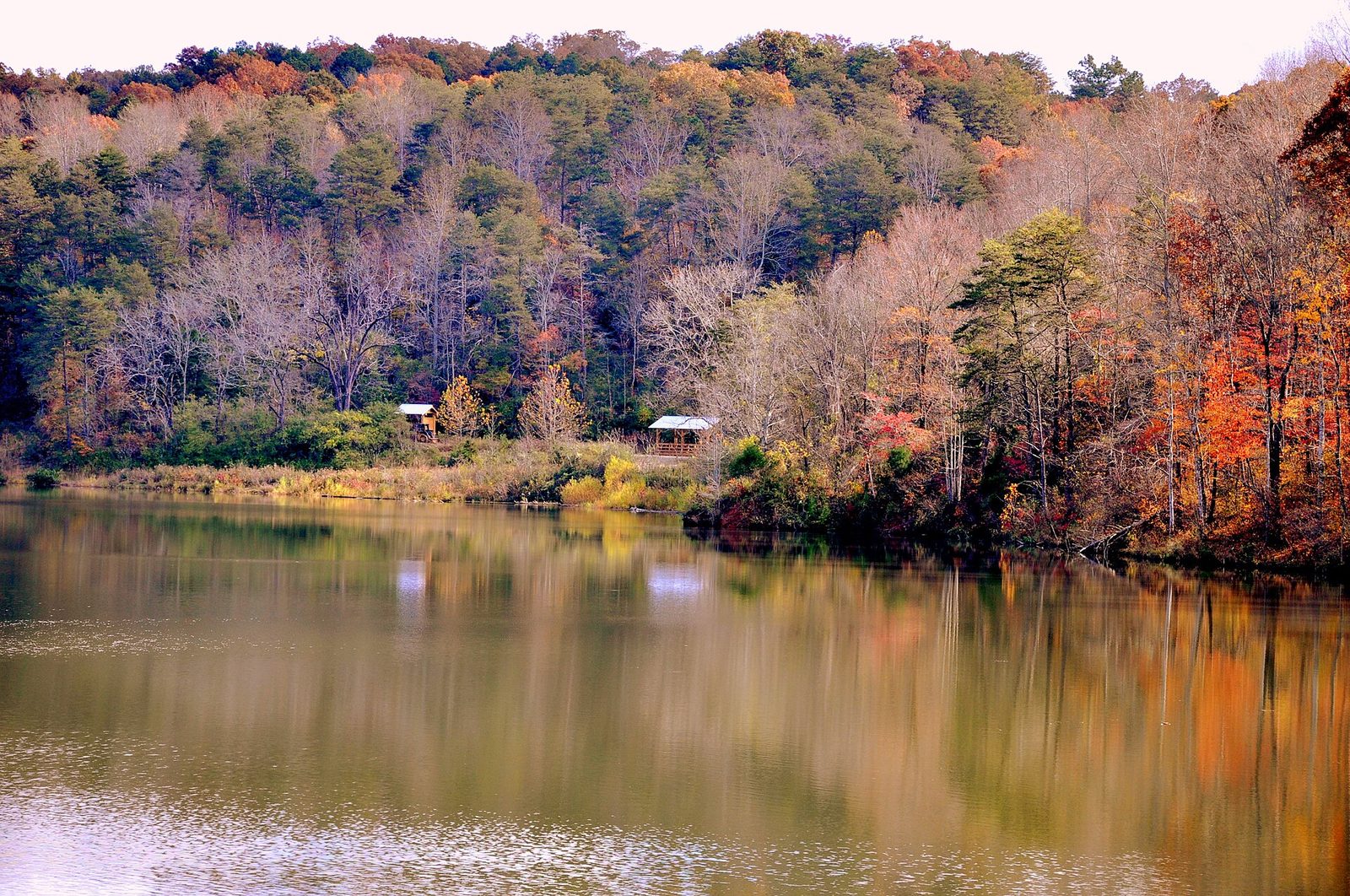
Lake at Dahlonega in autumn: photo by Chanilim714 / Wikimedia Commons (CC BY-SA 3.0)
Sources: each winery’s own site for hours, booking and group rules, food, age and pet policies, plantings and the claims attributed to it: Wolf Mountain Vineyards, Montaluce Winery & Restaurant, Kaya Vineyard & Winery, Cavender Creek Vineyards, Three Sisters Vineyards, Accent Cellars and Yonah Mountain Vineyards; the Dahlonega-Lumpkin County visitor bureau (dahlonega.org) for the count of tasting rooms and wineries, the Wine Trail Weekend, the Arts and Wine Festival, its descriptions of Three Sisters and Frogtown, and its tours page; the Federal Register (83 FR 30535, June 29, 2018) for the Dahlonega Plateau AVA; and Wikipedia’s Dahlonega entry for distances and the 2015 Senate resolution. Checked November 19, 2026. Hours and fees change, so confirm with the winery before you go.
Georgia Tourism Guide is an independent publication. We are not affiliated with Explore Georgia, the Georgia Department of Natural Resources, the National Park Service or any attraction listed here.