The hard part of festival planning is not finding events. It is finding out whether the date you read six months ago is still the date. Every year the same thing happens here: somebody books a Macon hotel for cherry blossom week off a stale listing, or drives to Helen for tubing during Oktoberfest and discovers the river closed at Labor Day. This guide covers the Georgia festivals that are genuinely worth building a trip around — about twenty of them, not two hundred — with confirmed 2026 dates where the organizer has published them, clearly marked expected windows where they have not, plus tickets, parking, where to stay, weather risk and accessibility. Everything here was checked in September 2026, and every entry names the official source to verify against before you book. Georgia here is the American state, not the country in the Caucasus.
How to read the dates below. Entries marked confirmed have dates published by the organizer as of September 2026. Entries marked expected follow a reliable annual pattern but had not been announced. Never book non-refundable travel against an expected window — check the official link first. Festival dates move, and the smaller ones move most.
The six worth planning a trip around
| Festival | 2026 dates | Where | Why it makes the list |
|---|---|---|---|
| Savannah St. Patrick’s Day | Around 17 March, annually | Savannah | One of the largest parades in America; the 200th ran in 2024 |
| Macon Cherry Blossom Festival | 20–29 March 2026 (confirmed for 2026) | Macon | Roughly 350,000 Yoshino trees in one mid-sized city |
| Atlanta Dogwood Festival | 10–12 April 2026 (confirmed) | Piedmont Park, Atlanta | 90th year; the city’s signature spring weekend |
| Helen Oktoberfest | 10 Sept – 1 Nov 2026 (confirmed) | Helen | Georgia’s longest-running festival, and it runs for seven weeks |
| Georgia National Fair | 8–18 October 2026 (confirmed) | Perry | The official state fair; eleven days, agricultural and enormous |
| Jekyll Shrimp & Grits | 23–24 October 2026 (confirmed) | Jekyll Island | Free admission, genuinely good food, on a barrier island |
The year at a glance
| Month | What is on | Where | Book by |
|---|---|---|---|
| January–February | Very little; low season statewide | — | Weeks |
| March | St. Patrick’s Day; Cherry Blossom; Savannah Music Festival opens | Savannah, Macon | Six months |
| April | Dogwood Festival; the Masters; Vidalia Onion Festival | Atlanta, Augusta, Vidalia | Three to six months |
| May | Music and neighborhood festivals; last comfortable month | Atlanta | Weeks |
| June–August | Thin. Peachtree Road Race on 4 July; local events | Atlanta | Lottery for the race |
| September | Oktoberfest opens; foliage trains begin; harvest festivals | Helen, Blue Ridge | Three months |
| October | The busiest month: State Fair, Apple Festival, Shrimp & Grits, Oktoberfest daily | Perry, Ellijay, Jekyll, Helen | Six months for the mountains |
| November | Oktoberfest closes 1 Nov; foliage trains to 3 Nov; harvest events | North Georgia | Two months |
| December | Holly Jolly Jekyll; mountain-town Christmas; city holiday programs | Jekyll, Helen, Savannah, Atlanta | Two months for the holiday fortnight |
The shape of that table is the single most useful thing on this page. Georgia’s festival year is heavily weighted to six weeks in the fall and four in the spring, with a genuine gap in high summer and a quiet stretch in midwinter. If your dates are flexible and you want an event, aim at late March or October. If your dates are fixed to July, plan a water trip and treat any festival as a bonus.
How these were selected
Georgia has hundreds of festivals and most of them are a street closed off and some craft stalls, which is lovely if you live there and not worth a four-hour drive. Four tests were applied.
- Is it worth traveling for? The event has to be the reason for the trip, not a pleasant coincidence. Local art-in-the-park weekends are excluded however good they are.
- Does it have an official source with dates? Anything whose only listing is an aggregator was left out, because aggregator dates go stale and are frequently wrong.
- Can you actually get in? Ticketed events with real sellout risk are flagged, as are the two on this page where attendance is effectively by lottery.
- Is there somewhere to sleep? Several of Georgia’s best festivals are in small towns whose entire accommodation stock books out. That is stated rather than discovered.
Spring
Savannah St. Patrick’s Day
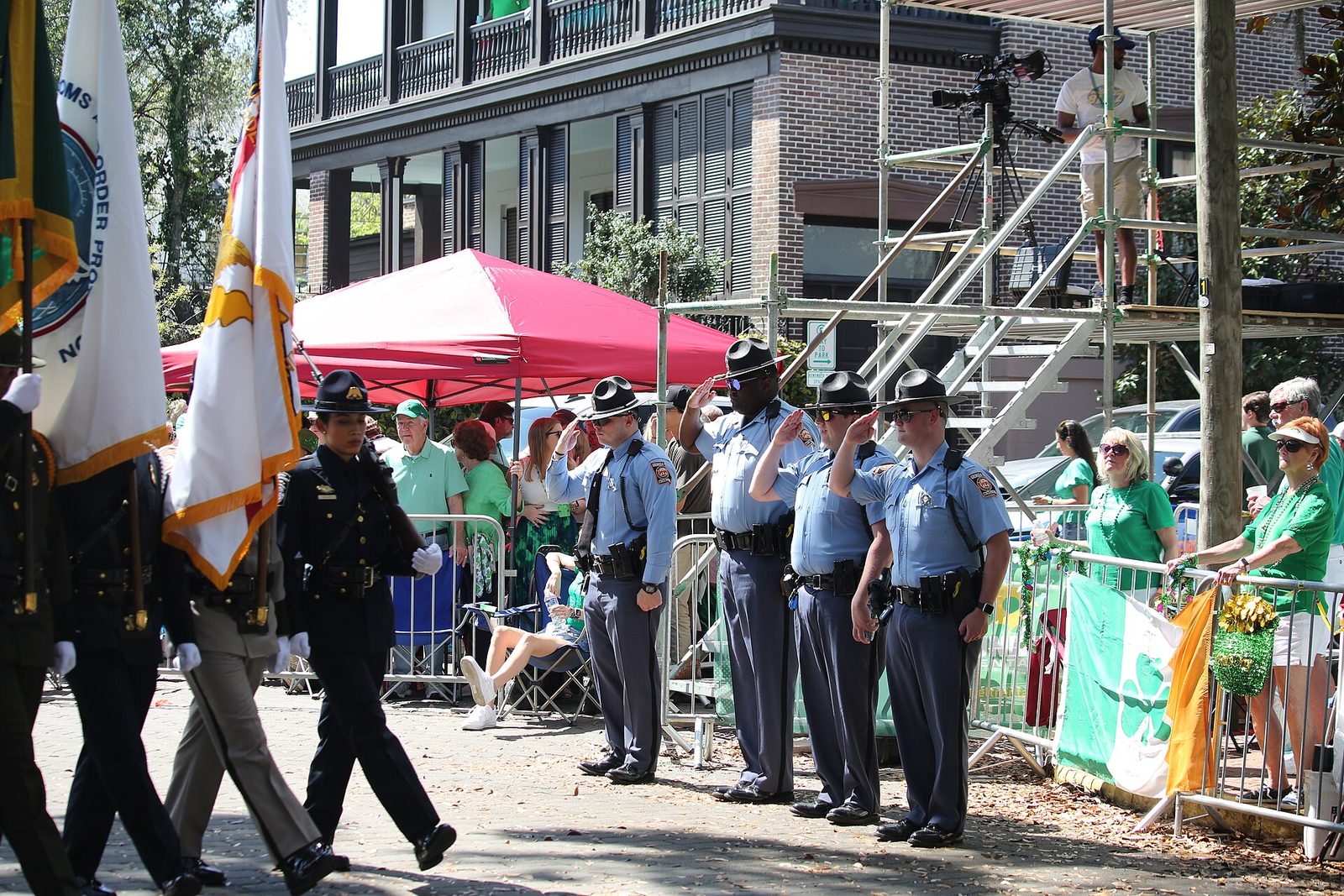
Savannah’s parade is one of the largest St. Patrick’s Day celebrations in the United States, behind only New York and Chicago, and the 200th annual parade ran on 16 March 2024 — this is not a recent invention. The parade itself is held on or around 17 March; St. Patrick’s Day falls on a Wednesday in 2027, which matters because a midweek date changes the shape of the weekend around it.
Practicalities. Rooms in the Historic District book months ahead at roughly double the usual rate, with minimum-stay requirements common. The city’s to-go cup rule — one 16 oz plastic cup, no glass, no cans, within the Historic District — is in force and heavily used, and public intoxication is still enforced. Parking is the usual Savannah problem made worse: buy the visitor parking pass at $15 a day or $90 for seven days, or do not bring a car at all. Verify at savannahsaintpatricksday.com and the city’s own page.
Savannah Music Festival
26 March to 11 April 2026 (confirmed). Seventeen days across jazz, classical, blues and American and global roots music, in venues around the Historic District, from restored downtown halls to churches. Tickets start at $37 and are sold at savannahmusicfestival.org, by phone on 912.525.5050 or at the Savannah Box Office. It overlaps the tail of St. Patrick’s Day season, which means the city is busy for a long stretch of spring — plan accommodation accordingly.
Macon International Cherry Blossom Festival
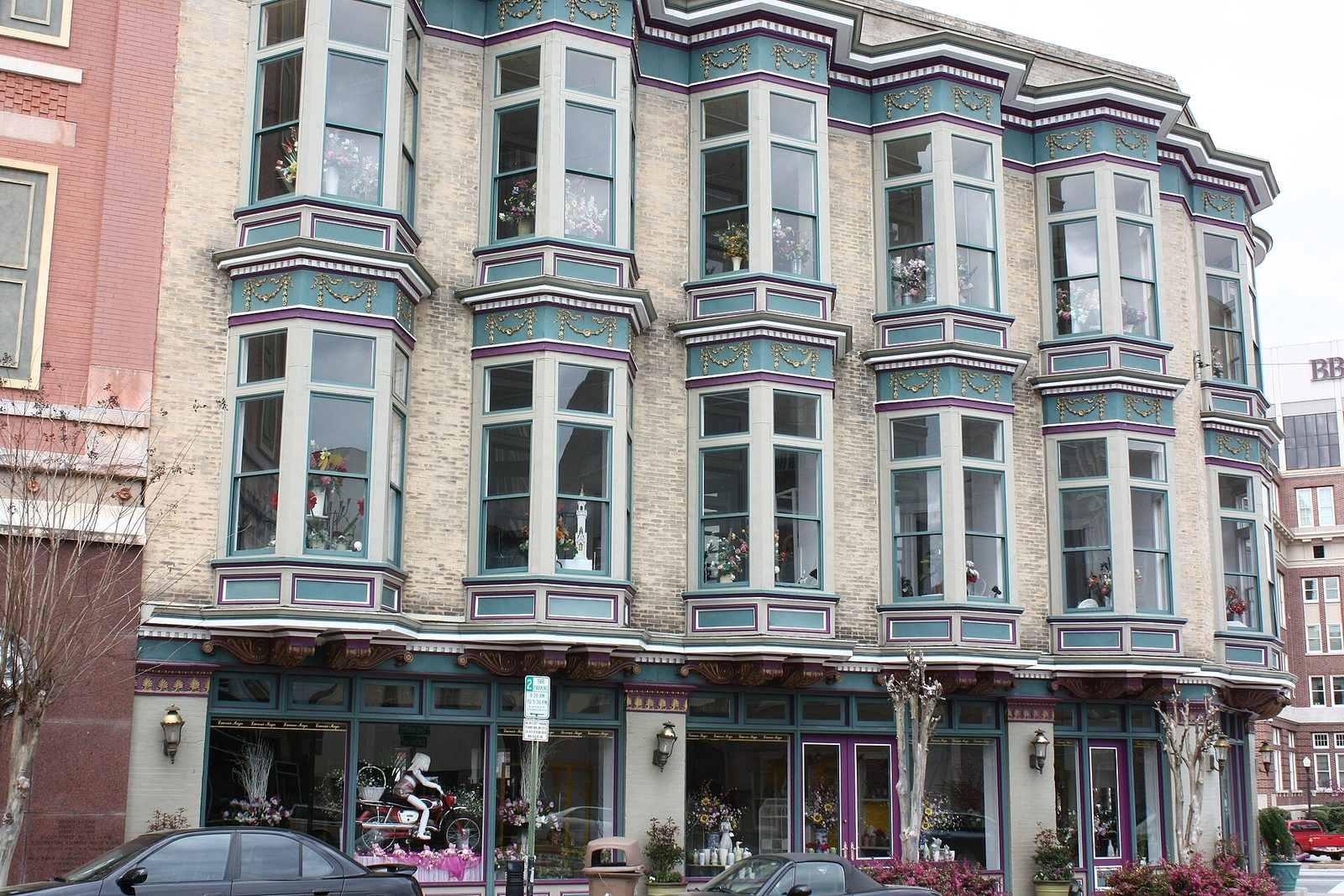
20 to 29 March 2026 (confirmed for 2026; 2027 dates had not been announced as of September 2026). Macon has roughly 350,000 Yoshino cherry trees and the festival runs ten days in March around them. The honest caveat: the trees bloom when they bloom and the festival dates are fixed in advance, so the two do not always coincide. Check cherryblossom.com for the current year rather than booking on a historical date, and have a second reason to be in middle Georgia that week — Ocmulgee Mounds is on the edge of town.
Note also that a good deal of the festival is a fairground event at the Georgia State Fairgrounds rather than a walk beneath blossom. Both are enjoyable; they are not the same thing, and visitors expecting the second are sometimes surprised by the first.
The Masters
First full week of April, Augusta. Included because people plan trips around it and then discover they cannot get in. The lottery is the only official route. Applications run 1 to 20 June the year before, results come by late July, badges mail in March, and one application is allowed per residential address. Practice rounds are $125 on Monday and Tuesday, $150 on Wednesday (which includes the Par-3 Contest) and $160 for each tournament round, with up to four practice tickets a day and two tournament tickets a day, and winners assigned a single day.
If the lottery does not come through, Augusta that week is fully booked and expensive anyway. Enter for a future year and plan the trip around the Riverwalk instead.
Atlanta Dogwood Festival
10 to 12 April 2026, Piedmont Park (confirmed), celebrating its 90th year. The change worth knowing: the festival now charges admission, at $5 on Friday and $10 on each of Saturday and Sunday, after decades of being free. Artist market, music stages and the park at the best week of the Atlanta year. It is on MARTA’s doorstep — use it rather than driving, because Piedmont Park parking during the festival is genuinely bad.
Vidalia Onion Festival
23 to 26 April 2026, Vidalia (confirmed), in its 49th year, with a Blue Angels air show as the headline draw. This is the most purely agricultural festival on the list and the most southern in feel: an onion that can only legally be called a Vidalia if it is grown in a defined area of south Georgia, celebrated by the town that grows it. Accommodation in Vidalia is thin and books out — Statesboro and Dublin are the fallback bases.
Summer
Georgia’s festival calendar thins out from June through August, and that is not an oversight. Outdoor events in 90-degree heat with afternoon thunderstorms and, below the Fall Line, gnats are a hard sell. What runs in summer tends to be either early in the morning, on the water, or indoors.
- The Peachtree Road Race, 4 July, Atlanta. A 10K through the city on Independence Day morning and one of the largest road races in the world. Entry is by lottery and fills far in advance; check the Atlanta Track Club for the current registration window.
- Independence Day on Jekyll Island. A designated event day, which means the island’s daily vehicle fee rises by $5 — $15 rather than $10 for that day. The annual $100 pass is unaffected.
- County and church festivals across the state, largely of local interest, and the honest advice is to enjoy one if you happen to be nearby rather than to drive for it.
The better summer plan in Georgia is to treat the season as lake, coast and mountain time and save the festival calendar for spring and fall. If you want a summer event, go early in the day or go north, where the mountains run ten to fifteen degrees cooler than Atlanta.
Fall
This is the real festival season, and it is congested. Four major events overlap in October alone, in four different parts of the state.
Helen Oktoberfest
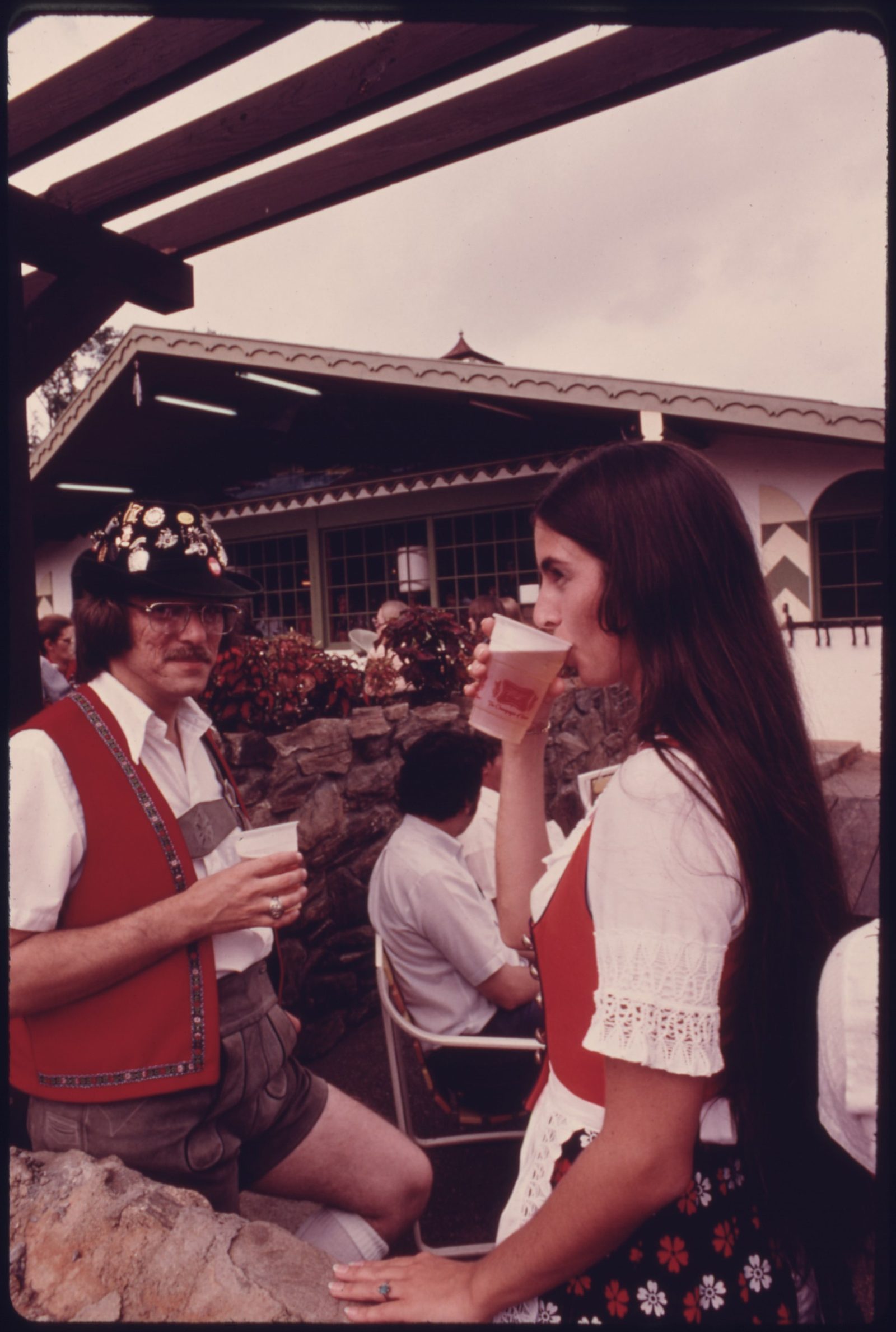
10 September to 1 November 2026 (confirmed) — the 56th edition, running Thursday to Sunday through September and then daily from 1 October to 1 November. The parade was Saturday 12 September 2026 at noon. Festhalle admission is $10 for adults Monday to Thursday, $15 Friday and Saturday, and free on Sunday; ages 6 to 12 are $5 Monday to Thursday and $7 Friday and Saturday, with under-sixes free.
Two things to get right. First, the Chattahoochee tubing season ends at Labor Day, so tubing and Oktoberfest do not overlap — a scheduling mismatch that catches out a startling number of visitors every September. Second, Helen is a superb base and a thin town: sleep there, and eat in Sautee Nacoochee or Clarkesville. Accommodation across White County books out for October weekends.
Georgia National Fair
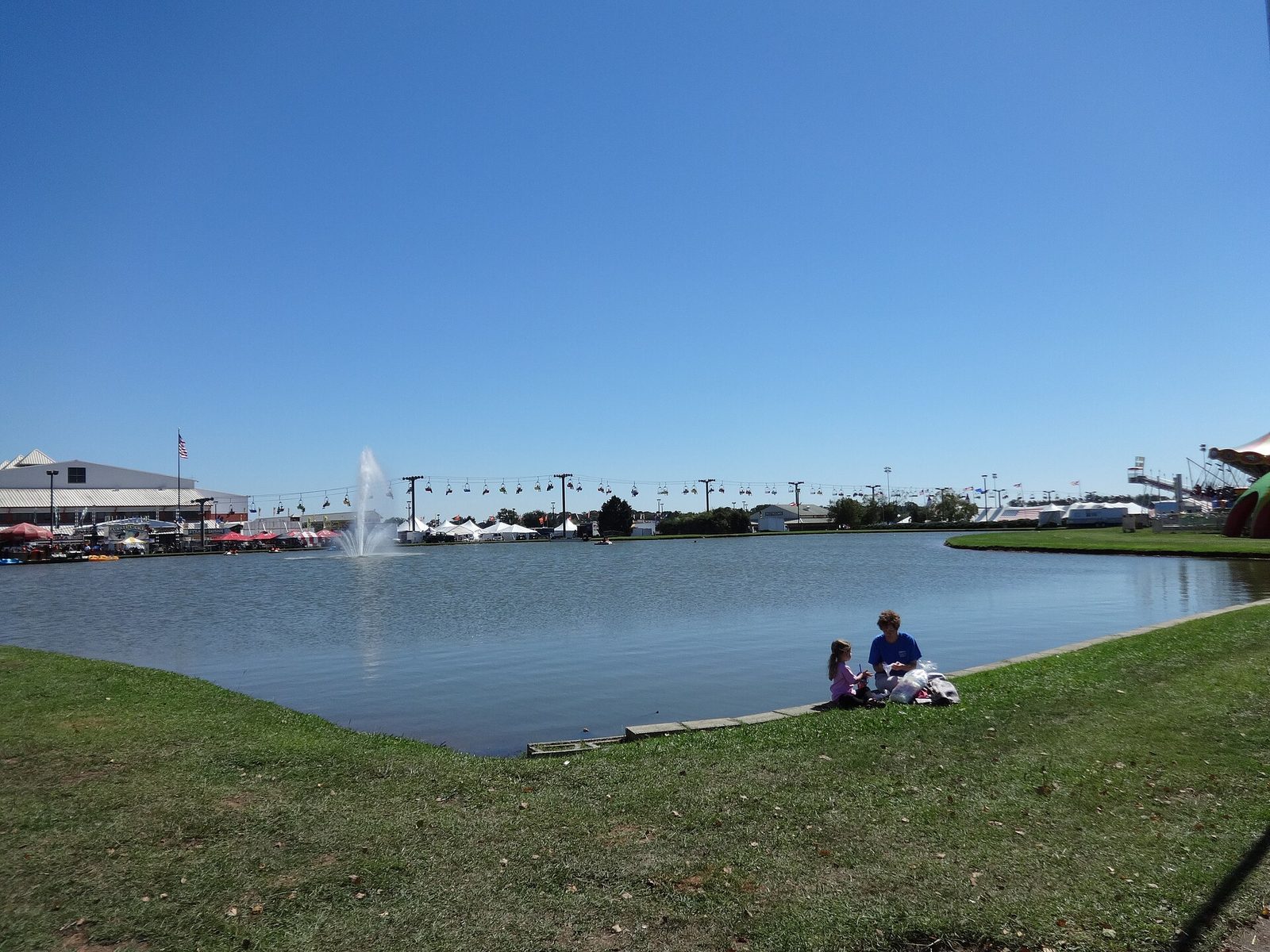
8 to 18 October 2026, Perry (confirmed), at the Georgia National Fairgrounds & Agricenter, with a 2026 theme of America250: Georgia Grown. Eleven days, and it is the official state fair rather than a county one — livestock competitions, horticulture halls, a full midway, concerts and a sky ride, on a purpose-built site off I-75 halfway between Atlanta and Valdosta.
Perry has limited accommodation for an event of this size, and Macon, 30 miles north, is the practical base. Parking at the fairgrounds is on site and plentiful but the queues on a Saturday afternoon are long — go on a weekday or arrive before lunch.
Georgia Apple Festival, Ellijay
10–11 and 17–18 October 2026 (confirmed), the 55th edition, over two consecutive weekends rather than one, with more than 250 vendors. Ellijay is apple country and the festival sits alongside a working apple-house season that runs through the fall, which makes it a better trip than the festival alone: you can buy apples direct from the orchards on the same day.
The practical warning is traffic. Ellijay and Blue Ridge are on the same two-lane approaches, both are busy every October weekend, and the Apple Festival weekends are the worst of them. Arrive early or stay overnight.
Jekyll Island Shrimp & Grits Festival
23 to 24 October 2026 (confirmed) — Friday 4 to 9 p.m. and Saturday 10 a.m. to 9 p.m. Admission is free, which makes it the best value event on this page. Note that it is a designated Jekyll event day, so the island’s daily vehicle fee rises by $5 to $15; the $100 annual pass is unaffected. Accommodation on Jekyll and in Brunswick and St. Simons fills for that weekend.
Blue Ridge Fall Foliage Trains
19 September to 3 November 2026 (confirmed). Not a festival, but it behaves like one and it books like one. Adult Coach Express fares start around $45 and rise for peak foliage weekends. The two-hour Express is out and back with no layover; the four-hour Extended gives about two hours off the train at McCaysville and Copperhill on the Tennessee line, which is the better ticket for most people. Ticket office (877) 413-8724.
Smaller festivals that earn a detour
These are the second tier: worth building a weekend around if you are already in the region, and each with a reliable annual pattern rather than a date this page will vouch for. All of these are expected windows. Confirm with the organizer before booking anything.
- Atlanta Jazz Festival, Piedmont Park, expected Memorial Day weekend. Free, outdoors, and the best large-scale music event in the state that does not charge admission.
- Sweet Auburn Springfest, Atlanta, expected May. A street festival on Auburn Avenue with a genuine claim on the city’s history, in the neighborhood around the King park.
- Savannah Film Festival, expected late October into November. Run by the art college, and a different and quieter reason to be in Savannah than the spring ones.
- Plains Peanut Festival, expected September. Small, agricultural, and in the town that holds the Jimmy Carter National Historical Park — a good pairing for a southwest Georgia trip.
- Sorghum Festival, Blairsville, expected October. Cane grinding and syrup making in the north Georgia mountains, and one of the few events up there that is about the place rather than about visitors.
- Rock Shrimp Festival, St. Marys, expected October. On the mainland opposite Cumberland Island, which makes it a natural add-on to a ferry trip if the dates align.
- Andersonville Historic Fair, expected October. Living history beside the national historic site, and a heavier day than the name suggests.
- Barnesville Buggy Days, expected September. A middle-Georgia town festival with an unusually specific premise: Barnesville built buggies.
- Claxton’s rattlesnake and wildlife festival, expected March. Reformed from its origins as a roundup into a conservation and education event, and a genuinely odd and interesting south Georgia day out.
- Mule Day, Calvary, expected November. Deep southwest Georgia, agricultural, and entirely unselfconscious.
The pattern worth noticing: almost all of the second tier is in the fall, and most of it is agricultural. Georgia’s small-town festival calendar follows the harvest rather than the tourist season, which is why September to November is so crowded and why a spring visitor sees so much less of it.
Winter
Quieter, cheaper and more pleasant than its reputation, particularly on the coast.
- Holly Jolly Jekyll, December, Jekyll Island. Lights, events and a holiday season on a barrier island. A designated event day, so the daily vehicle fee rises by $5.
- Mountain town Christmas seasons in Helen, Blue Ridge and Dahlonega, which do the season properly. Cabin rates for the two weeks around Christmas reflect it; the first half of December does not.
- Savannah and Atlanta holiday programs, both substantial, both cheaper to attend than their spring equivalents.
The genuine winter argument is the weather. Savannah’s January normal high is 61°F against Atlanta’s 54°F, so a coastal holiday trip is comfortable in a way an inland one is not.
By region
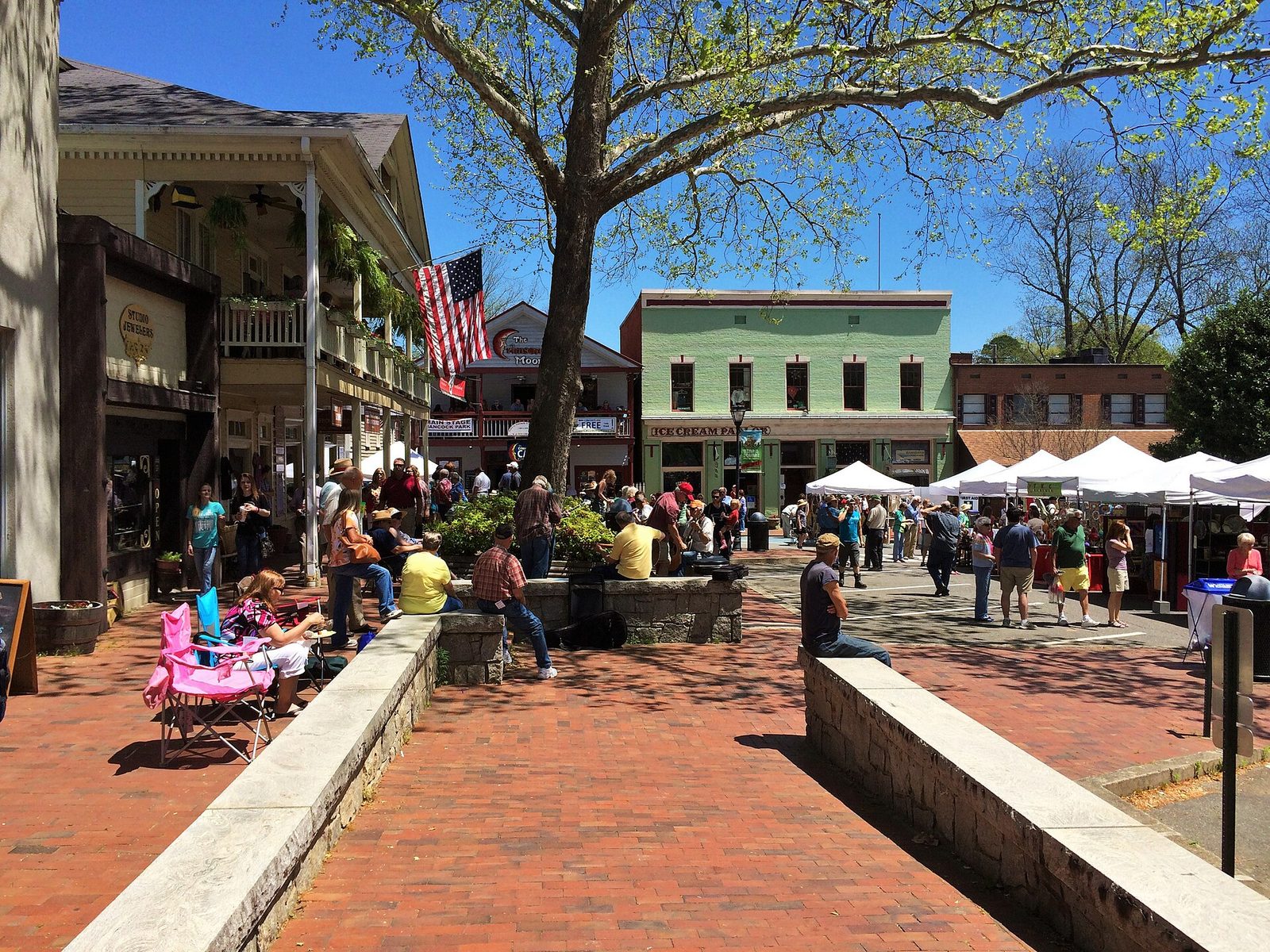
- North Georgia mountains. Helen Oktoberfest, the Georgia Apple Festival at Ellijay, the Blue Ridge foliage trains, and a calendar of smaller events on the Dahlonega square. Concentrated almost entirely between mid-September and early November.
- Atlanta. The Dogwood Festival in April, the Peachtree Road Race on 4 July, and a dense year-round program of neighborhood and music events. The only part of Georgia with a genuine summer festival calendar, because so much of it is indoors.
- Savannah and the coast. St. Patrick’s Day and the Music Festival in spring, Shrimp & Grits on Jekyll in October, Holly Jolly Jekyll in December. The coast’s calendar is bimodal — spring and fall, with a summer gap.
- Middle Georgia. Cherry blossom in Macon in March and the Georgia National Fair at Perry in October. Two events, both major, seven months apart.
- South Georgia. The Vidalia Onion Festival in April, and a scattering of agricultural festivals through the cooler months. Almost nothing from June to September, for good reason.
Pairing two festivals in one trip
October is congested enough that several combinations genuinely work, and a few that look workable on a map do not.
- Georgia Apple Festival and the Blue Ridge foliage train. Ellijay and Blue Ridge are twenty minutes apart, both events run across the same October weekends, and a two-night stay covers them comfortably. The best pairing on this page.
- Helen Oktoberfest and anything else in north Georgia. Because Oktoberfest runs daily through October rather than on a single weekend, it slots around whatever else you are doing — Brasstown Bald, Anna Ruby Falls, the byway. Treat it as an evening rather than a day.
- Jekyll Shrimp & Grits and Cumberland Island. St. Marys is an hour south of Jekyll, so a festival Saturday and a Sunday ferry works — but only if you booked the ferry six months ahead, because it sells out.
- Georgia National Fair and the Antebellum Trail. Perry is 30 miles from Macon and the Trail runs north from there through Milledgeville, Eatonton and Madison. A fair day plus two days of small towns is a genuinely good middle-Georgia week.
- Cherry blossom and the Masters. These look close — Macon and Augusta are both middle Georgia — and they are two and a half hours apart with a fortnight between them in most years. Not a pairing.
- Oktoberfest and the coast. Helen to Jekyll is five hours. Doable across a week, wasteful across a weekend.
The general rule: pair within a region, not across the state. Georgia’s festival towns are clustered — the mountains, middle Georgia, the coast — and the distances between clusters are four to five hours.
Tickets, parking and where to stay
Four practical rules that apply across almost every event above.
- Book accommodation before tickets, not after. For Helen in October, Ellijay on an Apple Festival weekend, Perry during the fair, Savannah at St. Patrick’s and Macon in cherry blossom week, the constraint is beds rather than admission. Several of these towns have a few hundred rooms and tens of thousands of visitors.
- Assume the nearest city is your real base. Macon for Perry. Brunswick or St. Simons for Jekyll. Statesboro or Dublin for Vidalia. Clarkesville or Sautee Nacoochee for Helen.
- Use transit where it exists. That means Atlanta, and it means MARTA at a flat $2.50 with four free transfers in three hours. For the Dogwood Festival at Piedmont Park this is not a marginal improvement, it is the difference between a good day and an hour spent parking.
- Check whether it is a designated event day if you are going to Jekyll. Independence Day, Shrimp & Grits and Holly Jolly Jekyll each add $5 to the daily vehicle fee, applied to the daily rate only and not to the $100 annual pass.
What festivals cost
| Event | Admission | Notes |
|---|---|---|
| Jekyll Shrimp & Grits | Free | Island vehicle fee $15 on event days rather than $10 |
| Savannah St. Patrick’s Day parade | Free to watch | Bleacher and party packages sold separately |
| Atlanta Dogwood Festival | $5 Fri, $10 Sat, $10 Sun | New for 2026; previously free |
| Helen Oktoberfest Festhalle | $10 Mon–Thu, $15 Fri–Sat, free Sun | Ages 6–12 $5 / $7; under 6 free |
| Savannah Music Festival | From $37 | Per performance; multi-show packages available |
| Blue Ridge Fall Foliage Train | From about $45 adult | Rises at peak foliage weekends |
| The Masters | $125–$160 | Lottery only; applications 1–20 June the year before |
| Georgia National Fair | Gate admission plus ride tickets | Check the fair’s site for the current year’s rates |
Two observations. The free events — Shrimp & Grits, the Savannah parade, the Atlanta Jazz Festival — are among the best on this page, which is unusual and worth exploiting. And the real cost of a Georgia festival is almost never admission: it is the room, which in Helen in October or Savannah in March will cost several times whatever the gate does.
How to verify a date before you book
Festival dates on the open web are wrong more often than not, and the failure mode is consistent: an aggregator copies last year’s dates, a blog copies the aggregator, and the result outranks the organizer. Four steps that take about five minutes.
- Find the organizer, not a listing. Chamber of commerce, festival association, city page or the venue itself. If you cannot find one, treat the event as unconfirmed.
- Look for a year in the page title or the copyright line. A page headed “2025 Festival” in September 2026 is a stale page, whatever the dates on it say.
- Check the social feed as a tiebreak. Organizers announce date changes on social media weeks before they update the website, and a “save the date” post is usually the earliest confirmation available.
- Re-check 60 to 90 days out. This is the window in which small festivals move, shorten or cancel, and it is early enough to change accommodation without losing money.
This page follows the same discipline: everything marked confirmed was published by the organizer as of September 2026, everything marked expected is a pattern rather than a promise, and the whole page carries a check date rather than an implied permanence.
Getting there and around on event days
Arrival is the part most festival plans underestimate, and in Georgia it is almost always a two-lane-road problem rather than a parking problem.
- Atlanta events. Use MARTA. A flat $2.50 one-way fare with four free transfers inside three hours, and since the Better Breeze system went live on 28 March 2026 you can tap a contactless card or phone at the faregate. For Piedmont Park during the Dogwood Festival this is not a small saving — the neighborhood parking is genuinely bad and the festival is on the transit network.
- Helen, Ellijay and Blue Ridge. The approaches are two-lane and they back up for miles on October weekends. There is no bypass and no transit. Arrive before ten or stay overnight; those are the only two strategies that work.
- Perry for the state fair. Directly off I-75 with on-site parking, which makes it the easiest large event in Georgia to reach. The queue is at the gate rather than on the road, and it is worst mid-afternoon on a Saturday.
- Savannah on parade day. Do not drive into the Historic District. Park once on arrival — the visitor pass at $15 a day covers any city garage and any Historic District meter — and walk for the rest of the stay. Street closures on 17 March make driving pointless as well as difficult.
- Jekyll Island. One causeway, one vehicle fee, and a festival weekend that fills the island’s parking. Bikes solve this: the island is flat and looped with paved paths, and arriving on foot or by bike is free.
One statewide point: none of these events is reachable by intercity rail in any practical sense. The daily Crescent is Georgia’s only passenger train, running once a day in each direction through Toccoa, Gainesville, Atlanta and Doraville. A late train means a lost day.
What changed recently
Four things that were true a few years ago and are not now. These are the details that stale listings get wrong.
- The Atlanta Dogwood Festival now charges admission. $5 on Friday and $10 on each of Saturday and Sunday for 2026, after decades of free entry. Any source that describes it as free is out of date.
- Helen’s Oktoberfest runs for seven weeks, not one. The 2026 edition ran 10 September to 1 November, Thursday to Sunday through September and then daily through October. Listings that describe it as a single October weekend are describing something that has not been true for a long time.
- The Georgia Apple Festival runs over two weekends. 10–11 and 17–18 October 2026, not one continuous stretch, which catches out visitors who book the middle of the week between them.
- Macon’s 2027 festival dates were not announced as of September 2026. There is no reliable way to book cherry blossom week for 2027 yet, and any date you find for it is a guess.
Weather risk, by season
Georgia’s outdoor events carry seasonal risk that organizers rarely publicize.
- Spring events face two things: pollen, which coats the Piedmont for about a fortnight in late March and early April, and severe thunderstorms, which are most frequent in March and April. Spring festivals do get delayed or shortened by weather.
- Summer events face heat index and daily afternoon storms. Anything outdoors between noon and five in July is a physical undertaking.
- Fall events are the safest bet: October is the driest month in much of the state and the temperatures are ideal. The risk in fall is crowds and traffic rather than weather.
- Coastal events in September sit in the statistical peak of the Atlantic hurricane season, which runs 1 June to 30 November. Buy travel insurance and watch the National Hurricane Center rather than a general forecast app.
Accessibility
Provision varies widely and is thinly documented, so the reliable approach is to contact the organizer directly rather than trusting a website badge.
The larger, purpose-built venues are the most dependable: the Georgia National Fairgrounds at Perry has paved surfaces, accessible parking and accessible restrooms throughout, and Atlanta’s park venues are generally good. Street festivals in historic towns are the hardest — Savannah’s cobbled and brick surfaces, crowd density on parade day, and portable toilet provision are all genuine obstacles. Helen’s Festhalle and the town’s main street are largely level but become extremely crowded.
Three questions worth asking any organizer in writing: where accessible parking is and how far it is from the entrance; whether there is a designated accessible viewing area for parades or stages; and what the surface is between the two. The answers vary more than you would expect between events of similar size.
What is not worth the trip
- Any festival found only on an aggregator site. If the organizer has no page with dates, the dates are probably wrong. This is the single most common way people waste a weekend here.
- Driving to Helen in September expecting to tube. The season ends at Labor Day. Oktoberfest starts after it.
- Augusta during Masters week without a badge. Full, expensive, and you will not get in. Enter the June lottery for a future year.
- A cherry blossom trip booked on last year’s dates. The festival dates move and the trees do not follow them.
- An October mountain festival weekend booked in September. Whatever is left will be expensive and badly located.
Frequently asked questions
What is the biggest festival in Georgia?
By attendance and duration, Helen’s Oktoberfest, which ran for seven weeks in 2026 — from 10 September to 1 November. Savannah’s St. Patrick’s Day celebration is the biggest single-day event, and one of the largest in the United States behind New York and Chicago. The Georgia National Fair at Perry is the largest ticketed event, over eleven days.
When are the 2027 dates announced?
It varies. Large fixed-venue events like the Georgia National Fair and Helen’s Oktoberfest publish early, often a year ahead. Smaller festivals frequently confirm only three to six months out. The Macon Cherry Blossom Festival’s 2027 dates had not been announced as of September 2026. Check the official site rather than an aggregator, and do not book non-refundable travel against a date you have not verified.
Which festival is best with children?
The Georgia National Fair at Perry, comfortably — eleven days of midway, livestock barns, a sky ride and exhibits on a site designed for crowds, with parking and accessible facilities throughout. The Jekyll Shrimp & Grits Festival is the runner-up: free, on an island, with a beach ten minutes away when attention runs out.
Are any Georgia festivals free?
The Jekyll Island Shrimp & Grits Festival is free to attend, though the island’s vehicle fee applies and rises by $5 on event days. Savannah’s St. Patrick’s Day parade is free to watch from public ground, with paid bleacher and party options sold separately. The Atlanta Dogwood Festival is no longer free — it introduced admission at $5 on Friday and $10 on Saturday and Sunday for 2026.
How far ahead should I book accommodation?
Six months for Savannah at St. Patrick’s, Macon in cherry blossom week, and any October weekend in Helen, Ellijay or Blue Ridge. Three months for Perry during the fair, using Macon as the base. Vidalia needs Statesboro or Dublin and about two months. Anything in Atlanta can usually be booked four to six weeks out, because the city’s room stock is large enough to absorb an event.
Do I need a car?
For everything except the Atlanta events, yes. The Dogwood Festival and the Peachtree Road Race are both better reached on MARTA than by car. Everywhere else on this page is a driving trip, and several of the mountain and south Georgia events involve two-lane approach roads that are the real constraint on arrival time.
What is the best festival in Georgia if I only go to one?
Helen’s Oktoberfest if you want scale and a seven-week window to fit it into, Savannah’s St. Patrick’s Day if you want an event with genuine history behind it, and the Jekyll Shrimp & Grits Festival if you want the best day for the least money. For families, the Georgia National Fair at Perry, without much competition.
Why are there so few festivals in summer?
Heat, storms and insects. July averages around 90°F in Atlanta and nearly 93°F in Columbus before humidity is counted, thunderstorms build on most afternoons, and below the Fall Line the gnats make standing about outdoors genuinely unpleasant from roughly May to September. Georgia’s festival calendar is built around the two shoulder seasons for exactly that reason, and the events that do run in summer tend to start early in the morning.
Can I still see the cherry blossoms if I miss the festival?
Often, yes — and sometimes that is the better plan. The trees bloom on their own schedule in late March and the festival dates are set in advance, so in some years the peak bloom falls a few days either side of the ten-day program. Macon is a pleasant, inexpensive city to visit midweek with Ocmulgee Mounds on its edge, and a bloom-week visit without the festival crowds is a genuinely good trade.
What should I do if a festival is cancelled after I have booked?
Assume the accommodation is not refundable and check before you assume otherwise, because in festival towns the strict cancellation tiers are the common ones. Travel insurance bought at the time of booking is the only reliable protection, and it matters most for coastal events between August and October, when a named storm rather than the organizer is the likely cause.
A good half of the events on this page are harvest festivals in disguise — Vidalia in April, Ellijay’s apples in October, shrimp on Jekyll the same month. Our guide to Georgia food and drink explains what is in season when, why the Vidalia onion has its own state statute, and where to buy at the source rather than at the festival stall.
The Savannah Music Festival is the strongest reason on this calendar to build a whole trip around music rather than adding a concert to one. If that is the direction you are heading, our guide to Georgia film locations and music history maps the rest of it — Macon’s Capricorn studio and the Big House, Athens on a night with a show booked, and the Augusta and Albany sites that rarely make a festival list.
Helen’s Oktoberfest is the longest-running in the country and the busiest thing that happens in north Georgia, which makes the rest of the town a very different proposition for those eight weeks. If you are planning around it — or deliberately around it — our Helen first-time visitor guide covers the traffic, the parking strategy and why the tubing season is already over by the time the Festhalle opens.
The autumn calendar is the busiest stretch of the Georgia year, and several of its fixtures — the Georgia Apple Festival’s two separate October weekends, Helen’s Oktoberfest, the Georgia National Fair at Perry, Jekyll’s Shrimp & Grits — are also the reason accommodation disappears. Our guide to fall weekend getaways in Georgia builds a weekend around them and says what to do when the cabins are booked out.
Related Georgia Guides
- Best Time to Visit Georgia — the climate normals and crowd cycles behind this calendar.
- Savannah Travel Guide — the city behind two of the biggest events here.
- Atlanta Travel Guide — MARTA, neighborhoods and the city’s own calendar.
- North Georgia Mountains Travel Guide — Helen, Ellijay and Blue Ridge in the autumn crush.
- Where to Stay in Georgia — base towns for the events that have none of their own.
- Georgia Beaches & Islands — Jekyll, including the event-day vehicle fee.
- Romantic Getaways in Georgia — the weekends that work around these dates.
- Georgia Family Vacations — which events suit which age.
- Georgia Road Trips & Scenic Drives — the driving between festival towns.
- Best Things to Do in Georgia — the statewide overview.
Photo Credits
The 200th annual St. Patrick’s Day Parade in Savannah, March 2024: photo by U.S. Customs and Border Protection / Wikimedia Commons (Public domain)
The Georgia National Fairgrounds & Agricenter, Perry: photo by Michael Rivera / Wikimedia Commons (CC BY-SA 4.0)
Visitors at an early Oktoberfest in Helen, from the EPA’s DOCUMERICA series: photo by Al Stephenson / Wikimedia Commons (Public domain)
Sources: Savannah Saint Patrick’s Day Parade Committee and the City of Savannah; Savannah Music Festival; Macon International Cherry Blossom Festival; Atlanta Dogwood Festival; Vidalia Onion Festival; Helen Chamber of Commerce; Georgia National Fair and the Georgia National Fairgrounds & Agricenter; Georgia Apple Festival and the Gilmer County Chamber; Jekyll Island Authority; Blue Ridge Scenic Railway; Masters reporting via AJC and Golf Digest; NOAA National Hurricane Center. Dates and prices checked September 2026; verify with the organizer 60 to 90 days before travel.
Georgia Tourism Guide is an independent publication. We are not affiliated with Explore Georgia, the Georgia Department of Natural Resources, the National Park Service or any attraction listed here.