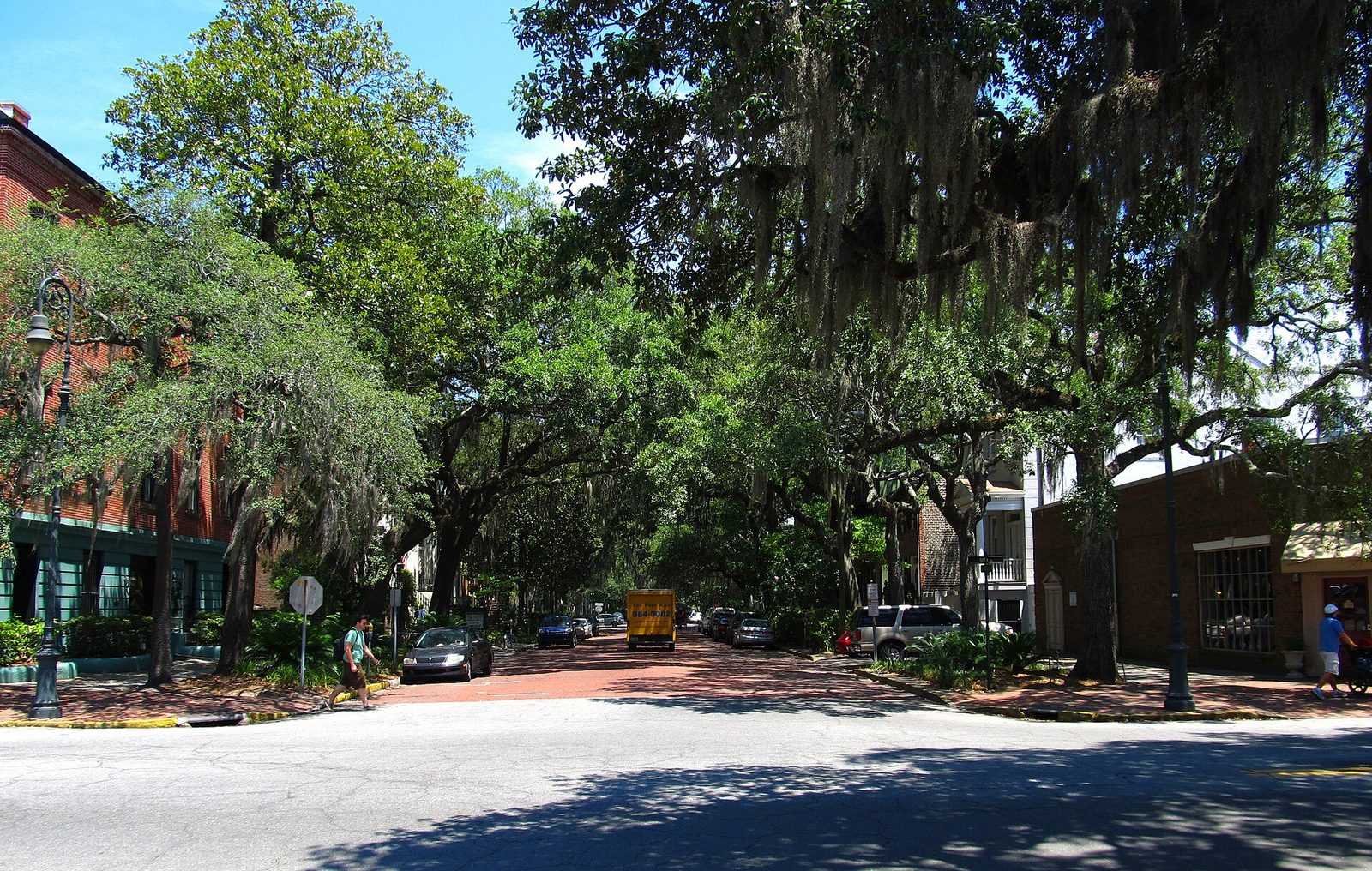
The first thing to understand about Savannah is that the squares are not decoration. James Oglethorpe laid the city out in 1733 as a repeating module — a square with house lots on two sides and public lots on the other two — and then simply copied it south as the town grew. Twenty-two of those squares survive, and they are the reason the historic district still feels like a series of rooms rather than a grid of streets. This Savannah travel guide is built on that fact, because once you grasp how the plan works you stop wandering and start walking with purpose.
What this page decides for you: where to base yourself among four very different districts, how to solve the parking problem cheaply (there is a specific answer, and most guides bury it), when Tybee Island is worth the drive and when it is not, and how to sequence two, three or four days so you are not crossing the same square six times in the heat. It also takes the history seriously, which on this particular stretch of the Georgia coast means saying some things the tourist board does not.
Prices and rules were checked in September 2026 against city and operator sources, and are date-stamped throughout. Savannah is a small city that absorbs about fourteen million visitors a year, and the gap between the marketing and the experience is wider here than anywhere else in the state — so the honest verdicts below matter more than usual.
Savannah at a Glance
| Question | Short answer |
|---|---|
| How many days? | Two covers the historic district properly. Three adds Bonaventure, Wormsloe and a proper dinner. Four lets you add Tybee Island without rushing. |
| Best months | Late March to early May, and October into November. Avoid mid-July through August, and avoid St. Patrick’s week unless that is why you came. |
| Do I need a car? | No, for the historic district — it is walkable end to end. Yes, for Bonaventure, Wormsloe, Pin Point and Tybee. |
| Parking answer | The city visitor pass: $15 a day or $90 for seven days, covering every city garage and every Historic District meter. Meters are free all day Sunday. |
| Best base | The southern squares around Monterey and Lafayette for atmosphere; north of Broughton for convenience; Starland for value and better food. |
| Tybee parking | $4 an hour, enforced 08:00–20:00, or a $25 day pass. The pass wins for any visit longer than six hours. |
| Open container | Legal in the Historic District: one 16 oz plastic cup, no glass or cans. Public intoxication is still enforced. |
| Biggest rookie error | Driving into the historic district and circling for a meter. Park once, in a garage, and walk everywhere. |
How the City Is Built, and Why It Matters
Each of Savannah’s wards was laid out around a square, with four residential blocks and four larger trust lots reserved for churches and public buildings. That is why the finest buildings in the city sit at the east and west ends of the squares rather than facing them head on, and why the streets running north to south have to give way at every block.
The practical consequences are three. First, walking is faster than driving anywhere inside the district — traffic must circle each square, and a car takes twice as long as your legs over the same six blocks. Second, the district is genuinely small: Bay Street to Forsyth Park is about twenty minutes on foot, and the whole grid is roughly a mile by half a mile. Third, you can navigate by square rather than by street name, which is how locals actually give directions.
If you only have time to walk one route, take Bull Street from City Hall south. It threads Johnson, Wright, Chippewa, Madison and Monterey Squares in order and ends at Forsyth Park, and it is the single best twenty-five minutes in the city. The squares get quieter and, to most eyes, prettier as you go south.
Getting There, Parking, and Getting Around
Arriving
Savannah/Hilton Head International is ten miles northwest of downtown off I-95, and it is a small, painless airport — twenty minutes to the historic district on a normal day. Driving in, Savannah is roughly four hours from Atlanta, two from Charleston and forty-five minutes from Hilton Head. The Atlanta run is I-75 south to Macon and then I-16 east, and you should know that I-16 is 160 miles of pine trees with very little in between. Fill up in Macon.
The parking answer
This is where most visitors lose an hour and thirty dollars. Savannah runs more than 3,000 metered spaces, seven garages and five surface lots downtown. Street meters are $1 to $2 an hour, enforced Monday to Saturday 08:00–20:00 north of Liberty Street and Monday to Friday 08:00–17:00 south of it. Meters are free all day on Sunday (checked September 2026).
The thing to actually do: buy the city’s visitor parking pass at $15 a day, or $90 for seven days. It covers unlimited parking in any city-owned garage and any metered space in the Historic District. If you are staying two nights and your hotel charges for parking, this is usually cheaper than the hotel, and it removes the entire problem. Pay-by-phone through the ParkSavannah app works for meters if you would rather not commit.
On foot, by pedicab, and the free ferry
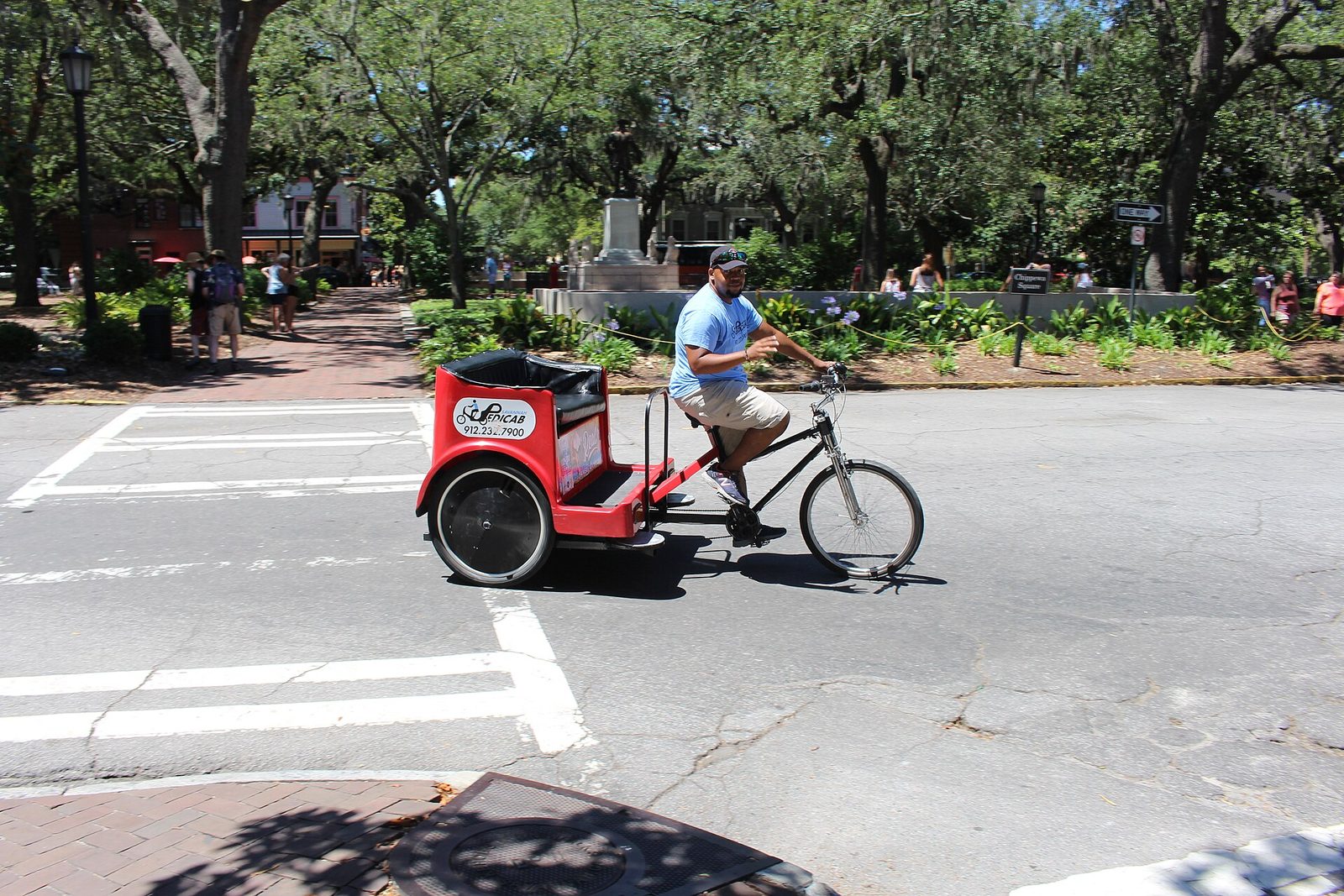
You will walk. Sidewalks are brick, uneven and shaded, which in July is the difference between pleasant and unbearable. Pedicabs circulate around the squares and are a reasonable way to cover ten blocks when the heat has won; agree the fare first.
The best-value transport in Savannah is free: the Savannah Belles Ferry runs across the river between the City Hall and River Street landings and Hutchinson Island, costs nothing, and gives you the skyline view from the water that the paid cruises charge for. Ride it both ways at dusk. There is also a free downtown shuttle loop operated by the regional transit authority — worth confirming the current route at the visitor center, as it has changed over the years.
Where to Stay
The northern squares and Broughton Street
North of Liberty Street, around Johnson, Reynolds, Wright and Telfair Squares, is where the hotel stock is concentrated and where you are closest to River Street, City Market and the Broughton Street shopping. It is convenient and it is also the busiest, loudest part of the district, particularly on weekend nights when City Market fills up. Good for a short first visit; less good if you want quiet.
The southern squares and Forsyth Park
Monterey, Lafayette, Troup, Whitefield and Calhoun Squares, down toward Forsyth Park, are the prettiest and calmest part of the historic district and are full of small inns in restored townhouses. You are ten to fifteen minutes’ walk from everything and you get to come home to a street with nobody on it. For most visitors this is the right answer, and it is where this guide would send a first-timer who has more than one night.
Starland and Thomas Square
South of Forsyth Park, Starland is the neighborhood where Savannah’s best new restaurants have been opening for a decade, and where rooms cost meaningfully less. It is a twenty-five minute walk or a five-minute ride from the squares. If you are here to eat rather than to photograph, stay here.
River Street and Hutchinson Island
River Street hotels put you on the water with container ships passing the window, which is a genuine pleasure. The trade-off is that you are below the bluff, the steps back up are steep, and the street itself is the most tourist-saturated strip in the city. Hutchinson Island, across the water, is quieter and cheaper and connected by the free ferry — a reasonable choice if you do not mind a short crossing to reach dinner.
| Base | Best for | Walk to squares | Noise |
|---|---|---|---|
| Northern squares / Broughton | Short trips, first visits, shopping | Immediate | High at weekends |
| Southern squares / Forsyth | Atmosphere, couples, longer stays | 5–15 min | Low |
| Starland / Thomas Square | Food, value, repeat visitors | 20–25 min | Low |
| River Street | Waterfront views, cruise arrivals | Uphill | High |
| Hutchinson Island | Value, families, free ferry access | Ferry | Very low |
The Sights That Earn Your Time
Telfair Museums and the Owens-Thomas House
Telfair runs three sites on one ticket — the Telfair Academy, the modern Jepson Center, and the Owens-Thomas House & Slave Quarters — and the ticket gives unlimited visits for a week from purchase (checked September 2026; check the current rate, as the museum prices through a separate ticketing site).
The Owens-Thomas House is the one to prioritize, and not for the Regency architecture. Telfair rebuilt the interpretation around the enslaved people who lived and worked in the building, and the surviving urban slave quarters at the back — with original haint blue paint still on the ceiling — are among the best preserved in the American South. It is the rare house museum that tells you who actually built and ran the house. Give it ninety minutes.
The Jepson Center, incidentally, is where the Bird Girl statue now lives, having been removed from Bonaventure Cemetery after Midnight in the Garden of Good and Evil made it a pilgrimage site. If that is what you came to see, it is here, indoors, and not in the cemetery.
First African Baptist Church and Black Savannah
On Franklin Square, First African Baptist is one of the oldest Black congregations in North America, with a sanctuary completed in 1859 by enslaved and free Black craftsmen who built it after their own working days were done. The pierced pattern in the floorboards is traditionally explained as breathing holes for people sheltering beneath during the Underground Railroad era. Tours run on a schedule; check the day you want.
Add the Ralph Mark Gilbert Civil Rights Museum on Martin Luther King Jr. Boulevard, and, if you have a car, the Pin Point Heritage Museum south of the city — a Gullah-Geechee community museum in a former oyster and crab factory, run largely by descendants of the people who worked it. Pin Point is small, remote, and the single most affecting hour on the Savannah coast.
Bonaventure Cemetery
Three miles east on a bluff above the Wilmington River, Bonaventure is a Victorian garden cemetery under enormous live oaks, and it is free to walk. Johnny Mercer is buried here; so is Conrad Aiken, whose bench-shaped gravestone invites you to sit down with a drink. Go early, go on a weekday, and bring water — there is no shade on the drives themselves, only over them.
Wormsloe State Historic Site
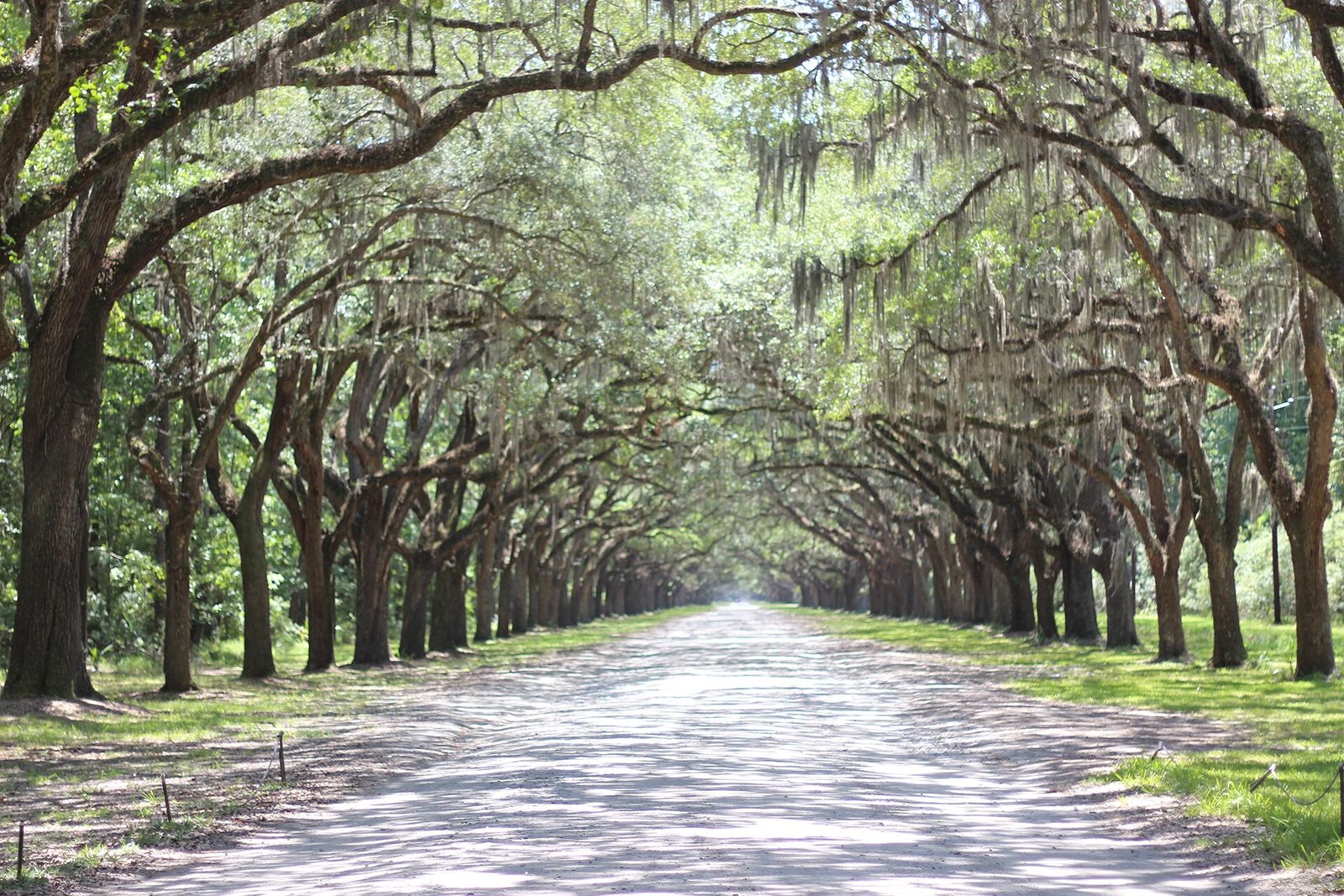
The avenue of more than four hundred live oaks running a mile and a half from the gate is one of the most photographed things in Georgia, and it deserves to be. Admission is $12 adult, $9 senior, $5.75 for ages 6–17 and $3.25 under 6, daily 09:00–16:45 (figures from secondary sources, September 2026 — the state parks site is unreliable to check, so confirm at the gate). This is a historic site, not a state park, which means your annual ParkPass does not cover it.
The honest verdict: the avenue is the visit. Beyond it there are tabby ruins, a small museum and a pleasant marsh trail, but the site is compact and most people are done in an hour. Budget accordingly and do not drive out expecting a half-day.
River Street, the bluff and the ships
River Street is the most touristy stretch in Savannah and it is still worth an hour, for one reason: the Port of Savannah is one of the busiest container terminals in the United States, and the ships come past the waterfront at close range, nine stories of steel sliding by at walking pace. It is free, it is genuinely startling the first time, and almost nobody plans for it.
The warehouses above are on Factors Walk, connected by iron bridges over the cobbles — which are ballast stones from ships that arrived empty. Those stones and the stairs down from Bay Street are steep, uneven and lethally slick in rain. Use the ramps at either end of the bluff or an elevator in one of the riverfront hotels instead of the famous stone staircases.
Telling the Truth About Savannah’s History
Savannah sells itself on charm, and the charm is real, but the city’s beauty was built on a specific economy and it is worth knowing what you are looking at.
Georgia was founded in 1733 as the last of the thirteen colonies, and slavery was banned in it for the first twenty years — then legalized in 1751 under pressure from colonists who wanted the rice and cotton economy their neighbors had. Savannah became one of the largest slave-trading ports in North America; the single largest recorded auction in American history took place at a racecourse just west of the city in 1859, breaking up families over two days of rain that gave it the name it is still known by.
The city was spared burning in December 1864 because it surrendered ahead of Sherman’s arrival, which is why the buildings survive. And a significant share of what you admire in the historic district exists today because of two later interventions: the preservation movement that began with seven women stopping the demolition of the Davis House in 1955, and the Savannah College of Art and Design, which since 1979 has bought and restored dozens of derelict buildings across the district. If a building looks immaculate and you cannot work out what it is, it is probably SCAD.
The practical advice: choose tours and house museums that name the enslaved people who lived in them. The Owens-Thomas House, First African Baptist, Pin Point and the Gilbert museum all do. Some of the ghost tours and carriage rides do not, and the difference in what you come away knowing is enormous.
Eating, Drinking and the To-Go Cup
Savannah’s famous lunch is Mrs. Wilkes’ Dining Room on Jones Street: communal tables, no menu, and a procession of fried chicken, butter beans and cornbread until you stop. It is a genuine institution. It is also lunch only, closed at weekends and for January, and the queue regularly runs an hour or more. Whether that is worth it depends entirely on how you feel about queueing, and the honest answer is that plenty of locals would send you to Sisters of the New South or Narobia’s instead and tell you the food is as good.
Beyond that: the celebrated restaurant in the restored 1938 bus terminal on Martin Luther King Jr. Boulevard is the one that changed Savannah’s reputation nationally, and it needs booking well ahead. The Olde Pink House on Reynolds Square is the pretty one, in a 1771 mansion, and takes reservations weeks out. Leopold’s on Broughton has been making ice cream since 1919 and the queue moves faster than it looks. Starland and Thomas Square hold most of the interesting newer kitchens, and the seafood improves noticeably the closer you get to Tybee.
On drinking: the open container rule is real and specific. Inside the Historic District — roughly River Street down to Jones Street, Martin Luther King Jr. Boulevard across to East Broad — you may carry one drink in a plastic cup of 16 ounces or less. No glass, no cans, no flasks. Step outside those boundaries and it stops being legal, and public intoxication is enforced regardless. Bars will hand you a to-go cup without being asked.
Tybee Island: When to Add It
Tybee is eighteen miles east on US-80, about thirty minutes when the bridges cooperate. It is a small, unpretentious barrier island beach town — low-rise, slightly shabby in a way people are rightly fond of, with a pier, a lighthouse and five miles of Atlantic sand.
Parking is the whole logistical story. Public parking is $4 an hour, enforced 08:00 to 20:00 every day, which comes to $48 if you stay the full enforced period. A daily pass is $25, runs to midnight on the day you choose, can be bought up to thirty days ahead, and can be extended to seven consecutive days for $175 (checked September 2026). Any visit longer than about six hours, buy the pass before you leave Savannah.
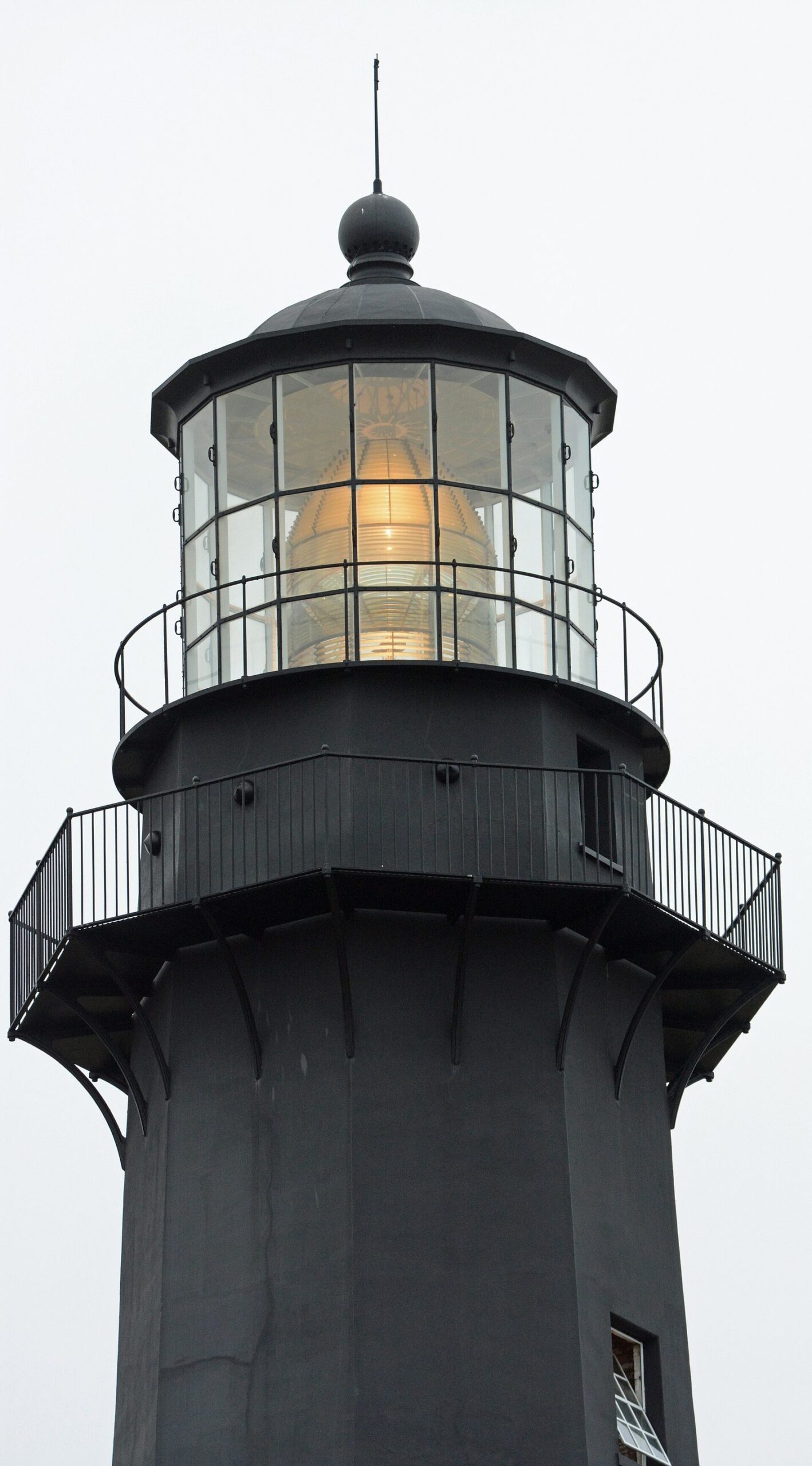
The Tybee Island Light Station is the island’s best hour: a working light with 178 steps, a keeper’s cottage and the best view on this part of the coast. On the way out, Fort Pulaski National Monument on Cockspur Island is a genuinely significant stop — in 1862 Union rifled cannon breached its brick walls in thirty hours and made every masonry fort in the world obsolete overnight. The damage is still visible in the southeast face.
Two warnings. US-80 crosses salt marsh on low bridges and the road floods on king tides and after heavy rain, occasionally closing entirely; check before you drive out, particularly in autumn. And summer weekend traffic onto the island is genuinely bad — leave Savannah before nine or after three.
Tours: Which Ones Are Worth It
Trolley tours are the most useful purchase for most visitors, and that surprises people. The hop-on-hop-off loops cover the district’s full length, give you a first pass at the geography, and in July they are air-conditioned transport between the things you actually want to see. Buy one on day one, walk on day two.
Walking tours are where the quality varies most. A good one is a historian with a route; a poor one is a script. Ask what the guide’s background is before booking, and prefer tours that name sources.
Ghost tours deserve a straight verdict. Savannah markets itself as the most haunted city in America, and the tours are a large industry. The good ones are well-researched social history with atmosphere — the yellow fever epidemics, the burial grounds built over, the specific unpleasant things that happened in specific houses. The bad ones are a man with a lantern making things up, and there are more of the second kind. If you have one evening, a history-led tour with a ghost framing will serve you better than a pure ghost tour.
Carriage rides are pleasant and slow. In summer heat, consider the horses before booking; the city regulates working conditions, but a hot afternoon is a hot afternoon.
Itineraries
Two days
Day one: walk Bull Street from City Hall to Forsyth Park, stopping at the squares, then the Owens-Thomas House in the afternoon. Evening on River Street to watch a ship go past, dinner in the southern squares. Day two: First African Baptist and the Gilbert museum in the morning, Broughton Street and Leopold’s at lunch, an afternoon walking tour, dinner in Starland.
Three days
Add a car day: Bonaventure Cemetery early, Wormsloe late morning, Pin Point Heritage Museum in the afternoon. That trio makes a coherent day about the coast rather than the city, and all three are within twenty minutes of each other.
Four days
Add Tybee. Buy the $25 parking pass the night before, leave by nine, do Fort Pulaski on the way out, the lighthouse before lunch, and the beach in the afternoon when the light is better anyway. Eat on the island and drive back after the traffic clears.
When to Visit: Heat, Storms and St. Patrick’s Day
Spring (late March–May) is the best season. Azaleas and wisteria in late March and April, temperatures in the 70s and low 80s, and the squares at their absolute best. It is also the busiest and most expensive stretch of the year outside St. Patrick’s Day.
Summer (June–September) is hot and humid in a way that catches people out — Savannah is at sea level on a tidal river, and it holds heat and moisture far more than Atlanta does. Expect 90s Fahrenheit with a heat index above that, plus afternoon thunderstorms that arrive around four and clear in under an hour. The workable pattern is early mornings, indoor museums from noon to four, and evenings outside. Hurricane season runs 1 June to 30 November, with the real risk concentrated from mid-August through October; buy travel insurance and watch the forecast rather than avoiding the season entirely.
Autumn (October–November) is the other good window: warm, drier, far quieter than spring. The one seasonal quirk is king tides, the highest tides of the year, which in September and October can push water up onto River Street and flood low points around the marsh — including the Tybee road.
Winter (December–February) is mild, gray-skied and cheap, with highs in the 50s and 60s. The squares are bare but the light is lovely and you will have them to yourself.
St. Patrick’s Day deserves its own paragraph. Savannah’s parade dates to 1824 and is one of the largest in the United States; the city’s population multiplies for several days, hotel rates triple, minimum stays appear, and the historic district becomes a single enormous street party. It is a genuine spectacle. It is also completely incompatible with a quiet trip to look at architecture. Come for it deliberately or avoid the week entirely — there is no middle option.
Accessibility and the Brick Problem
Savannah is flat, which helps, and comprehensively paved in brick, which does not. Sidewalks buckle over live oak roots, curb cuts are inconsistent at the older squares, and the ballast-stone cobbles on River Street and Factors Walk are extremely difficult for wheelchairs and strollers alike. The stone stairs from Bay Street down to the river are not a realistic option for anyone with mobility limits, or for anyone at all in the wet.
What works: the squares themselves have paved paths and benches; Forsyth Park is level and smooth; the Savannah Belles Ferry is step-free and free; the newer museums, including the Jepson Center, are fully accessible; and trolley operators run lift-equipped vehicles if you book ahead. For River Street, use the ramps at the east and west ends of the bluff or an elevator in one of the riverfront hotels rather than the stairs. House museums in 1810s buildings are the hardest category — contact them directly rather than assuming.
What Savannah Is Not
It is not a big city, and treating it like one leads people to over-plan. The historic district is walkable in an afternoon; the mistake is booking five tours into two days rather than sitting in a square for an hour, which is what the place is actually for.
It is not Charleston, and the comparison flatters neither. Savannah is scruffier, younger in feel because of the art school, more of a drinking town and less of a fine-dining one, and considerably less manicured. Some people much prefer it for exactly those reasons.
The Forrest Gump bench was a film prop. It was never a real bench in Chippewa Square, it is not there now, and the one that survives is in the Savannah History Museum. People still stand at the square’s north edge looking for it.
And River Street is not the heart of the city, whatever the cruise-terminal signage suggests. It is a converted warehouse row selling pralines and T-shirts, with one excellent free attraction — the ships — attached. The city you came for is four blocks uphill.
Frequently Asked Questions
How many days do you need in Savannah?
Two days covers the historic district thoroughly. Three is the comfortable number and adds Bonaventure Cemetery, Wormsloe and Pin Point. Four lets you add Tybee Island as a proper day rather than a dash.
Where should I park in Savannah?
In a city garage, once, and then walk. The best value is the city’s visitor parking pass at $15 a day or $90 for seven days, which covers every city-owned garage and every Historic District meter. Meters are free all day on Sunday. Circling for a street space is how visitors lose their first hour.
Is Savannah walkable?
Yes — the historic district is about a mile by half a mile and entirely flat. Bay Street to Forsyth Park is a twenty-minute walk. The surfaces are brick and uneven, so wear real shoes, and in summer plan your walking around the middle of the day rather than through it.
Can you really drink on the street in Savannah?
Inside the Historic District, yes: one drink in a plastic cup of 16 ounces or less. No glass, no cans, no flasks, and the boundaries matter — roughly River Street to Jones Street, Martin Luther King Jr. Boulevard to East Broad. Public intoxication is still an offense.
What is the best time of year to visit Savannah?
Late March to early May, or October into November. Spring is prettier and busier; autumn is quieter and drier. Avoid mid-July through August for heat, and treat St. Patrick’s week as a separate kind of trip entirely.
Is Tybee Island worth the drive?
If you have a spare day and want a beach, yes — it is thirty minutes each way and the lighthouse and Fort Pulaski make it more than a swim. If you have only two days in Savannah, skip it; the historic district will use that time better.
Is the Forrest Gump bench in Chippewa Square?
No. It was a prop, placed there for filming and removed afterwards. The surviving bench is in the Savannah History Museum. The square is still worth standing in — it has the Oglethorpe monument and the Savannah Theatre on its corner.
How far is Savannah from Atlanta?
About 250 miles and four hours or a little more, via I-75 south to Macon and then I-16 east. The I-16 leg is 160 miles with very little on it, so refuel in Macon rather than hoping.
Are the ghost tours worth it?
The well-researched ones are, because Savannah’s actual history — yellow fever, burial grounds built over, a very dense layer of the past underfoot — is stranger than the invented version. Ask about the guide’s sources before you book, and prefer history-led tours to pure ghost tours.
Does Savannah flood?
Yes, in two ways. King tides in September and October push water onto River Street and low-lying roads, including US-80 out to Tybee, without any storm involved. And hurricane season runs from June to November, with the real risk from mid-August. Neither is a reason to avoid the city; both are reasons to check a tide chart and a forecast.
Tybee is the beach most Savannah visitors end up on, but it is one of fifteen barrier islands and only four of those have a road to them at all. If the coast is a bigger part of your trip than a single afternoon, our guide to Georgia’s beaches and islands compares them properly — Jekyll’s $10 car fee against Cumberland’s reserved ferry, which beaches have lifeguards, and why the water is brown and always will be.
Two weeks of the Savannah year change the city completely: St. Patrick’s Day, whose parade is one of the largest in the country and ran for the 200th time in 2024, and the Music Festival that follows it into April. Our guide to Georgia festivals covers both with dates, ticket prices and the accommodation lead times they demand.
Savannah’s cooking is Lowcountry rather than generically southern, and the difference is not decorative: the rice at the center of it arrived with West African knowledge and enslaved labor, which is why the coast eats rice where the rest of the state eats corn. Our guide to Georgia food and drink maps that history across the state’s four regions, with fifteen things worth eating and where each one actually belongs.
Related Georgia Guides
- Atlanta travel guide — the other end of I-16, planned around where to stay, whether to rent a car and whether the CityPASS pays off.
- Best things to do in Georgia — the statewide overview, region by region, with costs and honest verdicts.
- Best places to visit in Georgia — 35 destinations from the north Georgia mountains to the barrier islands, ranked by whether the drive pays off.
Photo Credits
Jones Street and Bull Street, Savannah (featured image): photo by Ken Lund / Wikimedia Commons (CC BY-SA 2.0)
Pedicab at Chippewa Square: photo by Michael Rivera / Wikimedia Commons (CC BY-SA 4.0)
Oak avenue, Wormsloe Historic Site: photo by Jami430 / Wikimedia Commons (CC BY-SA 4.0)
Tybee Island Light Station: photo by Jud McCranie / Wikimedia Commons (CC BY-SA 4.0)
Forsyth Park fountain: photo by Bubba73 (Jud McCranie) / Wikimedia Commons (CC BY-SA 4.0)
Sources and Corrections
Parking rates, enforcement hours and the visitor pass were checked in September 2026 against the City of Savannah and Visit Savannah. Tybee Island parking figures are from the City of Tybee Island and Visit Tybee, September 2026. The Telfair ticket structure is from telfair.org; the museum prices through a separate ticketing site that was not checked, so no admission figure is printed here. Wormsloe admission figures are from secondary sources and should be confirmed at the gate. Fort Pulaski entrance fees and tour operator prices are deliberately omitted rather than guessed. Fees change; if you find something here out of date, we want to know.
Georgia Tourism Guide is an independent publication. We are not affiliated with Explore Georgia, the Georgia Department of Natural Resources, the National Park Service or any attraction listed here.