
Georgia is bigger than it looks on a map, and the distances are the first thing that catches visitors out. Atlanta to Savannah is four hours of pine trees on I-16. Savannah to the Okefenokee is nearly two more. If you are looking for things to do in Georgia — the US state, not the country in the Caucasus — the single most useful thing you can do before booking anything is decide which two or three parts of the state you are actually going to see, and let the rest go.
This guide is built around that decision. It covers the whole state, region by region, with what each place actually costs, when it is worth going, and where the gap between the marketing and the experience is widest. Prices were checked in September 2026 and are the ones you will find on the operator’s own site; admission fees in Georgia have moved quickly in the last two years, so treat any number here as a planning figure and confirm it before you pay.
Two things changed in Georgia recently that most guides have not caught up with. The Okefenokee Swamp was inscribed as a UNESCO World Heritage Site in July 2026, making it the 27th in the United States and instantly the most internationally significant natural site in the state. And state park parking doubled on 1 January 2026, from $5 a day to $10 — which quietly changed the arithmetic on a week of hiking.
Georgia at a Glance
| Question | Short answer |
|---|---|
| How long do I need? | Three days for one region. Seven to combine Atlanta, the mountains and the coast without rushing. |
| Best months | April–May and late September–early November. March is pollen season; July–August is genuinely hot. |
| Do I need a car? | Everywhere except central Atlanta and central Savannah, yes. There is no useful intercity rail. |
| Cheapest big-ticket day | Martin Luther King, Jr. National Historical Park — free, no reservation, half a day of substance. |
| Most expensive | Georgia Aquarium, $54.99–$64.99 depending on the date, before parking. |
| Most overlooked | Providence Canyon, Ocmulgee Mounds, and the Okefenokee itself. |
| Skip unless it matters to you | Helen’s Bavarian main street, most Savannah ghost tours, the Masters (see below). |
Start Here: Which Georgia Are You Visiting?
Georgia splits into five trip-shaped regions, and almost nobody should try to do all of them in one week. Use this to pick two, three at the outside.
| Region | Base | From Atlanta | Go if you want | Don’t go if |
|---|---|---|---|---|
| Atlanta metro | Midtown or Old Fourth Ward | — | Civil rights history, museums, food, live music, a walkable few days without a car | You want quiet or scenery |
| North Georgia mountains | Blue Ridge, Dahlonega, Helen | 1h20–2h | Waterfalls, fall color, cabins, short serious hikes, the start of the Appalachian Trail | You are visiting in high summer and expect cool air — it is only a few degrees cooler than Atlanta |
| Savannah and the historic coast | Savannah Historic District | 4h | Architecture, oaks, cemeteries, restaurants, a city you can walk end to end | You want beaches — Tybee is fine, not spectacular |
| Golden Isles and Cumberland | St. Simons or Jekyll | 4h45 | Empty beaches, wild horses, marsh, birds, genuine remoteness | You need nightlife or a packed itinerary |
| South and middle Georgia | Macon, Columbus or Folkston | 1h20–4h30 | The Okefenokee, Native American mound sites, whitewater, a canyon that should not exist | You are short on time — these are spread out |
The practical division that matters on the ground is the Fall Line, the old shoreline that runs through Columbus, Macon and Augusta. North of it you get red clay, hills and rock. South of it you get sand, pine plantations, blackwater rivers and — from roughly May to October — gnats. Georgians call it the gnat line and they are not joking about it. Pack repellent if you are going south in warm weather, and expect to want a head net in the swamp.
Atlanta: More Interesting Than Its Reputation
Atlanta gets written off as an airport with a city attached. That is unfair, but it is also true that the city does not announce itself — there is no skyline view you stumble into, no old quarter. You have to know where to go.
The civil rights sites are the reason to come
Martin Luther King, Jr. National Historical Park in the Old Fourth Ward is free, needs no pass and no reservation, and is the most substantial half-day in the state. Sites open 09:00–17:00 daily, closed 1 January, Thanksgiving and 25 December.
One thing to get right, because most guides still have it wrong: the Birth Home is closed for renovation. You will read advice about queuing at 09:00 for free timed tickets. That is out of date. Rangers now give Birth Home presentations in the bookstore next door, and lead daily Church Talks inside Historic Ebenezer Baptist Church, where King was co-pastor. Park operations are also running out of a temporary visitor center in Historic Fire Station No. 6 rather than the usual building. None of this diminishes the visit — the church, the King Center, the tombs and the Freedom Hall exhibits are all open — but arrive expecting the current arrangement rather than the one in a 2019 guidebook.
A mile west, the National Center for Civil and Human Rights connects the American movement to contemporary human rights work. Its lunch-counter sit-in simulation — headphones, a countertop, escalating abuse in your ears — is the single most affecting exhibit in Atlanta, and most people cannot last the full ninety seconds. Go here after the King park, not before.
The big-ticket attractions, and whether the pass pays
Georgia Aquarium is the state’s most-visited paid attraction and its most expensive. General admission runs $54.99 on a quiet weekday, $57.99–$59.99 at weekends, and up to $64.99 on peak holiday dates; entry is timed and you need to arrive within an hour of your slot. As of September 2026 one child aged 3–12 comes free with each general admission ticket, which materially changes the family maths. It is genuinely impressive — whale sharks and manta rays in a 6.3-million-gallon tank are not something you see often — though visitors who are uneasy about large cetaceans in captivity should know that belugas and bottlenose dolphins are part of the collection and central to the presentations.
Atlanta CityPASS costs $106 plus tax for adults and $86 for children aged 3–12, and lets you pick five of six: the Aquarium, World of Coca-Cola, Zoo Atlanta, Fernbank, the College Football Hall of Fame and the Center for Civil and Human Rights. It is valid nine days from first use.
Here is the honest version of that calculation. The pass only pays if you genuinely want five of those six. The Aquarium alone is around $55–65 of the $106, so the other four attractions are effectively costing you $10–13 each, which is good value if you would have gone anyway. If your real list is the Aquarium and the Center for Civil and Human Rights and nothing else, buy those two separately and spend the difference on dinner. Families with young children and three full days in the city are the clear winners; couples on a long weekend usually are not.
The Atlanta that costs nothing
The BeltLine’s Eastside Trail is the best free thing in the city — a former rail corridor now running from Piedmont Park through Old Fourth Ward, lined with murals, breweries and the Ponce City Market food hall. Walk it on a Saturday morning and you will understand Atlanta better than any museum will explain it. Piedmont Park itself gives you the Midtown skyline reflected in Lake Clara Meer, which is the skyline photograph everyone actually takes.
Add the Krog Street Tunnel for graffiti that changes weekly, Oakland Cemetery for Victorian funerary architecture and a genuinely good free tour culture, and Sweet Auburn Curb Market for lunch. None of it costs more than a MARTA fare.
Stone Mountain: the complicated one
Sixteen miles east of downtown, Stone Mountain Park charges around $20 per vehicle per day for parking — worth confirming at the gate, since the park keeps its rates inside its booking flow rather than on the page — with an Adventure Pass for the paid attractions at roughly $29.95 adult and $24.95 for children under twelve.
Parking alone buys the part most worth doing. The Walk-Up Trail is 1.3 miles one way with about 825 feet of gain, takes most people 45–60 minutes up, and finishes on a bald granite dome with the best long view in the metro area. Trails, picnic areas, the historic sites and the evening drone and light show are all included in parking.
You should also know what you are looking at. The mountain’s north face carries one of the largest bas-relief sculptures in the world, a Confederate memorial to Jefferson Davis, Robert E. Lee and Stonewall Jackson, and the mountain was where the Ku Klux Klan was refounded in 1915. The carving was completed in 1972. Georgia law protects it. Plenty of visitors hike the mountain and enjoy the park without engaging with any of that; plenty of others find the whole site uncomfortable. Either reaction is reasonable, but arriving without knowing is worse than arriving informed.
Savannah and the Historic Coast
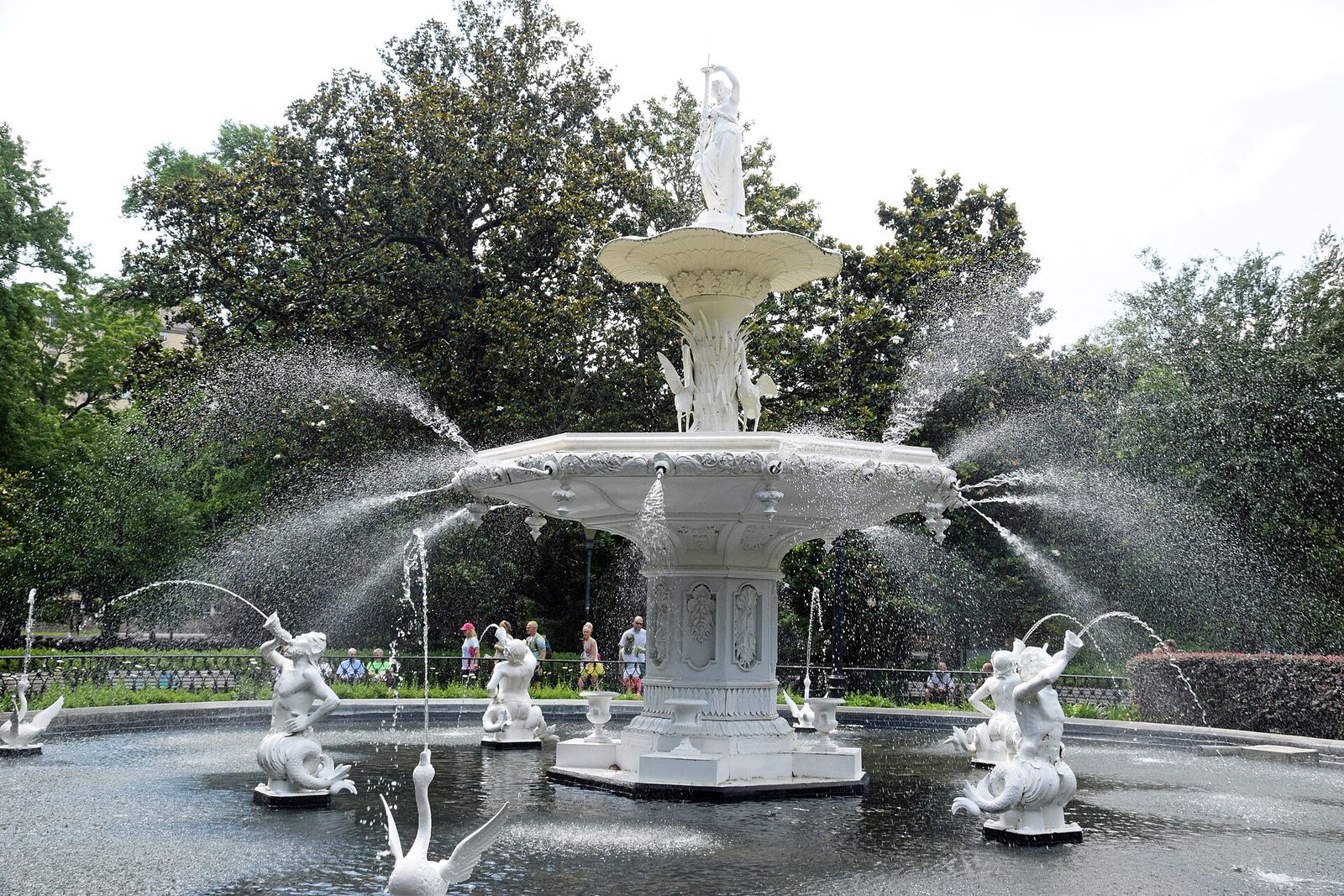
Savannah is the reason a lot of people come to Georgia at all, and it earns it. The 1733 town plan survives largely intact: a grid interrupted every few blocks by a public square, 22 of them still there, each with live oaks, Spanish moss and benches. It is one of the few American cities where wandering without a plan is the correct strategy.
What to actually do
Walk the squares from Forsyth Park north to Bay Street — about a mile and a half if you zigzag, which you should. Chippewa, Monterey and Lafayette are the best of them. Bonaventure Cemetery, four miles east, is free, open daily, and more beautiful than any paid attraction in the city; go early for the light through the oaks.
Wormsloe State Historic Site costs $12 for adults, $9 for seniors, $5.75 for ages 6–17 and $3.25 under 6, and opens 09:00–16:45. Be clear about what you are buying: the famous 1.5-mile avenue of live oaks is the attraction, plus tabby ruins and a small museum. It is a photograph and a pleasant hour, not an afternoon. Note that Georgia’s state historic sites charge per-person admission and are not covered by the state park ParkPass — a distinction that catches out people who bought the annual pass expecting it to cover everything.
River Street is where the cruise crowd goes and it shows. The cobbles are original ballast stone and pleasantly rough on the ankles; the shops are mostly candy and t-shirts. Go once, at dusk, for the ships going out to sea, then go back up the bluff.
The to-go cup rule, explained properly
Savannah allows open containers of alcohol on the street inside the Historic District, and visitors routinely get this wrong. The rules: one drink, in a plastic cup of 16 ounces or less. No glass, no cans, no flasks, no refilling from a bottle in your bag. The zone runs roughly from River Street south to Jones Street and from Martin Luther King, Jr. Boulevard east to East Broad. Step outside it and you are breaking the law. Public intoxication is enforced regardless, and Savannah police are not sentimental about it.
Ghost tours, and the honest verdict
Savannah bills itself as America’s most haunted city and sells the claim hard — there are dozens of competing ghost tours and they are the most heavily marketed thing in town. A good one is a decent evening of local history delivered by a strong storyteller. A bad one is forty minutes of jump scares and invented anecdote. If the history is what you want, book a straight architectural or Gullah Geechee heritage walking tour instead; you will learn considerably more for the same money.
Tybee Island, 18 miles east, is Savannah’s beach: an unpretentious, slightly scruffy barrier island with a working lighthouse you can climb. It is fine. It is not why you came to Georgia, and if you have the Golden Isles on your itinerary you can skip it.
The Golden Isles and Cumberland Island
Georgia has only about a hundred miles of coastline but fourteen barrier islands, and the four you can reach are each quite different.
Jekyll Island charges $10 per vehicle per day or $100 a year, with $5 added on designated event days such as Independence Day, the Shrimp & Grits Festival and Holly Jolly Jekyll. Arriving on foot or by bicycle is free, which is worth knowing if you are staying nearby. The island is state-owned and development is capped, so it stays quiet. Driftwood Beach, on the north end, is a stretch of eroding shoreline where the forest has fallen onto the sand and bleached — strange, photogenic, and best an hour after sunrise. The Georgia Sea Turtle Center is a working rehabilitation hospital rather than an aquarium, and better for it.
St. Simons Island is the busier, more residential one: a lighthouse, a pier village, and the Avenue of the Oaks at the golf club. Sea Island next door is a private resort and effectively closed to you unless you are staying there. Neither is essential.
Cumberland Island is the one to plan a day around. It is a National Seashore reached only by ferry from St. Marys — a 45-minute crossing — and the practicalities are unforgiving enough that they deserve their own paragraph.
Entrance is $15 per person for seven days for everyone over 16. The ferry is $44 plus tax for adults, $42 for seniors 62 and over, $34 for youth aged 6–15, and free under 5. Reservations open six months ahead and regularly sell out, particularly for spring weekends. The park is cashless. And there is no food, no water and no shop on the island: whatever you need for the day, you carry off the boat. People underestimate this constantly and spend the afternoon rationing a single bottle.
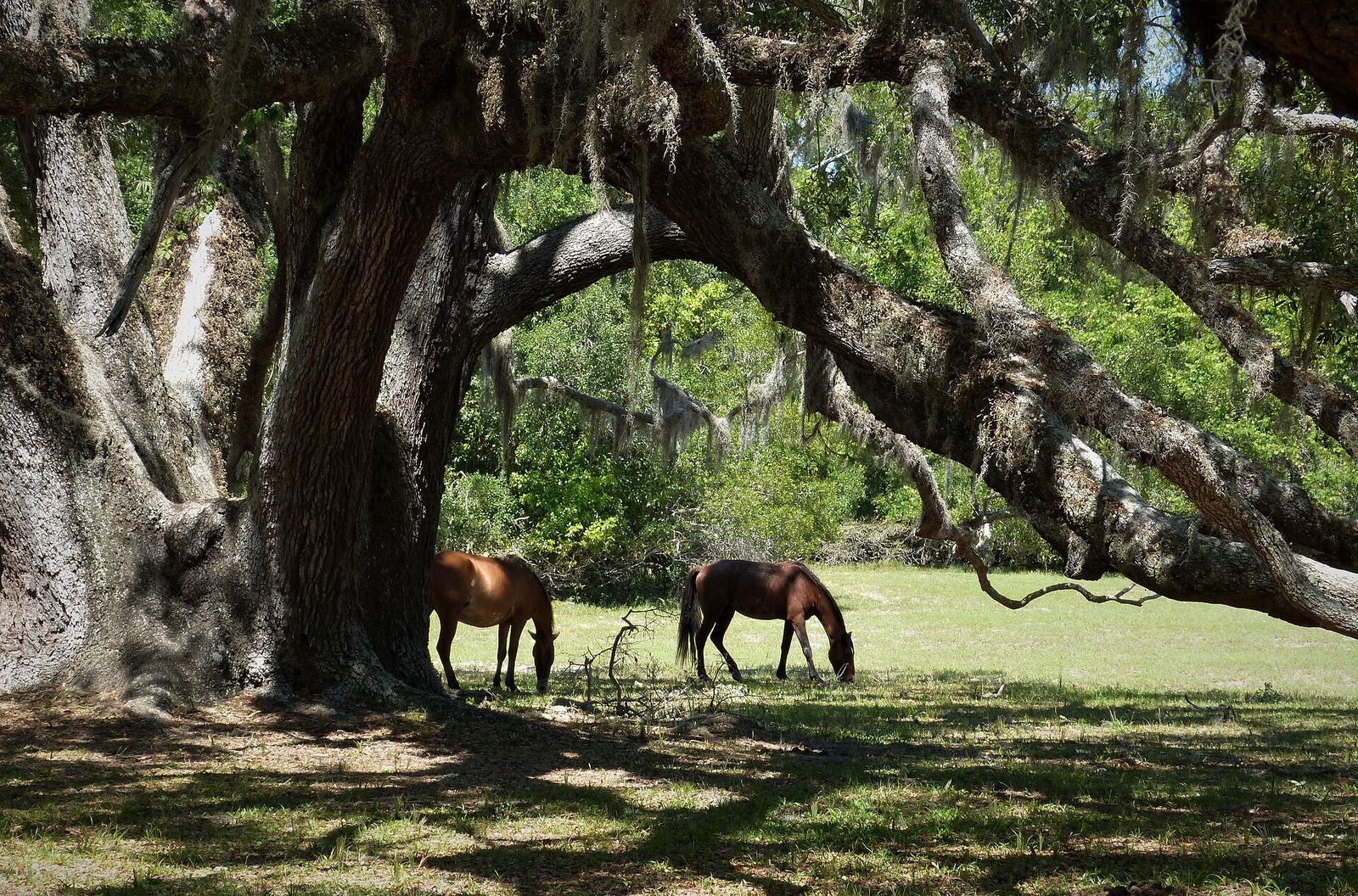
What you get for the effort is eighteen miles of undeveloped barrier island — maritime forest, salt marsh, empty beach, the ruins of the Carnegie family’s Dungeness estate, armadillos, and feral horses that have been on the island for generations. It is the best day in coastal Georgia and it is not close.
The Okefenokee: Georgia’s New World Heritage Site
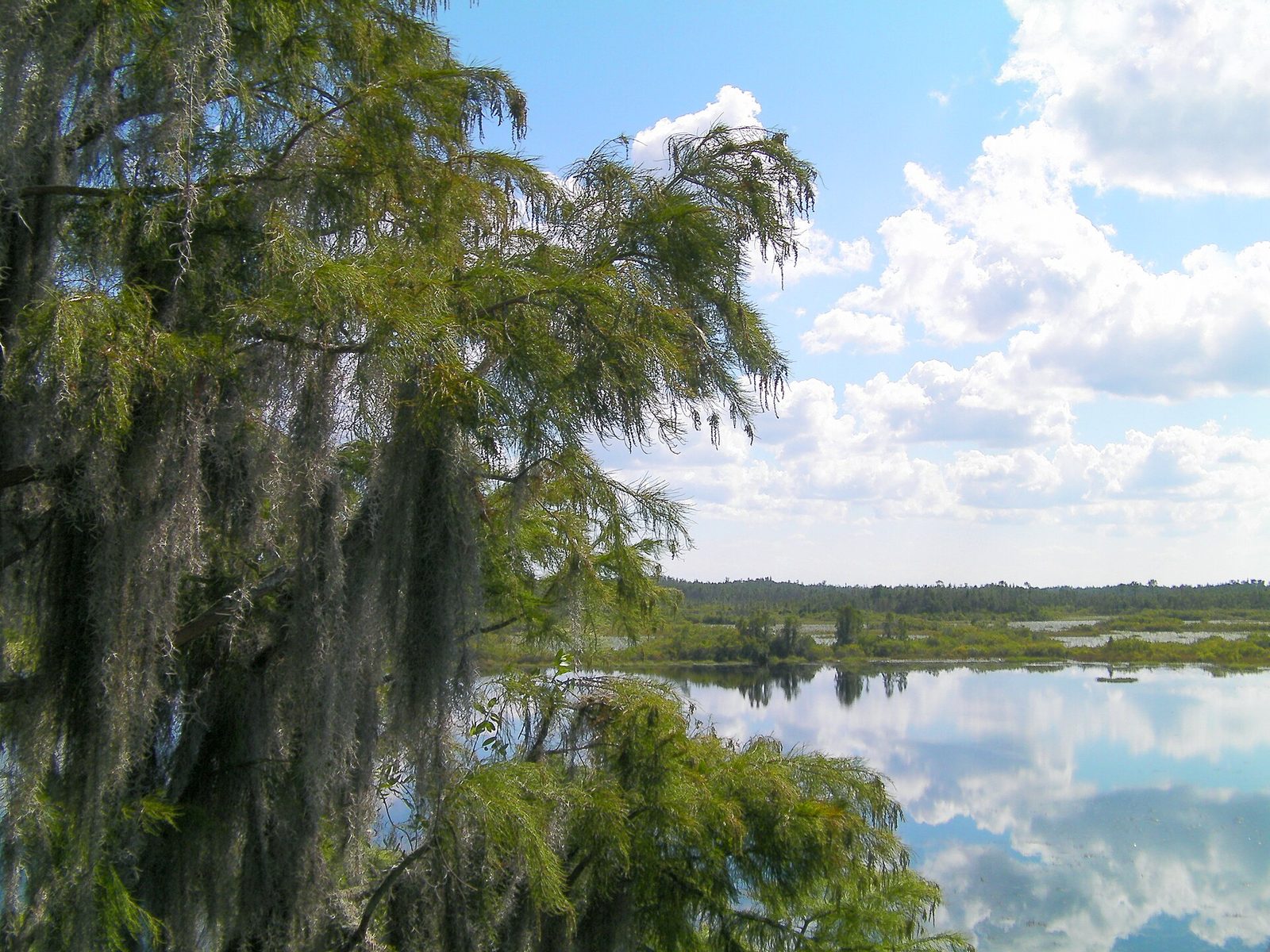
On 25 July 2026 the Okefenokee National Wildlife Refuge was inscribed on the UNESCO World Heritage List — the 27th site in the United States. It is 353,981 acres, almost all of it designated Wilderness, and it is one of the largest intact freshwater peat bogs on earth. If you only have one day for wild Georgia, this is now the strongest claim on it.
Practicalities, because they are more restrictive than people expect:
- Fee: $5 per vehicle for seven days at the main Folkston entrance (Suwannee Canal Recreation Area), or $15 annually. The same pass works at Stephen C. Foster State Park on the west side. America the Beautiful passes waive it.
- Hours: half an hour before sunrise until 19:30 March–October, 17:30 November–February.
- Tours: the refuge runs none of its own. Boat trips and guided paddles come from Okefenokee Adventures at the Folkston entrance or through Stephen C. Foster State Park.
- Camping: wilderness canoe permits are released only two weeks ahead, by telephone, on selected weekday mornings. There is no online booking. Plan accordingly or do not plan it at all.
- Water levels: low water has been restricting boat routes and trail access. Call before you drive four and a half hours.
Stephen C. Foster State Park, on the western side near Fargo, is also a certified International Dark Sky Park, and the night sky over the swamp is the darkest in Georgia. Alligators are abundant and entirely unbothered by you; keep your hands inside the boat and do not feed anything.
One footnote that tells you something about how new the designation is: as of September 2026 the US Fish and Wildlife Service’s own refuge page still described the Okefenokee as pursuing World Heritage status. The paperwork catches up slower than the news.
The North Georgia Mountains
The southern end of the Blue Ridge clips Georgia’s northern counties, and it is closer to Atlanta than most visitors realize — Amicalola is under ninety minutes from the city.
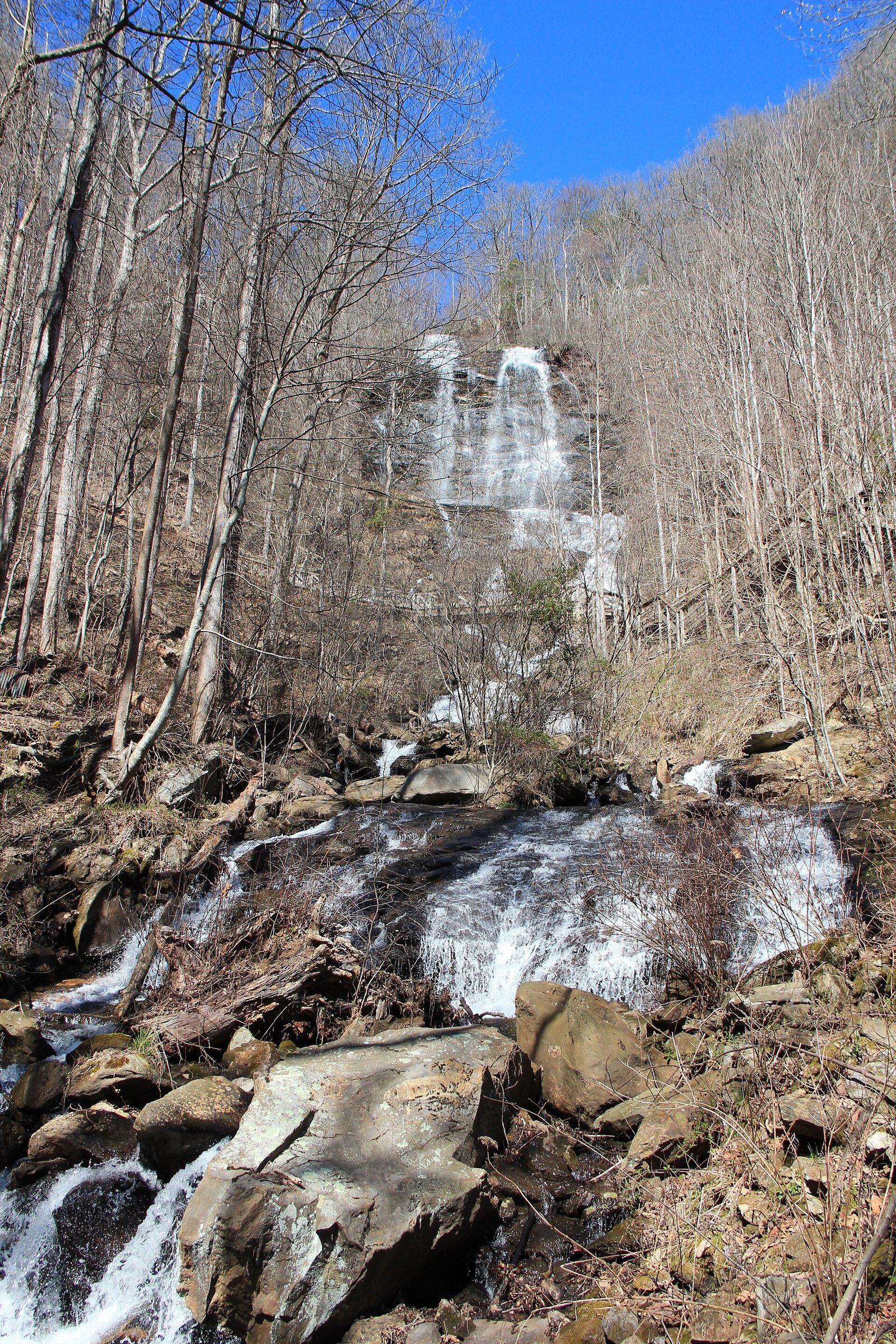
Amicalola Falls State Park has the tallest cascading waterfall east of the Mississippi at 729 feet, with a staircase running up beside it. The Approach Trail to Springer Mountain, where the Appalachian Trail officially begins, starts behind the visitor center — in March and April you will share the parking lot with thru-hikers beginning a five-month walk to Maine, which is worth seeing in itself.
Tallulah Gorge State Park is the most spectacular and the most rule-bound. The rim trails and the suspension bridge, which hangs about 80 feet above the riverbed, are open to anyone. Descending to the gorge floor requires a free permit, and only 100 are issued per day. They are handed out from 08:00 at the Interpretive Center and on summer weekends they are gone by about 09:00. Last permits go at 16:00 April–October and 15:00 November–March. You need closed-toe shoes — no flip-flops, no Crocs — and no permits at all are issued during scheduled water releases, when the dam sends whitewater through the gorge. Dogs are allowed on the rim trails but not on the floor, the stairs or the bridge. Arrive at eight or accept the rim.
Brasstown Bald is the highest point in Georgia at 4,784 feet, with a 360-degree observation deck reached by a steep half-mile paved path or a shuttle. On a clear day you can see four states. On the many days that are not clear you will see cloud, so check the webcam.
Helen requires an honest word. It is a former timber town that reinvented itself in 1969 as a replica Bavarian alpine village, and the main street is precisely as authentic as that sounds. Its Oktoberfest is the longest-running in the South and genuinely good fun; tubing the Chattahoochee through town on a summer afternoon is a legitimately excellent cheap day out; Unicoi State Park and Anna Ruby Falls next door are lovely. But if you drive ninety minutes expecting an alpine village, you will find a strip of souvenir shops with fake half-timbering. Come for the river and the surroundings, not the architecture.
Dahlonega was the site of America’s first major gold rush in 1828, twenty years before California, and the square is now the center of Georgia’s wine country — some thirty wineries within an hour. The Dahlonega Gold Museum occupies the old courthouse. Blue Ridge runs a scenic railway along the Toccoa River and has the best small-town main street in the region. Cloudland Canyon, out in the far northwest corner, has the most dramatic overlooks in the state park system and a brutal staircase down to two waterfalls.
Fall color peaks in the north Georgia mountains from roughly the third week of October into the first week of November, a good fortnight later than the Smokies. That weekend traffic on GA-60 and the Richard Russell Scenic Highway is real; start early.
Middle and South Georgia
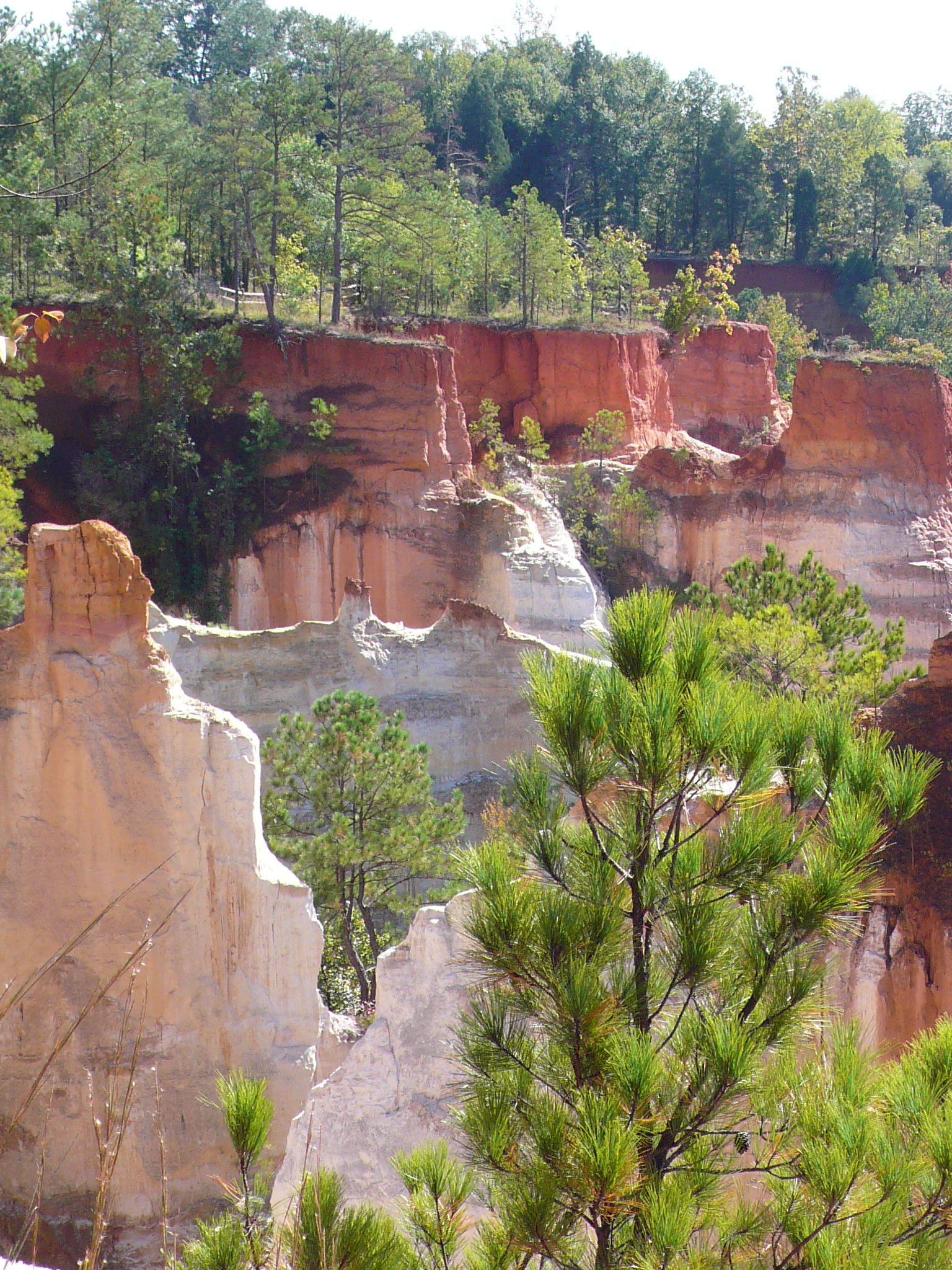
This is the part of Georgia visitors skip, and it contains two of the state’s genuinely unusual places.
Providence Canyon State Park, near Lumpkin in the southwest, is called Georgia’s Little Grand Canyon and the nickname undersells how odd it is. Sixteen gullies up to 150 feet deep, walls banded pink, orange, lavender and white — and all of it caused by bad farming practice in the 1800s, which stripped the topsoil and let the rain cut into soft coastal-plain sediment. It is an accidental landscape and an object lesson, and it photographs like nowhere else in the Southeast. The canyon floor trail is often ankle-deep in water and orange mud; wear shoes you do not care about.
Ocmulgee Mounds National Historical Park in Macon protects earthwork mounds built by Mississippian people around 900–1100 CE, including an earth lodge with an original clay floor you can walk into and sit on — one of very few places in North America where you can occupy a thousand-year-old room. There is live legislative news here: H.R. 9416, the Ocmulgee Mounds National Park Redesignation Act, was introduced on 24 June 2026 and referred to the Subcommittee on Federal Lands on 1 July. If it passes it would create Georgia’s first full national park plus an adjoining preserve. As of September 2026 it remains in committee, so it is still a National Historical Park — but the site is managed in close partnership with the Muscogee (Creek) Nation, whose ancestors were forced from this land, and that partnership is the most interesting thing about how it is interpreted today.
Columbus has the least likely attraction in the state: 2.5 miles of dam-released Class II–V whitewater running straight through downtown, billed as the longest urban whitewater course in the world. Whitewater Express is the only guided operator and offers both a gentler Classic trip and a Challenge run on the same stretch at higher flows. Rates change seasonally — book direct. The riverwalk beside it is free and pleasant even if you never get in a raft.
Plains, ninety minutes south of Columbus, is a town of about six hundred people that produced a president; the Jimmy Carter National Historical Park covers the boyhood farm, the old high school and the train depot that served as his 1976 campaign headquarters. Warm Springs, further north, preserves the Little White House where Franklin Roosevelt came for polio treatment and where he died in 1945; his unfinished portrait is still on the easel. Andersonville National Historic Site, between the two, was the Confederacy’s deadliest prison camp and is now the National Prisoner of War Museum. None of these are cheerful. All three are worth the drive.
Athens and Augusta
Athens, seventy miles east of Atlanta, is a university town with a disproportionate musical history — R.E.M., the B-52s, Widespread Panic and Drive-By Truckers all started here, and the 40 Watt Club still books five nights a week. The State Botanical Garden of Georgia is free. On home football Saturdays the town’s population effectively doubles and hotel rates triple, so check the schedule before you book anything.
Augusta is a pleasant river city that becomes, for one week in April, the center of the golfing world. Be realistic about the Masters: the lottery is the only official route to a ticket, applications run 1–20 June for the following year’s tournament, one per residential address, and successful applicants hear in late July. Practice rounds are $125 on Monday and Tuesday and $150 on Wednesday, which includes the Par-3 Contest; tournament rounds are $160 each. Winners are assigned a single day, not a week. In other words, this is not something you can decide to do while planning a trip — it is something you enter a year ahead and mostly do not win. The Augusta Riverwalk and the Lucy Craft Laney Museum are there the other fifty-one weeks.
When to Go
| Season | What it’s like | Worth planning around |
|---|---|---|
| March | Warm and green early, but pollen counts in Atlanta are among the highest in the country and everything turns yellow | Savannah’s St. Patrick’s Day is one of the largest in the US — book months ahead or avoid entirely |
| April–May | The best window. Mid-70s°F, azaleas and dogwoods out, gnats not yet serious | Masters week in Augusta; AT thru-hikers at Amicalola |
| June–August | Upper 80s to mid-90s°F with heavy humidity and near-daily afternoon thunderstorms | Hike before 10:00. Tubing in Helen, beaches, and anything with air conditioning |
| September | Still hot until late in the month, but crowds thin and coastal water is warm | Peak Atlantic hurricane season — coastal plans need flexibility |
| October–early November | The other best window. Cool, dry, clear | North Georgia fall color peaks late October; Helen’s Oktoberfest runs most of the month |
| December–February | Mild on the coast, genuinely cold in the mountains, occasional ice in the north | Waterfalls run hardest; Savannah is quiet and cheap; some coastal operators reduce hours |
Routes That Actually Work
One day
Pick a city and stay in it. In Atlanta: the King historical park in the morning, the Center for Civil and Human Rights after lunch, the BeltLine and Ponce City Market in the evening. In Savannah: the squares from Forsyth north, Bonaventure early or late, dinner downtown. Do not attempt a day trip from Atlanta to Savannah — that is eight hours of driving for four hours of city.
Three days
Two sensible pairings. Atlanta plus the mountains: a day in the city, then two nights in Blue Ridge or Dahlonega with Amicalola and Tallulah on either side. Total driving is manageable and the contrast is sharp. Savannah plus the islands: two days in Savannah, then Jekyll and Driftwood Beach, or the full Cumberland ferry day if you booked ahead.
Seven days
Atlanta (2 nights) → north Georgia (2 nights) → drive south to Savannah (2 nights) → Jekyll or Cumberland (1 night) and fly out of Jacksonville or Savannah. That is roughly 600 miles of driving, which is a reasonable week. Attempting to add the Okefenokee makes it eight days; attempting to add Providence Canyon makes it a different trip entirely, because the southwest is nowhere near the coast.
The southwest loop, if you want the Georgia nobody sees
Atlanta → Warm Springs → Columbus (whitewater) → Providence Canyon → Plains → Andersonville → Macon and Ocmulgee → back to Atlanta. Four days, about 450 miles, and you will see almost no other tourists.
What Things Cost
All figures checked September 2026. Confirm before you pay — several of these changed within the last year.
| Item | Cost | Notes |
|---|---|---|
| State park parking | $10 per vehicle per day | Doubled from $5 on 1 January 2026 |
| Annual ParkPass | $70 | 50% off age 62+, 25% off military and veterans, in person only. Pays back after seven visits |
| State historic sites | Per person, from about $6 | Not covered by ParkPass — a common and annoying surprise |
| Georgia Aquarium | $54.99–$64.99 | Date-based; one child 3–12 free per adult ticket as of September 2026 |
| Atlanta CityPASS | $106 adult / $86 child | Five of six attractions, nine days |
| Stone Mountain parking | About $20 per vehicle | Confirm at the gate; includes trails and the light show |
| Jekyll Island | $10 per vehicle per day, $100 annual | +$5 on event days. Free on foot or bicycle |
| Cumberland Island | $15 per person entry + $44 ferry | Cashless. Book six months out |
| Okefenokee | $5 per vehicle for seven days | $15 annual; federal passes accepted |
| Tallulah Gorge floor permit | Free | 100 per day, from 08:00, gone by 09:00 on summer weekends |
| MLK, Jr. National Historical Park | Free | No pass, no reservation |
Getting Around
Hartsfield-Jackson Atlanta International is the busiest passenger airport in the world and the state’s default entry point, with MARTA running from the domestic terminal into downtown and Midtown for a standard fare. Savannah/Hilton Head and Jacksonville, Florida are both more sensible for a coastal trip — Jacksonville is under an hour from St. Marys and the Cumberland ferry.
You need a car for everything else. Amtrak’s Crescent stops in Atlanta, Gainesville and Toccoa, and the Silver Meteor and Palmetto stop in Savannah and Jesup, but there is no useful rail connection between Georgia’s regions — Atlanta to Savannah by train means going via Washington or not at all.
Driving notes that will save you time: I-285, the perimeter around Atlanta, is congested well beyond conventional rush hours and afternoon delays routinely start at 15:00. I-75 southbound on a Friday in summer is full of Florida traffic. I-16 between Macon and Savannah is 160 miles of nothing — fuel up in Macon. And the state is large enough that “two hours away” usually means two and a half.
What’s Overrated
An honest guide has to be willing to say this out loud.
- Helen’s main street. The setting is lovely and the river is great. The fake Bavaria is a shopping strip.
- Most Savannah ghost tours. Heavily marketed, wildly variable. Book a history or Gullah Geechee heritage walk instead.
- River Street. Twenty minutes at dusk, then leave.
- Tybee Island, if you are also doing the Golden Isles. It is a perfectly nice local beach competing with better ones.
- The Masters as a trip plan. Unless you already hold a badge or won the lottery a year ago, build your Augusta visit around something else.
- Peach-themed everything. Georgia’s nickname is durable marketing, but the state grows fewer peaches than either California or South Carolina. Georgia’s genuine agricultural crown is pecans — usually the country’s leading producer — and Vidalia onions, which can legally only be grown in a defined area of south Georgia. The roadside peach stands in June are still excellent; just know the branding is doing some work.
Frequently Asked Questions
How many days do you need in Georgia?
Three days covers one region properly. Seven lets you combine Atlanta, the north Georgia mountains and either Savannah or the Golden Isles without spending the trip in the car. Ten would let you add the Okefenokee or the southwest. Two days is a city break, not a state visit.
What is Georgia best known for?
Atlanta’s civil rights history, Savannah’s preserved eighteenth-century town plan, the southern end of the Blue Ridge, the Golden Isles, and — since July 2026 — the Okefenokee Swamp’s UNESCO World Heritage listing. Culturally: the Masters, college football, and a music scene disproportionate to the state’s size.
Is Georgia expensive to visit?
Less than most US destinations. Outside Atlanta and Savannah, hotel rates are moderate and state park access is $10 a day. The costs that add up are Atlanta’s paid attractions, coastal accommodation in peak season, and the car you cannot avoid renting.
What is the best time to visit Georgia?
Mid-April to late May, or late September to early November. Both give you 70s°F, low humidity and clear skies. July and August are hot and humid enough to reshape a day around; March brings extraordinary pollen to the Atlanta area.
Do you need a car in Georgia?
Yes, except for a trip confined to central Atlanta (where MARTA works) or central Savannah (which you can walk). Everything else — the mountains, the coast, the islands, the parks — assumes a car.
Is Georgia the state or the country?
This guide is about the US state of Georgia in the American Southeast, capital Atlanta. The country of Georgia is in the Caucasus, with Tbilisi as its capital. The two share a name and nothing else.
What is the most beautiful place in Georgia?
Reasonable people disagree, but the strongest candidates are Cumberland Island’s oak forests and empty beaches, the Okefenokee’s open prairies at dawn, and the north Georgia mountains in the last week of October. Providence Canyon wins on sheer strangeness.
Can you drink alcohol on the street in Savannah?
Inside the Historic District only, in one plastic cup of 16 ounces or less. No glass, cans or flasks, and public intoxication laws still apply.
This guide is organized around what there is to do. If you have not settled on where to go yet — which region, how many nights each place is worth, which airport to fly into — start with our companion shortlist of the best places to visit in Georgia, which compares 35 destinations across the five regions with drive times from Atlanta and the right month for each.
Atlanta is where most trips to the state begin, whether you planned it that way or not — the airport sees to that. It is also the part of Georgia that rewards planning most, because the difference between a good Atlanta day and a wasted one is usually a decision made before you arrive: which neighborhood to sleep in, whether to rent a car, and how many paid attractions you will actually get to. Our Atlanta travel guide works through all three, with September 2026 prices, the CityPASS break-even arithmetic and the reason the airport train beats a taxi every single time.
Savannah is the one Georgia city that people travel a long way specifically to see, and it repays a little structure. Oglethorpe’s 1733 grid is not decoration — understanding how the squares work changes how you walk the place, and there is a specific, cheap answer to the parking problem that most guides bury. Our Savannah travel guide covers where to base yourself among four very different districts, when Tybee Island earns the drive, and which tours are worth the money.
Almost everything outdoors in this guide sits on state park land, and the fee arithmetic changed on 1 January 2026 when day-use parking doubled to $10. That matters more than it sounds: the $70 annual ParkPass now pays for itself on the seventh visit, and it still does not cover the historic sites, which charge per person instead. Our guide to Georgia’s state parks compares all 49 by drive time and signature feature, and explains the passes, permits and booking windows before you plan around them.
North Georgia gets a section above, but it is really a region rather than a stop — seven base towns, four state parks, a national forest and several hundred miles of trail, all within two hours of Atlanta. Our north Georgia mountains guide works through the choice properly, with fall color timed by elevation, Brasstown Bald and Anna Ruby Falls fees for 2026, and how far ahead you need to book a cabin for an October weekend.
The coast gets a section above, but the access rules are the thing that actually shapes a trip there: four of Georgia’s fifteen barrier islands have a road, two more take a public ferry with conditions attached, and the rest are private or protected. Our Georgia beaches and islands guide works through all of them with 2026 fees, plus the tide, water-quality and nesting-season rules that catch first-timers out.
A great deal of what is above is reachable from Atlanta and back between breakfast and dinner, provided you leave at the right hour — which for anything northbound in October means seven rather than nine. Our guide to day trips from Atlanta ranks twenty by honest drive ring, gives each a timed plan, and deliberately balances the compass rather than sending everybody up GA-400.
Almost everything on this page has a season attached to it, and several things — tubing at Helen, gorge-floor permits, peak foliage — have a window measured in weeks rather than months. Our guide to the best time to visit Georgia USA sets out NOAA’s 1991-2020 climate normals for three regions alongside a month-by-month breakdown, bloom and foliage timing and the fixed dates that move prices.
History is the one category where Georgia rewards a dedicated trip rather than a few stops squeezed between beaches and theme parks — the state packs Mississippian mounds, a Cherokee capital, a Confederate prison and the block where Martin Luther King Jr. grew up into a day’s driving. Our guide to Georgia history and civil rights sites sorts the lot into three-, five- and seven-day routes, with drive times, 2026 fees and a frank list of what to skip.
A large share of what America watched in the last fifteen years was shot within an hour of Atlanta, and most visitors go looking for it in the wrong places — a mall that has been demolished, a bench that was a prop, a studio gate with a security guard behind it. Our guide to Georgia film locations and music history sorts the screen and music map by access instead: what is a public street, what is somebody’s house, and where the music history is genuinely worth standing in.
Almost everything on this list assumes two things visitors from outside the Southeast rarely account for: that the distances are large and that the public transport between them is thin. Before you fix an itinerary, our Georgia trip planning guide compares the airport gateways, sets out when a car is genuinely optional, gives realistic drive times for each region, and covers MARTA fares, the express lane tolls, budget bands and accessibility.
Train rides are one of the categories where Georgia’s search results are most misleading: one genuine mountain excursion railway, one themed dinner-train operation through flat farm country, a half-hour loop around a granite dome, and a daily Amtrak service that is transport rather than sightseeing. Our guide to the best scenic train rides in Georgia sets out what each actually is, with 2026 fares, trip lengths and the fall booking windows that decide everything.
Related Georgia Guides
This is the first guide in a statewide series that will go region by region and subject by subject — Savannah and the coast, the north Georgia mountains, the Golden Isles, itineraries by trip length, and seasonal guides. As those publish they will be linked from here, so the practical detail lives in one place rather than being repeated across a dozen pages. In the meantime, the homepage has everything currently published.
Photo Credits
Forsyth Park fountain, Savannah: photo by Bubba73 (Jud McCranie) / Wikimedia Commons (CC BY-SA 4.0)
Wild horses, Cumberland Island: photo by gailhampshire from Cradley, Malvern, U.K / Wikimedia Commons (CC BY 2.0)
Pond cypress, Okefenokee Swamp: photo by Moultrie Creek from St. Augustine, FL, USA / Wikimedia Commons (CC BY-SA 2.0)
Amicalola Falls: photo by Thomsonmg2000 / Wikimedia Commons (CC0)
Providence Canyon: photo by Eoghanacht / Wikimedia Commons (Public domain)
Atlanta skyline (featured image): photo by Shawn M. Kent / Wikimedia Commons (CC BY-SA 4.0)
Sources and Corrections
Prices, hours and access rules in this guide were checked in September 2026 against the operators’ own websites: Georgia Aquarium, Atlanta CityPASS, the National Park Service for Martin Luther King, Jr. National Historical Park, Cumberland Island National Seashore and Ocmulgee Mounds, the US Fish and Wildlife Service for the Okefenokee, the Jekyll Island Authority, and Georgia State Parks. The Okefenokee’s World Heritage inscription is reported per the National Wildlife Refuge Association, July 2026. The Ocmulgee redesignation bill status is per Congress.gov, September 2026. Fees change; if you find something here out of date, we want to know.
Georgia Tourism Guide is an independent publication. We are not affiliated with Explore Georgia, the Georgia Department of Natural Resources, the National Park Service or any attraction listed here.