Stand on the Great Temple Mound at Macon and you are looking at earth people carried up by the basketload a thousand years before Oglethorpe’s ship reached the Savannah River. Drive two hours south and you are at a Confederate prison cemetery. Two hours back north and you are on Auburn Avenue, outside the church where a preacher’s son grew up to change federal law. That compression is what makes Georgia history sites worth a dedicated trip rather than a few stops folded into a beach week: roughly twelve thousand years of human record inside a day’s driving, almost none of it arranged in a tidy line. This guide sorts it into routes that work, with real drive times, hours and prices checked September 2026, and honest notes on which famous stops repay the detour.
One clarification before the maps. Searches on this subject tangle constantly with the country of Georgia in the Caucasus, which has its own heritage and no relevance here. Everything below is the American state — Atlanta, Savannah, Macon, red clay, the Fall Line — and every fee is in US dollars.
The short answer
| If you have… | Do this | Base yourself in | Best season |
|---|---|---|---|
| One day | The Sweet Auburn civil rights core, on foot | Downtown Atlanta | Any; January and February for programming |
| Three days | Atlanta, Macon, Andersonville and Plains | Atlanta then Americus | October–November, or March–April |
| Five days | Add Savannah and the coast | Atlanta, Macon, Savannah | March–April; October |
| A week | Add the Cherokee sites and battlefields of north Georgia | Loop from Atlanta | October, with fall color as a bonus |
| Indigenous history above all | Ocmulgee, Etowah, Rock Eagle, Kolomoki | Macon or Cartersville | Spring or fall; summer is brutal on open mounds |
If you read one line here, read this: the best half-day of history in the state is the walk from the Martin Luther King, Jr. National Historical Park up Auburn Avenue and across to the National Center for Civil and Human Rights, and it costs under thirty dollars. The rest of this page argues about what to add.
How Georgia’s history is arranged on the map
Georgia’s historic sites do not cluster helpfully around one old city. They are spread across a landmass bigger than England, split by a geological seam, and organized by eras that barely speak to one another.
The seam is the Fall Line, where the hard rock of the Piedmont drops away to the soft sediment of the coastal plain. Rivers turn to rapids there, which meant boats stopped, which meant towns grew: Columbus, Macon and Augusta all sit on it. North of that line is upland — Atlanta, the Cherokee country, the 1864 Atlanta Campaign battlefields. South is flat, hot and agricultural, and it holds the plantation economy, the prisoner-of-war camp and the rural civil rights movement. Locals will tell you the Fall Line is also the gnat line; below it, in summer, small flies will investigate your face while you read an interpretive panel. They are not wrong.
That produces the four clusters this page is organized around: Atlanta and the north, middle Georgia on the Fall Line, the southwest, and Savannah with the coast.
Interstates do the heavy lifting between them. I-75 runs Atlanta–Macon–Valdosta; I-16 runs Macon–Savannah and is famously 160 miles of pine trees with almost nothing in between, so buy fuel and coffee before you commit to it; I-20 goes east to Augusta; I-85 and GA-400 take you north. And I-285, the perimeter around Atlanta, will slow you down at hours that have nothing to do with rush hour — a Tuesday at 2 p.m. can cost you half an hour.
A working chronology
Most tourism writing on this subject isolates one era and romanticizes it. The sites make far more sense if you carry a rough sequence in your head. Here is one, stripped to what you can go and stand in.
| Period | What happened | Where you can see it |
|---|---|---|
| Paleoindian and Archaic | Continuous human presence in the Southeast for roughly 12,000 years | Ocmulgee’s lower layers; museum collections |
| Woodland, c. 1000 BCE–900 CE | Burial mounds and effigy mounds | Rock Eagle, near Eatonton; Kolomoki, near Blakely |
| Mississippian, c. 900–1600 | Large platform-mound towns with maize agriculture and regional trade | Ocmulgee Mounds, Macon; Etowah Indian Mounds, Cartersville |
| Contact and colonial, 1540–1732 | De Soto’s expedition, Spanish coastal missions, English encroachment | Fort King George, Darien |
| Colony and Revolution, 1733–1783 | Oglethorpe founds Savannah; slavery banned at the outset, then legalized in 1751 | Savannah’s Historic District; Bloody Marsh; Kettle Creek |
| Removal era, 1828–1838 | Gold found near Dahlonega; the Cherokee Nation dispossessed and forcibly removed | New Echota, Calhoun; Chief Vann House, Chatsworth; Dahlonega Gold Museum |
| Slavery and the plantation economy | Cotton in the uplands, rice on the coast; Savannah among the busiest slave ports | Hofwyl-Broadfield; Wormsloe; Jekyll Island |
| Civil War, 1861–1865 | Chickamauga, the Atlanta Campaign, Andersonville, the March to the Sea | Chickamauga; Kennesaw Mountain; Andersonville; Fort Pulaski |
| Reconstruction and Jim Crow | Black political participation, then its violent reversal and legal codification | Auburn Avenue, Atlanta; Springfield Baptist, Augusta; Tubman Museum, Macon |
| Civil rights movement, 1955–1968 | Atlanta as organizing headquarters; the Albany Movement; sit-ins statewide | MLK Jr. NHP; Albany Civil Rights Institute; Ralph Mark Gilbert Museum |
| Since 1976 | A Georgia peanut farmer reaches the White House; Atlanta becomes a Black political capital | Jimmy Carter NHP, Plains; the Carter Presidential Library |
Two things in that table are worth flagging. The gold rush and the removal are the same story — the 1828 strike near Dahlonega gave political cover to a dispossession already under way, and the sites sit within ninety minutes of each other. And Andersonville’s cemetery is forty minutes from the Plains visitor center, which puts the worst of Georgia’s nineteenth century and the most conciliatory chapter of its twentieth inside one morning’s driving. That juxtaposition is why the southwest loop repays the effort.
Atlanta: the civil rights core
Start a history trip in Atlanta — not for the oldest sites, since the city was only founded as a railroad terminus in the 1830s and burned in 1864, but because it holds the densest and best-interpreted concentration of the twentieth-century story anywhere in the South. Our Atlanta travel guide covers the city generally; this is the history layer.
Martin Luther King, Jr. National Historical Park
There is no entrance fee and no pass required, which makes this the best-value few hours in the state. The park occupies several blocks of Auburn Avenue, and sites are generally open 09:00–17:00 daily, closed 1 January, Thanksgiving and 25 December.
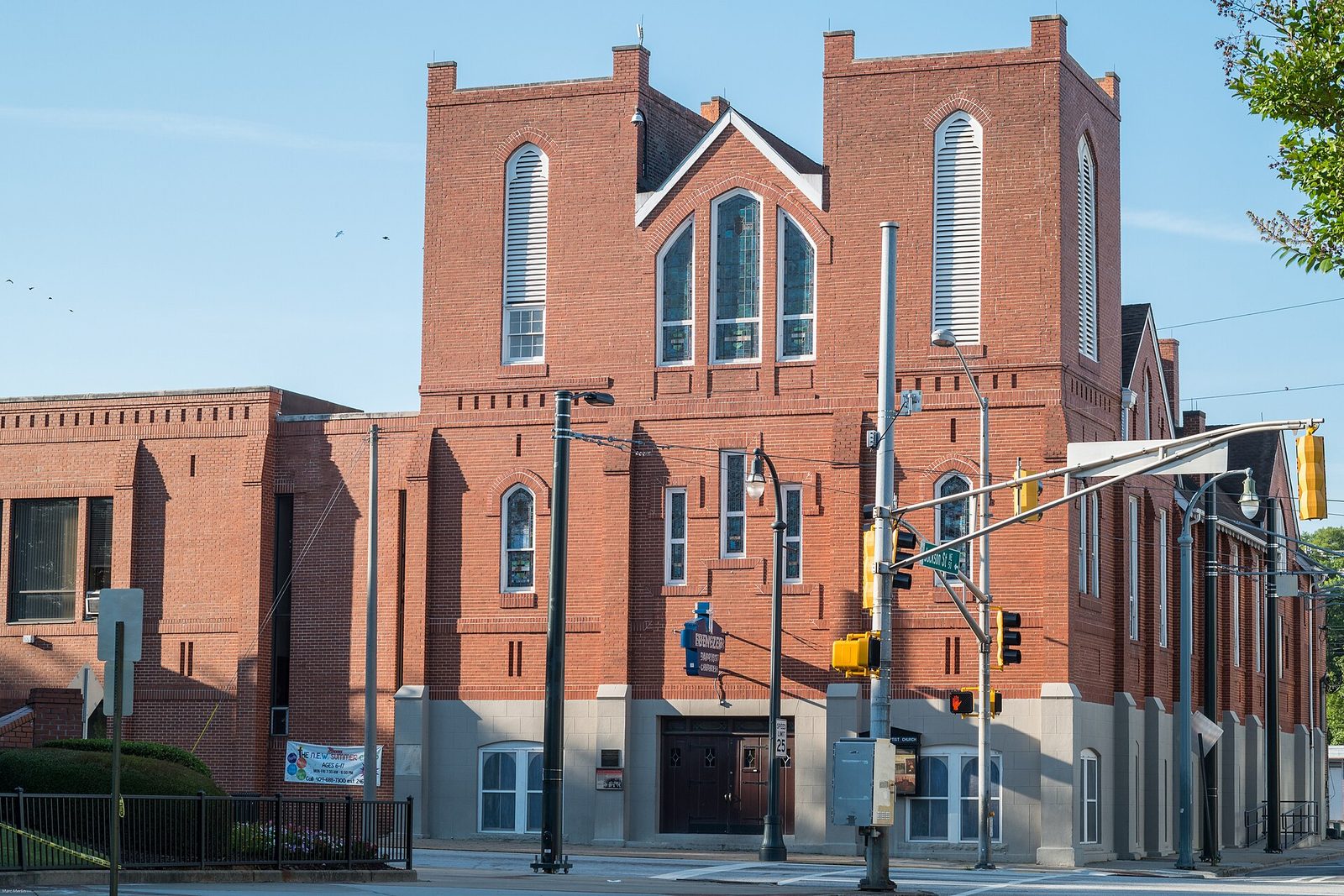
Here is what most guides still get wrong, and knowing it will save you a wasted early start: the Birth Home at 501 Auburn Avenue is closed for renovation. For years the drill was to queue at 09:00 for the day’s free timed tickets. That tour is not running. Rangers instead give “Birth Home” presentations in the bookstore next door, and there are daily “Church Talks” inside Historic Ebenezer Baptist Church. Visitor operations are displaced too, running out of a temporary setup in Historic Fire Station No. 6 rather than the main visitor center. Check nps.gov/malu for the day’s schedule, because the program has been shifting.
What is open is more than enough for two or three hours. Historic Ebenezer, where King was baptized and later served as co-pastor alongside his father, is the emotional center of the site and worth timing around a ranger talk. Fire Station No. 6 is a sharp small exhibit on the desegregation of Atlanta’s fire service. And the reflecting pool and crypt at The King Center — a separate non-profit rather than the Park Service, a distinction the signage does not make obvious — hold the tombs of Martin Luther King Jr. and Coretta Scott King.
The National Center for Civil and Human Rights
Admission was $26.00 adult and $20.00 child at the gate in September 2026. It sits at Pemberton Place beside Centennial Olympic Park, and it is a genuinely different experience from the Park Service sites: designed, immersive and emotionally deliberate rather than preservationist.
The lunch-counter simulation is the exhibit everyone talks about. You sit at a replica counter, put on headphones, place your hands flat, and listen to what was shouted at students doing the same thing in 1960 while a timer counts how long you last. Most people take the headphones off early. It works because it is uncomfortable, and it is not for young children — the center suggests the main galleries suit roughly ages ten and up. The upper floor pivots to contemporary global human rights, which is a harder sell and where attention tends to flag. Allow two hours.
Sweet Auburn, APEX and the street itself
Auburn Avenue was, in the middle of the twentieth century, one of the wealthiest Black commercial streets in America — a claim you will see attributed to Fortune magazine on plenty of plaques. Then the Downtown Connector, the stacked I-75/I-85 roadway, was cut straight through it in the 1950s and 60s, and the street never recovered. Walking it you pass the Atlanta Daily World building, the Royal Peacock ballroom, the Prince Hall Masonic building that housed the Southern Christian Leadership Conference, and a great many empty lots. The emptiness is part of the exhibit. The APEX Museum along the way is small, volunteer-run, and tells the story from a Black Atlantan’s point of view rather than a federal one — the useful antidote to a day of institutional interpretation. Hours are limited and it closes some weekdays, so call ahead.
Atlanta History Center and the Cyclorama
Out in Buckhead, the Atlanta History Center holds the restored Battle of Atlanta cyclorama: a painting 49 feet tall and longer than a football field, made in 1886 and moved here from Grant Park. The restoration is spectacular, and the interpretation is honest about the painting’s original purpose as Lost Cause propaganda, which is not what you expect walking in. The same campus holds the Swan House and the Smith Family Farm. Plan a half-day, not an hour — this is the most under-budgeted stop in the city. We did not verify admission within our research limits, so check the current rate before you go.
Stone Mountain, and how to think about it
Sixteen miles east of downtown, the largest Confederate monument ever carved covers the north face of a granite dome: Lee, Davis and Jackson across three acres of rock. Work began in 1915, the year the Ku Klux Klan was refounded on that summit, and finished only in 1972. Georgia law protects it.
Decide deliberately whether to go. Plenty of visitors do, for the mountain rather than the carving — the Walk-Up Trail is 1.3 miles one way with about 825 feet of gain, 45 to 60 minutes for most people, and the trails and lake are genuinely pleasant. Parking is around $20 per vehicle per day and a separate Adventure Pass runs roughly $29.95 adult and $24.95 child under 12, though the official site keeps prices inside its booking flow, so confirm at the gate. What we would not do is treat it as a history site in the same sense as the ones above: the park’s interpretation of the carving has improved but stays thin, and if your history budget is one afternoon, Auburn Avenue is the better use of it.
Getting around
MARTA makes the downtown core easy: $2.50 one way with four free transfers inside three hours, including from the airport, and since the Better Breeze rollout in March 2026 you can tap a contactless card at the faregate. King Memorial is a short walk from Auburn Avenue; Peachtree Center serves Pemberton Place. The Atlanta History Center needs a car.
Middle Georgia: the deepest record on the Fall Line
Ocmulgee Mounds National Historical Park, Macon
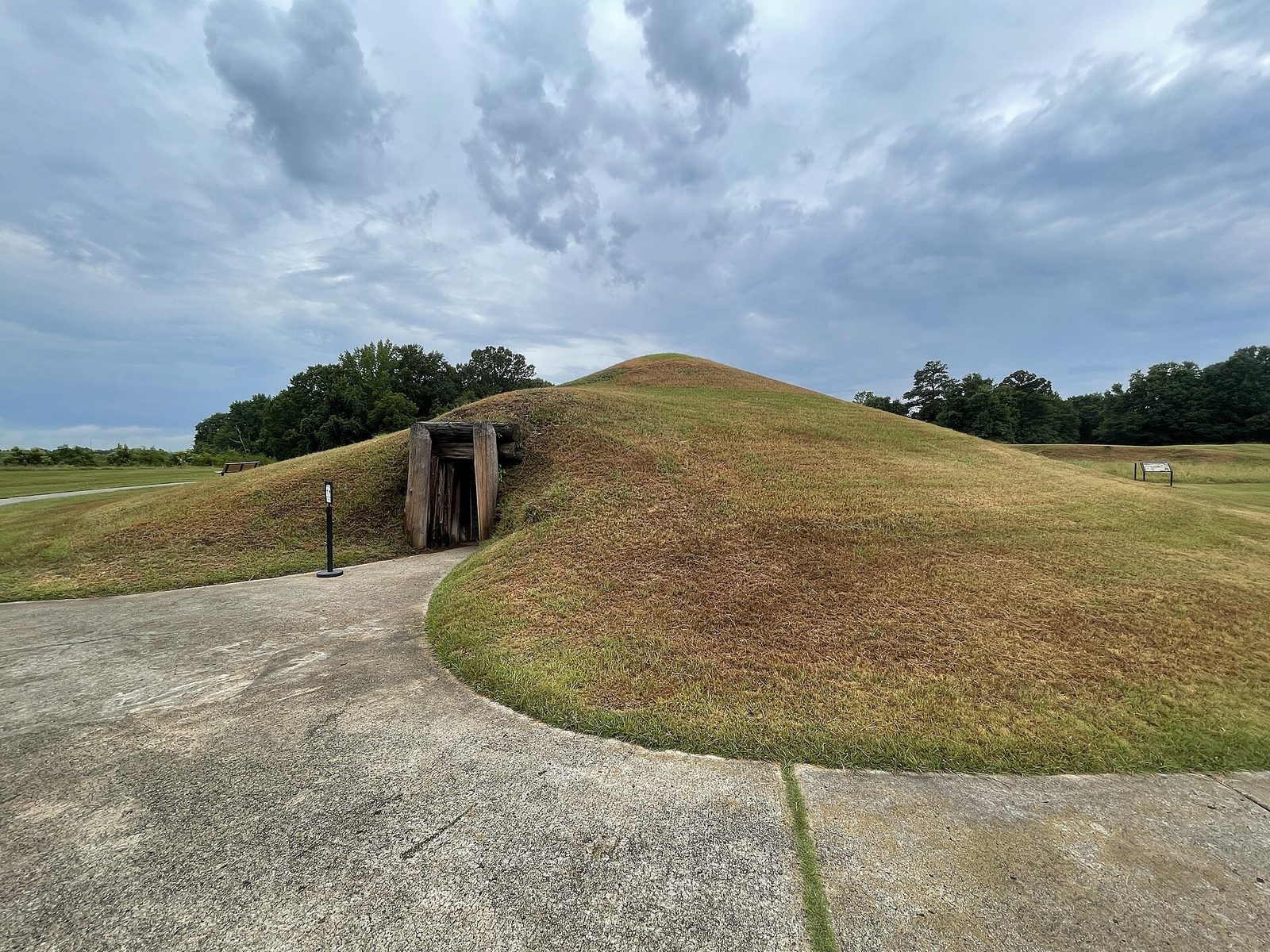
Eighty minutes south of Atlanta on I-75, on the east bank of the Ocmulgee River, sits the most significant archaeological site in the state and one of the most important in eastern North America. People have lived on this ground for something like twelve thousand years. The visible mounds are Mississippian, raised from roughly 900 CE by a maize-farming society: a fifty-foot Great Temple Mound, a Funeral Mound, and a reconstructed ceremonial Earth Lodge whose floor — unlike the roof above it — is the genuine article, a circular clay platform shaped like a bird with forty-seven molded seats around its edge. Ducking through the low timber passage into that dark, cool room is the single most memorable thing on this page.
The park is co-stewarded with the Muscogee (Creek) Nation, whose ancestors were removed from this land in the 1820s and 30s and whose citizens now live in Oklahoma. That shows in the interpretation, markedly better than a generation ago. A bill in Congress — H.R. 9416, introduced 24 June 2026 and referred to the Subcommittee on Federal Lands on 1 July — would redesignate the site as a national park with an adjoining preserve, making it Georgia’s first. It is in committee, not law. Anyone calling Ocmulgee a national park today is ahead of the legislation.
Check fees and hours on nps.gov/ocmu; we did not verify a figure and would rather print nothing than a stale number. Allow two to three hours, wear shoes you can climb steps in, and go early in summer — the mounds are open ground with no shade.
The Tubman Museum and Macon’s music
Downtown Macon holds the Tubman Museum, the largest in the Southeast devoted to African American art, history and culture, in a purpose-built home opened in 2015. It is a serious collection and a direct counterweight to the Antebellum Trail’s big houses a few miles north. Macon also gave the world Little Richard, Otis Redding and the Allman Brothers Band, whose Big House on Vineville Avenue is now a museum — history of a different kind, covered in our statewide things to do guide.
Macon is the natural overnight on any north-to-south route: the pivot between I-75 south and I-16 east, with real restaurants and hotels at a fraction of Atlanta’s rates. Time it for late March and roughly 350,000 Yoshino cherry trees bloom across the city during the International Cherry Blossom Festival — see our Georgia festivals and events calendar.
The Antebellum Trail, honestly
The marked route from Athens through Madison, Eatonton and Milledgeville to Macon strings together towns Sherman’s troops did not burn. Milledgeville was Georgia’s capital from 1804 to 1868, and the Old Governor’s Mansion is a first-rate house museum. Madison is the postcard.
Here is the honest caveat. House-museum interpretation along this route varies enormously. Some sites now foreground the enslaved people who built and ran these households, with named biographies and documented quarters. Others still deliver ninety minutes on furniture and cornices in which the people who made the wealth appear as a passing euphemism. Read the site’s own website first and look for whether enslaved individuals are named. It is a reliable tell.
Southwest Georgia: Andersonville, Plains and Albany
This is the loop most itineraries skip and the one that changes people. It is also the hardest driving: Americus is two and a half hours from Atlanta on two-lane state routes, and cell coverage is patchy. Do not attempt it as a day trip. Sleep in Americus or Albany.
Andersonville National Historic Site
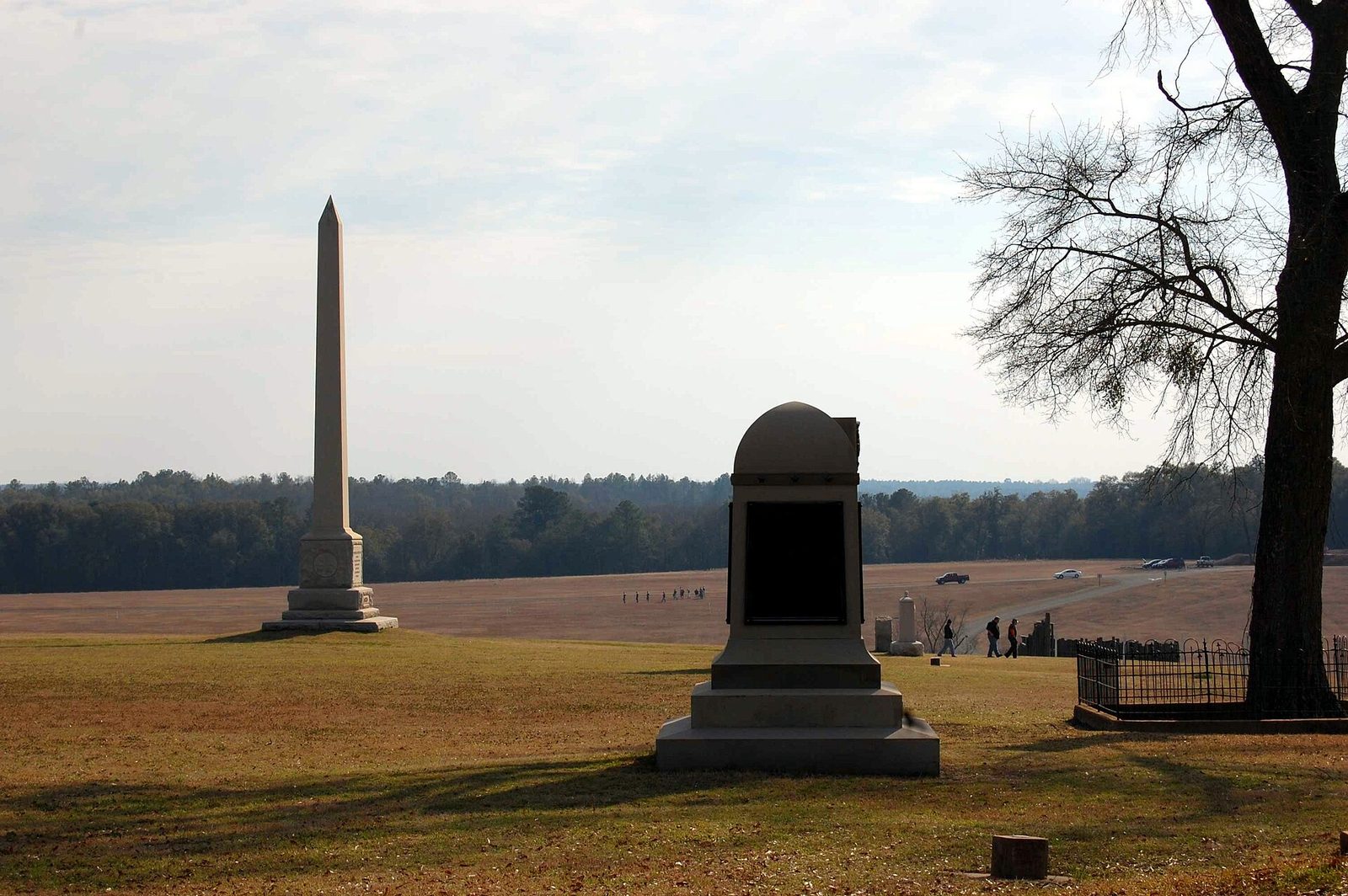
Camp Sumter operated for fourteen months from February 1864. By the Park Service’s figures, roughly 45,000 Union prisoners passed through a stockade built for a fraction of that number, and close to 13,000 died — of dysentery, scurvy, exposure and contaminated water. The site is three things at once: the reconstructed stockade corner and the swampy stream that served as both water supply and sewer; the national cemetery, still an active burial ground, its rows punctuated by state monuments; and the National Prisoner of War Museum, which since 1998 has been the country’s memorial to American prisoners of war from every conflict, not only this one.
That last part is what people find unexpectedly moving — the oral-history recordings from Bataan, from Korea, from Hanoi are what you carry out. Allow three hours; two covers the ground but not the museum. Check nps.gov/ande for hours and fees. Take the driving tour of the prison site rather than walking it in summer: there is no shade, and south Georgia in July is genuinely dangerous for anyone unaccustomed to it.
Jimmy Carter National Historical Park, Plains
Forty minutes from Andersonville, in a town of a few hundred people, is the most modest presidential site in the system — and it is free. No entrance pass is required, and the visitor desk runs 09:30 to 16:30 Eastern daily, closed 1 January, Thanksgiving and 25 December.
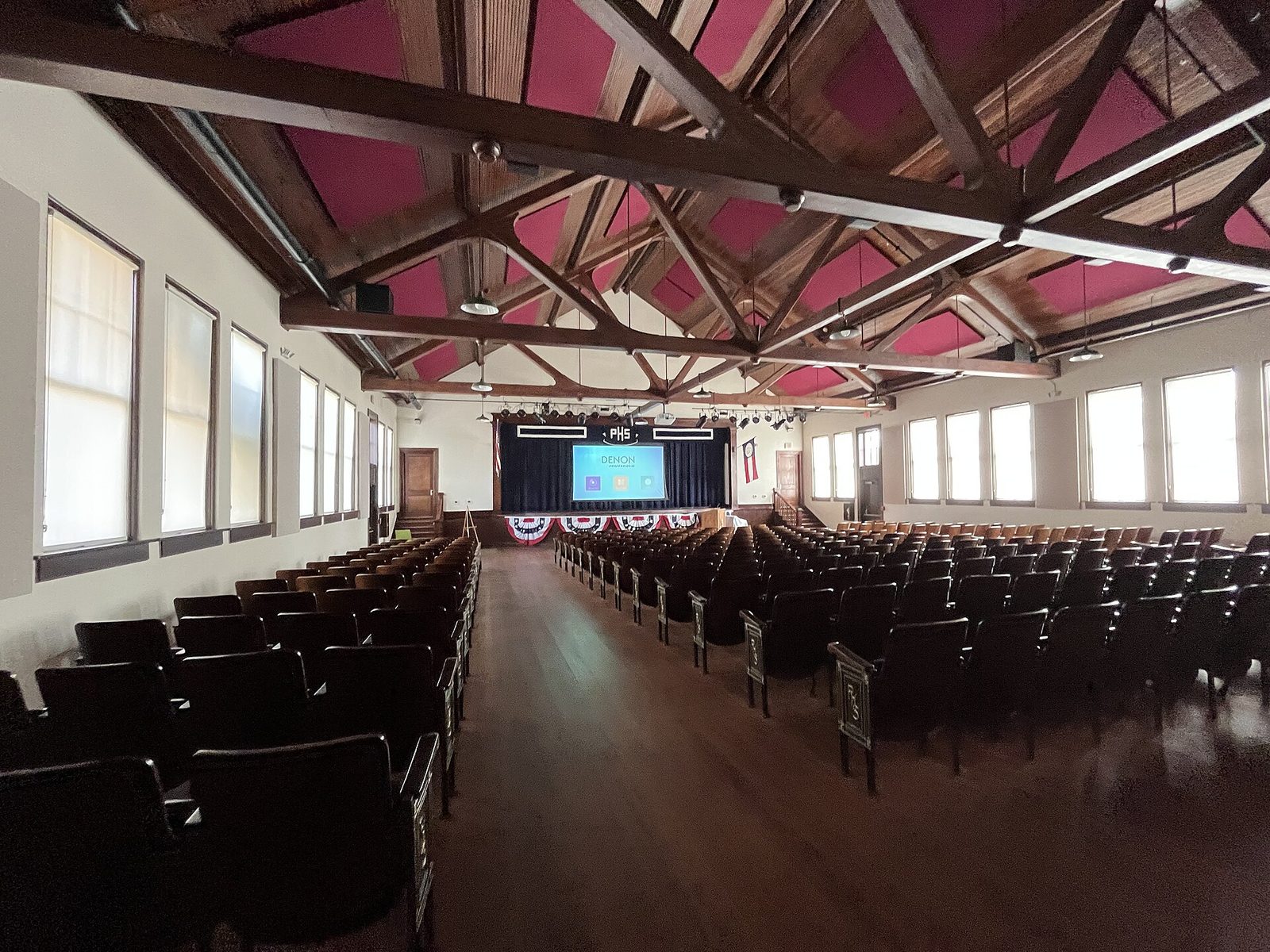
The park is scattered across the town, which is the point. The visitor center occupies the old Plains High School, where both Jimmy and Rosalynn Carter were pupils; its restored auditorium and re-created 1937 classroom explain the man better than any policy exhibit. The Boyhood Farm at Archery, a few miles west, is the strongest single stop: the house has no electricity, because it had none when the family lived there, and the windmill, commissary and tenant buildings make the Depression-era rural South concrete in a way no museum case manages. The Plains Depot, a tiny 1888 railway building, was the 1976 campaign headquarters and still looks it.
Jimmy Carter died on 29 December 2024 and is buried in Plains beside Rosalynn, who died in November 2023. The Carter residence was not open to the public during their lifetimes; ask at the visitor center about current access rather than assuming either way. Maranatha Baptist Church, where the former president famously taught Sunday school into his nineties, is still an ordinary working congregation — treat a visit accordingly.
Plains has a handful of places to eat, all on small-town hours. Americus, ten miles east, is where the hotels are, including the restored Windsor Hotel of 1892. It also holds Habitat for Humanity’s global headquarters and, just outside town, Koinonia Farm — an interracial Christian farming community founded in 1942, boycotted and shot at through the 1950s, and where Habitat’s founding idea came from. It welcomes visitors.
Albany Civil Rights Institute
An hour southwest of Americus, Albany holds the story its own participants first called a defeat and later reassessed as a turning point. The Albany Movement of 1961–62 mobilized a whole Black community against segregation across an entire city at once, rather than one lunch counter at a time. The police chief responded by arresting demonstrators quietly, in small numbers, dispersing them to jails across south Georgia, and refusing the national press the violent images it had come for. King was arrested twice and left without a clear victory; the lessons shaped Birmingham the following year. The institute is built around Old Mount Zion Baptist Church and the freedom-song tradition that came out of it — the Freedom Singers formed here. One of very few places in the country where a movement’s failures are the exhibit.
Savannah and the coast
Savannah is where Georgia starts. Oglethorpe stepped ashore on Yamacraw Bluff in February 1733 and laid out a grid of wards around public squares — twenty-two of them survive — that remains one of the most intelligent pieces of town planning in America. Our Savannah travel guide covers the city in full; here is the history that gets skipped.
The part the trolley tours rush
The colony banned slavery at its founding in 1733 and legalized it in 1751, under pressure from planters who wanted to compete with South Carolina’s rice economy. Within a century Savannah was one of the busiest slave ports in the country, and the wealth in those townhouses came from that trade and from the rice plantations along the tidal rivers. In March 1859, in what is remembered as the Weeping Time, roughly 436 enslaved people from the Butler estates were sold at a racecourse outside the city over two days — the largest single sale in American history. A historical marker in the Starland district is all there is. Find it anyway.
The Ralph Mark Gilbert Civil Rights Museum on Martin Luther King Jr. Boulevard tells Savannah’s twentieth-century story: the 1960 sit-ins, the sixteen-month Broughton Street boycott that broke segregation in the city’s shops, and Hosea Williams, who organized here before Selma. First African Baptist Church on Franklin Square has a congregation dating to 1773 and a building completed in 1859 by enslaved and free Black members who laid the brick after their own working days. The holes drilled through the sanctuary floor in a West African diamond pattern are explained on the tour, and the interpretation is far more careful than the ghost tours suggest.
Wormsloe and the fortifications
Wormsloe State Historic Site is the avenue of live oaks everybody photographs, and it is a colonial site: the tabby ruin at the end is what remains of Noble Jones’s fortified house of the 1730s. Admission is $12 adult, $9 senior, $5.75 age 6–17 and $3.25 under 6, daily 09:00–16:45. Be clear-eyed — the oak avenue is the photograph and the site itself is small. An hour covers it.
One statewide trap is worth learning here. Georgia’s state historic sites charge per-person admission and are not covered by the ParkPass, the $10-per-vehicle daily or $70 annual pass that gets you into the state parks. Wormsloe, Etowah, New Echota and the Dahlonega Gold Museum all work this way, and people buy the annual pass for a history trip and are surprised at every gate. Our Georgia state parks guide sets out the distinction.
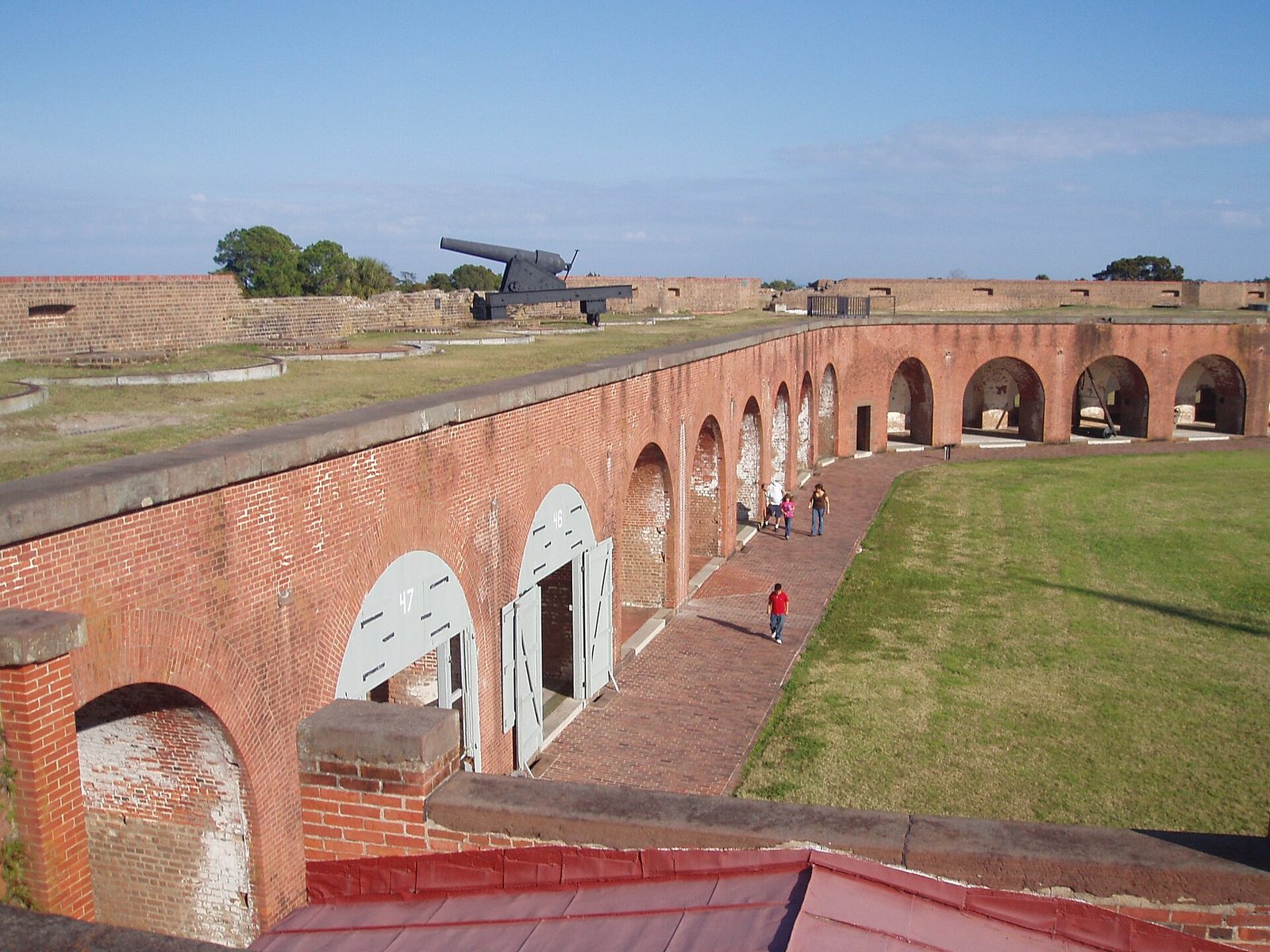
Fort Pulaski National Monument, on Cockspur Island toward Tybee, is better than its reputation. In April 1862 Union rifled artillery breached its seven-and-a-half-foot brick walls in about thirty hours, from a distance the designers had thought impossible, rendering every masonry coastal fortification in the world obsolete more or less overnight. You can put your hand in the holes. It also became a place of freedom: enslaved people who reached it were declared free under General David Hunter’s order, months before the Emancipation Proclamation. Fees not verified here — check nps.gov/fopu.
The Gullah-Geechee coast
South of Savannah, communities descended from enslaved West Africans on the rice and sea-island cotton plantations kept a distinct language and culture, because the barrier islands kept them separate. The Pin Point Heritage Museum, in a former oyster and crab factory outside Savannah, is run by descendants of the community that worked it. On Sapelo Island, reachable only by passenger ferry from the Sapelo Island Visitors Center at Meridian, the community of Hogg Hummock numbers around forty-five residents; access is by state-run tour on Wednesday and Saturday mornings, booked on 912-437-3224. Hofwyl-Broadfield Plantation near Brunswick preserves a tidal rice landscape that took engineering on a scale most visitors have never imagined.
On Jekyll Island — $10 per vehicle per day, $100 annually, free on foot or by bike — two histories sit a mile apart. The Jekyll Island Club was the winter retreat of the richest families in America, and a secret meeting there in 1910 drafted what became the Federal Reserve. In 1858, the schooner Wanderer landed roughly 400 captive Africans on the island’s south end, half a century after the transatlantic trade had been outlawed; there is a memorial at St. Andrews Beach. Our guide to Georgia’s beaches and islands covers the logistics.
North Georgia: removal, gold and the Atlanta Campaign
The Cherokee sites
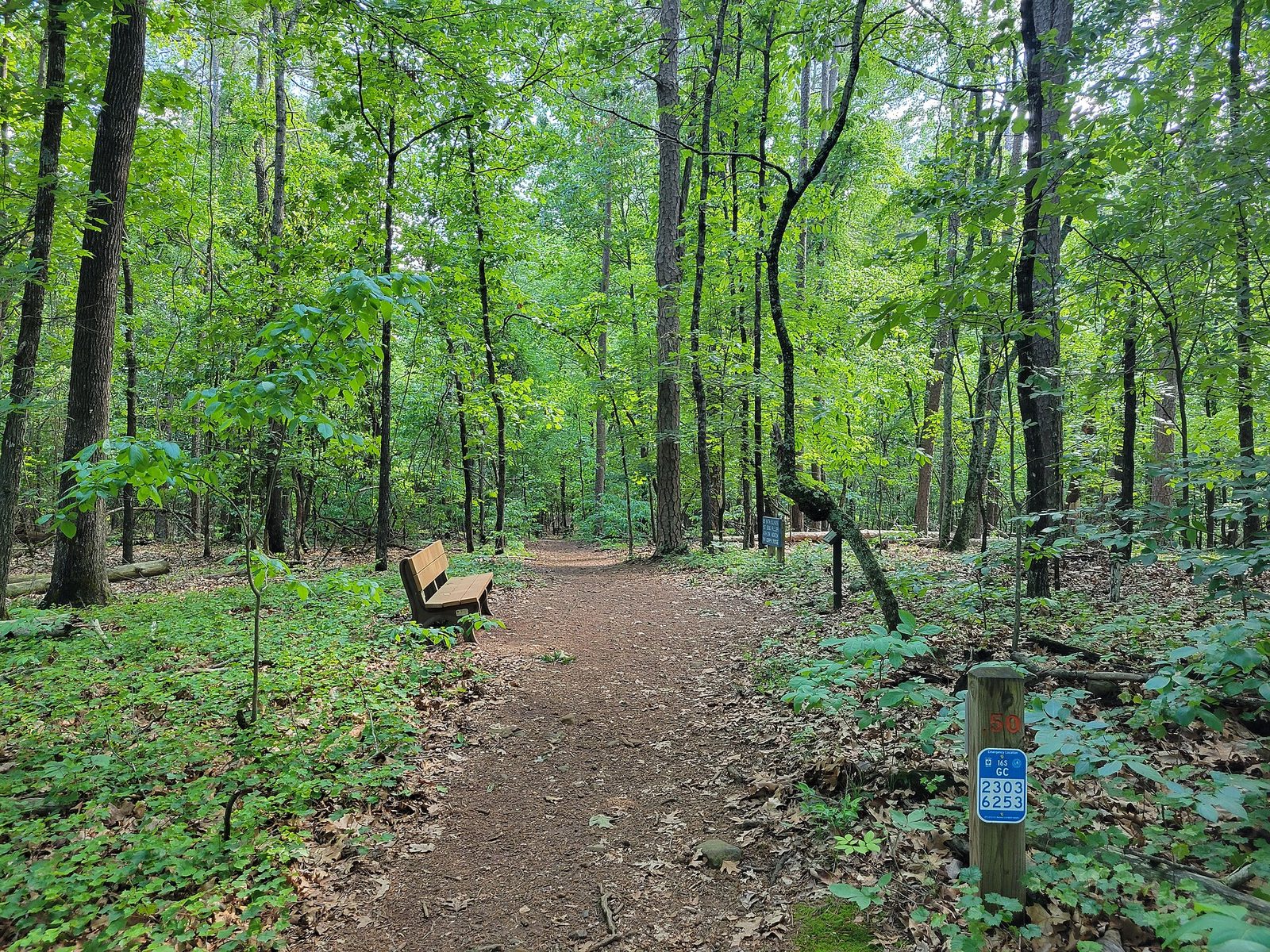
New Echota, at Calhoun off I-75, was the capital of the Cherokee Nation from 1825 until the removal of 1838 — a constitutional republic with a written syllabary, a supreme court and a bilingual newspaper, the Cherokee Phoenix, printed here in Cherokee and English. The site preserves the Supreme Courthouse, the Council House, Vann’s Tavern and a reconstructed print shop. It is also where, in 1835, a small unauthorized faction signed the Treaty of New Echota that the federal government then used to justify removing everyone else. Standing in that building is a different experience from reading about it.
The Chief Vann House at Chatsworth is a brick mansion built in the early 1800s by James Vann, a Cherokee leader who was also a plantation owner and an enslaver — a fact the site does not soften, and which complicates the tidy version of this history most visitors arrive with. Etowah Indian Mounds at Cartersville, older than either, opens seven days 09:00–17:00 with the mounds closing at 16:30. All three are state historic sites charging per-person admission; no 2026 figures are published anywhere we could verify, so check at the gate.
Dahlonega, an hour further into the mountains, is where gold was found in 1828 — the first major rush in the United States, two decades before California. The Gold Museum occupies the 1836 Lumpkin County courthouse, the oldest surviving courthouse in the state, and does not pretend the rush and the removal were unrelated. The square around it is one of the pleasantest in the north Georgia mountains.
Battlefields
Chickamauga, at Fort Oglethorpe near the Tennessee line, is the Georgia half of Chickamauga and Chattanooga National Military Park — established in 1890 as the first national military park in the country and the model for every battlefield park since. The September 1863 battle was the second-bloodiest of the war. The park is enormous, dotted with several hundred monuments placed by the veterans themselves, and the seven-mile auto tour is the sensible way to see it.
Kennesaw Mountain National Battlefield Park, twenty-five miles northwest of downtown Atlanta, preserves the June 1864 fighting that delayed Sherman’s advance. Practically, it is now a suburban park where thousands of Atlantans walk and run, which is pleasant and also means the lot fills by 09:00 on weekends. The earthworks are still legible in the woods. Combine it with Marietta’s square and the two national cemeteries, Union and Confederate, that face each other across town — our day trips from Atlanta guide sets out the drive, and our Georgia road trips guide covers the scenic alternatives to I-75.
Drive times you can plan against
| From | To | Miles | Realistic drive | Route |
|---|---|---|---|---|
| Atlanta | Macon (Ocmulgee) | 85 | 1 hr 20–1 hr 45 | I-75 S |
| Macon | Andersonville | 65 | 1 hr 15 | GA-49 S |
| Andersonville | Plains | 25 | 35–40 min | GA-49 / US-280 |
| Plains | Albany | 45 | 1 hr | US-280 / GA-520 |
| Macon | Savannah | 170 | 2 hr 30–3 hr | I-16 E (no services) |
| Atlanta | Savannah | 250 | 4 hr–4 hr 30 | I-75 / I-16 |
| Savannah | Fort Pulaski | 15 | 25 min | US-80 E |
| Atlanta | Kennesaw Mountain | 25 | 35–60 min | I-75 N |
| Atlanta | Etowah Mounds | 45 | 55 min | I-75 N |
| Atlanta | Dahlonega | 65 | 1 hr 20 | GA-400 N |
Add half an hour to anything beginning or ending in metro Atlanta between 06:30 and 10:00 or 15:00 and 19:30, and some at other times too, because I-285 congests unpredictably. The I-16 leg to Savannah is underestimated differently: not slow, just monotonous, and the absence of anything to stop for across 160 miles catches out drivers who did not fill up in Macon.
Three itineraries that work
Three days: Atlanta and the southwest
- Day 1 — Atlanta. Morning at the Martin Luther King, Jr. National Historical Park: Ebenezer, Fire Station No. 6, the King Center, a walk up Auburn Avenue. Lunch on Edgewood. Afternoon at the National Center for Civil and Human Rights.
- Day 2 — south. Leave by 08:00. Ocmulgee Mounds by 09:30, two and a half hours there. Lunch in downtown Macon, with the Tubman Museum if you move quickly. Andersonville for the late afternoon — the cemetery in low light is the right way to see it. Overnight in Americus.
- Day 3 — Plains and back. Andersonville’s POW Museum first thing if you ran out of day. Plains by mid-morning: the high school, the Boyhood Farm, the depot. Back to Atlanta by mid-afternoon, or on to Columbus.
Five days: add Savannah
Run the three-day plan, then on Day 3 drive east from Americus to Savannah — about three and a half hours via US-280 and I-16 — instead of north to Atlanta. Day 4 is Savannah on foot: First African Baptist, the Ralph Mark Gilbert Museum, the Weeping Time marker and the squares, with an hour at Wormsloe late in the afternoon when the light through the oaks is worth the drive out. Day 5 is Fort Pulaski, then either the run back to Atlanta or a night on Jekyll Island. Our where to stay guide covers the neighborhood trade-offs in both cities.
Seven days: the full loop
Days 1 to 5 as above, then head north. Day 6 runs Atlanta to Etowah Mounds, New Echota and Chickamauga, overnighting near Dalton or over the line in Chattanooga — the Cherokee and Civil War day, and a lot of driving, roughly 170 miles with three substantial stops. Day 7 comes back south through Dahlonega for the Gold Museum and the square, then down GA-400. With a spare half-day, the Carter Presidential Library on Freedom Parkway closes the loop neatly: the archive to Plains’ living memory.
Visiting difficult history well
Much of this page records people being enslaved, dispossessed, imprisoned and killed. A few habits separate visiting from gawking.
- Read the site’s own words first. The best sites now name individuals — enslaved people, removed families, prisoners — rather than counting them. A website that says “servants” where it means enslaved people is telling you what the tour will be like.
- Cemeteries and burial mounds are graves. Andersonville National Cemetery is an active military burial ground and funerals happen there. Mounds at Ocmulgee and Etowah contain human remains. Stay on marked paths and keep drones out entirely.
- Churches are congregations. Ebenezer, First African Baptist and Maranatha are working places of worship. Visiting hours exist for a reason.
- Separate evidence from interpretation. The Earth Lodge floor at Ocmulgee is original; the roof is a 1930s reconstruction. Andersonville’s stockade is a partial rebuild. Good sites tell you which is which — take the ones that do not somewhat less literally.
- Ask about the present tense. The Muscogee (Creek) and Cherokee Nations are governments with citizens today, and interpretation that speaks of them only in the past tense is out of date.
- Bring children in deliberately. Ocmulgee, Fort Pulaski, the Plains Boyhood Farm and Kennesaw are excellent with kids; the Civil and Human Rights Center’s main galleries and the POW Museum are not, below roughly ten. See our Georgia family vacations guide.
What is not worth the detour
The useful part of a guide is what it tells you to skip.
- Andersonville as an Atlanta day trip. Five hours of driving for a site that deserves three on the ground. Overnight in Americus or leave it for another trip.
- Queuing at 09:00 for Birth Home tickets. The tour is not running. Sleep in and arrive for a Church Talk instead.
- Buying an Atlanta CityPASS for the history. At $106 plus tax for adults and $86 for children it earns its keep for families doing the aquarium, the zoo and Fernbank. If the Civil and Human Rights Center is the only stop on it you want, pay the $26 at the door.
- Ghost tours sold as history. Savannah runs a great many. They are entertainment, and several build their patter on the suffering of enslaved people.
- Historical markers as destinations. Georgia has thousands, and they are good roadside reading. Driving forty minutes to photograph a cast-aluminum sign is a category error people make surprisingly often.
- House tours that will not say the word. If a site’s own material describes an antebellum household without mentioning slavery, you know how the ninety minutes will go.
- Stacking Stone Mountain onto a civil rights day. A tonal collision that helps nobody. If you want the hike, give it its own morning.
Practical planning
When to go
Late March into April, and all of October, are the two reliable windows: mild days, lower humidity, everything open. Summer is the problem season here, because so much of this trip is outdoors on unshaded ground — mounds, battlefields, a prison site, tidal rice fields. July highs in the low nineties with matching humidity are normal, afternoon thunderstorms are near-daily, and the gnats below the Fall Line are real. Winter suits the indoor-heavy Atlanta and Savannah portions, and January and February bring the densest civil rights programming around the King Holiday and Black History Month — which also makes them the busiest days on Auburn Avenue. Spring pollen in Atlanta peaks in late March and April and will coat your rental car yellow. Our best time to visit Georgia guide has the month-by-month detail.
Through 2026, America 250 programming is adding commemorations at the Revolutionary-era sites — Kettle Creek, Augusta, Savannah’s 1779 siege ground. Check site calendars rather than assuming a quiet Tuesday.
What it costs
| Site | 2026 price | Notes |
|---|---|---|
| MLK Jr. National Historical Park | Free | No pass required; 09:00–17:00 |
| Jimmy Carter NHP, Plains | Free | Visitor desk 09:30–16:30 |
| National Center for Civil and Human Rights | $26 adult / $20 child | Gate price |
| Wormsloe State Historic Site | $12 / $9 / $5.75 / $3.25 | Per person; ParkPass not valid |
| Georgia ParkPass | $10 per vehicle per day, $70 annual | State parks only, not historic sites |
| Stone Mountain parking | About $20 per vehicle | Indicative; confirm at the gate |
| MARTA | $2.50 one way | Four free transfers within three hours |
| Federal sites not verified here | Check nps.gov | Andersonville, Ocmulgee, Fort Pulaski, Kennesaw, Chickamauga |
Budget roughly $40 to $60 per adult in admissions for a three-day trip — remarkably little. The expense is fuel, hotels and food, and you will feel it in Atlanta and Savannah room rates in peak spring.
Accessibility
The Atlanta sites are strong: the Civil and Human Rights Center is fully accessible with transcripts for the audio, and Ebenezer and Fire Station No. 6 are level or ramped. Ocmulgee’s visitor center and Earth Lodge are accessible, but the Great Temple Mound is a long flight of steps with no alternative route. Andersonville’s museum and cemetery are accessible and the prison site has a driving tour. Fort Pulaski involves a footbridge and cobbles. New Echota and Etowah are gravel and grass — manageable in a chair with a companion, awkward alone. Wormsloe’s oak avenue is a wide level drive; the tabby ruin at the end is not paved.
Where to eat
Sweet Auburn is a good place to eat as well as walk. Macon and Americus punch above their size, Savannah needs a booking anywhere well known, and Plains has almost nothing — eat before or after. Start with our Georgia food and drink guide, and see places to visit in Georgia for what else is near these routes.
Frequently asked questions
What is the single most important history site in Georgia?
For the twentieth century, the Martin Luther King, Jr. National Historical Park on Auburn Avenue — free, walkable and unmatched. For the longer record, Ocmulgee Mounds in Macon, where occupation is measured in millennia rather than centuries.
Can I see the Martin Luther King Jr. Birth Home?
Not inside, as of September 2026. The house at 501 Auburn Avenue is closed for renovation. Rangers give “Birth Home” presentations in the bookstore next door, and the exterior is on the walking route. Check nps.gov/malu for the current position before you travel.
Is Ocmulgee Mounds a national park?
Not yet. It is a National Historical Park. A redesignation bill, H.R. 9416, was introduced on 24 June 2026 and referred to committee on 1 July 2026; if it passes it would create Georgia’s first national park plus an adjoining preserve. It has not passed.
Does the Georgia ParkPass cover the historic sites?
No, and this catches people out constantly. The ParkPass — $10 per vehicle daily, or $70 annually — covers parking at state parks. State historic sites such as Wormsloe, Etowah, New Echota and the Dahlonega Gold Museum charge per-person admission instead.
Which sites are free?
The two National Park Service units we verified — Martin Luther King, Jr. NHP and Jimmy Carter NHP — charge no entrance fee. Several other federal sites in the state are also fee-free, but we have not confirmed current figures, so check nps.gov rather than assuming. Historical markers, Auburn Avenue itself and most church visits cost nothing.
Isn’t Chickamauga in Tennessee?
The park’s full name is Chickamauga and Chattanooga National Military Park, and the Chickamauga battlefield — the larger half — is in Georgia, near Fort Oglethorpe. Chattanooga is over the state line.
Macon’s music runs alongside its history and mostly in the same few blocks: Capricorn Records, the Allman Brothers Band’s house on Vineville Avenue and the Otis Redding statue by the river all sit within a short drive of Ocmulgee Mounds and the Tubman Museum. Our guide to Georgia film locations and music history covers that side of the city, along with the film towns and what is honestly still there to see.
Related Georgia Guides
- Atlanta travel guide — the city beyond Sweet Auburn.
- Savannah travel guide — squares, walking routes and the Historic District.
- Day trips from Atlanta — Kennesaw Mountain, Etowah Mounds and the rest.
- Georgia road trips and scenic drives — the routes worth taking instead of the interstate.
- Georgia state parks — how the ParkPass works, and why historic sites differ.
- Best time to visit Georgia — month by month, with heat and pollen.
- Where to stay in Georgia — basing yourself for a multi-city route.
- Places to visit in Georgia — the statewide overview.
Photo Credits
Monuments at Andersonville National Historic Site: photo by Jud McCranie at en.wikipedia / Wikimedia Commons (CC BY-SA 3.0)
The auditorium at Plains High School, Jimmy Carter National Historical Park: photo by Riis2602 / Wikimedia Commons (CC BY-SA 4.0)
Fort Pulaski National Monument, Savannah: photo by CyberXRef / Wikimedia Commons (CC BY-SA 3.0)
Sources: National Park Service for the Martin Luther King, Jr., Jimmy Carter, Andersonville, Ocmulgee Mounds, Fort Pulaski, Kennesaw Mountain and Chickamauga units; congress.gov for H.R. 9416; the Georgia Department of Natural Resources and Georgia State Parks for ParkPass rates and historic-site hours; MARTA for fares; CityPASS for Atlanta gate prices; the Georgia Historical Society’s Civil Rights Trail and the New Georgia Encyclopedia for framing. Checked September 2026; verify with the operator before you travel.
Georgia Tourism Guide is an independent publication. We are not affiliated with Explore Georgia, the Georgia Department of Natural Resources, the National Park Service or any attraction listed here.