The single most expensive mistake visitors make in this state is booking a hotel before deciding what the trip is. Georgia is big — the largest state east of the Mississippi by land area — and a room that looks well placed on a map can leave you commuting two hours a day through country you did not come to see. Deciding where to stay in Georgia is really a question about bases, not beds: pick the right town and almost any decent room in it will work; pick the wrong one and the nicest suite on the coast cannot save the week. This guide sets out the regions, the base towns inside them, honest rate tiers (checked September 2026), the fees that land on top of the advertised rate, and the places that are genuinely not worth basing in. Georgia here is the American state — Atlanta, the Blue Ridge, the Golden Isles — not the country in the Caucasus.
Rates below are given as bands rather than quotes. Nightly prices in Georgia swing hard with season, weekend, event and how far ahead you book, and any specific figure printed in September would be wrong by spring. Where a rate is published on an operator’s own site — state park cottages, for instance — it is quoted exactly and dated. Everything else is an estimate and labeled as one.
The short answer: pick a base, then a room
Most Georgia trips fit one of five bases. Choose by what you want to do on the second and third day, not the first.
| If your trip is about… | Base here | Typical nightly band | Best for | Watch out for |
|---|---|---|---|---|
| City, museums, food, music | Atlanta — Midtown or Decatur | $$–$$$ | Two to four nights, no car needed in Midtown | Parking $25–$45 a night on top |
| History, architecture, walking | Savannah Historic District | $$$–$$$$ | Three nights, car parked and forgotten | Weekend rates double; parking is its own budget line |
| Beach, bikes, slow days | Jekyll or St. Simons | $$–$$$$ | Four nights or more | Jekyll charges $10 per vehicle per day to be on the island at all |
| Mountains, hiking, waterfalls, cabins | Blue Ridge, Helen or Clayton | $$–$$$ | Long weekends, groups, families | October books out months ahead at peak prices |
| Cheap, outdoors, flexible | A state park cottage or campsite | $ | Any length, anywhere in the state | 13-month booking window; the good ones go early |
The bands are relative to Georgia, not to New York: $ is roughly under $100, $$ $100–$180, $$$ $180–$300, $$$$ above $300, before tax and fees, for a standard double in shoulder season.
How this guide picks a base
Booking marketplaces rank by inventory and commission. This page ranks by fit, using four tests.
- The day-trip radius has to work. A base earns its place if the things you came for sit within about 45 minutes of it. Beyond an hour each way, you are not staying somewhere — you are commuting from it, and two hours a day over four days is most of a day lost.
- Total cost, not headline rate. Parking, resort fees, island entry, the $5-a-night state fee and local excise tax routinely add 20–30% to an advertised rate in Georgia. A base is compared on what leaves your account, not on what the search result said.
- Something to do after dark. A town where everything closes at eight is a fine base for hiking and a poor one for a four-night trip with teenagers. This is flagged rather than assumed.
- Published, checkable rules. Access fees, parking charges, pet policies and booking windows are quoted only where an operator or agency publishes them somewhere that can be verified. Where they are not, the text says so.
No booking site, hotel or tourism board paid for placement here, and nothing on this page is ranked by commission.
Atlanta: which neighborhood, and when to skip it
Atlanta is a collection of neighborhoods that happen to share a city limit, and the difference between them matters more than the difference between hotels. The useful question is whether you will have a car and whether you will use MARTA.
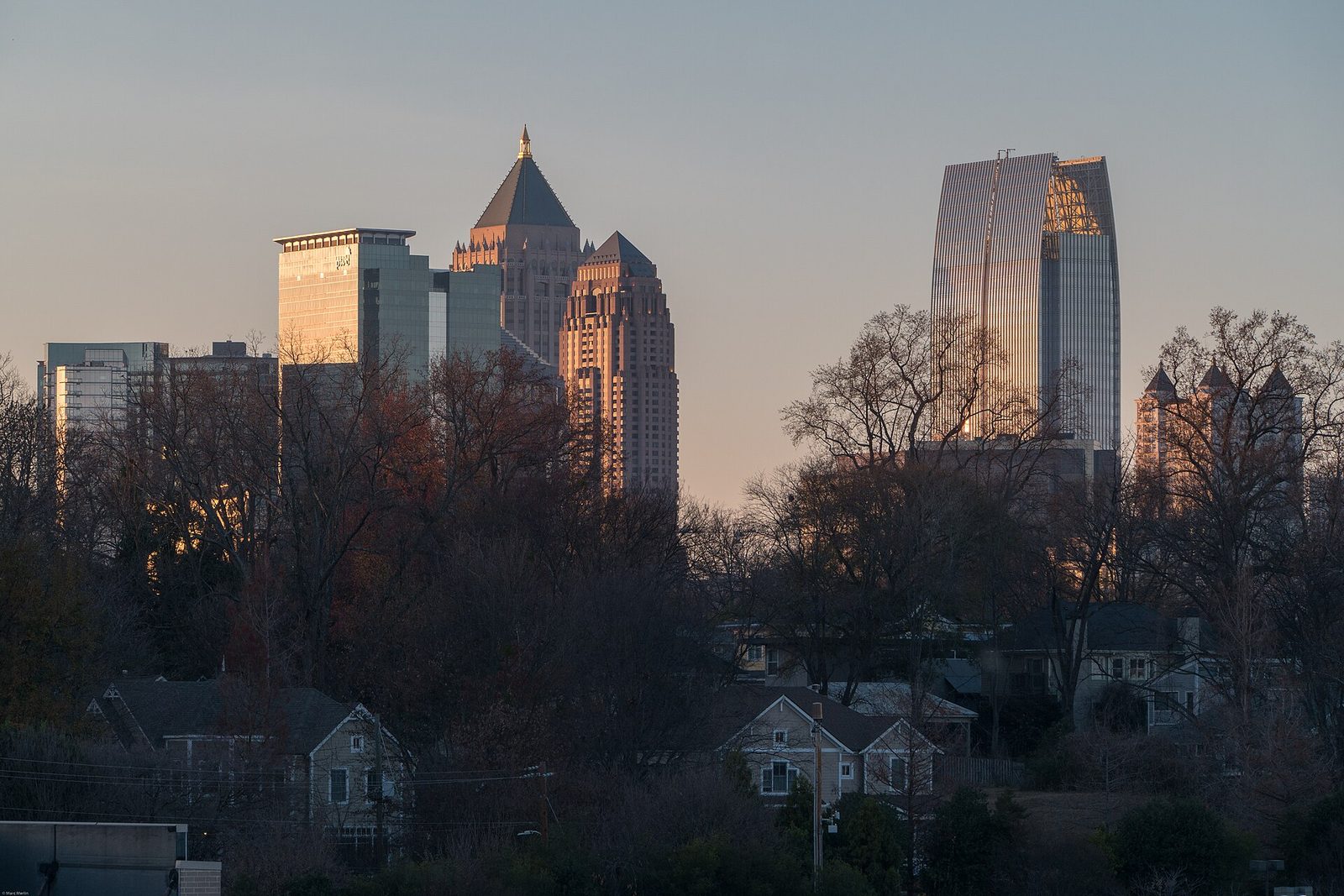
Downtown and Centennial Olympic Park
Stay here if your trip is the attractions cluster. Four of the six Atlanta CityPASS venues — Georgia Aquarium, World of Coca-Cola, the National Center for Civil and Human Rights and the College Football Hall of Fame — sit together at Pemberton Place and are walkable as a group. Rooms skew convention-hotel, rates spike hard when a large convention is in town, and the area empties in the evening. Good for two nights with children, dull for a week.
Midtown
The best all-round Atlanta base. It has the Fox Theatre, the High Museum, Piedmont Park, the Eastside BeltLine and the densest walkable restaurant scene in the city, and it sits on the MARTA red and gold lines. A one-way MARTA fare is $2.50 with four free transfers inside three hours, and the airport ride is the same flat $2.50 as any other trip — the single best value in Georgia travel. Since the Better Breeze system went live on 28 March 2026 you can tap a contactless bank card or phone straight at the faregate, which removes the old faff of buying a Breeze card. If you stay in Midtown you can skip the rental car for the Atlanta leg entirely.
Decatur and the east side
Decatur is six miles east, has its own MARTA station, a genuinely good square full of independent restaurants, and rooms that run a tier cheaper than Midtown. It is the value pick for anyone who wants a neighborhood rather than a downtown. Inman Park and Old Fourth Ward put you on the BeltLine with fewer hotels and more short-term rentals.
Buckhead and the airport
Buckhead is where the luxury inventory is, and it is a long way from most of what visitors come to Atlanta for. Stay there if you are shopping or visiting people, not otherwise. Airport hotels make sense for one night on either end of a flight and for nothing else — the MARTA ride downtown is cheap and quick enough that proximity buys you very little.
When not to stay in Atlanta at all
If your trip is the mountains or the coast, do not base in Atlanta and drive out daily. The Perimeter congests at times unrelated to rush hour, and a north Georgia day trip from a downtown hotel costs three hours of driving before anything happens. Use Atlanta as a bookend of one or two nights and move.
Savannah: the Historic District and the parking maths
Savannah is the one Georgia city where paying more to be central is unambiguously correct. The Historic District’s appeal is the squares, the architecture and the walking between them; a cheaper room out by the interstate removes the entire point and adds a drive and a parking charge at both ends.
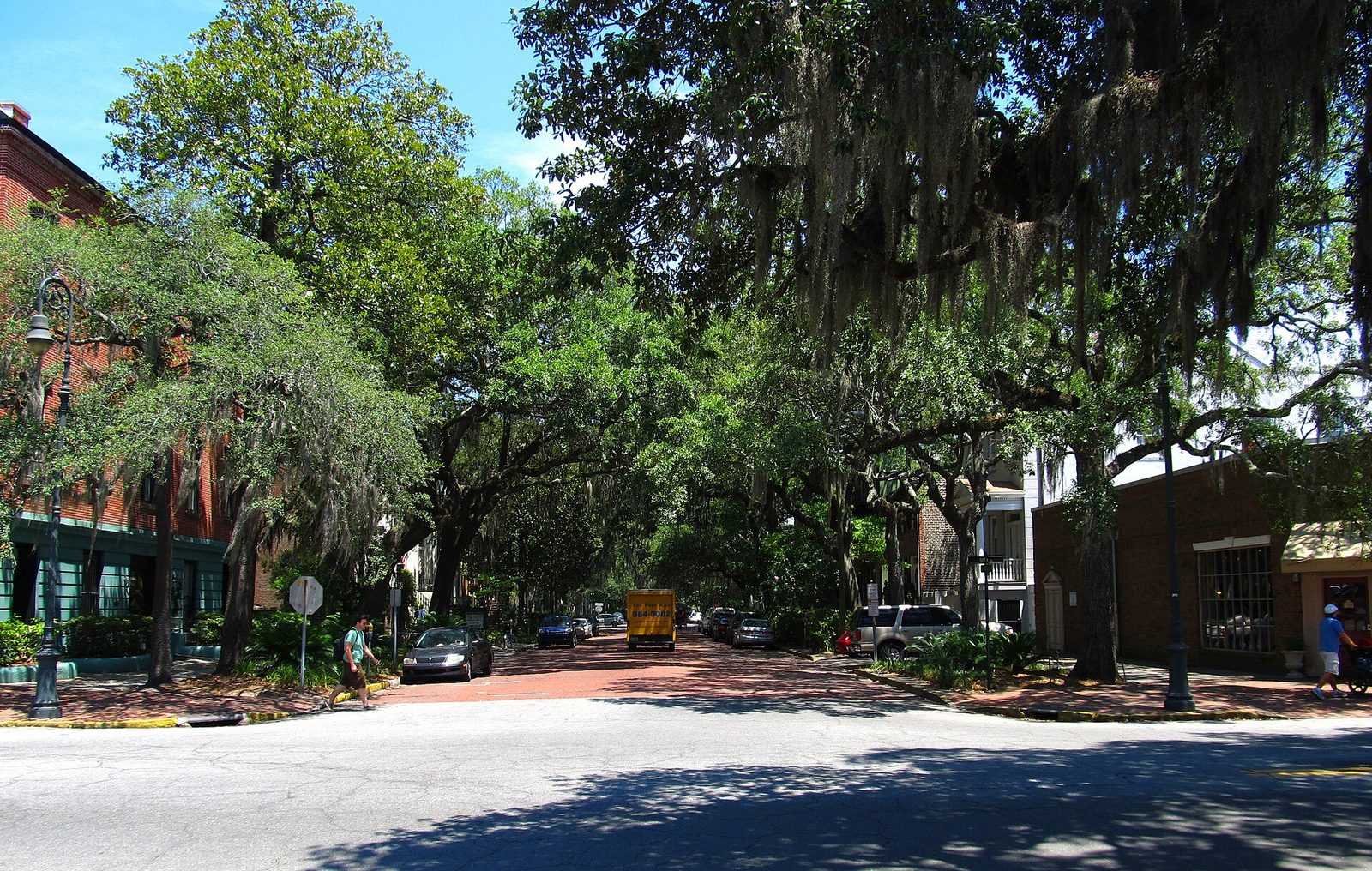
The catch is parking, which most Savannah lodging quotes do not include. Street meters run $1–$2 an hour, enforced Monday to Saturday 08:00–20:00 north of Liberty Street and Monday to Friday 08:00–17:00 south of it, and meters are free all day Sunday. City garages run around $1 an hour. The tip that almost no guide surfaces: the city sells a visitor parking pass at $15 a day or $90 for seven days that covers unlimited parking in any city garage and any Historic District meter. For a three-night stay with a car, that is the difference between a manageable line item and an unpleasant surprise.
Hotel taxes are steep here. Savannah’s hotel-motel excise tax rose to 8% effective 1 September 2023, and it sits on top of state and county sales tax and the $5-per-night state hotel-motel fee. Expect roughly 15% plus $5 a night on any quoted rate. Check the total at the payment screen rather than the search result.
Tybee Island as an alternative base
Tybee is 18 miles east on US 80 and runs a tier cheaper than the Historic District, with the beach thrown in. It works if your trip is mostly beach with a day or two in town. It does not work in reverse: the causeway backs up solid on summer weekends, floods on king tides, and Tybee parking is $4 an hour enforced 08:00–20:00 daily — $48 for a full day, or $25 for a daily pass, or $175 for seven consecutive days. Buy the pass online in advance.
The coast and the Golden Isles
The Georgia coast has about a hundred miles of shoreline and a very small number of places you can actually sleep on a barrier island. Each island’s access rule shapes what staying there means.
Jekyll Island
The most accessible island base and the best value on the coast. Jekyll is state-owned through the Jekyll Island Authority, which keeps development capped and rates more sane than St. Simons. Entry is $10 per vehicle per day or $100 annually, with an extra $5 on designated event days such as Independence Day, Shrimp & Grits and Holly Jolly Jekyll — that surcharge applies to the daily rate only, not the annual pass. If you are staying a week, do the arithmetic: seven days of daily entry is $70 against a $100 annual pass that also covers the next trip. Arriving on foot or by bike is free. Dogs are allowed at all times on a maximum 16-foot lead, with a stretch of South Beach off limits.
St. Simons Island
Bigger, busier, more restaurants, more expensive, and reached free on the F.J. Torras Causeway. It suits people who want a village with a proper dinner scene rather than a quiet island. Two limits worth knowing before you book a beach week: lifeguards work only from Memorial Day to Labor Day, 11:00 to 16:00, and only at the Coast Guard Station and Massengale beaches; and dogs are banned from the beach between 09:00 and 18:00 from Memorial Day to Labor Day. Outside that season and those hours they may be off leash under immediate voice control. East Beach and the Historic Coast Guard Station area has been under construction through 2026 with new facilities, parking and erosion work — expect disruption.
The islands where staying is the only way in
Three islands invert the usual logic, and on each of them booking a bed is the access.
- Sapelo. You cannot simply buy a ferry ticket and wander — you must be on an organized tour or the guest of a resident. Hog Hammock, the Gullah-Geechee community of roughly 45 residents that is the last of its kind, has houses that take guests, and booking one is the way onto the island outside the Wednesday and Saturday state tours. Book through the community directly; inventory is tiny.
- Cumberland Island. Camping and a single historic inn, Greyfield. Everything else is a day trip on the 45-minute ferry from St. Marys, which books six months ahead and sells out. The park is cashless and there is no food, water or shop on the island. Entrance is $15 per person for seven days, on top of the ferry at $44 plus tax for adults.
- Sea Island and Little St. Simons. Both are guest-only, with no public beach access at all. Staying is the only way to see either, which is the whole business model. No rates are published in a checkable form; contact them directly.
Mainland bases: Brunswick, Darien and St. Marys
All three run cheaper than the islands and all three work if you are moving rather than settling. St. Marys is the obvious base for a Cumberland Island day, since the ferry leaves from there and the early sailing is the one you want. Darien is the base for the Altamaha and for Sapelo. Brunswick is the cheapest bed on this stretch of coast and the least interesting evening.
North Georgia: cabin country and the mountain towns
The mountains are where Georgia’s lodging market is most distinctive and most seasonal. Four base towns cover almost everything.
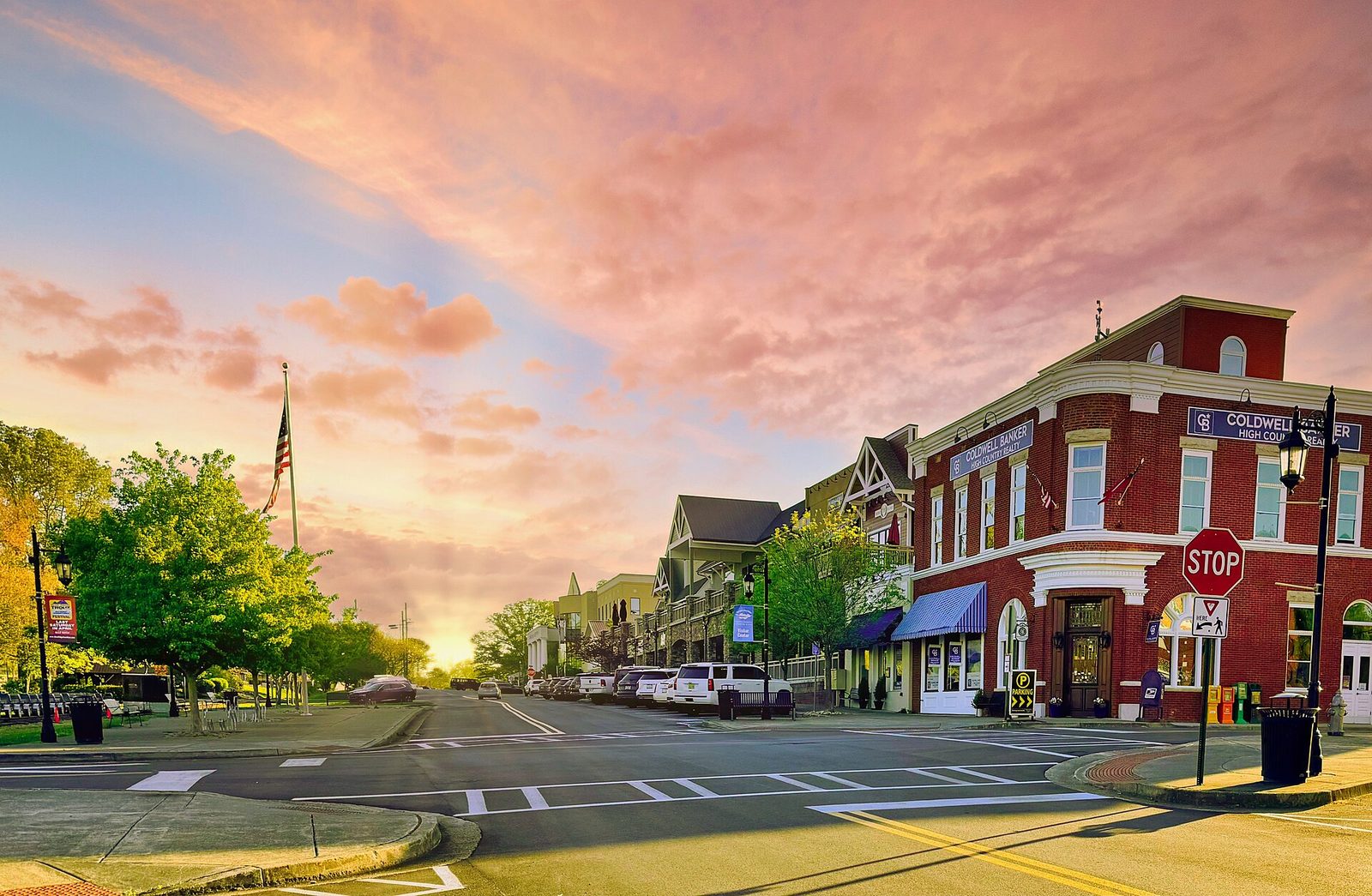
Blue Ridge and Ellijay
The cabin capital. Blue Ridge has the deepest rental inventory in north Georgia, a walkable main street with actual restaurants, and the Blue Ridge Scenic Railway. Ellijay is fifteen minutes south, cheaper, and surrounded by apple houses. Both are two hours from Atlanta by GA 515. October is the crunch: Fall Foliage Trains run 19 September to 3 November 2026 and cabins book out months ahead at peak rates. Book a fall weekend by June or take a weekday.
Helen and Sautee Nacoochee
Helen is the best base for the Russell–Brasstown byway, Anna Ruby Falls and Unicoi State Park, and it is a poor place to spend an evening — the Bavarian theming is committed, but the town itself is a shopping strip in costume. Sleep in Helen, eat in Sautee Nacoochee or Clarkesville. During Oktoberfest, which ran a 56th edition from 10 September to 1 November 2026, rates and occupancy climb sharply and the town is genuinely busy.
Dahlonega
The most attractive small-town base in the mountains and the closest to Atlanta at about an hour. A real square, the gold-rush history, and the state’s main wine country on its doorstep. It works as a one-night stop on the way north or a two-night weekend on its own. Inventory is thin, so weekends book early.
Clayton and Rabun County
The best food in the north Georgia mountains and the base for Tallulah Gorge, Black Rock Mountain and the lakes — Burton, Rabun, Seed. It is also the furthest from Atlanta at around two hours, which keeps the day-trip crowd out and the weekends slightly calmer than Blue Ridge.
What cabins actually cost
Nightly rates for private cabins are operator- and date-dependent and no honest guide can quote them, but the charges on top are published and predictable. Every short-term rental in Georgia pays a state hotel-motel fee of $5 per night — every calendar night until a stay reaches 31 consecutive days, at which point it becomes an extended-stay rental and is exempt — plus 4% state sales tax applied to the total listing price including the cleaning fee. Counties and cities add their own excise tax on top: 6% in unincorporated Fannin County, 8% in the City of Blue Ridge. Airbnb and Vrbo collect and remit these.
The part that catches people out is what counts as the taxable price. Georgia treats anything the host requires you to pay — cleaning, pet fees, extra-person charges — as part of it. A $200 nightly rate over three nights is not a $600 bill. Expect a cleaning fee scaled to the property’s size and, on many bookings, a non-refundable damage protection waiver; one operator’s runs $60 per reservation. Since 1 July 2026 a Georgia law has also required short-term rental operators statewide to complete human-trafficking-awareness training.
Middle Georgia and the smaller cities
Most lodging guides treat Georgia as Atlanta, Savannah, the mountains and the beach, and then stop. That leaves out four cities that make better bases than their reputations suggest, all of them cheaper than the headline destinations and all of them within an easy drive of something worth the trip.
Athens
An hour and a quarter east of Atlanta, Athens is a university town with a music scene that has outlived several generations of the bands that made it, a compact downtown you can walk end to end, and rooms that run a full tier below Atlanta. It is the northern anchor of the Antebellum Trail and a sensible first or last night for anyone flying into Atlanta and heading for the mountains or the Piedmont. The one caveat is the football calendar: on a home Saturday in autumn, rooms within twenty miles are booked and priced accordingly, often a year ahead.
Macon
Macon sits where I-75 meets I-16, which makes it the natural pivot for any trip that combines Atlanta with Savannah or the coast. It has Ocmulgee Mounds on the edge of town, a serious music heritage, and some of the best-preserved nineteenth-century domestic architecture in the state. Rates are low most of the year and then are not at all: the roughly 350,000 Yoshino cherry trees around the city bloom in late March, the International Cherry Blossom Festival runs ten days that month, and the 2026 edition ran 20 to 29 March. The 2027 dates had not been announced as of September 2026, so check before you assume your spring week is cheap.
Augusta
Augusta is an ordinary mid-sized city for fifty-one weeks of the year and something else entirely in the first full week of April. During the Masters, rates multiply, minimum stays appear, and private homes rent for sums that fund their owners’ own holidays. Outside that week it is inexpensive, the Riverwalk is pleasant, and it makes a reasonable stop between Atlanta and the coast on I-20. Note that a room during Masters week does not get you into the tournament — the ticket lottery is the only official route, with applications open 1 to 20 June the year before.
Columbus
The best value city base in Georgia and the obvious one for southwest Georgia, where accommodation otherwise thins to Americus and very little else. Columbus has a revived riverfront, the RushSouth whitewater course running through downtown, and rates that would embarrass Savannah. It puts Providence Canyon, Plains, Andersonville and Pine Mountain within an hour to ninety minutes, which is precisely the day-trip radius that makes a base work.
State parks: the best value lodging in the state
Georgia’s State Parks & Historic Sites Division runs 49 state parks across more than 84,000 acres, and its accommodation is consistently the best value in Georgia. Published rates: campsites $23–$50, cottages and cabins $75–$250 depending on park, season and size, and yurts $75–$100. There is no separate cleaning fee, which alone can make a park cottage cheaper than a private cabin advertised at a similar nightly rate.
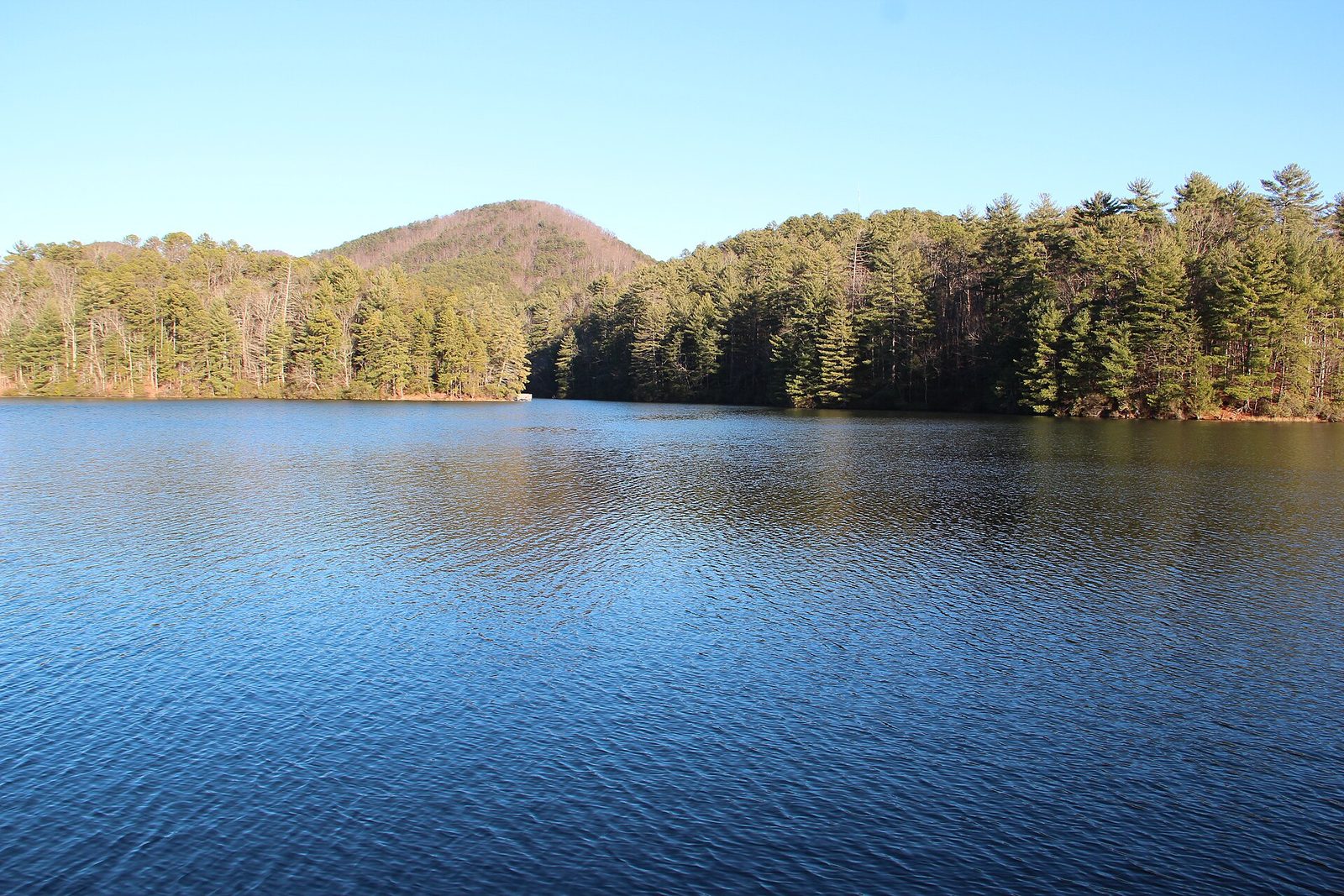
The catch is the booking window. Reservations open 13 months ahead for everyone and 14 months for Georgia residents, and the popular cottages at Vogel, Unicoi, Amicalola Falls and Cloudland Canyon go quickly for fall weekends. A 50% deposit confirms a booking made 15 or more days out, with the balance at check-in; inside 14 days it is payment in full. Book online or on 1-800-864-7275.
Dogs are welcome in parks and campgrounds on a leash no longer than six feet, with the owner present at all times, and more than 40 parks take dogs of any breed or size in their campgrounds with no extra pet fee. Some cabins are dog-friendly; most are not. Confirm before booking rather than after.
One more piece of arithmetic. Parking at a state park is $10 per vehicle per day, up from $5 on 1 January 2026, with an annual ParkPass at $70 — 50% off for ages 62 and over and 25% off for military and veterans, in person only. If you are staying in parks for a week, buy the annual pass on day one. Note that it does not cover state historic sites, which charge per-person admission instead.
Distinctive stays that are genuinely worth it
“Unique stays” lists are usually a way to sell treehouses. Four here have a real reason to exist.
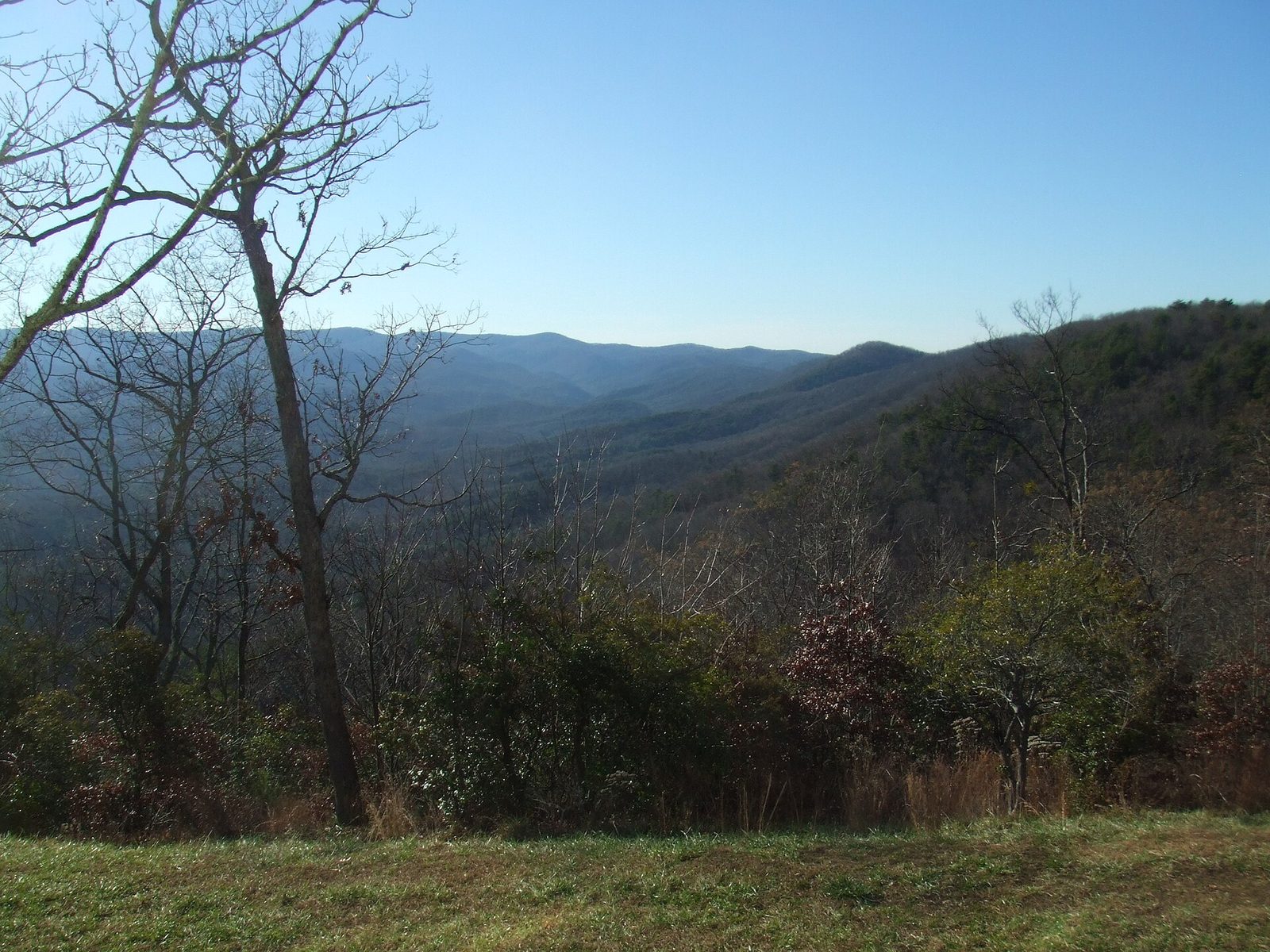
- The Len Foote Hike Inn, Amicalola Falls State Park. A backcountry lodge reachable only on foot — a five-mile trail from the park, two to four hours’ walking. Twenty bunkrooms with two beds each, hot showers, family-style meals and decks over the forest. It is LEED certified, the showers are solar, the toilets compost, and there is no road. Start early enough to arrive well before dinner.
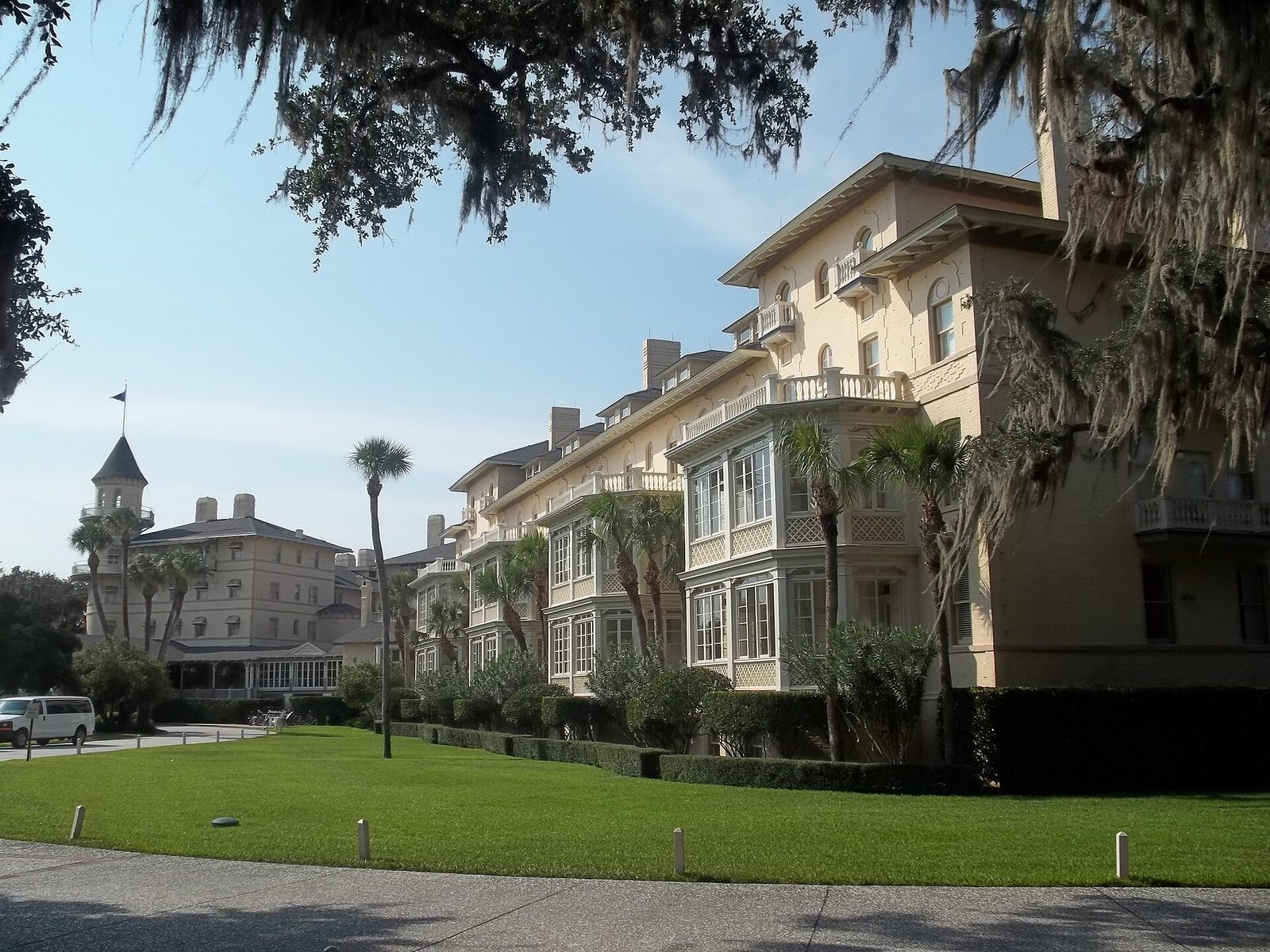
- The Jekyll Island Club. The 1886 clubhouse of what was once the most exclusive private club in America, now a hotel, with the cottage row beside it. It is expensive and it is the only place on the Georgia coast where the building is the reason to come.
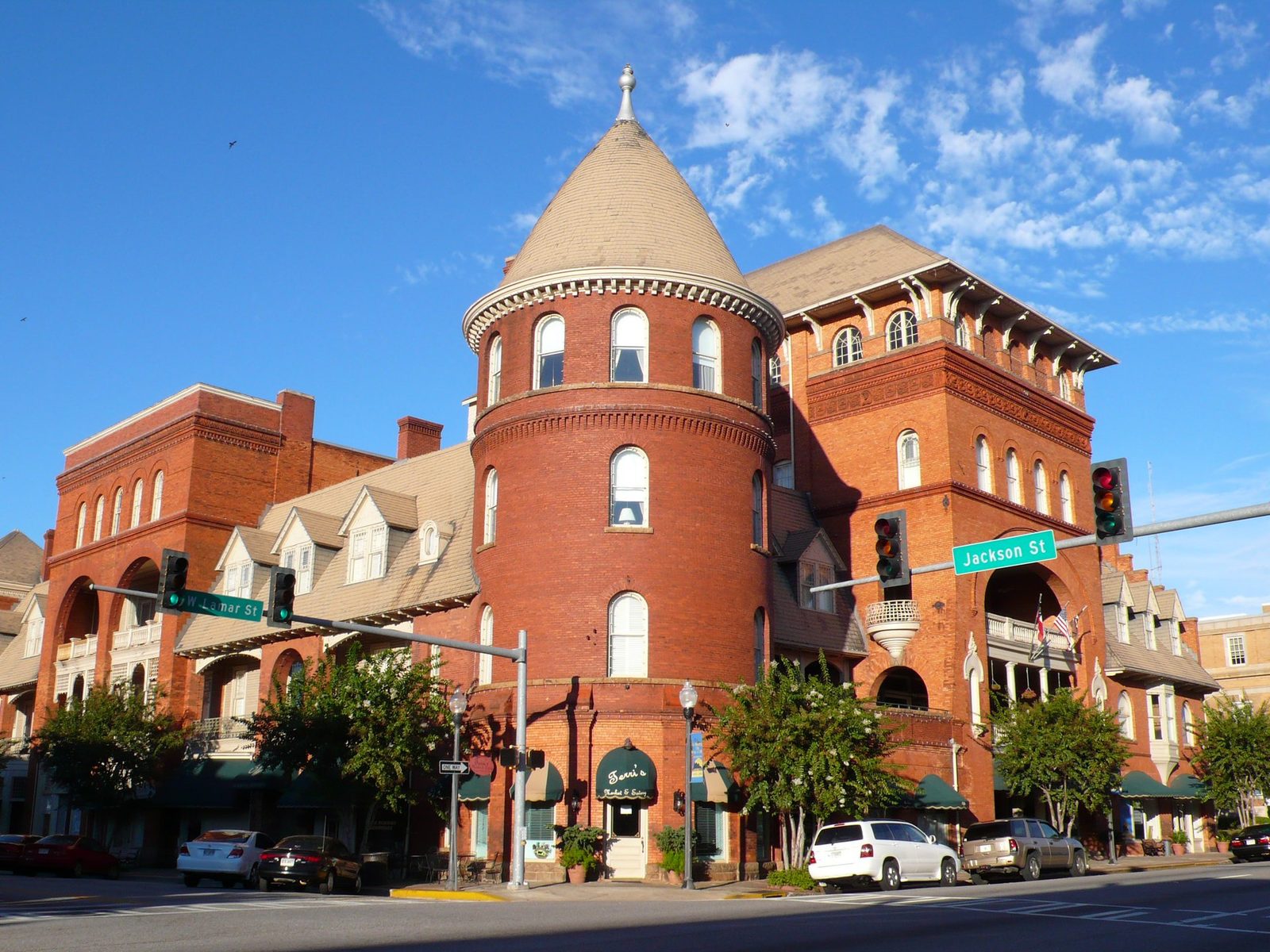
- The Windsor Hotel, Americus. An 1892 red-brick pile with a conical tower, in a small southwest Georgia town, and the single best reason to route a Plains and Andersonville trip through an overnight rather than a long day.
- A state park yurt. At $75–$100 a night with beds, electricity and a deck, a yurt splits the difference between camping and a cabin, and it is the cheapest way to sleep somewhere genuinely beautiful in this state.
Matching the lodging type to the trip
Region decides the town. Trip style decides what kind of room to book inside it.
Couples and short breaks
Two nights, one place, walkable. Savannah’s Historic District and Dahlonega are the two strongest picks in the state, with Blue Ridge close behind in any month that is not October. A historic inn or a small hotel beats a rental here: at two nights, a cleaning fee spread over two nights is a meaningful share of the bill, and check-in instructions by text are a poor substitute for someone who can tell you where to eat.
Families
Space and a kitchen usually beat location. A cabin in Blue Ridge or Ellijay, or a state park cottage anywhere, works out cheaper than two hotel rooms and removes the breakfast problem entirely. On the coast, Jekyll is the family pick — flat, bikeable, and with the vehicle fee as the only meaningful extra. In Atlanta, the downtown attractions cluster at Pemberton Place is genuinely walkable as a group, which is the argument for staying downtown with children even though the area empties after dark.
Groups and multi-generational trips
North Georgia cabin country exists for this. Properties sleeping eight to sixteen are common around Blue Ridge, Ellijay, Helen and Sautee Nacoochee, and per-person the numbers are hard to beat. Read the fees before celebrating: cleaning scales with property size, many operators add a non-refundable damage protection waiver of around $60 per reservation, and the taxable total in Georgia includes those charges rather than sitting beside them.
Hikers and long-distance walkers
Amicalola Falls State Park is the hub, with a lodge, cottages, a campground and a shelter for Appalachian Trail hikers heading for Springer Mountain. Vogel, Unicoi and Black Rock Mountain put you within minutes of trailheads. If your plan involves being at a small national forest trailhead at eight in the morning, sleeping forty minutes away in a mountain town beats sleeping ninety minutes away in a nicer one.
Accessibility
This is where Georgia’s lodging stock is most uneven and where the least information is published. Chain hotels in Atlanta, Savannah, Macon and Columbus are the most reliable for step-free rooms and roll-in showers. Historic inns in Savannah frequently are not: many are converted townhouses with a flight of steps to the front door and no elevator, and the listing will not always say so. Private mountain cabins are the hardest category — steep gravel drives, decks reached by steps, and ground clearance that matters as much as the room does. State park cottages vary by park and the accessible units are limited in number, so call 1-800-864-7275 and ask about the specific unit rather than relying on a filter. In every case, confirm in writing before paying a deposit.
The fees that land on top
Georgia’s advertised rates are not the price. Budget for these.
| Charge | Typical amount | Where it applies |
|---|---|---|
| State hotel-motel fee | $5 per night | Every hotel and short-term rental, until day 31 |
| State sales tax | 4% | On the total price, cleaning fee included |
| Local hotel-motel excise | 6–8% | Savannah 8%; Atlanta 7%; Blue Ridge 8%; Fannin County 6% |
| City hotel parking | $25–$45 per night | Atlanta and Savannah hotels, rarely included |
| Savannah visitor parking pass | $15/day or $90/7 days | Any city garage plus Historic District meters |
| Jekyll Island vehicle entry | $10/day or $100/year | Every vehicle, every day, plus $5 on event days |
| State park parking | $10/day or $70/year | All 49 state parks |
| Rental cleaning fee | Scaled to property size | Private cabins and STRs; not state parks |
| Damage protection waiver | Around $60 per booking | Many private cabin operators; non-refundable |
Booking lead times
Georgia’s lodging calendar has four hard crunches and a lot of slack in between.
- October in the north Georgia mountains. The tightest market in the state. Book fall weekends in Blue Ridge, Helen, Dahlonega and Clayton by June, or accept a weekday.
- Late March in Macon. Cherry blossom week transforms the town and the rates. The 2026 festival ran 20 to 29 March; 2027 dates had not been announced as of September 2026, so watch cherryblossom.com before booking.
- Savannah, St. Patrick’s Day and any spring weekend. Rates roughly double and minimum stays appear. Book months out or go midweek.
- State park cottages, always. The 13-month window exists because people use it.
Outside those, two to four weeks is comfortable almost anywhere. The coast in winter and south Georgia in any season are close to walk-up markets — and the coast in January is mild, cheap and nearly empty, which is one of the better-kept secrets on this page.
Deposits, cancellation and reading a Georgia listing
Three mechanics decide how much risk a booking carries, and they differ sharply by lodging type.
- State parks. A 50% deposit confirms a booking made 15 or more days out, with the balance due at check-in; book inside 14 days and it is payment in full. The booking window opens 13 months ahead, 14 for Georgia residents. This is the most forgiving category in the state.
- Hotels. Standard practice, with the usual split between a flexible rate and a cheaper non-refundable one. In Savannah and Athens, watch for minimum-stay requirements attached to weekends and event dates rather than to the rate itself.
- Private cabins and short-term rentals. The strictest. Cancellation terms are set by the host, not the platform, and the harsher tiers are common in peak season. Storm cancellation is the one to read closely: a hurricane warning on the coast and an ice event in the mountains are both foreseeable in Georgia, and whether a booking is refundable in either case is a host-level decision.
When you read a listing, four things are worth checking before the photographs. What the total is with cleaning, fees and tax, not the nightly rate. Whether parking is included and what it costs if not. For mountain cabins, how steep and how paved the access road is, because a listing that says “four-wheel drive recommended in winter” means it. And for anything on the coast, whether the vehicle fee applies — on Jekyll it does, every day, and it is not part of the room rate.
Three worked base plans
The abstract version of this advice is “pick fewer bases and stay longer.” Here is what that looks like in practice, with the fees that apply to each.
Four nights, first visit, no fixed agenda
Two nights in Savannah’s Historic District, two on Jekyll Island. Savannah gives you the walking, the architecture and the food; Jekyll gives you the decompression, and the drive between them is about ninety minutes down I-95. Budget the Savannah visitor parking pass at $15 a day, or $90 for seven days if the whole trip is longer, and the Jekyll vehicle fee at $10 a day. This is the plan that goes wrong most often when people add Atlanta to it — the drive from Atlanta to Savannah is three and a half hours on I-16 and it eats a day at each end.
Five nights, mountains and a city
One night in Athens or Dahlonega on the way up, three in Blue Ridge or Clayton, one in Atlanta before flying out. The single mountain base covers the Russell–Brasstown byway, Tallulah Gorge, Brasstown Bald and the waterfalls without a second check-in. If you are going in October, book the mountain nights by June; if you are going any other month, two weeks is plenty. A ParkPass at $70 pays for itself if the mountain days include seven park visits, which three full days easily can.
Seven nights, the whole state, two bases
Three nights in the north Georgia mountains, one transfer night in Macon or Athens, three on the coast at Jekyll or St. Simons. Macon works as the transfer because it sits at the I-75 and I-16 junction, which means the next morning’s drive is the only one that matters. This is the most efficient way to see genuinely different parts of Georgia in a week, and it involves exactly three check-ins. The version that fails is the one with a different town every night: Georgia rewards staying put and driving out, not moving the luggage daily.
The plan to avoid
Atlanta for seven nights with day trips to everything. It is the most commonly booked Georgia itinerary and the worst value in the state. The coast is four hours away, the far north is two, and the Perimeter adds unpredictable time to both ends of every day. If a single base is genuinely necessary, make it Macon, which is within two and a half hours of more of Georgia than any other city — but two bases beat one almost every time.
Where not to base
Four common choices that cost more than they look.
- An interstate exit outside Savannah or Atlanta. The nightly saving is real and it is consumed by parking, driving and the evenings you do not have.
- Atlanta for a mountain or coast trip. Covered above and worth repeating, because it is the most common itinerary error in Georgia.
- Helen for a four-night stay. Excellent base, thin town. Two nights, or sleep there and eat elsewhere.
- Buckhead for a sightseeing trip. The rooms are good and the location is wrong for almost everything visitors come to Atlanta for. It is a shopping and business district that happens to have hotels.
- A town chosen only because the cabin photographs well. The listing photo does not show the forty-minute gravel drive to the nearest restaurant. Check where dinner comes from before you fall for the hot tub.
- Anywhere chosen for a resort pool in July. South of the Fall Line in high summer means heat, humidity, afternoon thunderstorms and gnats. If the trip is about lounging outdoors, go in May or October, or go to the mountains where it runs ten to fifteen degrees cooler.
Frequently asked questions
Do I need a car in Georgia?
Almost always, yes. The only exception is a trip confined to Atlanta, where MARTA covers the airport, Midtown, Downtown and Decatur at a flat $2.50 with four free transfers in three hours. The daily Crescent is the only intercity passenger train in the state, with one service a day in each direction through Toccoa, Gainesville, Atlanta and Doraville — useful for a specific journey, useless as a way to get around.
Is it cheaper to stay in a cabin or a hotel?
For two people, usually the hotel once cleaning fees and the taxable-total rule are counted. For four or more, or for any stay of four nights or longer, the cabin normally wins. A state park cottage beats both on total cost because there is no cleaning fee.
How far ahead should I book a fall weekend in the mountains?
By June for October, and earlier for a cabin sleeping six or more. Peak foliage in the higher counties lands in late October, roughly a fortnight after the Smokies, and that fortnight is when everything is full.
Which Georgia island can I actually stay on without a resort budget?
Jekyll, comfortably. It has the widest range of rates on the coast, the $10 daily vehicle fee is the main extra, and bikes make a car unnecessary once you arrive. Tybee is the other affordable island, though it is a beach town rather than a barrier-island experience.
Are resort fees common in Georgia?
Less than in Florida or Nevada, but they appear at coastal and mountain resorts, and hotel parking charges in Atlanta and Savannah function the same way. Read the charges panel before you confirm — the $5 nightly state fee and local excise tax are unavoidable, but a resort fee is a reason to pick a different property.
Can I bring a dog?
More easily than in most states. Georgia’s state parks take dogs in campgrounds with no extra fee at more than 40 parks, on a leash no longer than six feet. Most park cabins do not allow them. On the coast, Jekyll allows dogs on the beach year round on a 16-foot lead; St. Simons bans them from the beach 09:00–18:00 in summer.
Is a state park lodge as good as a hotel?
Different rather than worse. Parks with full lodges — Amicalola Falls and Unicoi among them — give you a restaurant, a front desk and a view that a comparably priced roadside hotel cannot touch, in exchange for plainer rooms and patchier cell service. For anyone whose days are spent outdoors, the trade is heavily in your favor, and there is no cleaning fee.
Which base works if I only have one week for the whole state?
Two bases, not one. Three nights in the north Georgia mountains, then four on the coast, with Atlanta or Macon as a single transfer night if the drive is awkward. Trying to cover Georgia from one base means five hours of driving on the days that matter, and the state is too big to reward it.
Traveling with children narrows the base list fast: space and a kitchen usually beat location, and a room within twenty minutes of the morning’s plan is worth more than a better room further out. Our guide to family vacations in Georgia works through the bases by age band, with what a day actually costs for two adults and two children once parking and gate fees are counted.
Couples travel to a narrower brief than families do: walkable, bookable, and close enough to dinner that the evening does not become a drive. Our guide to romantic getaways in Georgia takes the bases on this page and ranks them by occasion instead of by region, from a $75 state park cottage to the guest-only islands that publish no rates at all.
Where you base yourself is partly a transport decision. Downtown Atlanta parking commonly adds $30 to $50 a night on top of the room, while a MARTA-adjacent hotel in Midtown or Decatur can make a rental car unnecessary for the first few days. Our Georgia trip planning guide sets out the car-versus-transit decision, the drive times between regions and indicative daily budget bands.
Cabin country is its own lodging market with its own rules, and the headline nightly rate is roughly two-thirds of what you actually pay once the cleaning fee, the damage waiver, the $5 state hotel-motel charge and the county excise are added. Our guide to romantic cabins in north Georgia works a real example through the arithmetic and compares it against the state park cottages, which charge no cleaning fee at all.
If the mountain leg of your trip is a cabin, the amenity everyone filters for is the one that tells you least. Our guide to north Georgia cabins with hot tubs sets out what genuinely varies between properties, how the county hotel-motel taxes and the cleaning and damage fees add roughly a third to the headline rate, and when a state park cottage is simply better value.
Related Georgia Guides
- Georgia Cabins & Mountain Rentals — the detailed cabin-country guide behind the north Georgia section.
- Best Georgia State Parks — which parks have cottages, yurts and lodges, and which are worth the drive.
- Atlanta Travel Guide — neighborhoods, MARTA and the CityPASS maths in full.
- Savannah Travel Guide — what the Historic District actually buys you.
- Georgia Beaches & Islands — access rules, ferries and beach conditions island by island.
- North Georgia Mountains Travel Guide — the region around the mountain base towns.
- Best Weekend Getaways in Georgia — two-night trips built around these bases.
- Georgia Road Trips & Scenic Drives — routes that decide which bases you need.
- Best Places to Visit in Georgia — the destinations these bases serve.
- Best Things to Do in Georgia — the statewide overview.
Photo Credits
The Jekyll Island Club and its cottage row: photo by Ebyabe / Wikimedia Commons (CC BY-SA 3.0)
The view from the Amicalola Falls State Park lodge: photo by Thomsonmg2000 / Wikimedia Commons (CC0)
The Windsor Hotel, Americus: photo by Eoghanacht / Wikimedia Commons (Public domain)
Sources: Georgia Department of Natural Resources, State Parks & Historic Sites Division; Georgia Department of Revenue, State Hotel-Motel Fee; City of Savannah Revenue Department; City of Tybee Island; Jekyll Island Authority; Golden Isles CVB; MARTA; the Len Foote Hike Inn; Avalara MyLodgeTax; Fannin County Chamber of Commerce; Blue Ridge Scenic Railway; National Park Service. Checked September 2026.
Georgia Tourism Guide is an independent publication. We are not affiliated with Explore Georgia, the Georgia Department of Natural Resources, the National Park Service or any attraction listed here.