Somewhere between four and five million square feet of purpose-built sound stage sits within an hour of downtown Atlanta, and almost none of it is open to you. That gap — between an industry the size of Georgia’s and the handful of places a fan can legitimately stand — is what most guides to Georgia film locations and music history get wrong. They list fifty addresses without telling you which are working studios behind a gate, which are somebody’s front porch, and which are a public square you can walk across at nine on a Tuesday morning. This page sorts them by access rather than by production, adds the music side that the film lists usually ignore, and tells you honestly where the tour bus is selling you a parking lot. Prices and status checked September 2026.
A note on the name, since search results blur it: this is the American state — Atlanta, Macon, Athens, Savannah — not the country of Georgia in the Caucasus. Everything here is in the US Southeast and every price is in dollars.
The short answer
| If you want… | Go to | Access | Time needed |
|---|---|---|---|
| A film location you can actually walk into | Senoia, Juliette, Covington, Savannah’s squares | Public streets, free | Half a day each |
| A working studio tour | Nowhere reliable | Closed sets; check individual studios | — |
| Music history you can stand inside | Macon: the Big House, Capricorn, Rose Hill | Museums, small fees | A full day |
| A live scene rather than a museum | Athens | Clubs, cover charges | A night, ideally two |
| Both in one city | Atlanta | Mixed; mostly public | Two days |
| A festival to build a trip around | Savannah Music Festival, 26 Mar–11 Apr 2026 | Tickets from $37 | A long weekend |
The one-line version: Georgia is the best place in America to see where things were filmed and one of the worst to tour a studio. Plan around towns, not productions.
How to decide what to see
Four questions settle most of this, and answering them in order saves a lot of driving.
- Do you want to stand somewhere, or learn something? Film tourism in Georgia is almost entirely the first. There is very little interpretation at a filming location — no plaque, no guide, no exhibit — just a street that looked different with a camera on it. Music tourism is the reverse: three or four genuinely good museums and a lot of context.
- Is the location public, private or gone? This is the single most useful filter, and the one the fan lists never apply. Town squares and parks are public. Houses are private. Malls and sets get demolished. Everything in this guide is labeled by which.
- Are you willing to buy a ticket to something happening tonight? If yes, Athens and Atlanta’s venues are the strongest part of the state’s offer. If no, skip Athens entirely and put the day into Macon.
- How much of your trip is driving? The film towns sit in three different directions from Atlanta and the music sites are on a north-south axis. Trying to do both in two days means five hours in the car. Pick one spine.
Why so much is filmed here
The answer is a tax credit, not the scenery. Georgia has offered a film incentive since 2005 — currently up to 30% on qualifying production spend, with no annual cap and no sunset clause, which is the part that matters. Producers can plan five years out. Other states have matched the headline rate and then capped the pot or let the program lapse; Georgia’s stability is why the crews, the grip houses and the stage space came, and why they stayed.
The state now advertises more than four million square feet of stage space and a searchable directory of over ten thousand filming locations at locations.georgia.org. That directory is a production tool rather than a tourist map, but it is public, and it is the most reliable way to work out whether a place you have seen on screen is a town square or a private farm.
The practical consequence for a visitor is counterintuitive. Because so much is shot on stages in Fayetteville, Doraville and southwest Atlanta, the things you can actually visit are the exteriors — small towns dressed as other small towns, city blocks doubling for somewhere else, and a handful of landscapes. The interiors you remember were a set, and the set has been struck.
The second consequence is a crew base. Georgia has enough working grips, gaffers, carpenters and caterers to run several productions simultaneously, which is why shows return season after season rather than moving on. It also means that on any given week something is filming somewhere in metro Atlanta, and that the polite convention about not interfering with it is a live issue rather than a theoretical one.
What was shot where, and what you can see
| Production | Georgia locations | What you can visit | Access |
|---|---|---|---|
| The Walking Dead | Senoia, Grantville, Haralson, Atlanta | Senoia’s main street | Public, free |
| Stranger Things | Jackson, East Point, Emory Briarcliff, Duluth | Jackson’s streets; the Briarcliff exterior | Public; Starcourt is gone |
| Fried Green Tomatoes | Juliette, Senoia | The Whistle Stop Café | Open as a restaurant |
| The Vampire Diaries | Covington | The courthouse square | Public; tours available |
| Forrest Gump | Chippewa Square, Savannah | The square; the bench indoors | Museum admission for the bench |
| Midnight in the Garden of Good and Evil | Monterey Square, Bonaventure | Mercer-Williams House | Ticketed ground-floor tour |
| Baby Driver | Downtown Atlanta, Castleberry Hill | The chase streets | Public, free |
| Marvel features | Trilith Studios, metro Atlanta | Trilith the town, not the lot | Studio closed |
| Ozark | Lake Allatoona, Lake Lanier | Public lake access points | Day-use fees apply |
| Driving Miss Daisy | Druid Hills, Senoia | Streetscapes only | Residential — look, do not linger |
Where the studios are, and why you cannot visit them
Georgia’s studio cluster is real and worth understanding even if you cannot get in, because it explains the geography of everything below.
- Trilith Studios, Fayetteville, about 30 minutes south of Hartsfield-Jackson. The Marvel production hub, attached to a purpose-built walkable town of the same name. The studio is closed to the public; the town is not, and its restaurants and bookshop are a pleasant hour.
- Tyler Perry Studios, on the former Fort McPherson army base in southwest Atlanta — a 330-acre lot, the first major studio in the country owned outright by a Black filmmaker. Public tours have run intermittently rather than continuously. Check the studio’s own site before you build a day around it.
- Assembly Atlanta, Doraville, on the site of a former General Motors plant, and Shadowbox Studios in southwest Atlanta. Both working facilities, both closed.
- Athena Studios, Athens, and a scattering of smaller stages around metro Atlanta.
The honest verdict: do not plan a trip around a studio tour. Unlike Los Angeles, Georgia’s industry never built a visitor-facing business, and the tours that do appear are occasional, capacity-limited and often sold out weeks ahead. Build the trip around the towns instead — they are better anyway.
Film locations you can actually visit
Senoia — Woodbury, and a great deal else
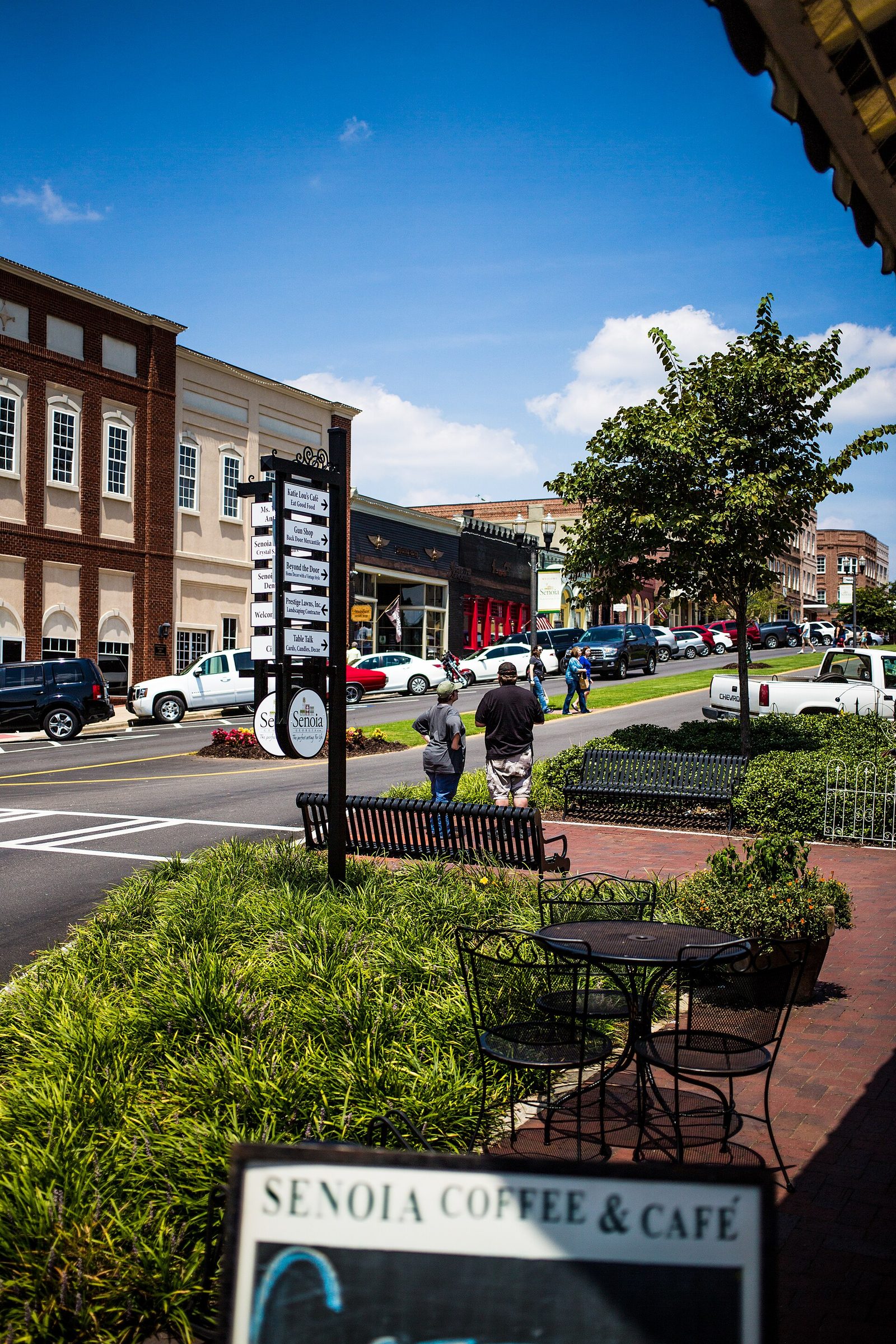
Forty minutes south of Atlanta in Coweta County, Senoia is the most filmed small town in the state. It played Woodbury in The Walking Dead, and long before that it stood in for period America in Driving Miss Daisy, Fried Green Tomatoes and a string of others. The reason is boring and useful: a compact brick main street, no visual clutter, and a local government that learned early how to work with productions.
What you can do: walk the street, which is public and free; eat somewhere on it; and visit the fan-facing shops, which have historically included a Walking Dead-themed store and a filming-location walking tour. Status changes here faster than anywhere else in this guide — retail tied to a show that ended has a short half-life — so check what is currently trading before you drive down, and treat any article more than a year old as fiction.
What you cannot do: visit the prison. The set that served as the prison in seasons three and four was built on private land outside town, and the standing structures are not accessible. Neither is the Alexandria neighborhood, which is a real street where real people live. Drive past it and you are photographing someone’s house.
Juliette — the Whistle Stop
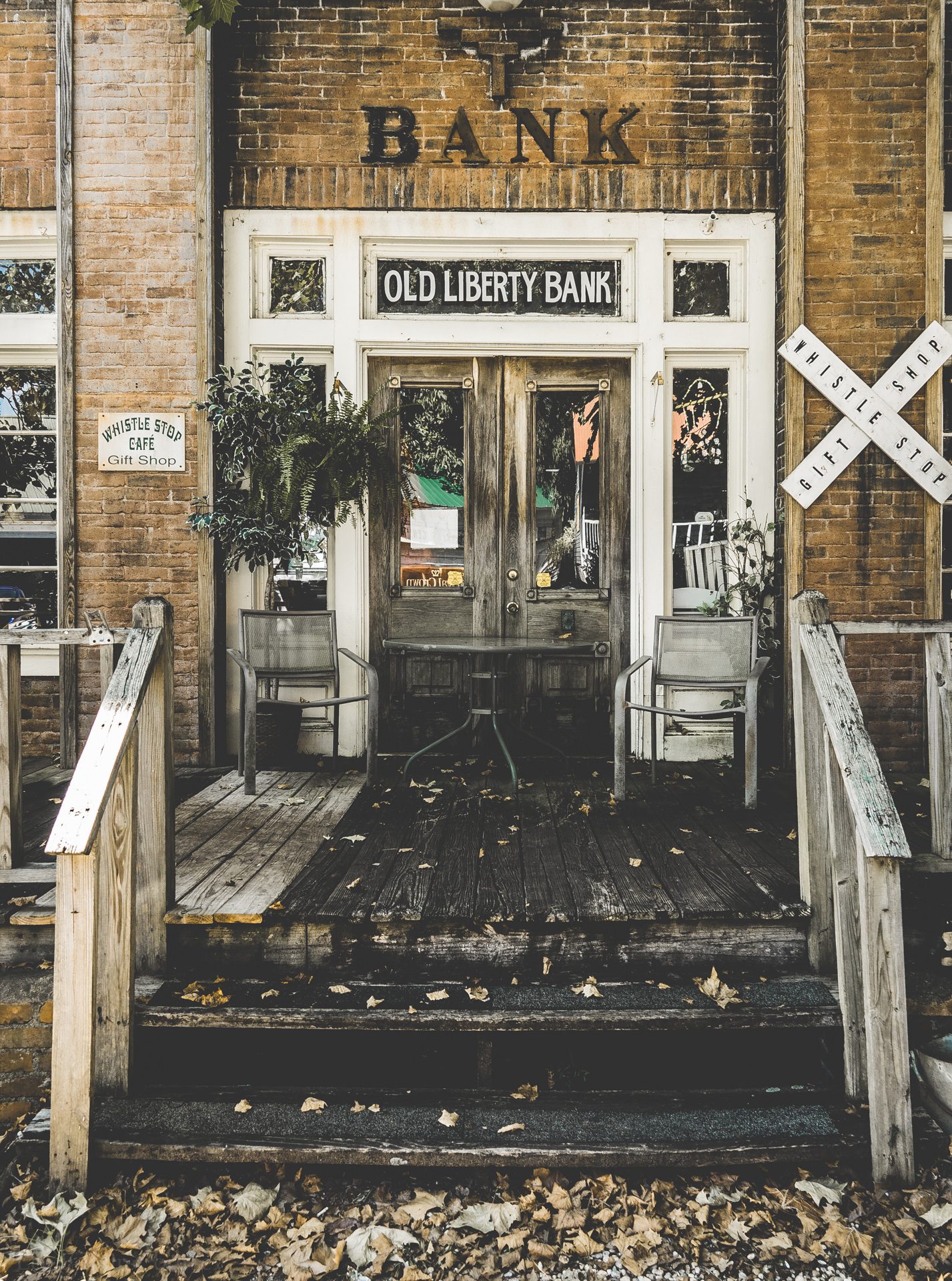
Twenty minutes north of Macon, on the Ocmulgee River, Juliette is two hundred yards of street beside a railroad line. Production designers built a café here for Fried Green Tomatoes in 1991; the town kept it, and the Whistle Stop Café has been serving fried green tomatoes ever since. The adjacent buildings house antique and gift shops.
It is a genuinely charming hour and a genuinely bad three. Come for lunch, look at the mill dam, buy something, leave. Trains still run through, close and loud. There is no admission charge to the street itself.
Covington — Mystic Falls
Forty-five minutes east of Atlanta on I-20, Covington’s courthouse square has been Mystic Falls in The Vampire Diaries, Sparta in In the Heat of the Night, and the backdrop for a great many other productions. Several private operators run location tours around the square and the surrounding streets; the square itself is public and free. Again, the residential locations are residences.
Savannah
Savannah’s Historic District has been on screen for decades, and two locations dominate the questions.
The Forrest Gump bench was a prop. It sat on the north side of Chippewa Square for the 1994 shoot and was removed afterward; it now lives indoors at the Savannah History Museum. People stand in the square looking for it every day of the year. The square is lovely and worth the visit for its own sake — just do not expect the bench.
The Mercer-Williams House on Monterey Square, from Midnight in the Garden of Good and Evil, is open for guided tours of the ground floor; the upper floors are a private home. And the Bird Girl statue from the book’s cover is no longer in Bonaventure Cemetery — it was moved to the Telfair’s Jepson Center years ago after the attention became unmanageable. Bonaventure is still worth going to. It is simply not where the statue is.
Beyond those two, Savannah has been a working location for forty years, partly because of the architecture and partly because the Savannah College of Art and Design put several thousand film students and a lot of production infrastructure in the middle of it. Glory used the city and the surrounding coast in 1989; The Legend of Bagger Vance used Savannah and the Golden Isles; more recent features have shot on Tybee Island and River Street. None of these left anything behind to visit, which is the general rule — the value of Savannah on a screen trip is that the city itself is the set, and you can walk all of it.
The Savannah Film Festival, run by the college, brings premieres and panels to the Historic District in the fall. Dates shift year to year; check the college’s own listing rather than a roundup.
Our Savannah travel guide covers the squares and walking routes in detail.
Atlanta and the metro
Most of what was shot in Atlanta was shot in places you already walk past. A few that are genuinely public:
- Westside Park, on the old Bellwood Quarry — the quarry appeared in The Walking Dead and Stranger Things, and it is now the city’s largest park, fully open, with the best skyline view in Atlanta from the quarry rim.
- Downtown and Castleberry Hill — Baby Driver used a great deal of both; the opening chase runs through streets you can stand on.
- Emory University’s Briarcliff campus and the streets of Jackson, an hour southeast, for Stranger Things‘ Hawkins exteriors.
- Lake Lanier and Lake Allatoona for Ozark. Our Georgia lakes and rivers guide covers access.
What is gone: Starcourt Mall. The interiors were shot in Gwinnett Place Mall in Duluth, which has been largely emptied and is being redeveloped. There is nothing to see, and people still drive out to look.
Filming etiquette, and the private-property problem
This is the part most location lists leave out, and it is the part that gets visitors shouted at.
- Assume a house is a house. A production rents a private home for a few weeks. The owners live there the rest of the time. Standing on the lawn, ringing the bell, or filming through a window is trespass, not fandom.
- An active set is a workplace. If you see cones, generator trucks and a security guard, the answer is no. Georgia neighborhoods post filming notices on lamp posts during production; they are a courtesy to residents, not an invitation.
- Studio gates are gates. Turning up at Trilith or Tyler Perry Studios without a booking gets you a polite refusal at a guard house.
- Small towns are living towns. Senoia, Juliette and Covington have a few hundred to a few thousand residents and a finite number of parking spaces. Park legally, spend money locally, and keep the noise down after dark.
- Drones are usually prohibited. Georgia state parks and historic sites require prior approval for commercial photography and a separate request plus FAA clearance for drone work. Film locations on private land simply say no.
- Check status before you drive. Fan-facing businesses open and close with the shows they serve. A phone call beats a two-hour round trip.
Music history: the deeper story
Georgia’s musical output is disproportionate to its size and far older than the film industry, and unlike the studios, much of it is visitable.
Macon — the essential stop
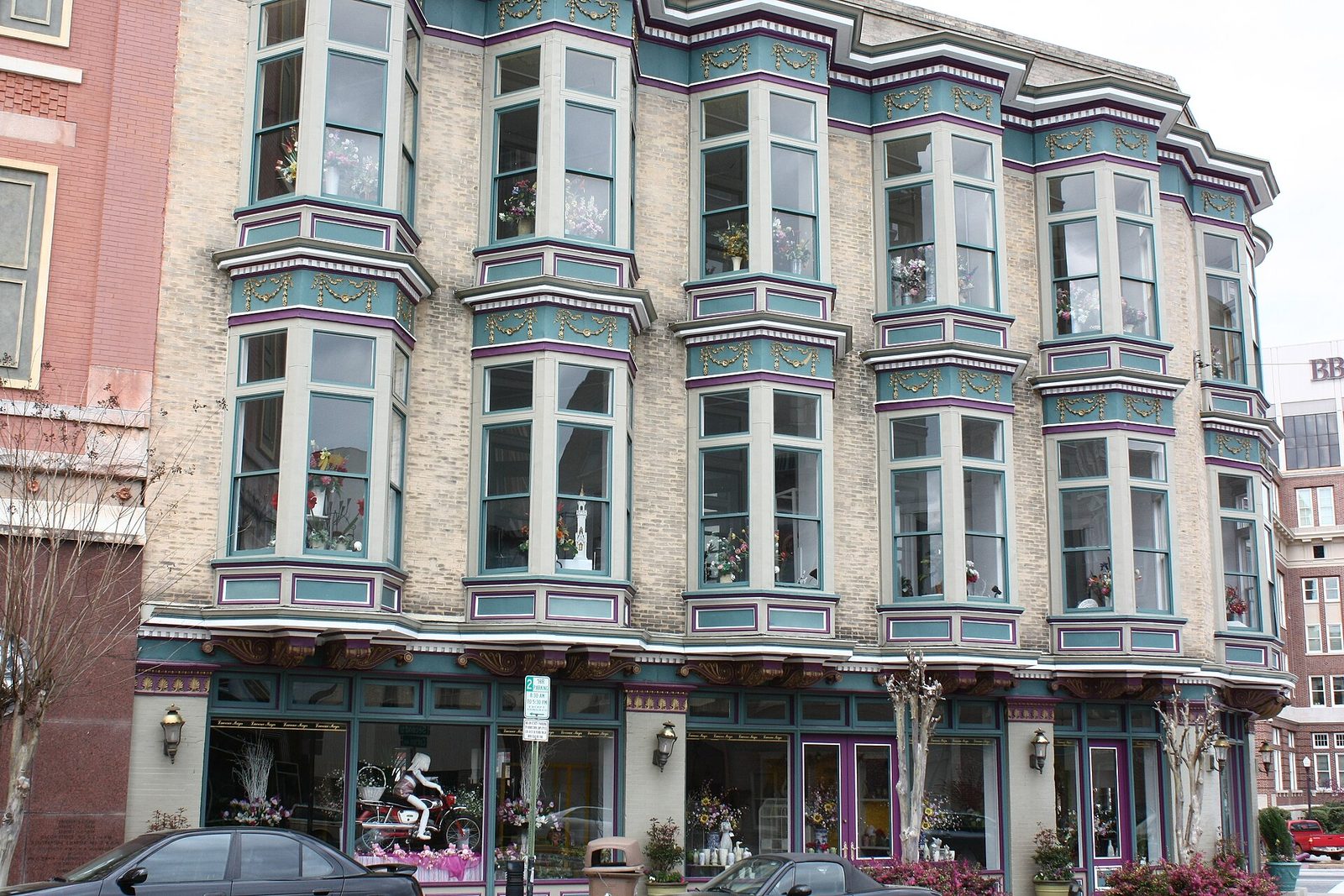
If you do one music day in Georgia, do Macon. Little Richard, Otis Redding and the Allman Brothers Band all came from or through this city of ninety thousand on the Fall Line, and the sites are within a few miles of each other.
- The Big House on Vineville Avenue — the Tudor house the Allman Brothers Band and their families lived in from 1970 to 1973, now the band’s museum. Instruments, stage clothes, Duane’s guitars, and the rooms themselves. The single best music museum in the state.
- Mercer Music at Capricorn — Capricorn Records’ original studio, where the Allmans, the Marshall Tucker Band and Wet Willie recorded, restored and reopened as a working studio with a museum attached. You can stand in the room.
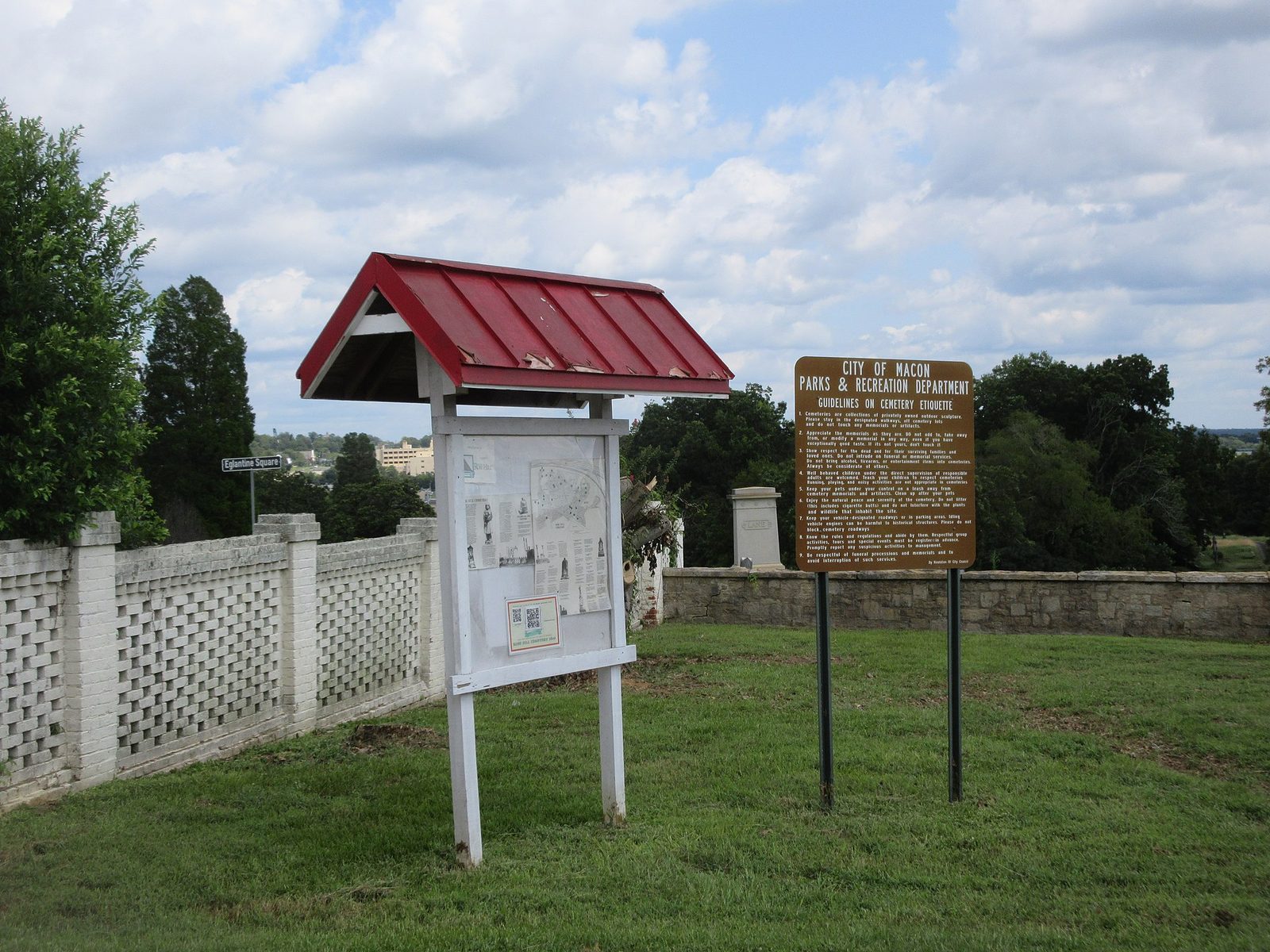
- Rose Hill Cemetery, on terraces above the Ocmulgee — where the band wrote and drank, and where Duane Allman and Berry Oakley are buried a few feet apart. “In Memory of Elizabeth Reed” is named for a headstone here. Go quietly; it is an active cemetery and people are visiting family.
- Otis Redding — a bronze statue in Gateway Park by the river, and the Otis Redding Foundation’s center downtown.
- Little Richard — his restored childhood home on Craft Street now operates as a resource center; the Macon of his childhood, Pleasant Hill, is a historic Black neighborhood cut through by I-75 in the 1960s.
- The Douglass on Martin Luther King Jr. Boulevard — a 1921 Black vaudeville and movie house where Redding, Richard and Ma Rainey all played. Still programming.
The Capricorn story is worth knowing before you go, because it explains why a mid-sized Georgia city mattered. Phil Walden managed Otis Redding out of Macon in the early 1960s; after Redding died in a plane crash in December 1967 at twenty-six, Walden founded Capricorn Records and signed a band built around two brothers from Daytona by way of Macon. What came out of that studio between 1969 and 1979 — the Allman Brothers Band, the Marshall Tucker Band, Wet Willie, Elvin Bishop — is most of what people mean by southern rock. The label went bankrupt, the building sat empty for decades, and Mercer University restored it. That it is a working studio again, with students recording in the room where At Fillmore East‘s band cut its records, is the reason it is worth an hour of your day rather than fifteen minutes.
Macon is 85 miles south of Atlanta on I-75, roughly 90 minutes without traffic. If you are combining it with heritage sites, our Georgia history and civil rights guide covers Ocmulgee Mounds and the Tubman Museum in the same city.
Athens — a scene, not a museum
Athens is 70 miles east of Atlanta and produced the B-52’s, R.E.M., Widespread Panic, Drive-By Truckers, of Montreal and Neutral Milk Hotel out of a university town of about 130,000. It is the one place in Georgia where the right move is to buy a ticket rather than an admission.
- The 40 Watt Club on West Washington Street — the room, more than any other, where this happened. Still a working venue with a nightly schedule.
- The steeple on Oconee Street — all that survives of St. Mary’s Episcopal church, where R.E.M. played their first show at a birthday party in April 1980. It is a small brick tower in a residential development, visible from the street.
- The Murmur trestle — the railroad trestle on the 1983 album cover was demolished, but timbers were saved and a section re-erected beside the Firefly Trail, which is a pleasant walk in its own right.
- Wuxtry Records on College Square, where Peter Buck was working when he met Michael Stipe. Still a record shop.
- Weaver D’s Fine Foods — the soul-food place whose motto R.E.M. borrowed for Automatic for the People.
Go on a night when something is on. Athens on a quiet Tuesday in July, with the students gone, is a nice college town and nothing more.
Atlanta
Atlanta’s music story is mostly hip-hop and mostly recent, which means it lives in neighborhoods and clubs rather than plaques. OutKast, Ludacris, T.I., Future, Migos and a generation of producers built one of the most influential regional sounds in American popular music out of the southwest side and East Atlanta.
- The Trap Music Museum near Howell Mill Road — part exhibit, part experience, and the most direct attempt anyone has made to interpret the scene for visitors.
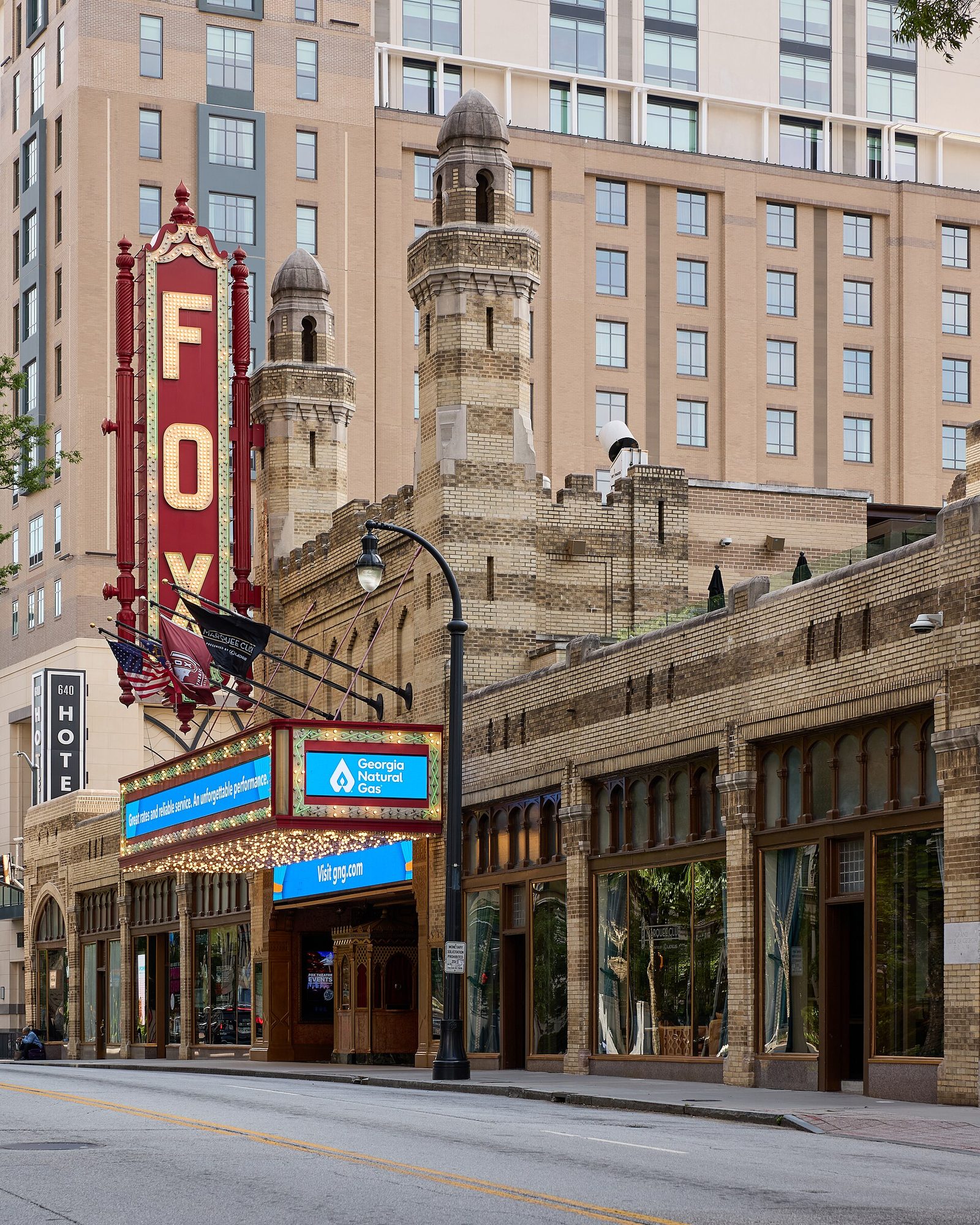
- The Fox Theatre on Peachtree — a 1929 Moorish-revival picture palace that survived demolition by public campaign in the 1970s, and still the best-looking room in the city. Building tours run several days a week.
- The Tabernacle downtown — a former Baptist church turned mid-size rock venue, with the balconies and organ pipes intact.
- Blues and roots — Northside Tavern and Blind Willie’s both still run live blues most nights, and both are unglamorous in the right way.
- Record shops — Criminal Records and Wax’n’Facts in Little Five Points, and Moods Music in the Old Fourth Ward, are all still trading and all still worth an hour.
- Cascade Family Skating on the southwest side — a roller rink that has been a fixture of Black Atlanta social life for decades and turns up repeatedly on screen. Open to anyone who can stay upright.
What you will not find is a hip-hop heritage trail, and the reason is instructive. The Dungeon — the East Point basement where Organized Noize produced OutKast’s first records and the Dungeon Family formed — is a private house. Stankonia Studios on Northside Drive is a working commercial studio. Magic City, which broke more records than most radio stations, is a nightclub. The places that made this music are places of business and places people live, not monuments, and the neighborhoods that produced it are ordinary residential Atlanta. Treat a self-guided drive accordingly, or take one of the guided hip-hop tours that run from downtown, which have local guides and the sense to stay on public streets.
Worth knowing: the Georgia Music Hall of Fame, which many older guides still list as a Macon attraction, closed in 2011. Its collection went to the University of Georgia. Do not plan around it.
Augusta and James Brown
Augusta, two hours east of Atlanta on I-20, is where James Brown grew up, shined shoes on Broad Street and first performed. A bronze statue of him stands on Broad Street in the middle of the roadway, which is an odd and very Augusta piece of civic design, and the Augusta Museum of History holds the largest public collection of his material — stage costumes, the 1962 Live at the Apollo story, personal effects. The city’s arena carries his name.
One honest note: Brown is buried in Beech Island, South Carolina, across the river on private family property, and it is not a visitor site. Augusta itself is a pleasant half-day, with the 1918 Imperial on Broad Street and a riverwalk, and the rest of the year it is mostly known for a golf tournament whose tickets you cannot buy.
The rest of the state
- Columbus — the Ma Rainey House on Fifth Avenue, home of Gertrude “Ma” Rainey, the mother of the blues, restored as a museum.
- Albany — Ray Charles was born here. Ray Charles Plaza on the Flint River has a bronze of him at a piano, and the Albany Civil Rights Institute nearby is built partly around the freedom-song tradition.
- Thomson — Blind Willie McTell country, east of Augusta, with an annual festival in his name.
- Savannah — Johnny Mercer was born here and is buried at Bonaventure Cemetery. Note the common confusion: the Mercer-Williams House was built for his great-grandfather, and Johnny Mercer never lived in it.
Who came from where
Georgia’s output crosses more genres than any single trip can cover. This is the shortlist, for orienting rather than for planning:
| Artist | Georgia connection | What is there now |
|---|---|---|
| Ray Charles | Born in Albany, 1930 | Ray Charles Plaza, Flint River |
| Ma Rainey | Columbus | Ma Rainey House museum |
| James Brown | Raised in Augusta | Broad Street statue; Augusta Museum of History |
| Little Richard | Born in Macon, 1932 | Restored childhood home, Craft Street |
| Otis Redding | Dawson and Macon | Gateway Park statue; foundation center |
| The Allman Brothers Band | Based in Macon from 1969 | The Big House; Capricorn; Rose Hill |
| Gladys Knight | Born in Atlanta, 1944 | No dedicated site |
| R.E.M. and the B-52’s | Athens, from 1976 and 1980 | The 40 Watt; the Oconee Street steeple |
| OutKast | East Point and Atlanta, from 1992 | Neighborhoods rather than sites |
| Alan Jackson | Newnan | Nothing formal; the town is pleasant |
| Johnny Mercer | Born in Savannah, 1909 | Grave at Bonaventure Cemetery |
| Blind Willie McTell | Thomson and Statesboro | Annual festival; a grave marker |
Note how many of those last entries say “nothing formal”. Georgia has been better at producing musicians than at commemorating them, and a fan trip built on statues will be short. The live rooms and the two or three serious museums are the substance.
Festivals worth planning around
The Savannah Music Festival runs 26 March to 11 April 2026, with tickets from $37 — a genuinely serious program spanning jazz, classical, blues and roots across venues in the Historic District. It is the single best reason to time a Georgia music trip.
Beyond it, Atlanta Jazz Festival takes over Piedmont Park over the Memorial Day weekend, Sweet Auburn Springfest fills Auburn Avenue in spring, and the Savannah Film Festival runs in the fall. Dates for these move year to year and we have not verified 2026 specifics — check each organizer rather than trusting a list. Our Georgia festivals and events guide carries the confirmed dates.
Themed routes, two to five days
Two days: Atlanta
Day one is the city on screen: Westside Park for the quarry and the skyline, Castleberry Hill and the downtown blocks from Baby Driver, and an afternoon at the Trap Music Museum. Day two is the venues — a Fox building tour in the morning, record shops in Little Five Points, and whatever is playing at the Tabernacle or Variety Playhouse at night. Add the town at Trilith if you want to see what a studio-adjacent development looks like.
Three days: Atlanta, Senoia, Macon
Day one in Atlanta as above. Day two runs south to Senoia for the morning, then across to Juliette for lunch at the Whistle Stop, arriving in Macon mid-afternoon for the Big House. Day three is Macon proper: Capricorn, Rose Hill, the Otis Redding statue, and back up I-75. This is the strongest three days on the page.
Four days: add Athens
Run the three-day route, then cut east from Macon to Athens on US-129 and US-441 — about 90 minutes through the Antebellum Trail towns. Spend the afternoon on the steeple, the trestle and the record shops, and the night at the 40 Watt. Return to Atlanta on GA-316 in an hour and a quarter.
Five days: add Savannah
From Macon, take I-16 east to Savannah — 170 miles, two and a half to three hours, and famously empty, so fill up before you go. Give Savannah a full day for the squares, the Mercer-Williams House and Bonaventure, and time it for late March if you want the Music Festival. Our Georgia road trips guide covers the scenic alternatives if you would rather not take the interstate.
If the obvious choice is booked out
Three substitutions that work when the first choice does not.
- Senoia on a busy Saturday — go to Covington instead. Similar square, similar production history, more parking, and an hour closer to I-20 if you are heading east anyway.
- No tickets in Athens — Atlanta’s Variety Playhouse, Terminal West and the Earl in East Atlanta all program most nights of the week, and you do not have to drive 70 miles each way afterward.
- Macon’s museums closed on a Monday — much of the city’s music history is outdoors and free: Rose Hill Cemetery, the Otis Redding statue in Gateway Park, and the Pleasant Hill streets. Call ahead, because opening days vary by site and several close early in the week.
Practical planning
When to go
Spring and fall, as with everything in Georgia — late March through April and all of October. Athens runs on the university calendar, so a term-time weekend has four times the live music of a July one, and a home football Saturday makes the town impassable and every hotel expensive. Savannah is at its busiest around St. Patrick’s Day in March. Summer heat matters less here than on a history trip, because most of this is indoors or in the evening, but the afternoon thunderstorms are still real. Our best time to visit Georgia guide has the month-by-month detail.
Getting around
You need a car for everything outside central Atlanta. Senoia, Juliette and Covington have no public transport connection worth using. Within Atlanta, MARTA is $2.50 one way with four free transfers inside three hours and covers downtown, Midtown and the airport; Westside Park and the Trap Music Museum do not, realistically, and want a rideshare.
What it costs
| Item | 2026 cost | Note |
|---|---|---|
| Walking Senoia, Juliette, Covington | Free | Public streets; spend in the shops |
| Savannah Music Festival | From $37 | 26 Mar – 11 Apr 2026 |
| MARTA | $2.50 one way | Four transfers in three hours |
| Museum admissions | Not verified here | Big House, Capricorn, Trap Music Museum, Mercer-Williams — check each |
| Club covers in Athens | Varies widely | Free to $40 depending on the act |
| Studio tours | Usually unavailable | Check the studio’s own site |
We have deliberately not printed museum admission figures we could not verify against the operator inside this guide’s research budget. Check each before you go; most of the Macon sites are in the ten-to-twenty-dollar range, but that is a pattern, not a quote.
Accessibility
This is a mixed picture and worth checking site by site. The Fox runs accessible building tours and the auditorium has accessible seating. The Big House is a 1900s residence with stairs between floors, so call ahead about which rooms you can reach. Rose Hill Cemetery is terraced, unpaved and steep in places. Senoia, Covington and Savannah’s squares are level and walkable; Juliette’s boardwalk and steps are not. Athens venues vary enormously and the older rooms are the worst — ask when you buy, because a basement room with a flight of stairs and no lift is common and rarely advertised as such. Mercer Music at Capricorn and the Trap Music Museum are both modern conversions and generally the easiest of the music sites. The film towns are the simplest of all: a level sidewalk on a main street, with the usual small-town caveat that curb cuts are inconsistent and the historic boardwalks in Juliette are neither level nor even.
What is not worth your time
- Driving out to Gwinnett Place Mall. Starcourt is gone. The building is emptied and under redevelopment.
- Hunting the Forrest Gump bench in Chippewa Square. It was a prop, it is indoors at the Savannah History Museum, and the square has no marker.
- Turning up at a studio gate. Trilith and Tyler Perry Studios are workplaces with security.
- The Georgia Music Hall of Fame. Closed since 2011. Older guides still list it.
- Residential filming locations. The Alexandria street in Senoia, the Mystic Falls houses in Covington, the Hawkins homes in Jackson — all private, all lived in.
- Athens out of term with nothing booked. The venues are the attraction. With no show on, you have driven 70 miles to look at a brick steeple.
- Any fan attraction you have not phoned. This is the most volatile category of tourism in the state, and the listicles do not update.
Frequently asked questions
Can I tour a film studio in Georgia?
Rarely, and never reliably. Trilith, Assembly Atlanta and Shadowbox are closed working facilities. Tyler Perry Studios has run public tours intermittently rather than continuously — check their own site rather than a third-party listing, and book well ahead if a date is open.
Where was The Walking Dead filmed?
Across a wide spread of Georgia, with Senoia standing in for Woodbury and much of the later series. Senoia’s main street is public and free to walk. The prison set and the Alexandria neighborhood are on private land and are not visitable.
Is the Whistle Stop Café real?
It is now. The café building in Juliette was created for Fried Green Tomatoes in 1991 and has operated as a working restaurant ever since. The town around it is two hundred yards long, so pair it with Macon rather than making it a day.
Where should I go for music history if I only have one day?
Macon. The Big House, Mercer Music at Capricorn and Rose Hill Cemetery sit within a few miles of each other, and no other city in the state concentrates this much in one place.
Is the Forrest Gump bench in Savannah?
Not in Chippewa Square. It was a film prop, removed after the 1994 shoot, and is displayed at the Savannah History Museum. Visit the square for the square.
What is the Georgia film tax credit?
A production incentive of up to 30% on qualifying spend, running since 2005, with no annual cap and no expiry date. It is the reason the industry is here, and the reason it has stayed through several rounds of competition from other states.
Can I find out where something was filmed?
The state’s own locations directory at locations.georgia.org is public and searchable. It is built for location scouts rather than fans, which makes it more accurate and less convenient than a fan wiki — and it is the fastest way to tell a public square from a private farm.
Is there a James Brown museum?
Not a standalone one. The Augusta Museum of History holds the major public collection, and there is a statue on Broad Street. His grave is on private family land in South Carolina and is not open to visitors.
How much driving does a film and music trip involve?
More than you would like. Atlanta to Macon is 90 minutes, Macon to Athens another 90, Athens back to Atlanta 75 minutes, and Macon to Savannah two and a half to three hours on an empty interstate. Senoia, Juliette and Covington are each 40 to 60 minutes out of Atlanta in three different directions. Budget a car and accept it.
Are there hip-hop tours in Atlanta?
Yes, several operators run guided tours covering the southwest side, East Point and the Old Fourth Ward. They are the sensible way to do it: the significant places are private homes, working studios and nightclubs rather than sites, and a guide keeps you on public ground and adds the context a drive-past cannot.
Can I visit where The Walking Dead prison was?
No. The prison set was built on private land outside Senoia and is not accessible. The same goes for the Alexandria set, which is a real residential street.
Is Athens worth the trip from Atlanta?
On a night with a show booked, yes, emphatically. On a quiet weekday out of term, no. Check the 40 Watt’s calendar first and let it decide the date.
Related Georgia Guides
- Atlanta travel guide — neighborhoods, MARTA and where to eat between venues.
- Savannah travel guide — the squares, on foot and in order.
- Georgia history and civil rights sites — the heritage layer under Macon, Atlanta and Savannah.
- Georgia festivals and events — confirmed 2026 dates, and which ones are worth the crowd.
- Day trips from Atlanta — Senoia, Juliette and Covington with realistic drive times.
- Things to do in Georgia — the statewide overview.
- Best time to visit Georgia — month by month.
Photo Credits
Downtown Senoia, used as Woodbury in The Walking Dead: photo by Counse / Wikimedia Commons (CC BY 2.0)
The Old Liberty Bank building beside the Whistle Stop Café, Juliette: photo by Lee Coursey / Wikimedia Commons (CC BY 2.0)
Rose Hill Cemetery, Macon: photo by Infrogmation / Wikimedia Commons (CC BY-SA 4.0)
Sources: Georgia Department of Economic Development for the film tax credit, stage space and locations directory figures; the Georgia Film Office locations directory at locations.georgia.org; Savannah Music Festival for 2026 dates and ticket pricing; MARTA for fares; Georgia State Parks photography and filming policy for drone and commercial-shoot rules. Checked September 2026. Fan-facing attractions in this category change status frequently — verify with the operator before you travel.
Georgia Tourism Guide is an independent publication. We are not affiliated with Explore Georgia, the Georgia Department of Natural Resources, the National Park Service or any attraction listed here.