The most common way a Georgia camping trip goes wrong has nothing to do with the weather. It is somebody discovering in October that the site they wanted at Vogel was taken in January, or pulling a 38-foot fifth wheel up a mountain road toward a campground whose longest pad is 30 feet. Camping in Georgia is unusually good value — state park sites start at $23 a night and the national forest is free — but it runs on booking windows, rig lengths and a handful of agency rules that are published in four different places and almost never in one. This guide puts them together: what each kind of camping means here, what it costs, how far ahead to book, the hookup and rig-length reality for RVs, dispersed-camping rules in the national forest, and the wildlife and hunting-season facts that matter. Everything was checked in September 2026. Georgia here is the American state, not the country in the Caucasus.
The structural fact to start from: Georgia’s State Parks & Historic Sites Division runs 49 state parks across more than 84,000 acres, the Chattahoochee-Oconee National Forest covers most of the north Georgia mountains, and the Army Corps of Engineers runs campgrounds on nearly every big lake. Between them, the public sector owns the best camping in this state by a wide margin.
The short answer: four kinds of camping
| Type | Cost | Book | Best for | The catch |
|---|---|---|---|---|
| State park campground | $23–$50 per night + $10 parking | 13 months ahead | Almost everyone; RVs and tents alike | Popular sites go the day the window opens |
| State park yurt or cottage | $75–$100 yurt, $75–$250 cottage | 13 months ahead | Camping without the gear | Limited numbers; no cleaning fee, which helps |
| Corps of Engineers campground | Varies by lake | Federal system | Waterfront sites on the big lakes | Separate booking system from the state parks |
| Dispersed, national forest | Free | No reservation | Self-sufficient campers | 14 days in any 30; no facilities at all |
Public, private and dispersed: what the words mean here
Three categories, and the differences are larger in Georgia than in many states.
- Developed public campgrounds — state parks and Corps of Engineers parks. Numbered sites, hookups, bathhouses, dump stations, a gate and a ranger. Reserved in advance through an official system. This is what most people mean by camping here, and it is the best value.
- Private campgrounds and RV parks — everything from a full-service resort with a pool to a gravel lot behind a gas station. Generally more amenities, generally more expensive, and quality varies enormously. They also carry Georgia’s short-term lodging charges, which public campgrounds largely do not.
- Dispersed camping — pitching on national forest land outside a developed campground, for free, with no reservation, no water, no toilet and no ranger. Legal across most of the Chattahoochee-Oconee National Forest, subject to the rules below. This is where Georgia’s camping gets genuinely cheap and genuinely demanding.
Georgia State Parks: the default choice
What it costs
Published rates, checked September 2026: campsites $23 to $50, cottages and cabins $75 to $250 depending on park, season and size, and yurts $75 to $100. Parking is $10 per vehicle per day, up from $5 on 1 January 2026, with an annual ParkPass at $70 — 50% off for ages 62 and over and 25% off for military and veterans, in person only. There is no separate cleaning fee on park accommodation, which is why a park cottage frequently beats a private cabin advertised at a similar nightly rate.
Arithmetic worth doing before you arrive: if your trip involves seven or more days of state park parking, the $70 annual pass has already paid for itself. A week of camping across two or three parks hits that easily.
The booking window is the whole game
Reservations open 13 months ahead for everyone and 14 months for Georgia residents, an extended-window benefit DNR added for residents. A 50% deposit confirms a booking made 15 or more days out, with the balance due at check-in; booked 14 days or fewer ahead, it is payment in full. Book online or on 1-800-864-7275.
What that means in practice: the lakeside sites at Vogel, Unicoi, Cloudland Canyon, Amicalola Falls and Red Top Mountain for an October weekend are taken roughly a year in advance, largely by Georgia residents using the extra month. If you are planning a fall mountain trip, either book at the window or plan for a weekday. Midweek availability in the same parks, in the same month, is often wide open.
Yurts, pioneer camping and the in-between options
Georgia’s park system has more than tents and RV pads, and the middle categories are underused.
- Yurts at $75 to $100 a night come with beds, electricity and a deck, and split the difference between a tent and a cabin. They are the cheapest way to sleep somewhere genuinely beautiful in this state without owning gear.
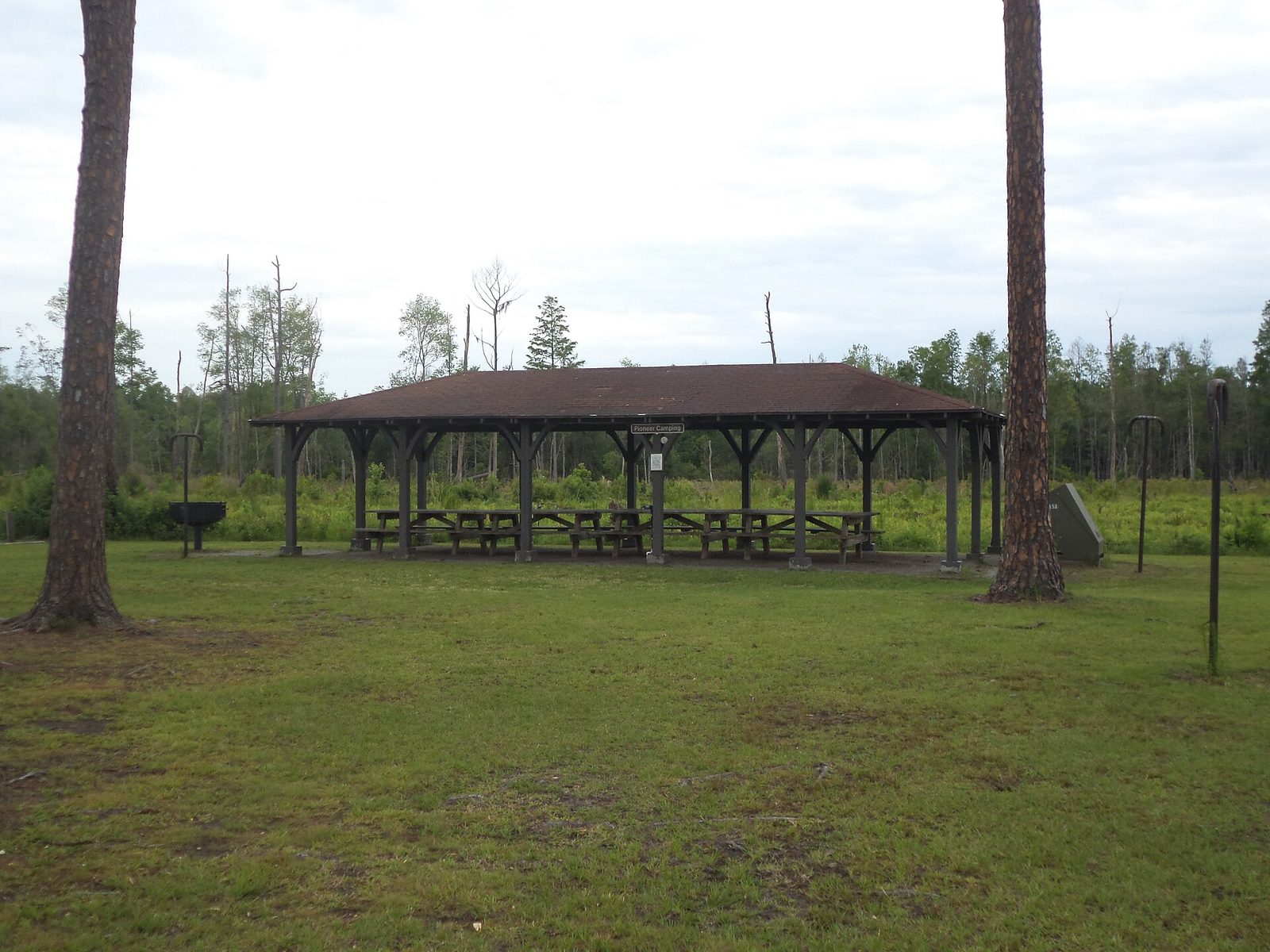
- Pioneer camping areas are group sites — a shelter, tables, a fire ring, a water source and a pit or vault toilet, booked as a unit. Designed for scout troops and extended families, and priced per group rather than per person.
- Backcountry and walk-in sites exist at several parks for people who want to carry gear a short distance and be away from vehicles without a genuine expedition.
Pets
Better than most states. Dogs are welcome in parks and campgrounds on a leash no longer than six feet, with the owner present at all times, and more than 40 parks take dogs of any breed or size in their campgrounds with no extra pet fee. Leashed dogs are allowed on almost all park trails, with specific exceptions. Some cabins are dog-friendly and most are not, so confirm the specific unit before booking rather than after.
RVs: hookups, rig length and the things that catch people out
Georgia’s state park campgrounds are well set up for RVs by public-campground standards. Most offer a mix of pull-through and back-in sites with 30 and 50-amp electric and water, many with sewer, and all campgrounds have dump stations. Comfort stations with hot showers are standard. Several parks also offer cable hookups.
Rig length is the variable that matters and the one no summary can answer. Maximum site length differs park by park and site by site — Hard Labor Creek, for example, has 51 sites taking rigs up to 45 feet, while mountain parks on tighter ground have considerably shorter pads. The reservation system lets you filter by site length, and that filter is the single most useful thing on it. Use it before you fall in love with a park.
Three further cautions for anyone in a large rig:
- Access roads, not just pads. A site can be long enough while the road to it is not. North Georgia park roads are narrow, steep and switchbacked, and a 40-foot rig that fits the pad may still struggle to reach it. Call the park and ask about the approach, not just the site.
- Levelness. Mountain sites are cut into slopes. Bring more leveling blocks than you think you need.
- Generator hours. These are set locally and enforced. Check the specific park’s rules rather than assuming a statewide window.
Corps of Engineers and other federal campgrounds
The Army Corps of Engineers runs campgrounds on Lanier, Allatoona, Hartwell, Carters, Clarks Hill and West Point, and they are frequently in better waterfront positions than the private sites nearby. They book through the federal reservation system rather than the state one, which is the detail people miss when a state park search comes up empty — the lake you wanted may have availability under a different agency.
Note that Corps day-use and boat-launch fees are separate from camping. At Lake Lanier, day use and launching rose from $4 to around $8 in summer, so verify current rates with the Mobile District before you arrive.
Two other federal options worth knowing. The Forest Service runs developed campgrounds in the Chattahoochee-Oconee, generally simpler and cheaper than state parks — Lake Winfield Scott and the campgrounds around Lake Blue Ridge among them. And Cumberland Island National Seashore offers the most memorable camping in Georgia: entrance is $15 per person for seven days, the ferry from St. Marys is $44 plus tax for adults and takes 45 minutes, reservations open six months ahead and sell out, the park is cashless, and there is no food, no water and no shop on the island. Everything comes in with you and everything leaves with you.
Dispersed camping in the national forest
This is Georgia’s free option and the rules changed recently, so it is worth getting right.
Dispersed camping on the Chattahoochee-Oconee National Forest requires no reservation and no fee. What it now carries is a camping stay limit: Forest Order CO-25-02, issued 6 May 2025 and effective to 6 May 2030, prohibits camping longer than 14 days in any 30-day period, and campers must leave forest lands before returning. That order was a response to long-term occupation of dispersed sites, and it is enforced.
The other standing rules:
- Camp at least 200 feet from any water source, to protect streams and the riparian ground beside them.
- There are no facilities. No water, no toilet, no trash collection. Carry water in and carry everything out, including food waste.
- Fire restrictions change. Check the current Forest Supervisor’s orders before you light anything; drought-season bans are issued without much notice.
- Check for closures. The Forest Service publishes supervisor’s orders online, and specific areas are periodically closed for restoration or safety.
Dispersed camping is genuinely good in Georgia — Forest Service roads off GA 60, GA 180 and the Cohutta area put you somewhere quiet for nothing — but it requires more self-sufficiency than the state parks, and cell coverage in most of it is patchy to absent.
Backcountry camping and the bear rule
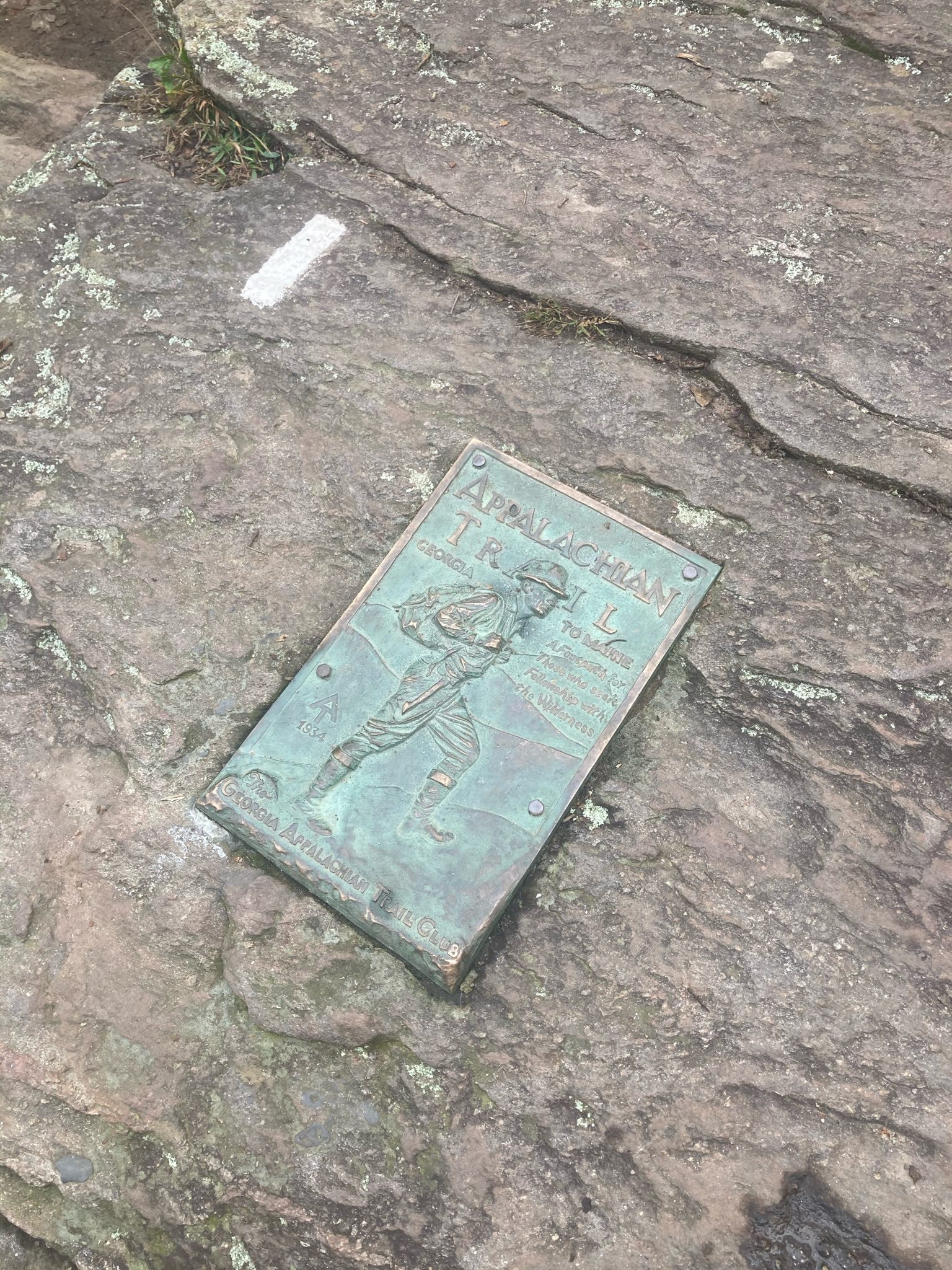
The Appalachian Trail’s southern terminus is at Springer Mountain, and the Georgia section is the busiest backcountry corridor in the state — busiest of all in March and April, when the northbound thru-hiker bubble passes through.
The rule that catches people out is the bear canister requirement. Hard-sided bear canisters are required for overnight camping on the Appalachian Trail between Jarrard Gap (AT mile 26.1) and Neel Gap (mile 31.7), and anywhere within a quarter mile of the AT in that stretch, from 1 March to 1 June each year. That is the Blood Mountain section, and the rule dates from a 2012 Forest Service order issued after repeated bear conflicts at the 1934 CCC stone shelter on the summit. Day hikers are not affected — this applies to overnight camping only.
The other backcountry option is the Okefenokee, and it is the most constrained in Georgia. Wilderness canoe camping permits are released only two weeks ahead, by phone, on selected weekday mornings, which makes a multi-day paddle a planning exercise rather than a decision. Refuge entry is $5 per vehicle for seven days. Low water has been limiting boat and trail access, so call before committing to the drive. Stephen C. Foster State Park, reached through Fargo, is a designated dark-sky park and the best night sky in the state.
Where to camp, region by region
North Georgia mountains
The busiest and the best. Vogel on Lake Trahlyta, Unicoi near Helen, Black Rock Mountain above Clayton — the highest-elevation state park in Georgia — Amicalola Falls with its lodge and AT hiker shelter, Cloudland Canyon on Lookout Mountain and Fort Mountain above Chatsworth. Add the Forest Service campgrounds and the dispersed sites on the forest roads. Cooler than Atlanta by ten to fifteen degrees in summer, and booked solid on October weekends.
The coast
Underrated for winter camping. Skidaway Island near Savannah, Fort McAllister south of it, Crooked River near St. Marys for a Cumberland Island trip, and Cumberland itself. The coast in January is mild, cheap and nearly empty, and it is the one part of Georgia where a winter camping trip is straightforwardly pleasant rather than an endurance exercise. Summer here is hot, humid and buggy.
Middle Georgia
The overlooked middle. High Falls between Atlanta and Macon, Indian Springs — among the oldest state parks in the country — Hard Labor Creek near Madison with its long RV sites, and Fort Yargo near Winder. None of them are destinations in themselves, and all of them are easy, close to the interstates and rarely full.
Southwest and south Georgia
Providence Canyon near Lumpkin, Florence Marina on Walter F. George, Georgia Veterans on Lake Blackshear near Cordele, and Stephen C. Foster in the Okefenokee. Flat, hot in summer, excellent from October to April, and the emptiest camping in the state.
Twelve campgrounds worth the drive
Chosen for the site rather than the facilities, with the practical catch attached to each.
| Campground | Region | Why | Catch |
|---|---|---|---|
| Vogel | North mountains | Lake Trahlyta, beach, cottages, one of Georgia’s oldest parks | Fall weekends gone a year ahead |
| Cloudland Canyon | Northwest | Rim sites above a genuine canyon; yurts and cottages | A long way from Atlanta; steep trails |
| Black Rock Mountain | Rabun County | Highest-elevation state park in Georgia; three-state views | Cold and often fogged in; short season |
| Amicalola Falls | North mountains | Lodge, cottages, campground and the AT approach trail | Busy with thru-hikers in March and April |
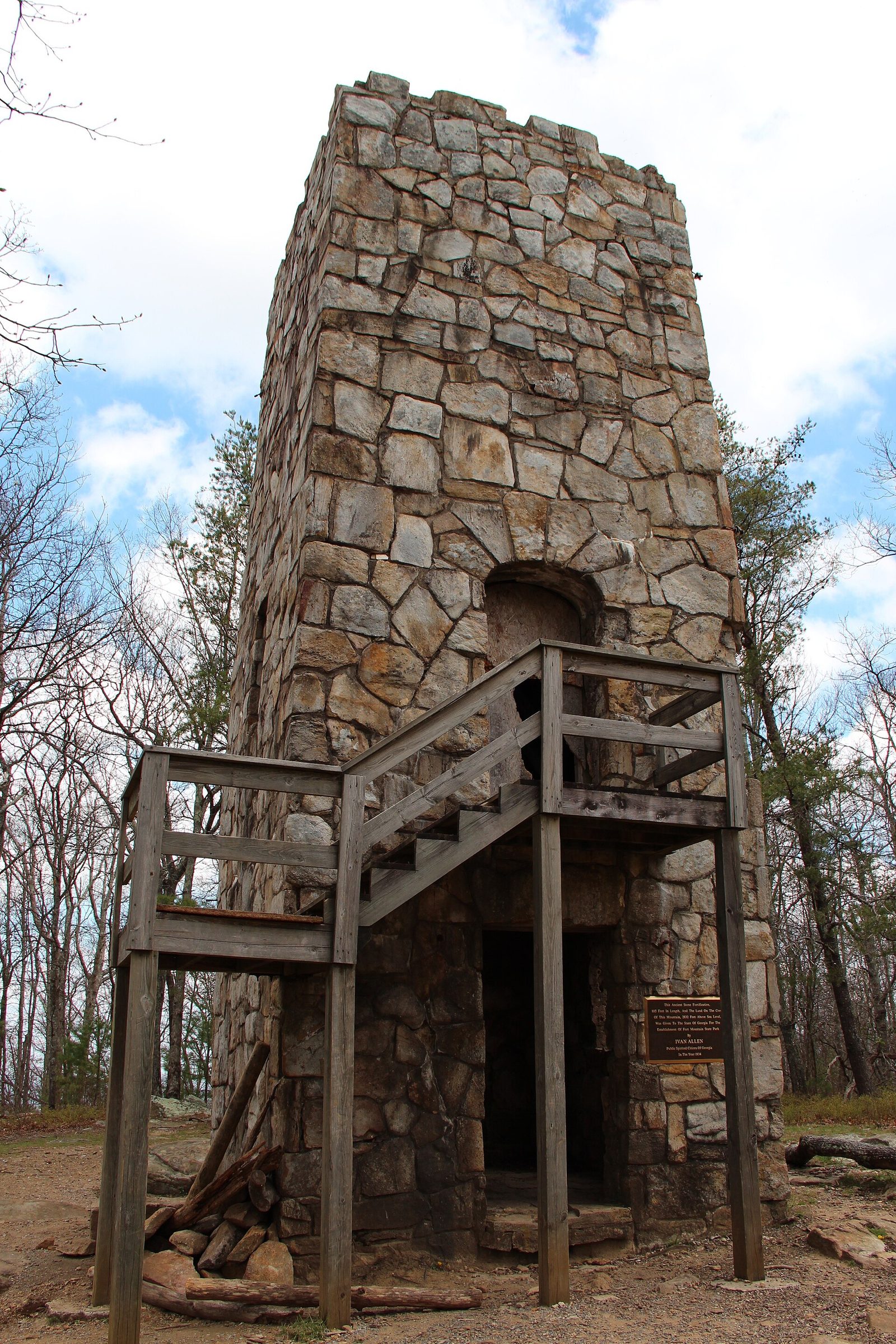
| Fort Mountain | Chatsworth | Stone tower, lake, and far fewer bookings than Vogel | Access road is steep; check rig length |
| Unicoi | Near Helen | Lake, lodge, and two miles from Anna Ruby Falls | Helen traffic during Oktoberfest |
| Red Top Mountain | Lake Allatoona | Closest good lake camping to Atlanta | Weekend boat traffic |
| Tallulah Gorge | Rabun County | Gorge on the doorstep; good facilities | Floor permits need an 08:00 start |
| Hard Labor Creek | Near Madison | 51 sites taking rigs up to 45 feet; easy interstate access | Pleasant rather than spectacular |
| Skidaway Island | Near Savannah | Marsh, live oaks, and Savannah 20 minutes away | Hot and buggy from May to September |
| Stephen C. Foster | Okefenokee | Dark-sky park; on the water at first light | Two hours from anywhere; low water limits access |
| Cumberland Island | Coast | The best camping in Georgia, without qualification | Ferry six months ahead; carry in everything |
If you are choosing one and have never camped in Georgia: Vogel in spring, Red Top Mountain if you want it easy, Cloudland Canyon if you want the view. If you have done all three, go to Cumberland.
Private campgrounds: when they are worth it
Public land wins on setting almost every time in Georgia, so the case for a private campground has to be made on something else. Usually it is one of four things.
- Full hookups with sewer at the site, for longer stays or larger rigs, where the state park has electric and water only.
- Availability, which is the honest main reason. When the October mountain weekend you wanted was booked in January, a private campground twenty minutes away is the difference between a trip and no trip.
- Amenities children care about — pools, playgrounds, organized activities — that public campgrounds generally do not provide.
- Late arrival. Private parks are more forgiving about checking in after dark than a state park gate is.
Two things to check before booking one. First, the total: private campgrounds carry Georgia’s lodging charges in a way public ones largely do not, so read the tax and fee line rather than the nightly rate. Second, the actual setting — “RV resort” in Georgia covers everything from a wooded lakefront to a gravel field beside a highway, and the photographs will not always tell you which.
Weather, wildlife and hunting season
Four seasonal facts that shape a Georgia camping trip.
Summer storms. Afternoon thunderstorms build most days from June to August. They are usually short and occasionally severe, and the practical response is to have camp set before mid-afternoon rather than after it. Below the Fall Line — the line running roughly Columbus to Macon to Augusta — add gnats from about May to September, in numbers that make a brimmed hat genuinely useful.
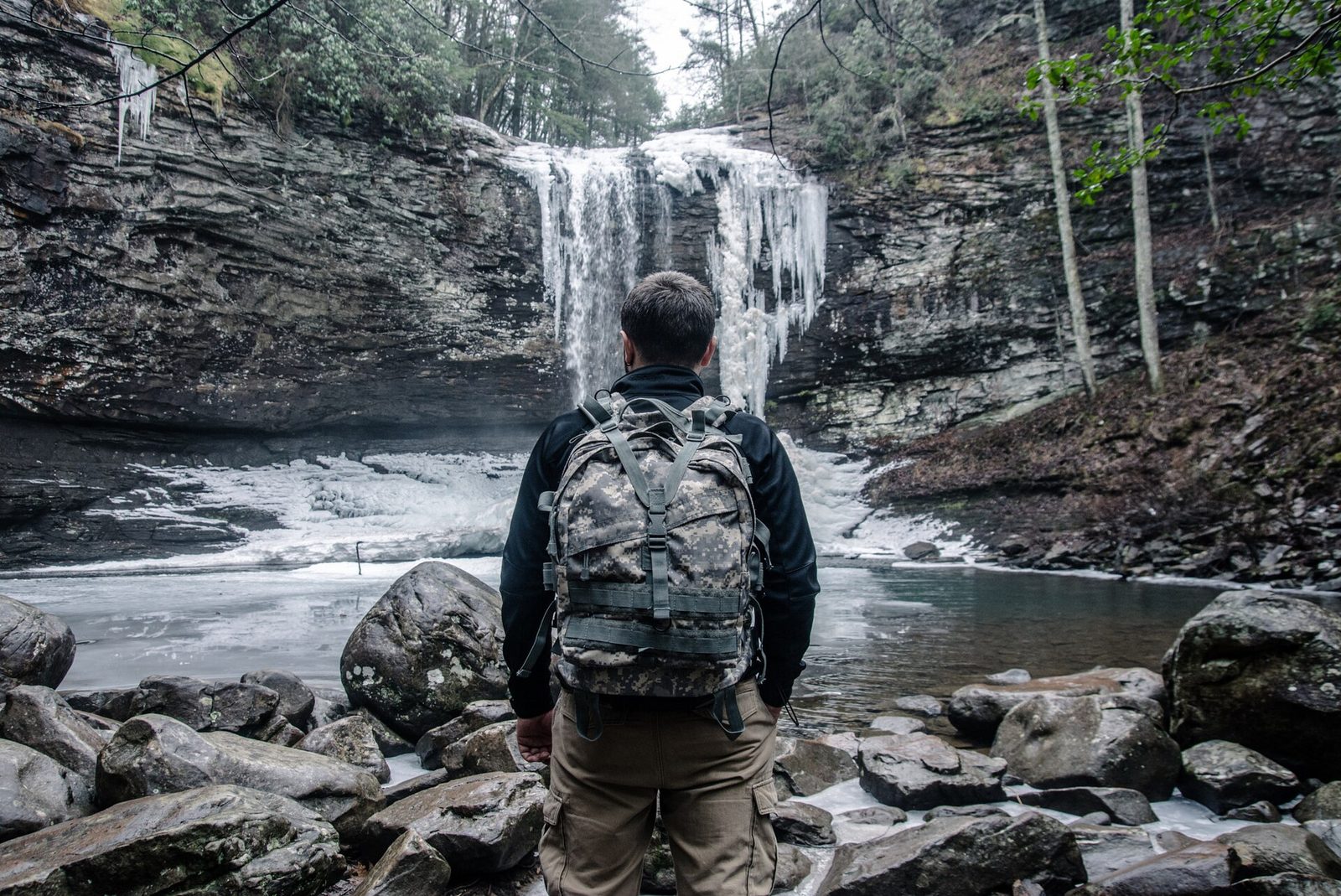
Winter ice in the mountains. GA 348, GA 180 and the higher reaches of GA 60 ice over and are gated with little warning. Check Georgia 511 at 511ga.org before committing to a mountain campground between December and March.
Bears. North Georgia has a healthy black bear population and the mountain campgrounds have the food-storage rules to match. Use the provided storage where it exists, a canister where it is required, and never leave food or scented items in a tent. The Blood Mountain corridor rule above is the strictest in the state and exists for a documented reason.
Hunting season. This is the one most campers never think about. Georgia’s statewide firearms deer season runs 17 October 2026 to 10 January 2027, with archery from 12 September to 9 October 2026 and primitive weapons and youth firearms 10 to 16 October; nine southwest counties extend to 14 January 2027. Hunters and anyone accompanying them must wear at least 500 square inches of daylight fluorescent orange or pink above the waistline during firearms and primitive-weapons deer or bear season, and hunter orange is required on wildlife management areas, VPAs and federal lands during those hunts. Camping and hiking are allowed year-round on WMAs unless posted. If you are camping in the national forest in late October, wear blaze orange when you walk out of camp.
Camping by season
Spring, March to May
The best all-round camping season in Georgia and the most underbooked relative to how good it is. Waterfalls run hardest, temperatures are comfortable statewide, the gnats have not started and the mountain campgrounds that are impossible in October have availability in April. The two caveats: pollen coats everything for a fortnight in late March and early April, and this is when the Appalachian Trail thru-hiker bubble moves through Amicalola Falls and Springer Mountain, so the AT corridor is at its busiest.
Summer, June to August
Go up or go to water. The mountains run ten to fifteen degrees cooler than Atlanta, and the lake campgrounds are the other answer. Afternoon thunderstorms build most days, humidity is constant, and below the Fall Line the combination of heat index and gnats makes tent camping genuinely unpleasant for most people. Set camp early, plan the afternoon around shade or water, and expect condensation every morning.
Fall, September to November
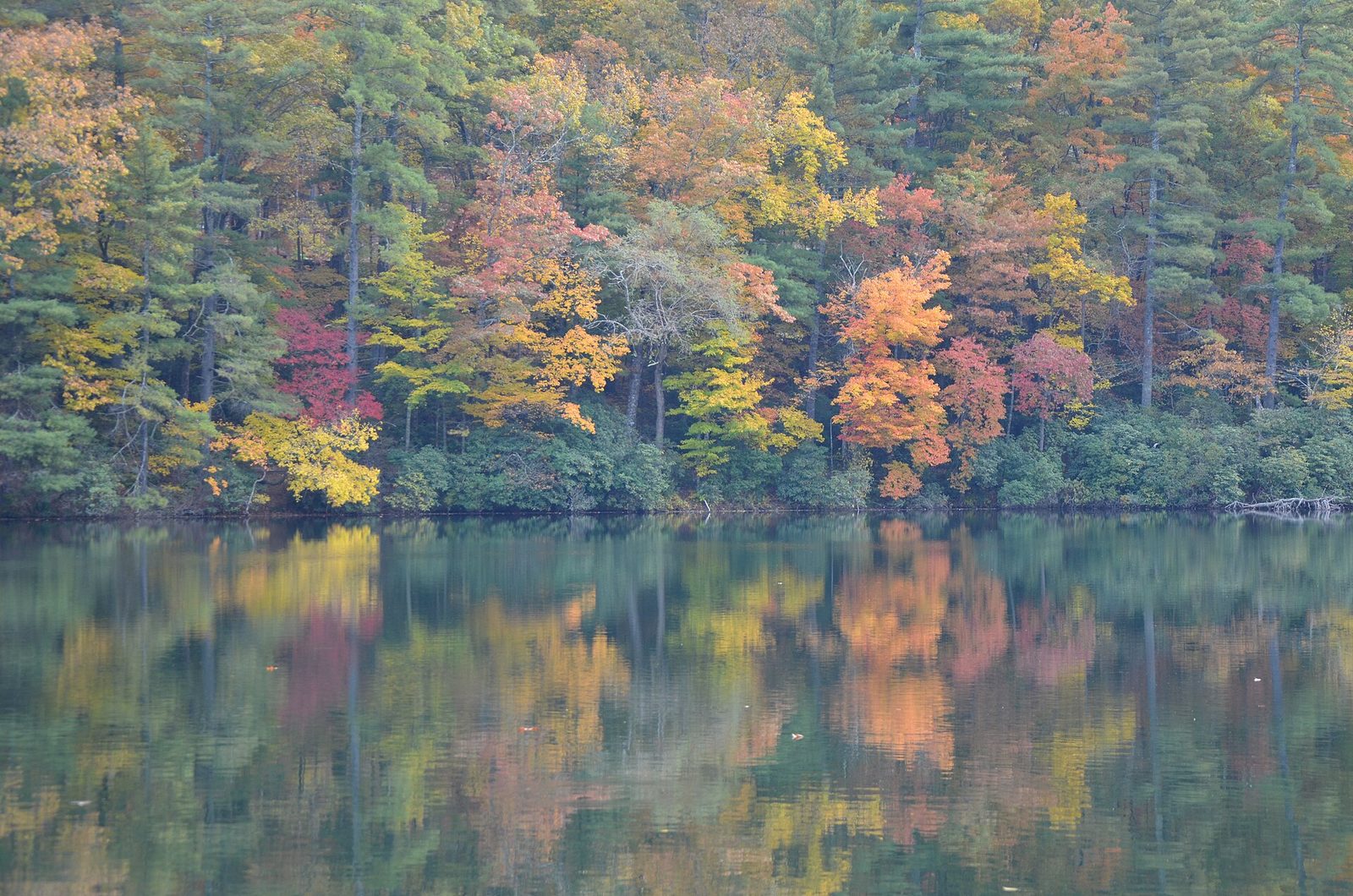
The peak season and the one everybody wants. Color in the higher north Georgia counties arrives in late October, roughly a fortnight after the Smokies. The consequence is that mountain state park campsites for October weekends are taken close to a year ahead. Two workarounds that actually work: take a weekday, when the same parks are often wide open, or go in the first half of November, when the crowds have gone and the lower-elevation color is still worth seeing.
Winter, December to February
Split the state in two. The mountains are cold, frequently beautiful, and subject to ice closing GA 348, GA 180 and the upper reaches of GA 60 with little warning — check Georgia 511 before committing. The coast, by contrast, is the best-kept secret in Georgia camping: mild, cheap, nearly empty, and free of every insect that makes summer difficult. Skidaway Island, Crooked River and Cumberland in January are as pleasant as camping in this state gets.
Cell service: assume you will not have it
Coverage in Georgia’s camping country is worse than visitors expect, and the gaps are specific. The Russell–Brasstown byway has patchy to absent service for its entire length. The Cohutta area and the Forest Service roads off GA 60 are unreliable. The Okefenokee approaches thin out past Folkston and Fargo. Several state park campgrounds in valleys have no usable signal even where the road above does.
Plan accordingly: download offline maps before you leave a four-lane road, tell somebody your itinerary, carry a paper map for the forest roads, and do not rely on being able to check a reservation, a weather radar or a generation schedule from your site. Park offices have landlines; that is frequently the actual communications plan.
Gear for Georgia specifically
Most camping advice is generic. These seven things are about this state in particular.
- A proper rainfly, pitched before you need it. Summer thunderstorms build most afternoons and arrive fast. Set camp before mid-afternoon and stake properly; a storm that lasts twenty minutes can still flatten a badly pitched tent.
- Something for the humidity. Condensation inside a tent is the standard Georgia morning from May to September. Ventilate, keep gear off the tent walls, and expect everything to feel slightly damp — this is not a leak.
- Insect strategy, in layers. Gnats below the Fall Line from May to September, mosquitoes near any still water, ticks and chiggers in the summer grass. A brimmed hat for the gnats, repellent for the mosquitoes, and a tick check every evening. Chiggers are the underrated one and they live in exactly the grassy edges people pitch on.
- Extra leveling blocks. Mountain sites are cut into slopes and you will use more than you expect.
- Blaze orange, in autumn. If you are camping on or near national forest or WMA land between mid-October and early January, wear it when you walk out of camp. The statewide firearms deer season runs 17 October 2026 to 10 January 2027.
- Warm layers, even in the south. North Georgia at elevation gets genuinely cold at night well outside winter, and the tailwater rivers are cold year-round. Black Rock Mountain in October is not the same climate as Macon in October.
- Local firewood. Buy it where you burn it rather than bringing it from home. Moving firewood moves invasive forest pests with it, and this is a standing request across public campgrounds, not a suggestion.
The one thing not to bother with: a heavy cold-weather sleeping bag for a coastal trip. Winter camping on the Georgia coast is mild, and the more common problem down there is being too warm in a bag bought for the mountains.
Water, showers and the practical facilities question
What you actually get varies more by agency than by park, and it is worth knowing before you pack.
- State park campgrounds have comfort stations with hot showers and flush toilets, drinking water, and a dump station at every campground. This is the reliable end of the spectrum.
- Corps of Engineers campgrounds are broadly comparable, with bathhouses and dump stations, though facilities vary by park and some loops are more basic than others.
- Forest Service developed campgrounds are a step simpler: often vault toilets rather than flush, frequently no showers, and sometimes a hand pump rather than piped water. Cheaper, quieter, and fine if you know in advance.
- Pioneer camping areas have a shelter, water and a pit or vault toilet, and no showers.
- Dispersed sites have nothing at all. Carry every drop of water you will drink and cook with, dig a cathole well away from water, and pack out everything including food waste.
One Georgia-specific note on water: even in the national forest, treat or filter anything you take from a stream. The water looks clean and frequently is not, and the cost of being wrong is the rest of the trip.
Accessible camping
Provision is real but limited in number and thinly documented. Georgia state parks have accessible campsites, comfort stations and, at several parks, accessible fishing piers and paved lake loops; Corps day-use areas generally have paved parking and accessible restrooms. The number of accessible units at any one park is small.
The practical advice is the same as for cottages: call 1-800-864-7215 or 1-800-864-7275 and ask about the specific site rather than relying on a booking filter, and confirm what you are told in writing before paying a deposit. Ask specifically about the surface between the parking pad and the site, the route to the bathhouse, and whether the site is level — three things the listing will not tell you and that decide whether the site works.
What it costs
| Item | Cost | Notes |
|---|---|---|
| State park campsite | $23–$50 per night | Plus $10 per vehicle per day parking |
| State park yurt | $75–$100 | Beds, electricity, deck; no cleaning fee |
| State park cottage | $75–$250 | Varies by park, season and size |
| Annual ParkPass | $70 | Breaks even at seven park-days |
| Dispersed, national forest | Free | 14 days in any 30-day period |
| Okefenokee entry | $5 per vehicle, 7 days | $15 annual; America the Beautiful waives it |
| Cumberland Island | $15 per person, 7 days | Plus ferry $44 + tax adult; cashless, no shops |
| Deposit, state parks | 50% | Booked 15+ days out; full payment inside 14 days |
From booking to arrival: the sequence
The order in which you do things matters more here than in states with more slack in the system.
- Pick the month first, then the park. An October mountain weekend is a different planning problem from an April one. If your dates are fixed and popular, start with what is available rather than with what you want.
- Filter by site length before anything else, if you are in an RV. There is no point falling for a park that cannot take your rig.
- Book at the window, or book midweek. Thirteen months ahead, fourteen for Georgia residents. Between those two options there is very little for popular parks in peak season.
- Buy the ParkPass if the trip is seven park-days or longer. $70 against $10 a day, and it is sold in person for the discounted rates.
- Call the park about the access road, not just the site, for anything over about 30 feet and anywhere in the mountains.
- Check Georgia 511 and the Forest Supervisor’s orders in the week before you leave — road closures in winter, fire restrictions in drought.
- Download offline maps before you leave a four-lane road, and leave your itinerary with somebody. Cell coverage in Georgia’s camping country is worse than visitors expect.
- Arrive before dark. State park gates and the roads to mountain campgrounds both argue for it, and a first pitch in daylight is worth an hour of driving earlier in the day.
What to skip
- Trying to book a mountain weekend in October in August. The window opened a year earlier and Georgia residents got an extra month. Go midweek instead, which is cheaper and better.
- Taking a long rig to a mountain park without calling. The pad length in the listing is not the same question as the road to it.
- South Georgia in July. Heat, humidity, storms and gnats. The same campgrounds are excellent from October to April.
- Dispersed camping as a first Georgia trip. No water, no toilet, no signal and a 14-day order to comply with. Start at a state park and work up.
- Assuming the ParkPass covers everything. It covers parking at state parks. Not state historic sites, not Forest Service sites like Brasstown Bald and Anna Ruby Falls, and not Corps day-use areas.
Frequently asked questions
How far ahead do I need to book a Georgia state park campsite?
For an October weekend in the mountains, a year — the window opens 13 months ahead, 14 for Georgia residents, and popular lakeside sites go quickly. For a midweek stay in the same park, or for anywhere in middle or south Georgia outside a holiday, two to four weeks is comfortable.
Is dispersed camping legal in Georgia?
Yes, across most of the Chattahoochee-Oconee National Forest, for free and without a reservation. Forest Order CO-25-02, effective from 6 May 2025 to 6 May 2030, limits camping to 14 days in any 30-day period and requires you to leave forest lands before returning. Camp at least 200 feet from water, expect no facilities, and check the current Forest Supervisor’s orders for fire restrictions and closures before you go.
What size RV can Georgia state parks take?
It depends entirely on the park and the individual site. Hookups are commonly 30 and 50-amp with water, many sites have sewer, and every campground has a dump station — but maximum site length ranges from short mountain pads to 45 feet at parks like Hard Labor Creek. Filter by site length in the reservation system, then call the park and ask about the access road as well as the pad.
Do I need a bear canister?
Only in one place, and only at one time of year: overnight camping on the Appalachian Trail between Jarrard Gap and Neel Gap, or within a quarter mile of the trail in that stretch, from 1 March to 1 June. Elsewhere in Georgia, use the food storage provided at campgrounds and hang or store food properly in the backcountry. Day hikers never need one.
Can I camp with a dog?
Easily. More than 40 Georgia state parks take dogs of any breed or size in their campgrounds with no extra pet fee, on a leash no longer than six feet with the owner present at all times, and leashed dogs are allowed on almost all park trails. Cabins are the exception — most do not allow dogs, so check the specific unit.
When is the best month to camp in Georgia?
October in the mountains if you booked a year ago, and April everywhere if you did not. April gives you waterfalls at full flow, comfortable temperatures statewide, no gnats worth mentioning and far better availability than the fall. For the coast, January to March is mild, empty and cheap.
Are campfires always allowed?
Not always. Fire restrictions are issued through Forest Supervisor’s orders in the national forest and by park rules in the state system, and drought-season bans appear with little notice. Check before you travel rather than assuming, use the provided ring where there is one, and buy firewood locally rather than bringing it from home — moving firewood moves forest pests.
What is the cheapest way to camp in Georgia?
Dispersed camping in the Chattahoochee-Oconee National Forest, which is free and needs no reservation, subject to the 14-day-in-30 limit and the 200-foot setback from water. If you want a toilet and drinking water, a state park campsite at $23 to $50 a night plus $10 parking is the next step up, and the $70 annual ParkPass pays for itself at seven park-days.
Choosing the month matters more than choosing the campground here, because the booking window and the weather push in opposite directions: October is the best month and the hardest to get, while April is nearly as good and far easier. Our guide to the best time to visit Georgia USA has the regional climate normals, the crowd and price cycles, and the shoulder weeks that almost nobody books.
Related Georgia Guides
- Best Georgia State Parks — which parks are worth the drive and what each one has.
- Where to Stay in Georgia — how camping compares against cabins and hotels on total cost.
- Georgia Lakes, Rivers & Water Adventures — the lakes these campgrounds sit on, and who manages them.
- Best Hiking in Georgia — trails from the campgrounds, and the Appalachian Trail approach.
- North Georgia Mountains Travel Guide — the region with most of the camping.
- Georgia Beaches & Islands — coastal camping and the Cumberland Island ferry.
- Georgia Cabins & Mountain Rentals — when a cabin beats a campsite on price.
- Georgia Family Vacations — camping with children, by age band.
- Best Waterfalls in Georgia — what to walk to from a mountain campsite.
- Georgia Road Trips & Scenic Drives — the driving between campgrounds.
Photo Credits
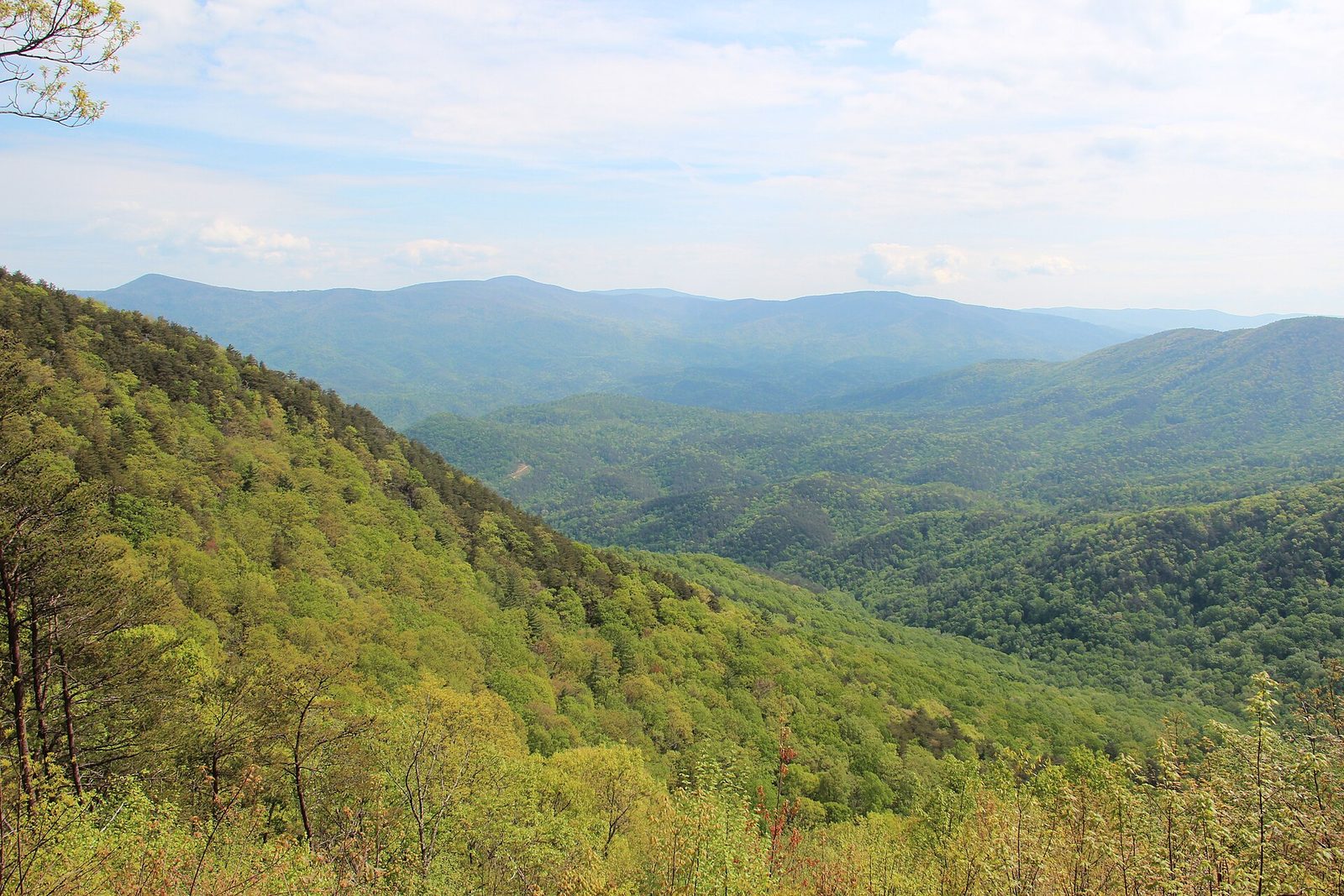
Cool Springs Overlook, Fort Mountain State Park: photo by Thomson200 / Wikimedia Commons (CC0)
The pioneer camping area at Stephen C. Foster State Park: photo by Michael Rivera / Wikimedia Commons (CC BY-SA 3.0)
The stone fire tower at Fort Mountain State Park: photo by Thomsonmg2000 / Wikimedia Commons (CC0)
Sources: Georgia Department of Natural Resources, State Parks & Historic Sites Division, including its camping, reservations, park rules and dog-walking pages; US Forest Service, Chattahoochee-Oconee National Forest, including Forest Supervisor’s Order CO-25-02; US Army Corps of Engineers, Mobile District; National Park Service, Cumberland Island National Seashore; US Fish and Wildlife Service, Okefenokee National Wildlife Refuge; Georgia DNR Wildlife Resources Division hunting regulations; Georgia 511. Checked September 2026.
Georgia Tourism Guide is an independent publication. We are not affiliated with Explore Georgia, the Georgia Department of Natural Resources, the National Park Service or any attraction listed here.