There are more than fifty streets in Atlanta with Peachtree in the name, and the first time you follow a phone into the city you will discover this the hard way, somewhere around the moment Peachtree Street becomes Peachtree Road without warning. That is the city in miniature: a place that rewards a little preparation far more than it rewards wandering. This Atlanta travel guide covers the capital of Georgia — the US state, not the country in the Caucasus — and it is built around the handful of decisions that actually determine whether a trip here works.
Those decisions are: which neighborhood you sleep in, whether you rent a car, and how many paid attractions you genuinely intend to see. Get those three right and Atlanta is a generous, cheap, easy city with the best food in the Southeast and a civil rights history you cannot get anywhere else. Get them wrong and you will spend your holiday on I-285 looking for parking. Everything below is organized around getting them right.
Prices were checked in September 2026 against each operator’s own site and are date-stamped where it matters. Atlanta’s admission fees have moved quickly in the last two years — the aquarium now prices by the day like an airline — so treat every number here as a planning figure rather than a promise, and confirm it before you pay.
Atlanta at a Glance
| Question | Short answer |
|---|---|
| How many days? | Two is enough for the downtown attraction cluster and one neighborhood. Three is the sweet spot. Four lets you add Stone Mountain or Buford Highway without rushing. |
| Best months | Late September to early November, then April into early May. March is pollen. July and August are genuinely hot. |
| Airport to downtown | MARTA rail, about 16 minutes, $2.50 flat. Faster and cheaper than a car, every single time. |
| Do I need a car? | Not for downtown, Midtown, the BeltLine or Decatur. Yes for Buford Highway, Stone Mountain, Truist Park and the Atlanta History Center. |
| Best base | Midtown for first-timers. Old Fourth Ward or Inman Park if you want to walk to dinner. Downtown only if you are here for a convention. |
| Cheapest great day | Free: the King National Historical Park, Oakland Cemetery, the BeltLine Eastside Trail, Piedmont Park, Centennial Olympic Park. |
| Is the CityPASS worth it? | Yes from three attractions, comfortably from four. See the arithmetic below — the advertised 47% is optimistic. |
| Biggest rookie error | Assuming the city is walkable end to end. It is a set of walkable neighborhoods separated by distances that are not. |
One structural fact explains a surprising amount about Atlanta: it sits at roughly 1,050 feet, up on the Piedmont plateau, well north of the Fall Line that runs through Columbus, Macon and Augusta. It has no port, no river worth the name and no natural reason to exist — it is here because two railroads met here in the 1830s. That inheritance is why the city sprawls along transport corridors rather than clustering around a historic core, and why the airport, not the downtown, is its real center of gravity.
Getting In and Getting Around
From Hartsfield-Jackson to the city
Hartsfield-Jackson Atlanta International is the busiest passenger airport in the world and the main Delta hub, which means two things for you. First, you can fly here nonstop from almost anywhere, often cheaply. Second, the place is enormous: seven concourses strung along an underground Plane Train, and a walk from a T-gate to baggage claim that can run fifteen minutes before you have even left the building.
The single best piece of advice in this guide is to take the train into town. The MARTA Airport station sits inside the domestic terminal, past baggage claim, and the ride to Five Points in the middle of downtown takes about sixteen minutes. The fare is $2.50, flat, the same as any other MARTA trip, with four free transfers inside three hours (checked September 2026). A rideshare covering the same ten miles will cost many times that and, in the wrong hour, take twice as long, because it has to use the Downtown Connector and the Connector is where Atlanta traffic goes to die.
Since the Better Breeze system went live in March 2026, you no longer need to buy a physical card first — you can tap a contactless bank card or a phone straight at the faregate. If you are traveling as a group, note that each person needs their own tap.
MARTA: what it does well, and where it stops
MARTA rail is four lines that all cross at Five Points. Red and Gold run north–south, splitting after Lindbergh Center for North Springs and Doraville respectively; Blue and Green run east–west. Trains are clean, frequent enough on weekdays, and genuinely useful for a specific list of places: the airport, downtown, Midtown, the Woodruff arts block, Buckhead’s malls, Decatur, and the college football and civil rights museums downtown.
What MARTA does not do is reach most of the things people actually come to Atlanta for on their second day. There is no station at the BeltLine, at Ponce City Market, in Inman Park proper, at Zoo Atlanta, at the Atlanta History Center, at Truist Park, or anywhere near Buford Highway. The rail network was cut down from its original plan in the 1970s when surrounding counties voted it out, and the city has been working around that gap ever since. The practical fix is to use rail for the trunk and a rideshare or a bike for the last two miles, which is cheap and works well.
The streetcar downtown is a short loop between Centennial Olympic Park and the King district. It is pleasant, it is slow, and walking the same distance often takes about as long.
Driving, the Connector, and where the traffic actually is
If you do rent a car, learn three road names before you arrive. I-285 is the Perimeter, the ring road, and the phrase “inside the Perimeter” is how locals divide the city socially as well as geographically. The Downtown Connector is the stretch where I-75 and I-85 merge and run through the middle of town as a single road fourteen lanes wide in places, and it jams anyway. Spaghetti Junction is the I-285/I-85 interchange in the northeast, officially the Tom Moreland Interchange, and it looks exactly like its nickname.
The thing visitors underestimate is that Atlanta congestion is not confined to rush hour. A Tuesday at 2pm on I-285 north can be stop-start for twenty minutes with no incident at all. Build slack into every cross-town plan, and if you are catching a flight, add an hour to whatever the map says.
Parking downtown runs to garage rates, and event nights are worse. Midtown and the BeltLine neighborhoods have metered street parking that is workable off-peak. Several hotels charge for parking on top of the room, which is worth checking before you book, because it can quietly add up over four nights.
Where to Stay: Choosing a Base
This is the decision that most affects how your trip feels, and the honest version is that Atlanta’s default hotel district is its weakest neighborhood for visitors.
Downtown
Downtown puts you inside walking distance of the main attraction cluster at Pemberton Place — the aquarium, World of Coca-Cola, the civil rights museum and the football hall of fame are all on one square — plus Centennial Olympic Park, State Farm Arena and Mercedes-Benz Stadium. It is also where the convention business lives, which is precisely the problem. Outside event weeks the area empties after six, the street-level dining is thin, and you will find yourself getting in a car to eat. If your trip is a two-day attraction blitz or you are here for a conference, it is the efficient choice. If it is a holiday, it is not.
Midtown
Midtown is the first-timer’s answer. It has three MARTA stations, the High Museum and the Woodruff Arts Center, the Fox Theatre, Piedmont Park and the Atlanta Botanical Garden, a proper restaurant scene along Peachtree and Juniper, and a walk of about twenty minutes to the northern end of the BeltLine Eastside Trail. You can reach the downtown attractions in ten minutes on the train and come back to somewhere that is alive at night. For most visitors it is the best balance in the city.
Old Fourth Ward, Inman Park and the BeltLine
If the point of your trip is eating and walking, stay along the Eastside Trail. Old Fourth Ward has Ponce City Market and the King historic district on either side of it; Inman Park has Victorian houses, Krog Street Market and Little Five Points up the road. There is no rail station, so you will be using rideshares to get downtown, but the payoff is that dinner is a walk and the BeltLine is your front path. Hotel stock is thinner here and skews to boutique and short-term rentals.
Buckhead
Buckhead is where the money is, and it delivers on shopping, with Lenox Square and Phipps Plaza facing each other, and on the upper end of the hotel market. It is also six miles from downtown and built at a scale that assumes a car. It is on the Red and Gold lines, so it is not cut off, but staying here as a sightseeing visitor means a commute at both ends of every day. Choose it for a shopping-and-restaurants weekend, not for a first trip.
Decatur
Decatur is a separate city of its own, six miles east, with a courthouse square, an unusually good restaurant and bar density for its size, and its own MARTA station twenty minutes from Five Points. It is calmer, cheaper and more pleasant than anywhere downtown, and it suits travelers who would rather stay somewhere that feels like a town. The trade-off is that you are committing to the train every morning.
| Base | Best for | Rail | Walk to dinner? |
|---|---|---|---|
| Downtown | Conventions, two-day attraction runs | Excellent | Limited |
| Midtown | First-time visitors, arts, parks | Excellent | Yes |
| Old Fourth Ward / Inman Park | Food, the BeltLine, repeat visitors | None | Yes, excellent |
| Buckhead | Shopping, upscale hotels | Good | Partly |
| Decatur | Quiet base, good value, families | Good | Yes |
The Attractions That Earn a Ticket
Martin Luther King, Jr. National Historical Park
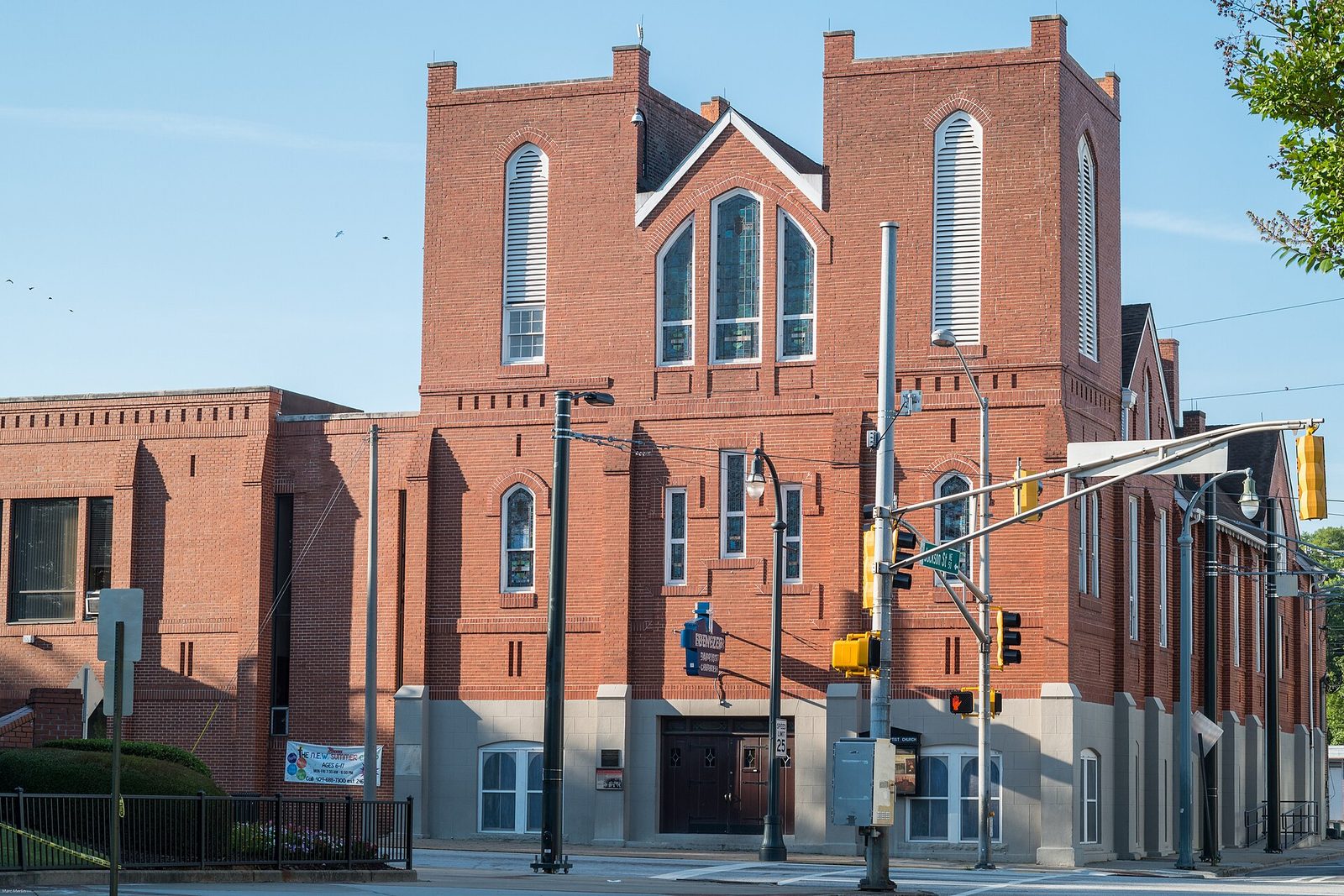
Start here. The park runs along Auburn Avenue in Sweet Auburn and it is free — no entrance fee, no pass, no timed ticket. It takes in Historic Ebenezer Baptist Church, where King was co-pastor and where you can stand in the sanctuary; the King Center and the reflecting pool where Martin Luther King Jr. and Coretta Scott King are entombed; the fire station; and the block of Auburn Avenue itself. Sites are open 09:00 to 17:00 daily, closed on 1 January, Thanksgiving and 25 December (checked September 2026).
Two things have changed that most published guides have not caught up with. Visitor operations currently run from a temporary visitor center in Historic Fire Station No. 6, and the Birth Home is closed for renovation. You will still read advice telling you to queue at nine in the morning for free Birth Home tour tickets. Do not plan a morning around it. Rangers give Birth Home presentations in the bookstore next door instead, and there are daily Church Talks at Historic Ebenezer that are worth arranging your visit around.
Give it three hours if you are reading the panels properly. It is the single most significant thing in the city and it costs nothing.
National Center for Civil and Human Rights
Downtown at Pemberton Place, and the natural companion to the King park rather than a repeat of it. The building sets the American civil rights movement alongside contemporary human rights struggles worldwide. The exhibit everyone talks about is the lunch counter simulation: you sit at a counter, put on headphones, place your hands on the surface and are shouted at. Most people cannot last the full run. It is not a gimmick, and it does more in ninety seconds than a room of text panels. Adult admission is listed at $26.00 (September 2026). Allow two hours, and do not bring young children to that particular exhibit without thinking about it first.
Georgia Aquarium
One of the largest aquariums in the world, and the reason a lot of families come to Atlanta at all. The headline tank holds whale sharks and manta rays behind a viewing window big enough to sit in front of for half an hour. Pricing is dated and dynamic: weekdays start around $54.99, weekends run $57.99 to $59.99, and peak holiday dates reach $64.99 (checked September 2026). Entry is timed and you must arrive within an hour of your slot, so book ahead — walking up on a Saturday in July is how people end up with a 4pm entry.
Typical hours are 9:00 to 16:00, varying by date. As of September 2026 there is a promotion giving one free child ticket aged 3 to 12 with each general admission, which is worth checking for before you buy a family set. One straight note: the aquarium keeps dolphins and belugas and runs presentations with them. Some visitors have a settled objection to cetaceans in captivity, and if that is you, this is the exhibit to know about in advance.
World of Coca-Cola
A brand museum, and refreshingly unembarrassed about it. The vault, the bottling line, the advertising archive and, at the end, a tasting room with around a hundred drinks from Coca-Cola markets worldwide. Children love the tasting room without reservation. Adults should know what they are buying: at a listed $27.95 it is the weakest value of the six CityPASS attractions if you are traveling without kids, and the best of them if you are not. Ninety minutes is plenty.
The Midtown arts block
The High Museum of Art is the South’s major art museum, in a white Richard Meier building with a later Renzo Piano expansion, and the collection of folk and self-taught Southern art is the part you will not see elsewhere. Next door, the Woodruff Arts Center holds the Atlanta Symphony Orchestra.
Four blocks south, the Fox Theatre is a 1929 movie palace done as a Moorish fantasy, with minarets on Peachtree Street and an auditorium ceiling painted as a night sky with projected clouds moving across it. It was nearly demolished in the 1970s and saved by a public campaign. If anything you would watch is playing while you are in town, buy a ticket for the room as much as the show; if not, the theatre runs building tours.
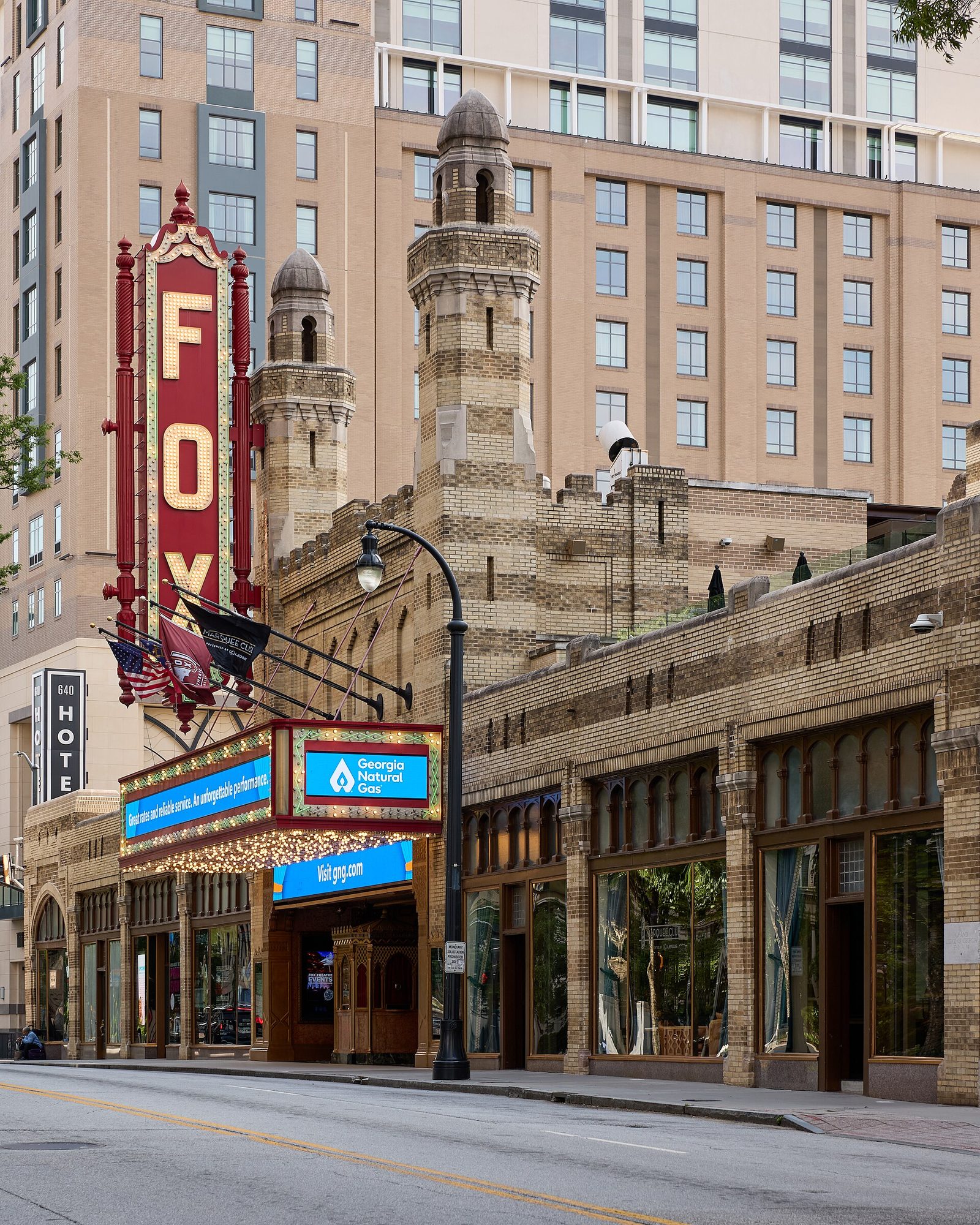
Atlanta History Center, Zoo Atlanta and Fernbank
The Atlanta History Center in Buckhead is the serious history museum in the city, and since 2019 it has housed the Battle of Atlanta cyclorama — a painting 49 feet tall and longer than a football field, moved here from Grant Park and restored. The grounds include the Swan House, which Hunger Games viewers will recognize. It is not on the CityPASS and it needs a car or a rideshare.
Zoo Atlanta sits in Grant Park, a couple of miles southeast of downtown, and is a good zoo in a genuinely pleasant Victorian park. Fernbank Museum of Natural History is out in Druid Hills, with dinosaur casts, a giant screen theater and 75 acres of old-growth forest behind it that most visitors never walk into — which is the best part. Both are strong family choices and both are inconveniently placed relative to everything else.
Does the Atlanta CityPASS Actually Pay Off?
The Atlanta CityPASS costs $106 plus tax for adults and $86 plus tax for children aged 3 to 12, and lets you pick five of six attractions over nine days from first use (checked September 2026). CityPASS advertises 47% savings. Here is the arithmetic behind that claim, using the gate prices CityPASS itself publishes.
| Attraction | Adult gate | Child gate |
|---|---|---|
| Georgia Aquarium | $69.99 | $69.99 |
| Zoo Atlanta | $37.95 | $30.45 |
| College Football Hall of Fame | $34.89 | $24.79 |
| Fernbank Museum | $30.95 | $28.95 |
| World of Coca-Cola | $27.95 | $23.95 |
| Center for Civil and Human Rights | $26.00 | $20.00 |
| Best five, at the gate | $201.73 | $178.13 |
| CityPASS | $106.00 | $86.00 |
The catch is in the top line. That $69.99 aquarium figure is the peak walk-up rate, and almost nobody pays it — the aquarium’s own dated pricing starts at $54.99 on a weekday. Substitute the price you would realistically pay and the five-attraction total drops to about $187, so the real saving is closer to 43% than 47%. Still good. Just not the number on the poster.
The more useful question is the break-even. At $106, the pass pays for itself at three attractions if one of them is the aquarium — an aquarium, Coca-Cola and civil rights museum day comes to roughly $109 at the gate — and it is comfortably ahead at four. Below three, buy individual tickets.
And there is a geographic catch the marketing does not mention. Four of the six — aquarium, Coca-Cola, civil rights, football hall of fame — stand together at Pemberton Place beside Centennial Olympic Park, and you can do all four on foot in a single long day. The other two do not: Zoo Atlanta is in Grant Park and Fernbank is out in Druid Hills, in different directions. Using all five slots means a driving day you may not want. A perfectly rational plan is to buy the pass, use four, and treat the fifth as a bonus you may not collect.
The BeltLine, the Parks and the Free City
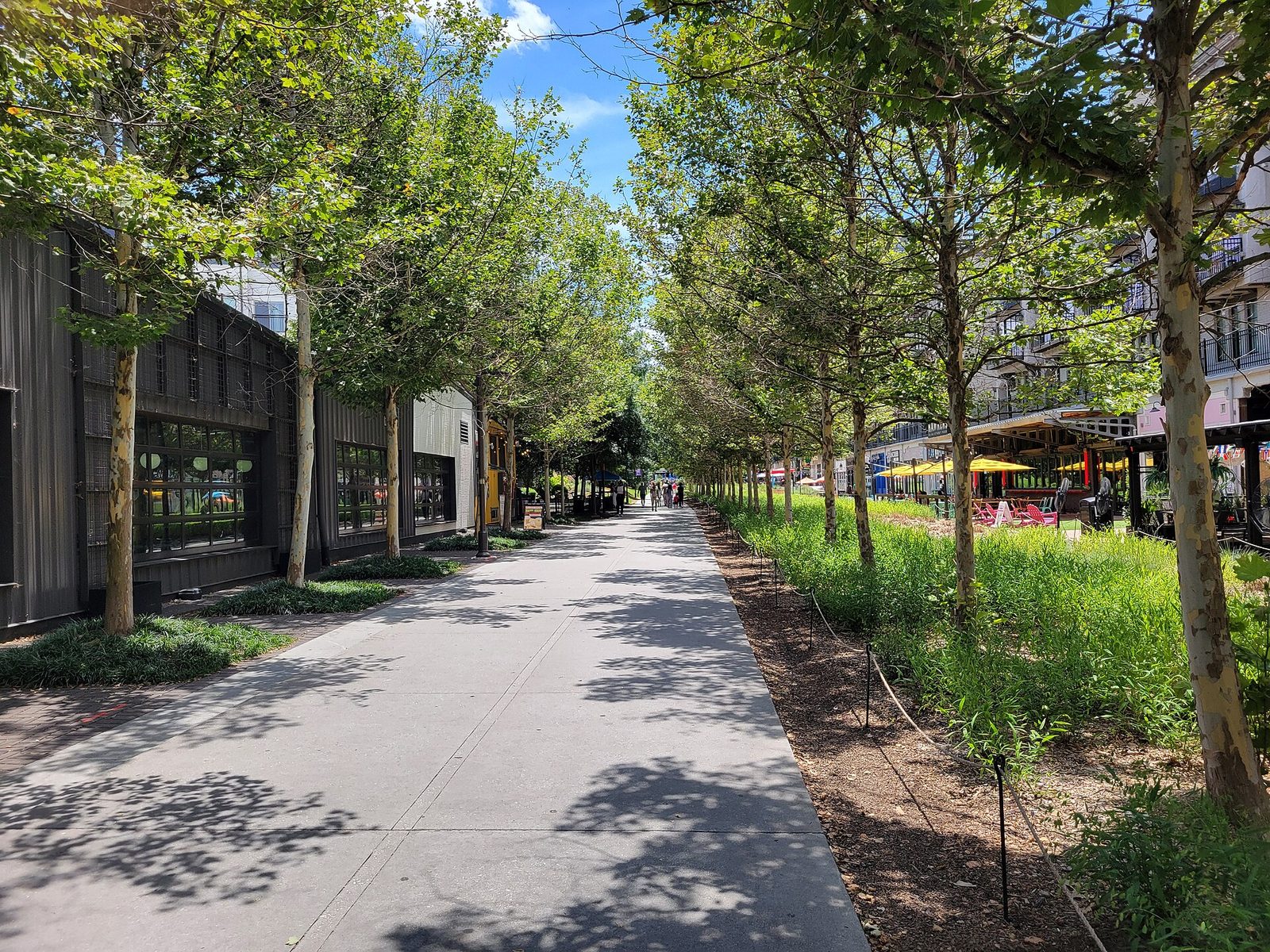
The Atlanta BeltLine is a ring of disused railway being converted into a 22-mile loop of trail and park around the inner city. The loop is not finished and will not be for years, but the Eastside Trail — roughly three paved miles from Piedmont Park down through Old Fourth Ward, Inman Park and Reynoldstown — is the most rewarding hour of walking in Atlanta, and the single clearest view of what the city is turning into. It passes Ponce City Market, drops you near Krog Street Market, and is lined with murals, breweries and patios the whole way. Rental bikes and scooters are everywhere along it. The Westside Trail is open too, quieter and less polished.
Because the BeltLine follows a rail corridor, it runs behind the buildings rather than along the street, which is why it feels so separate from the traffic a block away.
Piedmont Park is Midtown’s back garden, 200-odd acres with the skyline rising directly behind the lake. Go to the Park Tavern end for the classic view. Next to it the Atlanta Botanical Garden has a canopy walkway through the treetops and, in winter, the Garden Lights display that is a genuine local institution.
Oakland Cemetery, just east of downtown, is a Victorian garden cemetery of 48 acres where Bobby Jones and Margaret Mitchell are buried, alongside Confederate dead, enslaved and free Black Atlantans, and a good deal of ambitious funerary architecture. Entry is free, it is beautiful, and it is almost always empty.
Add Centennial Olympic Park, the legacy of the 1996 Games with its Fountain of Rings, and the free half of Atlanta is already a full day: King park in the morning, Oakland at lunch, the BeltLine in the afternoon, Piedmont Park at sunset, for the price of the train.
Eating in Atlanta
Buford Highway
If you eat one thing in Atlanta on someone else’s recommendation, make it this. Buford Highway is a corridor of strip malls running northeast through Chamblee and Doraville, and it holds the densest concentration of immigrant restaurants in the Southeast: Korean, Sichuan, Vietnamese, Cantonese, Mexican, Salvadoran, Ethiopian, Honduran, often several within one parking lot. This is the best eating in the city and it is not close.
Two practical notes. You need a car — there is no useful transit, and the highway itself is hostile to pedestrians. And do not try to pick the single best restaurant; pick a plaza, park once, and eat at two.
Food halls and the BeltLine
Ponce City Market occupies the old Sears, Roebuck warehouse on Ponce de Leon Avenue, the largest brick building in the Southeast, with a food hall on the ground floor and a rooftop amusement area up top. Krog Street Market, a mile down the Eastside Trail in Inman Park, is smaller, less crowded and preferred by a lot of locals. On the west side, Chattahoochee Food Works does the same thing with less of a queue.
Downtown, the Sweet Auburn Curb Market has been trading since 1918 and is the least touristy of the lot, with counters rather than concepts.
Southern food, and the Varsity question
For the classics: Busy Bee Cafe in the West End has been serving fried chicken since 1947 and is the real thing, with a queue to match. Mary Mac’s Tea Room in Midtown is the last of the old-line tea rooms and will bring you a complimentary cup of pot likker whether you ordered it or not. Barbecue is a serious business here and the city argues about it constantly.
Then there is The Varsity, the vast drive-in by Georgia Tech where they shout “What’ll ya have?” at you the moment you reach the counter. Here is the honest verdict: go for the building, the sign and the ritual, which are all genuinely part of the city. Do not go for the food, which is ordinary fast food that happens to be historic. Twenty minutes, one chili dog, a frosted orange, and move on.
Sport, Music and Nights Out
Atlanta’s three big teams sit in three different places, and one of them is not in Atlanta at all. The Falcons and Atlanta United play at Mercedes-Benz Stadium downtown, an extraordinary building with a camera-shutter roof that is worth seeing even from the cheap seats. It is also known for deliberately cheap concessions — the fan-first menu has held hot dogs and refillable sodas around the $2 mark since the stadium opened, though check the current menu rather than taking that as gospel. The Hawks play at State Farm Arena a few blocks away.
The Braves, however, play at Truist Park, which is in Cobb County at the I-75 and I-285 interchange, roughly ten miles northwest of downtown. There is no MARTA station. Getting there on a weeknight is a real traffic problem and getting out afterwards is worse. The Battery, the entertainment district built around the stadium, is pleasant and entirely commercial. Plan the journey properly or skip it.
For music, Atlanta’s contribution to hip-hop is the most globally significant thing the city has produced in the last thirty years, and the scene is live rather than museum-bound. The Eastside venues, the Tabernacle downtown in a converted 1910 church, and the Fox for the big touring shows cover most of it. Little Five Points, at the top of the Eastside Trail, is the punk, vintage and dive-bar quarter and has resisted change more successfully than anywhere else on this list.
Itineraries That Work
One day
Morning at the King National Historical Park on Auburn Avenue. Walk or take a short ride to Pemberton Place for the aquarium or the civil rights museum after lunch — one, not both. Late afternoon on the Eastside Trail from Ponce City Market, dinner in Inman Park. You will have seen the two things that make Atlanta itself.
Two days
Day one as above. Day two: the downtown cluster properly — civil rights museum, World of Coca-Cola and the football hall of fame are a walkable set — then Midtown in the evening for the High Museum and a show at the Fox. This is the trip the CityPASS is designed for.
Three days
Add a day with a car. Either Buford Highway and the Atlanta History Center, or Stone Mountain, 16 miles east, where parking is $20 per vehicle per day and buys you the hiking trails, the picnic grounds and the evening laser show without any further ticket. The Walk-Up Trail is 1.3 miles one way with about 825 feet of climb, 45 to 60 minutes up. These figures come from secondary sources — the park keeps its pricing inside a booking flow — so confirm before you go.
One thing to say plainly about Stone Mountain: the carving on the north face is the largest Confederate monument in the world, commissioned in a long process entangled with the Ku Klux Klan’s revival on that same mountain in 1915. The park is a fine place to walk and the view from the summit is the best in the region. You should simply know what you are looking at.
Four days
Use the fourth day to leave. Athens is 70 miles east, an hour and a half, and has a music history out of all proportion to its size. Chattanooga is two hours north on I-75, just over the Tennessee line. The north Georgia mountains — Helen, Blue Ridge, Amicalola Falls — start about 90 minutes up the road, and in late October they are the best fall color in the state.
When to Come
Spring (March–May) is the prettiest season and the most uncomfortable. Dogwoods and azaleas in April are worth the trip on their own. But pine pollen in late March and April coats the entire city in yellow, drifts in the gutters and shows up in pollen counts in the thousands. If you have any respiratory sensitivity at all, come in May.
Summer (June–August) is hot and humid, with highs in the 90s Fahrenheit and heat index figures above that. The useful pattern to know is the afternoon thunderstorm: it builds around three or four, comes down hard for forty minutes, and clears. Plan indoor attractions for the middle of the afternoon and you barely notice it. Atlanta’s elevation makes it a degree or two kinder than Savannah or the coast, which is not much but is something.
Fall (September–November) is the best time to be here. September is still warm, October is close to perfect, and city leaf color peaks in early to mid-November — a couple of weeks after the north Georgia mountains, which turn in late October. Football Saturdays fill hotels across the state.
Winter (December–February) is mild, gray and cheap. Highs sit in the 50s, attractions are empty, hotel rates drop, and the Botanical Garden lights run through the season. The one risk is ice: Atlanta gets a serious ice event perhaps once every few years and the city has very little equipment for it, so when it happens everything stops. If a winter storm is forecast, do not plan to drive through it.
Rain, Heat and Other Fallbacks
Atlanta is unusually good at bad weather, because so much of what is worth doing is indoors. A wet day maps cleanly onto the aquarium, the civil rights museum, the High Museum, Fernbank, the Atlanta History Center, Ponce City Market and the Sweet Auburn Curb Market — that is more than a day’s worth without stepping outside for long. The three things that genuinely need dry weather are the BeltLine, Piedmont Park and Stone Mountain, and all three can shift by a day.
In high summer, invert it: outdoors early, indoors from noon to four, outdoors again at six when the heat breaks. The BeltLine at seven on a July evening is a different city from the BeltLine at two.
Families, Accessibility and Practicalities
For children, the reliable list is the aquarium, Zoo Atlanta, Fernbank, the World of Coca-Cola tasting room and the Fountain of Rings at Centennial Olympic Park, which is a splash pad in all but name on a hot day. The child CityPASS at $86 covers four of those five.
On access: the downtown attraction cluster is modern, level and well equipped, and MARTA stations all have lifts, though it is worth checking for outages before you rely on a specific one. The King park sites are largely accessible, and the temporary visitor center arrangement has not changed that. The BeltLine is a paved, gently graded former rail bed and is one of the better accessible walks in any American city. The Fox Theatre, being a 1929 building, is the one to contact directly about seating.
Two small practical notes. Tipping is standard American practice, 18 to 20% in restaurants. And Georgia is a state where you should expect to be driven everywhere outside the handful of neighborhoods named above — the distances are simply larger than the map suggests.
What Atlanta Is Not
It is not a historic city in the way Savannah is. Sherman burned the military and industrial core in 1864, and what visitors actually see downtown is a twentieth-century city with the Olympics stapled on. Anyone arriving expecting squares, cobbles and antebellum houses has come to the wrong end of the state; that trip starts four hours east on I-16.
It is not a compact walking city, and no amount of optimism will make it one. It is not cheap on parking, though it is cheap on almost everything else. Underground Atlanta has been reinventing itself for forty years and is still not a reason to cross town. And the CNN Studio Tour, which still appears in a surprising number of current-looking listicles, stopped running when CNN moved out of the building downtown — confirm it directly before you build a morning around it.
What Atlanta is, instead: the best food city in the Southeast, the most important civil rights destination in the country, a place with genuinely excellent free museums-worth of history in its streets, and a city being visibly rebuilt around a walking trail. That is a better trip than the one the postcards promise.
Frequently Asked Questions
How many days do you need in Atlanta?
Two days covers the downtown attraction cluster and the King historic district. Three is the sweet spot and adds the BeltLine, Midtown and a proper dinner or two. Four lets you add Stone Mountain, Buford Highway or a day trip without compressing anything.
Do I need a car in Atlanta?
Not if you are staying downtown, in Midtown or in Decatur and sticking to the main attractions — MARTA plus occasional rideshares covers it and avoids paying for parking twice. You do need one for Buford Highway, Stone Mountain, Truist Park, the Atlanta History Center, Fernbank and any day trip.
Is the Atlanta CityPASS worth it?
Yes if you will visit three or more of the six included attractions and one of them is the Georgia Aquarium; comfortably yes at four. At $106 plus tax for adults it beats the gate from roughly the third ticket. Below that, buy individually. Note that the advertised 47% saving uses the aquarium’s peak walk-up price, which most people do not pay.
What is the cheapest way from the airport to downtown?
MARTA rail, at a flat $2.50, about sixteen minutes from the Airport station to Five Points. The station is inside the domestic terminal past baggage claim, and since March 2026 you can tap a contactless card or phone at the gate rather than buying a Breeze card first.
Is the Martin Luther King, Jr. Birth Home open?
No. It is closed for renovation as of September 2026, and rangers give Birth Home presentations in the bookstore next door instead. The rest of the national historical park, including Historic Ebenezer Baptist Church and the King Center, is open and free.
What is the best month to visit Atlanta?
October. Warm days, cool evenings, low rain, and the city’s events calendar is full. May is the next best, after the pollen has cleared. Avoid late March and April if you have allergies, and avoid July and August if heat bothers you.
Is downtown Atlanta safe at night?
The attraction cluster around Centennial Olympic Park and the hotel blocks are routinely busy and fine. The wider downtown simply empties after office hours, which makes it feel deserted rather than dangerous. Use normal city sense, and take a rideshare for anything more than a few blocks late at night — which is what most locals do anyway.
Where is the skyline view from the TV shows?
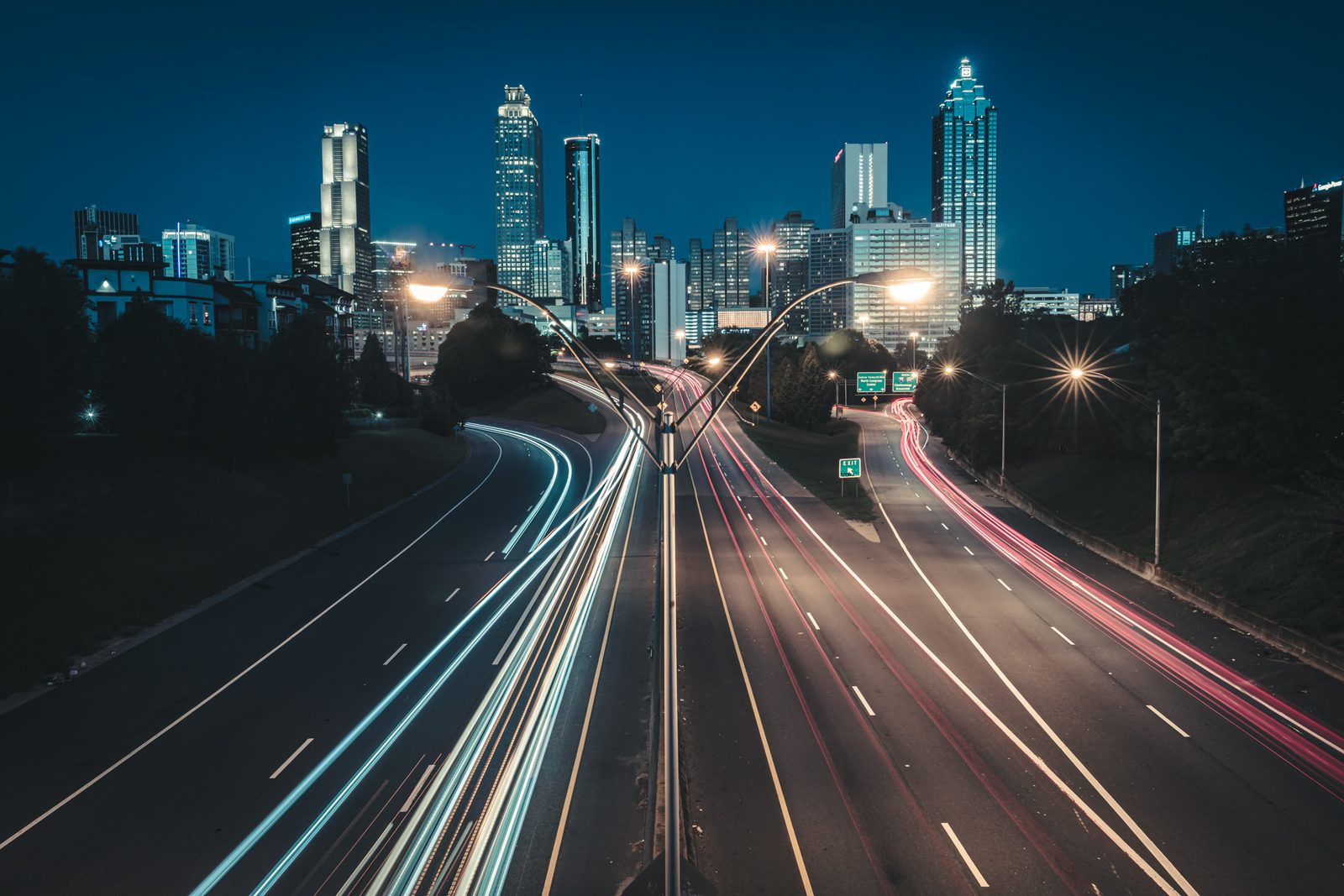
The Jackson Street Bridge, just northeast of downtown, looking southwest along the Freedom Parkway approach. It is a public sidewalk on an ordinary road bridge, it is free, and it is busiest around sunset. Piedmont Park gives you the other famous angle, across the lake to the Midtown towers.
Do I need to book the Georgia Aquarium in advance?
Yes. Entry is timed and dated, prices move by day, and you need to arrive within an hour of your slot. Weekday mornings are both the cheapest and the quietest. Walking up on a summer weekend usually means whatever late slot is left.
How far is Atlanta from Savannah?
About 250 miles, four hours or a little more, almost all of it on I-75 south to Macon and then I-16 east. The I-16 stretch is 160 miles of pine trees with very little in between, so fill up in Macon and do not plan on finding much until Savannah.
If you are pairing Atlanta with the coast, the drive is four hours and change: I-75 south to Macon, then 160 mostly empty miles east on I-16. It is worth doing, because the two cities have almost nothing in common — Savannah is small, flat, walkable and built to a 1733 plan that Atlanta would find baffling. Our Savannah travel guide covers where to stay, how to solve the parking problem for $15 a day, and how to fit Tybee Island in.
Atlanta is also the best base in the state for hiking, which is not obvious from the skyline. Sweetwater Creek and its burned mill ruins are thirty minutes west; Amicalola Falls is an hour and a quarter north; Cloudland Canyon and Tallulah Gorge are both inside two hours. Our guide to Georgia’s state parks ranks all 49 by drive time from the city and explains the ParkPass, the historic-site fee trap and which permits you need to arrive early for.
The mountains are the easiest escape from the city: Dahlonega is an hour and a quarter up GA-400, and Blue Ridge is an hour forty-five on a four-lane the whole way. Fall color peaks up there in the last ten days of October, a good fortnight before Atlanta turns. Our north Georgia mountains guide covers which base town suits which trip, how far ahead cabins go, and which roads are worth driving for their own sake.
If you are based in the city for a while, the weekend is where Georgia opens up — Dahlonega at an hour and a quarter, Blue Ridge at an hour forty-five on a four-lane, Savannah at four hours if you leave early enough. Our guide to weekend getaways in Georgia ranks fourteen of them, and is specific about the thing that decides a two-night trip: how bad the Friday afternoon queue out of Atlanta really is, and when to leave to miss it.
If you are here for more than three days, the fourth is usually better spent outside the city — and the thing that decides whether that works is when you leave. Northbound GA-400 and I-575 build from about nine on a Saturday and add 40% to any autumn estimate, while southbound and eastbound stay civil. Our guide to day trips from Atlanta sorts twenty of them into honest drive rings, gives each a timed plan, and covers the ones most lists skip because they are not to the north.
Atlanta is the only city in the state where you can reasonably plan a trip around eating, between the historic Black culinary institutions downtown, the Buford Highway immigrant corridor and the food halls on the BeltLine. Our guide to Georgia food and drink sets out those four pathways alongside the regional foodways that explain why the rest of the state eats so differently.
If the civil rights sites are the reason you came to Atlanta, there is more of this story waiting outside the city — Ocmulgee Mounds an hour and a half south, the Albany Movement’s mass-meeting church, Andersonville, and Plains. Our guide to Georgia history and civil rights sites builds the itineraries that connect them, and explains why the Birth Home queue everyone still recommends no longer exists.
Related Georgia Guides
- Best things to do in Georgia — the statewide overview, region by region, with what each place costs and when it is worth going.
- Best places to visit in Georgia — 35 destinations across the state, from the north Georgia mountains to the barrier islands, ranked by whether the drive pays off.
Photo Credits
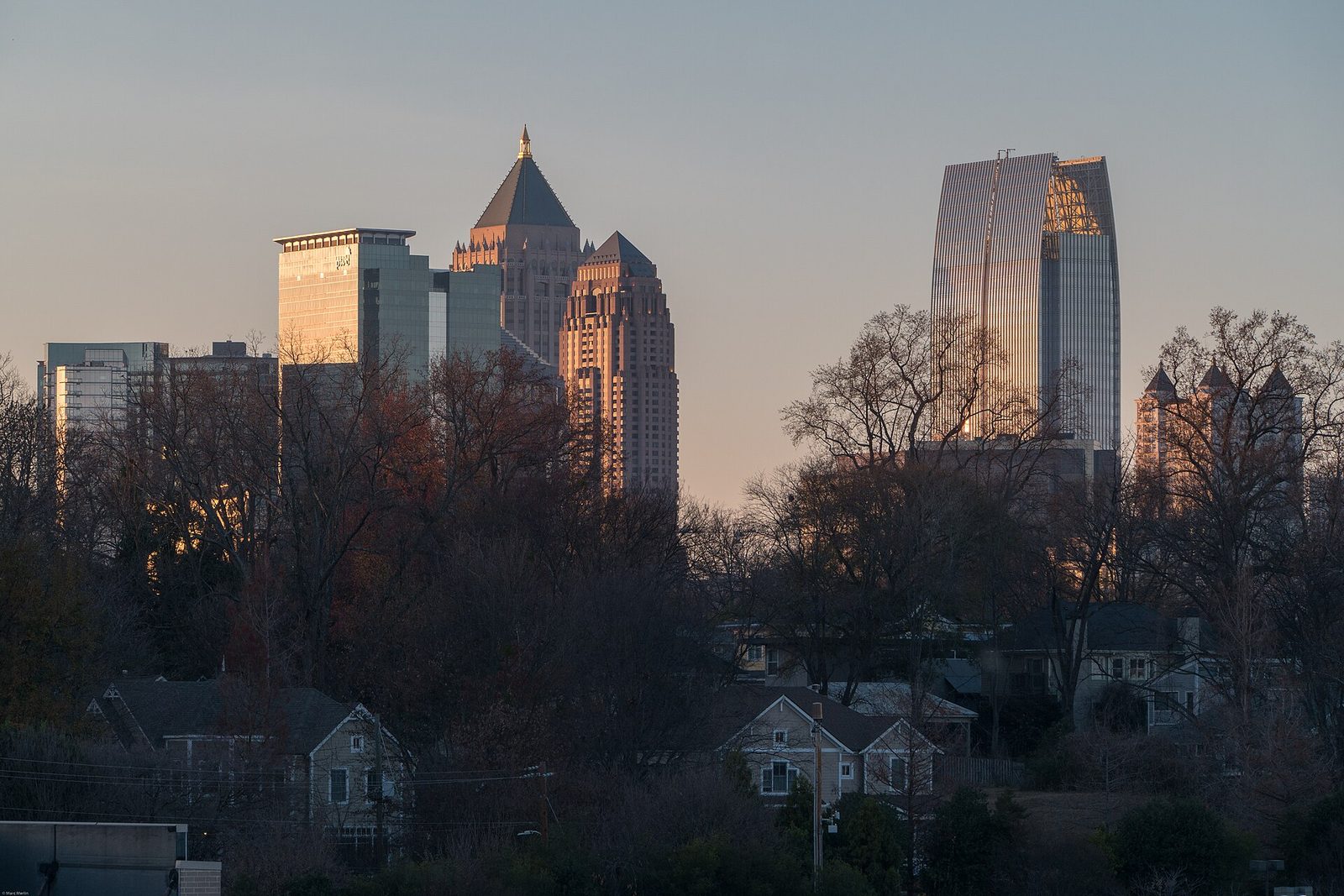
Midtown Atlanta skyline from the Eastside BeltLine Trail (featured image): photo by Marc Merlin / Wikimedia Commons (CC BY-SA 4.0)
Atlanta BeltLine Eastside Trail, Inman Park: photo by John Phelan / Wikimedia Commons (CC BY 4.0)
Historic Ebenezer Baptist Church: photo by Marc Merlin / Wikimedia Commons (CC BY-SA 4.0)
Fox Theatre, Peachtree Street: photo by Marc Merlin / Wikimedia Commons (CC BY-SA 4.0)
Downtown Atlanta skyline at night: photo by Shawn M. Kent / Wikimedia Commons (CC BY-SA 4.0)
Sources and Corrections
Prices, hours and access rules were checked in September 2026 against the operators’ own sites: MARTA for fares and the Better Breeze rollout, Georgia Aquarium for dated admission, CityPASS for the Atlanta pass and the published gate prices behind it, and the National Park Service for Martin Luther King, Jr. National Historical Park, including the temporary visitor center and the Birth Home closure. Stone Mountain figures are from secondary sources because the park keeps pricing inside its booking flow, and are hedged accordingly. Mercedes-Benz Stadium concession pricing is long-standing and widely reported but was not re-verified for 2026. Fees change; if you find something here out of date, we want to know.
Georgia Tourism Guide is an independent publication. We are not affiliated with Explore Georgia, the Georgia Department of Natural Resources, the National Park Service or any attraction listed here.