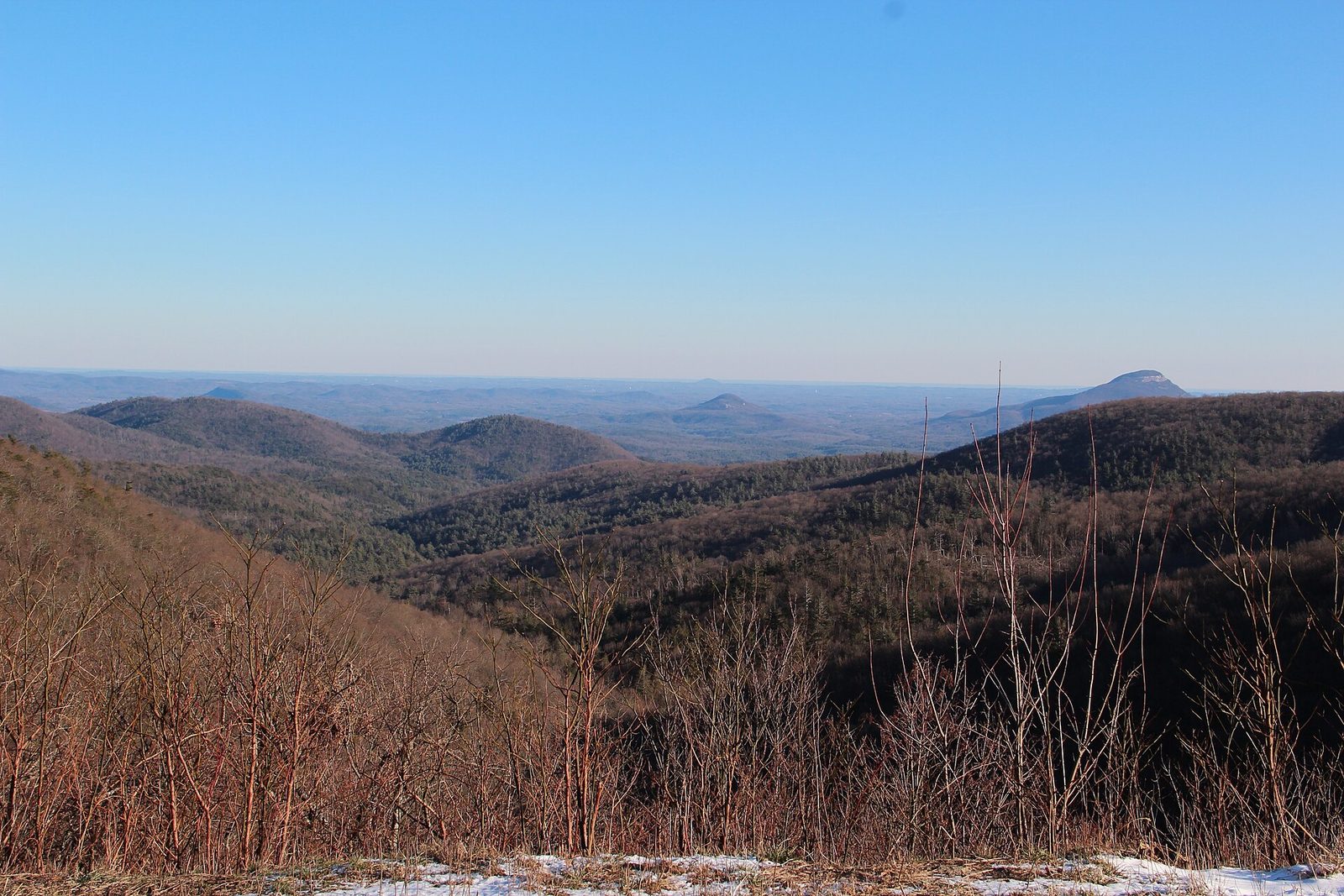
On a clear January night in Union County the air sits around 30°F, the sky is genuinely dark, and a hot tub on a deck at 3,000 feet is one of the best things you can do in this state for the price of a cabin. That is the reason north georgia cabins with hot tubs are the dominant search in the whole mountain rental market — and also why the amenity has become almost meaningless as a filter. Nearly every cabin above the budget tier lists one. What varies enormously is where it sits, how private it is, whether it is clean, whether it is actually hot when you arrive, and whether it is switched off for four months of the year. This guide is about those differences. Rates and rules checked September 2026.
A note before the detail: this is the American state — Blue Ridge, Ellijay, Helen, Dahlonega — about ninety minutes to two hours north of Atlanta, not the country of Georgia in the Caucasus.
How this guide works
We do not rank individual cabins, and you should be suspicious of any page that does. Cabin ownership in these counties turns over constantly, management companies change hands, and a property that was excellent two years ago may now be under different care with the same photographs. A list of twelve named cabins is a list that was accurate on the day it was written and has been decaying ever since.
What does not decay is the set of questions that separates a good hot tub cabin from a bad one, the geography of which county gives you what, and the fee arithmetic that determines what you actually pay. That is what follows. Everything here is either verifiable from a listing before you book or checkable with one message to the host.
The short answer
| Area | County | Best for | Trade-off |
|---|---|---|---|
| Blue Ridge | Fannin | Widest choice; walk to dinner | Highest rates; cabins packed close together |
| Ellijay | Gilmer | Best value; creeks and orchards | Gentler country, fewer long views |
| Helen | White | River cabins; tubing and falls nearby | Summer traffic; Oktoberfest chaos |
| Dahlonega | Lumpkin | Wine country; closest to Atlanta | Cabins further from tasting rooms than listings suggest |
| Blairsville, Hiawassee | Union, Towns | The long views hot tubs are for | Steepest access roads in the state |
| Clayton, Dillard | Rabun | Real seclusion and dark skies | Furthest drive; weakest phone signal |
If you want one recommendation: book a ridge-top cabin in Union or Towns County for a winter weekend, and check the satellite view before you pay. The view and the cold are what make the tub worth it, and the satellite view is what tells you whether it is private.
What actually varies between hot tubs
Placement, which is 80% of it
The same tub is a completely different experience depending on where it sits. Four arrangements, roughly in descending order of quality:
- Screened porch or gazebo, facing trees or a view. The best setup. Rain does not stop you, the cover keeps leaves out, and nobody can see in. Rare and worth paying for.
- Open deck at the back, with the slope falling away. The most common good arrangement. If the land drops behind the cabin, there is nobody to see you.
- Open deck facing the road or the next cabin. The most common arrangement full stop, and the one that disappoints. You will use it once, in the dark.
- Ground level beside the parking pad. Usually a sign the tub was added later. Cold walk, no view, headlights.
How to check: find the pin on the listing map and switch to satellite view. You are looking for how close the nearest roof is and whether the deck faces down the slope or across at a neighbor. Two minutes of this is worth more than an hour of reading reviews.
Size, and why smaller is better for two
Most cabin tubs seat four to six. A two- or three-person tub heats faster, holds its temperature better on a cold night, uses less chemical and is easier for an owner to keep clean. If a listing shows a large tub on a small cabin, it was chosen to photograph well rather than to be used.
Whether it will be hot when you arrive
This is the most common complaint in reviews and the easiest thing to prevent. Well-run properties keep the tub at temperature between guests and simply uncover it. Others shut it down after each stay and restart it on the changeover, which means it can be sitting at 80°F when you arrive at six on a Friday and will not be ready until the middle of the night — a tub of that size can take several hours to come up. Ask directly: “will the hot tub be at temperature at check-in?” A confident yes is a good sign about everything else too.
Cleaning, and the question that reveals everything
There is no public inspection regime for a private cabin’s hot tub in Georgia the way there is for a commercial pool. Standards are set entirely by the owner or the management company, and they range from drained and refilled between every stay to topped up with chemicals and hoped for.
The question to ask is: “how often is the tub drained and refilled, and is it done between guests or on a schedule?” Drained between every stay is the gold standard and some operators do it. A weekly or fortnightly drain with chemical balancing between is normal and fine. Anything vaguer than that, or an answer that dodges, tells you what you need to know.
When you arrive, three things take ten seconds and are worth doing: lift the cover and look at the water in daylight, check that the waterline has no ring of scum, and see whether there is a foam residue when the jets run. Cloudy water, a strong chlorine smell or foam means walk away and tell the host — you are entitled to, and a good one will be embarrassed rather than defensive.
The cover, the steps and the lid lifter
An old, waterlogged cover is the clearest single indicator of how a property is maintained. Covers degrade in a few years of Georgia sun and rain, they get heavy, and heaving one off in the dark in February is genuinely unpleasant. If the listing photos show a cracked or sagging cover, assume the rest of the maintenance matches. Steps and a handrail matter more than you think on a wet deck at night.
Jets, noise and the pump
An older tub with a tired pump is loud enough to dominate the deck, which rather defeats the purpose of sitting out under a quiet mountain sky. You cannot tell this from photographs and reviews rarely mention it unless it is egregious, so it is one of the few things you simply discover. What you can do is favor properties whose listings mention the tub’s age or a recent replacement, and treat a cabin whose photos show a visibly dated tub with a bleached shell as a coin flip.
Related: many tubs have colored underwater lighting on a cycle. It is a matter of taste, and it can usually be turned off at the control panel — worth finding on the first night if you came for dark skies, because a rotating purple glow six feet away will comprehensively ruin them.
Which way the deck faces
West-facing decks get sunsets, which is the single best time to be in one of these. East-facing decks get morning light and are cold by dusk in winter. North-facing decks in a hollow get very little direct sun at all between November and February, which is fine for the tub and grim for the deck around it. The satellite view tells you orientation as clearly as it tells you distance to the neighbors.
Seasonal shutdowns
Some cabins turn their tubs off in summer, when nobody wants one and the running cost is dead money; some turn them off in deep winter to avoid freeze damage on an exposed deck. Neither is unreasonable, but both are occasionally buried in the house rules rather than the listing. If the tub is why you are booking, confirm in writing that it will be operating on your dates.
Area by area
Blue Ridge, Fannin County
The deepest inventory in the state and the easiest weekend logistically: a genuinely walkable downtown with restaurants and tasting rooms, the Blue Ridge Scenic Railway, Lake Blue Ridge and the Toccoa River all within minutes, and something available even at short notice.
The hot-tub caveat is density. A great deal of Fannin’s stock sits in cabin developments where properties are thirty to fifty feet apart, and an open-deck tub in one of those is overlooked by definition. Fannin also runs the highest rates in the mountains, and the City of Blue Ridge levies an 8% hotel-motel excise tax against unincorporated Fannin County’s 6% — which on a three-night booking is a real difference.
Book here if you want to walk to dinner and are willing to spend the extra effort filtering for privacy.
Ellijay, Gilmer County
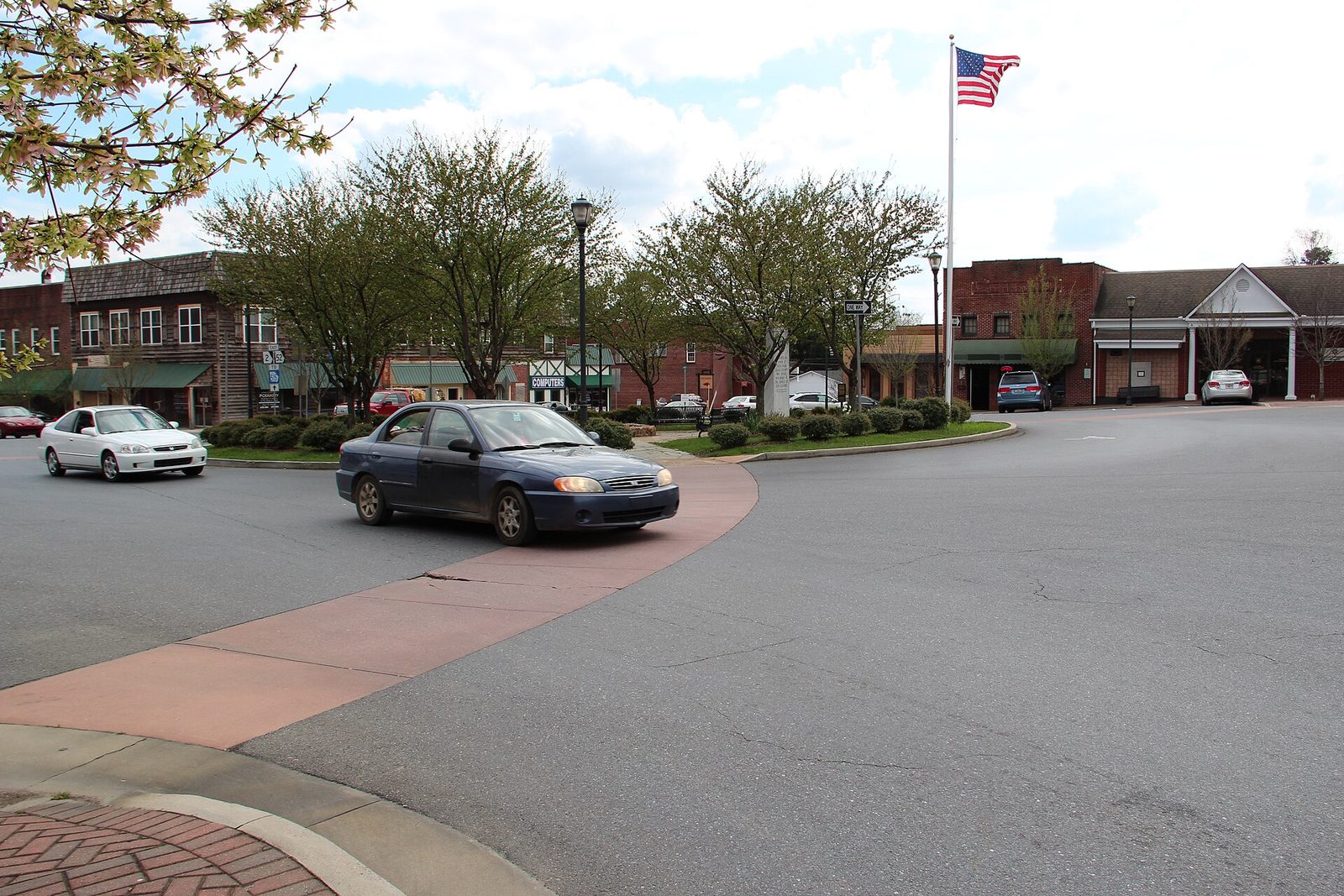
Twenty minutes south of Blue Ridge and the best-value county in the mountains. The country is gentler — orchards, the Cartecay and Ellijay rivers, lower ridges — which means fewer long-range views and more creekside cabins, and creekside with a hot tub is an underrated combination because running water masks everything else.
Ellijay is also the closest cabin country to Atlanta at about ninety minutes, which matters if you are only coming for two nights. Autumn is apple season here, and the Georgia Apple Festival runs across two separate weekends in October rather than one continuous stretch — check our festivals and events guide for the dates.
Book here if the budget matters, or if you would rather hear a creek than see a ridge.
Helen, White County
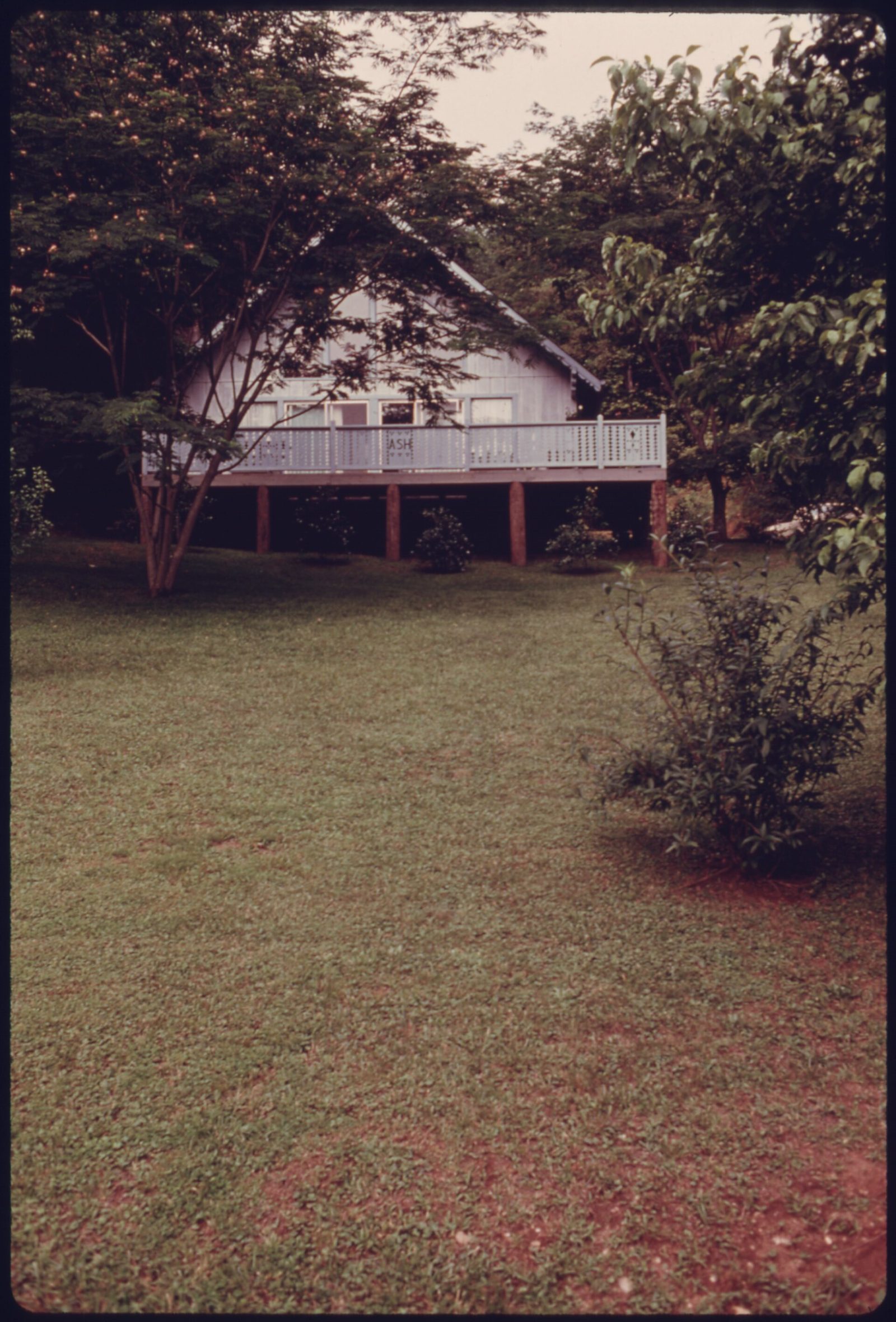
Helen is a themed Bavarian village that people either find charming or find relentless, but the cabins on the Chattahoochee above and below it are good, and the location is strong: Unicoi State Park, Anna Ruby Falls and the Richard Russell Scenic Highway are all close, and summer tubing on the Chattahoochee runs through the middle of town.
The trade-offs are seasonal and severe. Helen’s traffic in summer and during Oktoberfest is genuinely bad for a town of a few hundred residents, and a cabin within two miles of the center can mean twenty minutes to get out of it on a Saturday. Book further up the valley and treat Helen as a destination you drive to.
Book here if you want the river and the falls, and are visiting outside July and the Oktoberfest weekends.
Dahlonega, Lumpkin County
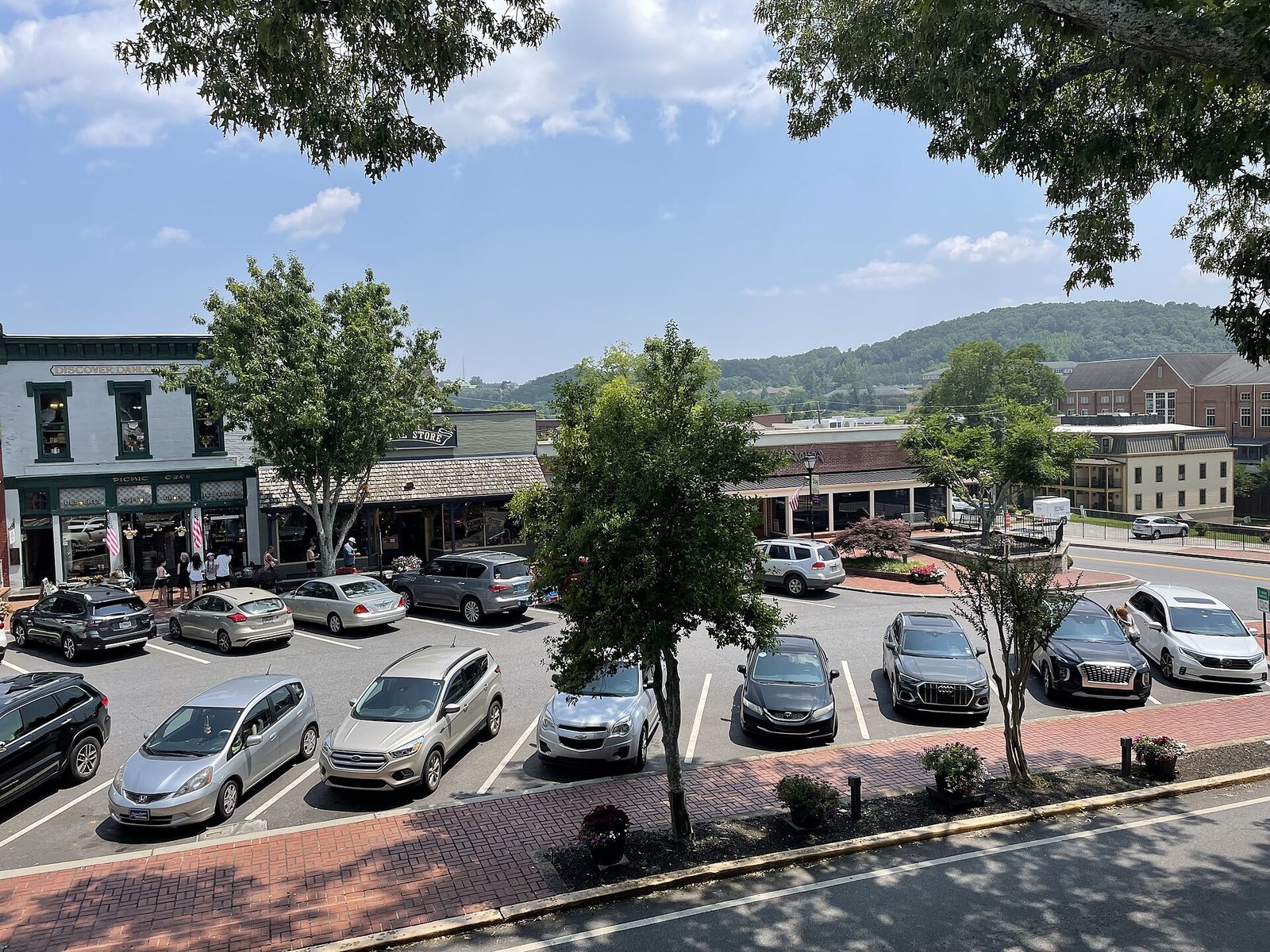
The closest mountain town to Atlanta at about an hour and a quarter up GA-400, with the prettiest square in the region and the state’s flagship wine country around it. Cabins here skew slightly more upmarket and slightly less rustic than Fannin or Gilmer.
Be realistic about the wine. The Dahlonega Plateau AVA has roughly 110 planted acres across the whole appellation, and the tasting rooms are scattered across Lumpkin and White counties rather than gathered in one valley. A listing that says “ten minutes from the wineries” means ten minutes from one of them. Montaluce runs free tours daily, weekdays at 2 p.m. and weekends at noon, which is a good anchor. Our wineries and agritourism guide has the honest scale of the region.
Book here if you are short on driving time or the tasting rooms are the point.
Blairsville and Hiawassee, Union and Towns counties
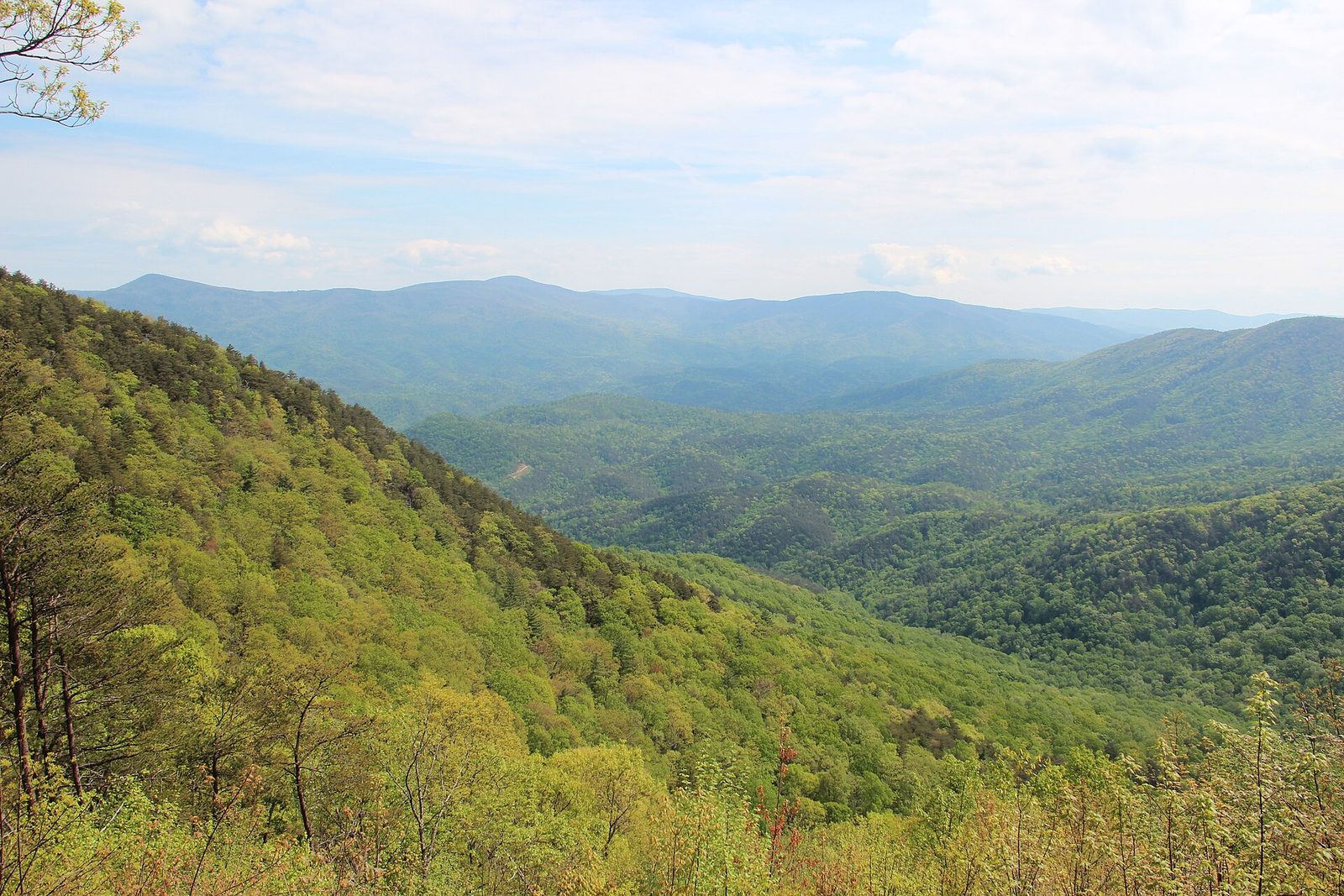
The highest ground in Georgia, and the only part of the state that delivers the layered blue ridgelines everyone is actually picturing when they book. Brasstown Bald, at 4,784 feet, is here, and so are Lake Nottely and Lake Chatuge. A west-facing hot tub above one of those lakes is the best version of this entire category.
The cost is access. These are the steepest roads in cabin country, frequently with a long unpaved private drive at the end, and cabins with the best views are at the top of them. Ask the host how long the gravel is, and take a winter ice forecast seriously.
Book here if the view is the reason you are going, and you are comfortable on mountain roads.
Clayton and Dillard, Rabun County
The far northeast corner, up against the North Carolina line — the least developed cabin market, the lowest rental density, and the darkest skies. Tallulah Gorge, Black Rock Mountain and a string of the state’s best waterfalls are here, and Clayton has a surprisingly good restaurant scene for a town of two thousand.
It is around two hours from Atlanta and the phone signal is the weakest in the state, which is either the point or a problem depending on your week. Rabun is also the wettest county in Georgia, catching more rain than anywhere else in the state, so a spring booking should assume it.
Book here if you want to see nobody, and a genuinely dark sky above the water matters more than being twenty minutes from a restaurant.
Reading a listing properly
Six things to look for, in the order they are worth checking.
- An exterior photo taken from the deck, not of it. If every outside shot faces the cabin, there is no view, however many times the title says “mountain view”.
- The tub in a wide shot rather than a close-up. Close-ups of steaming water with a wine glass on the edge are stock composition and tell you nothing. A wide shot shows what is behind and beside it.
- Recent reviews, read at three stars. Five-star reviews describe the view. Three-star reviews describe the road, the neighbor’s dog and the tub that was cold on Friday.
- The house rules, in full. Quiet hours, hot tub hours, minimum ages, generator or no generator, and whether the tub is seasonally closed all live here rather than in the description.
- The cancellation policy. A booking made in spring for October is a long commitment in a region where weather closes roads.
- The total at the final checkout step. Platforms only show the fees and taxes at the end, and on a two-night booking they are a third of the price.
Road access, which decides more than people expect
The relationship is unfortunately simple: the better the view, the worse the road. Cabins with long-range views sit on ridges, and ridges are reached by steep switchback drives, a good number of them gravel and privately maintained.
- Ask two specific questions: how long is the unpaved section, and how steep is the steepest part. Hosts field this constantly and the good ones answer precisely.
- “Four-wheel drive recommended in winter” means it. A front-wheel-drive rental on wet clay or ice on a 15% grade is a genuinely bad afternoon.
- Arrive in daylight the first time. Mountain drives with no guardrail and a lockbox at the end are much easier before dark.
- Check where you park relative to the door. A long flight of steps from the pad is common, rarely photographed, and matters if anyone in the party has mobility limits or if you are carrying three days of groceries.
- Download the map before you leave the town. Navigation apps fail in the hollows of Union, Towns and Rabun counties.
What you will actually pay
The nightly rate is roughly two-thirds of the total. Georgia’s lodging charges apply to every short-term rental in the state:
- $5 per night state hotel-motel fee, on every calendar night until a stay reaches 31 consecutive days.
- 4% state sales tax, applied to the total listing price — and Georgia treats anything the host requires you to pay, including the cleaning fee and any pet fee, as part of that price.
- Local hotel-motel excise tax set by county or city: 6% in unincorporated Fannin County, 8% in the City of Blue Ridge. Other mountain counties set their own rates, so check yours.
On top of the taxes sit a per-booking cleaning fee scaled to the property, and increasingly a non-refundable damage protection waiver — one north Georgia operator charges $60 per reservation. Excess cleaning and any HOA fines are billed back after you leave.
Worked example. A $230 one-bedroom with a hot tub in the City of Blue Ridge, two nights, $130 cleaning, $60 waiver: taxable total $650, so $26 state sales tax, $52 city excise and $10 in state hotel-motel fees. About $738 against a $460 headline. Budget a third above the advertised rate and you will not be caught out.
Airbnb and Vrbo collect and remit the taxes at checkout; booking direct does not avoid them. Our guide to romantic cabins in north Georgia goes further into the screening criteria for couples specifically.
Season: winter is the whole point
| Season | Hot tub experience | Rates |
|---|---|---|
| December–February | The best of the year — cold air, bare trees, long views, dark skies | Lowest, outside holidays |
| March–May | Very good; waterfalls at full flow; some rain | Moderate |
| June–August | The weakest case; humid nights, afternoon storms | Moderate |
| Mid-October | Excellent, and booked out six months ahead | Peak |
| Late Oct–November | Arguably the sweet spot — cool nights, easing rates | Falling |
Fall color in north Georgia peaks in the third week of October, roughly a fortnight after the Smokies, and it is the one week of the year when nothing good is available at short notice. The genuinely underrated season is January and February: rates drop by a third or more, the leafless ridges give the longest views of the year, and the temperature difference between the air and the water is what the whole thing is for.
Two winter cautions. Ice, not snow, is the real risk on these roads. And power cuts are not unusual in the mountain counties during ice storms or summer thunderstorms — a hot tub holds its heat for a while, but a cabin without power in February is a different weekend. Ask whether the property has a generator or a wood stove as backup.
Using it safely
Worth stating plainly, because cabin hot tubs come with no lifeguard and frequently no posted rules.
- 104°F is the standard maximum for a domestic hot tub, and most people are comfortable at 100–102°F. If a tub is running hotter than that, turn it down.
- Fifteen to twenty minutes is a session, not an evening. Get out, cool down, go back in.
- Alcohol and hot water are a poor combination — the heat accelerates absorption and masks dehydration. Drink water alongside.
- Pregnancy, heart conditions and blood pressure medication all warrant caution or avoidance; take medical advice rather than a listing’s word.
- Children overheat much faster than adults and should never be in one unsupervised. Many hosts set a minimum age.
- Shower first. It is the single biggest thing guests can do to keep the water clean for themselves and the next people.
- Replace the cover. It keeps the heat, the leaves and the wildlife out, and it is in the house rules for a reason.
If you cannot find one
- Shift to midweek. A Sunday-to-Wednesday in the same cabin frequently costs 40% less than Friday-to-Sunday and is available when the weekend is not.
- Move one county. Gilmer is cheaper than Fannin and twenty minutes away; Towns is quieter than Union with the same views.
- Consider the state parks. Georgia’s park cottages run roughly $75 to $250 a night with no cleaning fee, which is unbeatable value — but none of them has a hot tub. You will need a ParkPass at $10 a day or $70 a year. See our state parks guide.
- Look northwest. Walker and Dade counties around Cloudland Canyon have far fewer rentals, lower rates and dramatic scenery, with Chattanooga twenty-five minutes away for dinner.
- Look at lodges. Amicalola Falls and Unicoi both run full lodges, and several private resorts in the region have spas — a different experience, but a reliable one.
Frequently asked questions
Which north Georgia town has the most cabins with hot tubs?
Blue Ridge, by a wide margin, followed by Ellijay and Helen. Choice is highest in Fannin County and so are the rates, and the density of cabins there is what makes privacy the thing to screen for.
Are cabin hot tubs clean?
It depends entirely on the operator — there is no inspection regime for private rentals in Georgia. Ask how often the tub is drained and refilled and whether it happens between guests. Check the water in daylight when you arrive, and report cloudy water or foam immediately rather than getting in.
Will the hot tub be hot when I check in?
At well-run properties, yes, because the tub is kept at temperature and simply uncovered. At others it is restarted on changeover day and can take several hours to come up. Ask before you book — the answer says a lot about the rest of the property.
Is a hot tub worth it in summer?
Much less so. North Georgia summer nights are humid and rarely drop below the low seventies, and afternoon thunderstorms are near-daily. If your trip is July, put the money into a creek, a lake or a river cabin instead.
How much extra does a hot tub cost?
There is rarely a separate charge — it is priced into the nightly rate, and comparable cabins with and without typically differ by $30 to $60 a night. What is not priced in is the cleaning fee, the damage waiver and Georgia’s lodging taxes, which together add roughly a third to the advertised rate.
Do I need four-wheel drive?
Not in normal conditions. It matters on the steepest gravel drives after heavy rain and during the occasional winter ice event. If a listing recommends it, ask the host how long and how steep the unpaved section is.
Can I bring a dog?
Many cabins are pet friendly for a per-pet fee, which is taxable along with everything else. Dogs are not allowed in hot tubs anywhere, and some properties charge for the consequences if one gets in.
What is the best month to book?
For the experience, January and February — coldest air, longest views, lowest rates. For color, the third week of October, which needs booking in the spring. Late November is the best compromise.
Can I ask for the tub to be turned down or up?
Yes, and most hosts are happy to say how. The control panel is usually under a locked or clipped cover beside the tub. Adjusting temperature is fine; changing chemical settings is not, and a few operators lock the panel precisely because guests have tried.
What happens if the hot tub is broken when I arrive?
Tell the host immediately and in writing through the platform, with a photograph. Most will send someone or offer a partial refund. What you should not do is wait until you get home and then leave a review — platforms expect the issue to be raised during the stay, and your position is far weaker afterward.
Why do you not list specific cabins?
Because ownership and management in these counties turn over constantly, and a named list is out of date within a year while keeping the same photographs. The criteria above are stable, checkable before you pay, and will still be true next season.
Related Georgia Guides
- Georgia cabins — the whole picture, including lakes, the coast and family-size rentals.
- Romantic cabins in north Georgia — the couples-specific screening criteria.
- North Georgia mountains — the towns, the geography and what each is for.
- Georgia state parks — cottages, the ParkPass and how booking works.
- Georgia wineries and agritourism — the Dahlonega Plateau at its real scale.
- Georgia waterfalls — ranked by how much effort each one takes.
- Best time to visit Georgia — month by month, including the mountains.
Photo Credits
The town square in Ellijay, Georgia: photo by unknown / Wikimedia Commons (CC0)
A home with an alpine motif on Chattahoochee Drive near Helen, Georgia: photo by Al Stephenson / Wikimedia Commons (Public domain)
Sources: Georgia Department of Revenue and the Fannin County Chamber for the state hotel-motel fee, sales tax treatment of cleaning fees and local excise rates; Georgia State Parks for cottage rate bands and ParkPass pricing; operator policy pages for the damage-waiver example; Montaluce Winery for tour times; Alcohol and Tobacco Tax and Trade Bureau for the Dahlonega Plateau AVA planted acreage. Checked September 2026; nightly rates are operator- and date-dependent, so confirm the total at checkout rather than the headline rate.
Georgia Tourism Guide is an independent publication. We are not affiliated with Explore Georgia, the Georgia Department of Natural Resources, the National Park Service or any attraction listed here.