Most cabin listings that market themselves to couples are three-bedroom family rentals with a heart-shaped photo on the front. The genuinely good romantic cabins in north georgia are a much smaller set, and they are distinguished by four things you can check before booking: one bedroom rather than three, a view that is actually from the deck rather than from a clearing up the road, a hot tub that is private rather than overlooked, and enough distance from the neighbors that the deck is usable at night. This guide sets out how to screen for those, what the real total cost is once Georgia’s lodging taxes and fees are added, and which of the mountain counties suits which kind of weekend. Rates and rules checked September 2026.
Two quick notes. This is the American state — Blue Ridge, Helen, Dahlonega, Ellijay — an hour and a half north of Atlanta, not the country of Georgia in the Caucasus. And this page is about choosing the cabin; our romantic getaways in Georgia guide covers what to do once you have one.
The short answer
| If you want… | Look in | Nearest town | Watch out for |
|---|---|---|---|
| Long mountain views | Union and Towns counties | Blairsville, Young Harris | Steep gravel access roads |
| Walkable town plus cabin | Fannin County | Blue Ridge | Highest rates; busiest weekends |
| Wine country | Lumpkin and White counties | Dahlonega | Cabins sit further from tasting rooms than listings imply |
| A creek or river at the door | Gilmer and Fannin counties | Ellijay, McCaysville | Road noise; check the map, not the photos |
| Genuine seclusion | Rabun County | Clayton, Dillard | Weak cell coverage; 90 minutes further from Atlanta |
| Lowest total cost | State park cottages | Vogel, Unicoi, Black Rock Mountain | No hot tubs; book months ahead |
The one-line version: book a one-bedroom in Union or Towns County for the view, in Fannin if you want to walk to dinner, and in Rabun if you want to see nobody at all.
Seven criteria that actually separate cabins
Listing photos are taken with a wide lens on the best afternoon of the year. These seven checks are what survive contact with reality, and they are worth running in order — the first one alone eliminates most of the inventory.
1. One bedroom, not three
This is the single strongest filter and the one most guides skip. North Georgia’s rental stock is dominated by large family cabins, because they earn more per night. A three-bedroom booked by two people costs more, cleans slower, feels cavernous, and usually sits in a development of identical cabins. Filter to one bedroom — sometimes listed as a studio, loft or “honeymoon” unit — and the noise, the price and the density all drop together.
2. A view from where you will sit
“Mountain view” in a listing can mean a long-range layered ridge view from the deck, or it can mean a gap in the trees visible in February. Two tests. First, look for a photo taken from the deck rather than of it; if every exterior shot faces the cabin, there is no view. Second, check whether the view photos show bare trees — a winter-only view is a real thing in these mountains and is not dishonest, but it is not what you are imagining for an October weekend.
Elevation matters more than county. The ridgelines above Blairsville, Young Harris and Hiawassee give the best long views in the state because Brasstown Bald and the Blue Ridge crest are right there. Our north Georgia mountains guide covers the geography.
3. A private hot tub, not just a hot tub
Nearly every cabin above the budget tier has one. What varies is whether it sits on an open deck facing the neighbor’s kitchen window or in a screened corner facing the trees. Look at the satellite view of the address before you book — most listings give an approximate pin, and you can see how close the next roof is. A hot tub twenty feet from another cabin’s deck is a hot tub you will use once. Ask the host when it was last drained and refilled, and whether it is covered between guests — the good operators answer both without hesitating.
4. The access road
The cabins with the best views are on the steepest roads, and a surprising number are reached by unpaved private drives with switchbacks and no guardrail. In dry weather any car manages. After heavy rain, or in the occasional January ice event, a front-wheel-drive rental will not. If a listing mentions four-wheel drive “recommended in winter”, believe it. Ask the host directly how long the gravel section is and how steep; good hosts answer this precisely because they get asked constantly.
5. Distance to dinner
Thirty minutes each way on dark mountain roads turns dinner into an expedition, and it is the reason so many couples end up eating supermarket food two nights running. Decide in advance which you want: a cabin within fifteen minutes of Blue Ridge, Dahlonega, Helen or Clayton and their restaurants, or genuine isolation with a cooler packed before you leave Atlanta. Both are good weekends. The mistake is booking the second while planning the first.
Practical note: most small-town kitchens in these counties close by 21:00, earlier on weeknights, and several close entirely on Mondays and Tuesdays. Check before you drive down.
6. What the listing does not say
- Stairs. Many cabins are built into slopes with a long flight from the parking pad. Rarely mentioned; often the deciding factor.
- Cell coverage. Rabun and the hollows of Union and Towns counties have real dead zones. If one of you is on call, ask the host outright which carrier works.
- Wood stoves versus gas. A wood-burning stove is lovely and is also work. Check whether wood is supplied and whether there is a backup heat source.
- Community amenities. A “resort” or HOA cabin may mean a shared pool, a gate, and rules — and fines billed back to you.
- Minimum stays. Two nights is standard, three on holiday weekends, and some hosts require a Friday–Sunday block in October.
7. How many other rentals are on the road
This is the quiet variable that decides whether a cabin feels romantic or feels like a motel with trees. Some mountain roads in Fannin and Union counties are now almost entirely short-term rentals, which means a rotating cast of weekend arrivals, car doors at midnight and someone’s Bluetooth speaker on a deck two hundred feet away. Others are ordinary residential roads with one or two rentals on them, and those are quieter because the neighbors are permanent and the rules are enforced.
You can read this from the listing. A cabin with a cute name in a development where the other listings have matching photography and the same host is in the first category. A cabin on a named road with no obvious siblings is in the second. Neither is wrong, but the first is where the complaints about noise come from, and the second is where you actually get the silence you are paying for.
What it really costs
The advertised nightly rate is roughly two-thirds of what you will pay, and understanding why saves arguments at checkout.
Georgia’s lodging taxes
Every short-term rental in the state carries:
- A state hotel-motel fee of $5 per night, charged on every calendar night until a stay reaches 31 consecutive days.
- 4% state sales tax, applied to the total listing price — and Georgia counts anything the host requires you to pay, including the cleaning fee, pet fee and extra-person fee, as part of that price.
- A local hotel-motel excise tax set by the county or city. In cabin country, unincorporated Fannin County is 6% and the City of Blue Ridge is 8%. Other mountain counties set their own; check yours.
Airbnb and Vrbo collect and remit these, so they appear at checkout rather than on arrival. Booking direct with an operator does not avoid them.
The other charges
- Cleaning fee — scaled to the property, per booking rather than per night. This is the strongest argument for a one-bedroom: the cleaning fee on a small cabin is a fraction of a large one, and on a two-night stay it can be a quarter of the total.
- Damage protection waiver — non-refundable and increasingly standard. One north Georgia operator charges $60 per reservation. It is not insurance for you; it is cover for the owner.
- Pet fee — per pet, often per night, and taxable as above.
- Excess cleaning and HOA fines — billed back to the guest after departure. Read what the community rules say about quiet hours and parking.
A worked example
A $210 nightly one-bedroom in the City of Blue Ridge for two nights, with a $125 cleaning fee and a $60 damage waiver: the taxable total is $605, so 4% state sales tax is $24.20 and the city’s 8% excise is $48.40, plus $10 in state hotel-motel fees. The real number is about $688, not $420. Budget roughly a third above the headline rate and you will not be surprised.
The state park alternative
Georgia State Parks rent cottages across the mountains at published rates — broadly $75 to $250 a night depending on park, size and season — and they charge no cleaning fee at all. They are plain: no hot tubs, no fireplaces in most, basic kitchens, and a two-night minimum on weekends. What they have is location. Vogel’s cottages sit in a bowl beneath Blood Mountain, Unicoi’s are minutes from Helen and Anna Ruby Falls, and Black Rock Mountain is the highest state park in Georgia with genuine long-range views off the porch. You will also need a ParkPass at $10 per vehicle per day, or $70 annually. Our Georgia state parks guide explains the system.
| Park | Near | What it gives a couple | The catch |
|---|---|---|---|
| Vogel | Blairsville | A bowl under Blood Mountain; lake, falls and trails from the door | Busiest park in the system on fall weekends |
| Unicoi | Helen | Anna Ruby Falls and Helen ten minutes away; a lodge as backup | Close to Helen’s traffic |
| Black Rock Mountain | Clayton | The highest park in the state; long views off the porch | Cottages book out first; can be in cloud |
| Amicalola Falls | Dawsonville | The tallest cascading falls east of the Mississippi; a full lodge on site | Busy day-use traffic |
| Fort Mountain | Chatsworth | Quieter than the others; a lake, a stone wall of unknown origin | Further from any town worth eating in |
| Moccasin Creek | Lake Burton | Tiny, on the lake, genuinely peaceful | Camping rather than cottages; check availability |
| Cloudland Canyon | Rising Fawn | The best canyon views in Georgia; cottages and yurts | Northwest corner, two hours from Atlanta the other way |
The honest comparison: for a $300 total weekend, a state park cottage beats anything you will find on a rental platform. Above about $450, the private cabins win decisively on hot tub, view and privacy.
Where to book, and what to check before you do
Three routes, with different trade-offs.
- The big platforms. The widest inventory, the clearest photographs, guest reviews that are genuinely useful, and taxes collected automatically. Reviews are the real asset — filter for recent ones and read the three-star reviews rather than the five-star ones, which is where the noise, the road and the hot tub problems surface.
- Local property managers. North Georgia has several large cabin-management companies, and booking direct with them sometimes undercuts the platform rate. They tend to know their properties better and can answer specific questions about road grade and cell signal. The downside is that their cancellation terms are usually stricter and the review pool is thinner.
- Individual owners. The best cabins in these mountains are often owned and managed by one person, and those are the listings where the answer to “how steep is the drive” comes back within the hour. Expect firmer minimum stays and less flexibility.
Before you pay, check four things. The cancellation policy, because an October booking made in April is a long commitment and mountain weather does not cooperate. The check-in method, because a self check-in that involves a lockbox at the end of a gravel drive in the dark is worth knowing about. The total including every fee, which platforms only show at the final step. And the exact address or at least a precise pin, so you can look at the satellite view — the single most useful two minutes in this entire process.
Red flags in a listing
- No exterior photo taken from the deck. The view is not what you think it is.
- Interior photos only, or heavily wide-angle. The cabin is smaller or closer to its neighbors than it looks.
- “Minutes from everything.” In these mountains, minutes are not miles. Check the drive on a map.
- No recent reviews on an established listing. Either it is new management, or something changed.
- A cleaning fee above about 60% of a nightly rate. Common on small cabins and worth pricing against a slightly larger one.
- Rules about the hot tub being unavailable “seasonally”. Ask which months before booking a January weekend.
Where to look, county by county
Union and Towns counties — the view
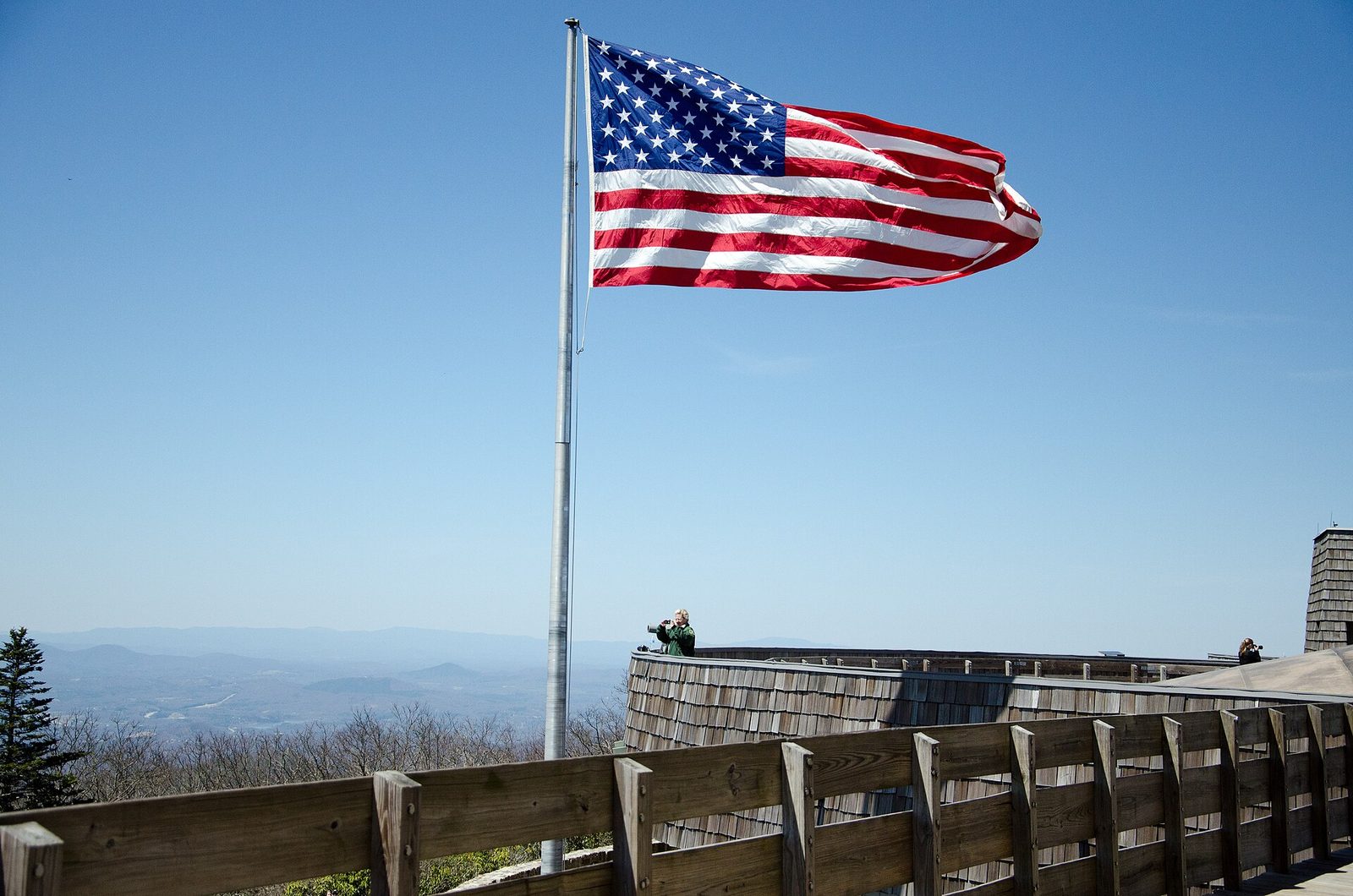
Blairsville, Young Harris and Hiawassee sit under the highest ground in the state. Brasstown Bald, Georgia’s highest point at 4,784 feet, is here, and so are the layered blue ridgelines that everyone is actually picturing. Cabins on the slopes above Lake Nottely and Lake Chatuge get long westward views and therefore sunsets, which matters more than it sounds.
Trade-offs: the access roads are the steepest in the state, the towns are quiet, and dinner options are limited compared with Blue Ridge. It is about two hours from Atlanta.
Fannin County — Blue Ridge and the compromise
Blue Ridge is the most developed cabin market in the state and the easiest weekend. The downtown is genuinely walkable, with restaurants, a scenic railway, tasting rooms and shops; Lake Blue Ridge and the Toccoa River are minutes away; and the cabin stock is large enough that something is always available.
The cost of that is price and density. Fannin’s rates run highest in the state for equivalent properties, October weekends sell out months ahead, and many cabins sit in developments where the neighbor’s deck is thirty feet away. If you book here, spend the extra effort on the satellite view.
Gilmer County — Ellijay, apples and creeks
Ellijay is quieter and cheaper than Blue Ridge twenty minutes away, and the country around it — orchards, the Cartecay and Ellijay rivers — is gentler than the high ridges. This is the best county for a creekside cabin at a reasonable rate, and for an autumn weekend built around apple houses rather than long views. It is also the closest cabin country to Atlanta at about 90 minutes.
Lumpkin and White counties — Dahlonega and Helen
Dahlonega’s square is one of the pleasantest in the state, and the Dahlonega Plateau’s tasting rooms are the reason most couples come. Be realistic about distances: the wineries are spread across the county and a “10 minutes from the wineries” cabin is usually ten minutes from one of them. Plan a designated driver or book a tour.
Helen, twenty minutes east, is a themed alpine village that people either enjoy or find relentless. The cabins on the Chattahoochee above and below it are good, and Unicoi State Park and Anna Ruby Falls are close. Treat Helen as a half-day rather than a base, unless the theming is the reason you came.
Rabun County — Clayton and real seclusion
If you want one sentence on this county: it is where north Georgia stops being a weekend market and starts being mountains.
The far northeast, up against the North Carolina line, is where the cabins get genuinely remote. Tallulah Gorge, Black Rock Mountain, the Chattooga River and a string of waterfalls are here, Clayton has developed a surprisingly good restaurant scene for its size, and the density of rentals is lower than anywhere else in cabin country.
It is also the furthest from Atlanta — around two hours to Clayton, more to Dillard — and the cell coverage is the weakest. That is the point, but know it before you arrive. Rabun is also the wettest corner of the state, catching more rain than anywhere else in Georgia, which is why the waterfalls are here and why a spring weekend can be properly soggy. Pack for it rather than being surprised by it.
The northwest corner — the one people forget
Everything above sits in the northeast quadrant, because that is where the cabin industry is. The northwest — Walker, Dade and Chattooga counties, up against Lookout Mountain and the Tennessee line — has far fewer rentals, lower rates and, at Cloudland Canyon, arguably the most dramatic scenery in the state: a thousand-foot gorge with waterfalls at the bottom and cottages and yurts on the rim. Chattanooga is twenty-five minutes away for dinner, which solves the food problem that dogs the other counties.
The trade-off is that it feels less like a mountain weekend and more like a canyon one, and the drive from Atlanta is two hours up I-75 rather than through the hills. If the northeast is booked solid for an October weekend, this is the first place to look.
What to do with the weekend
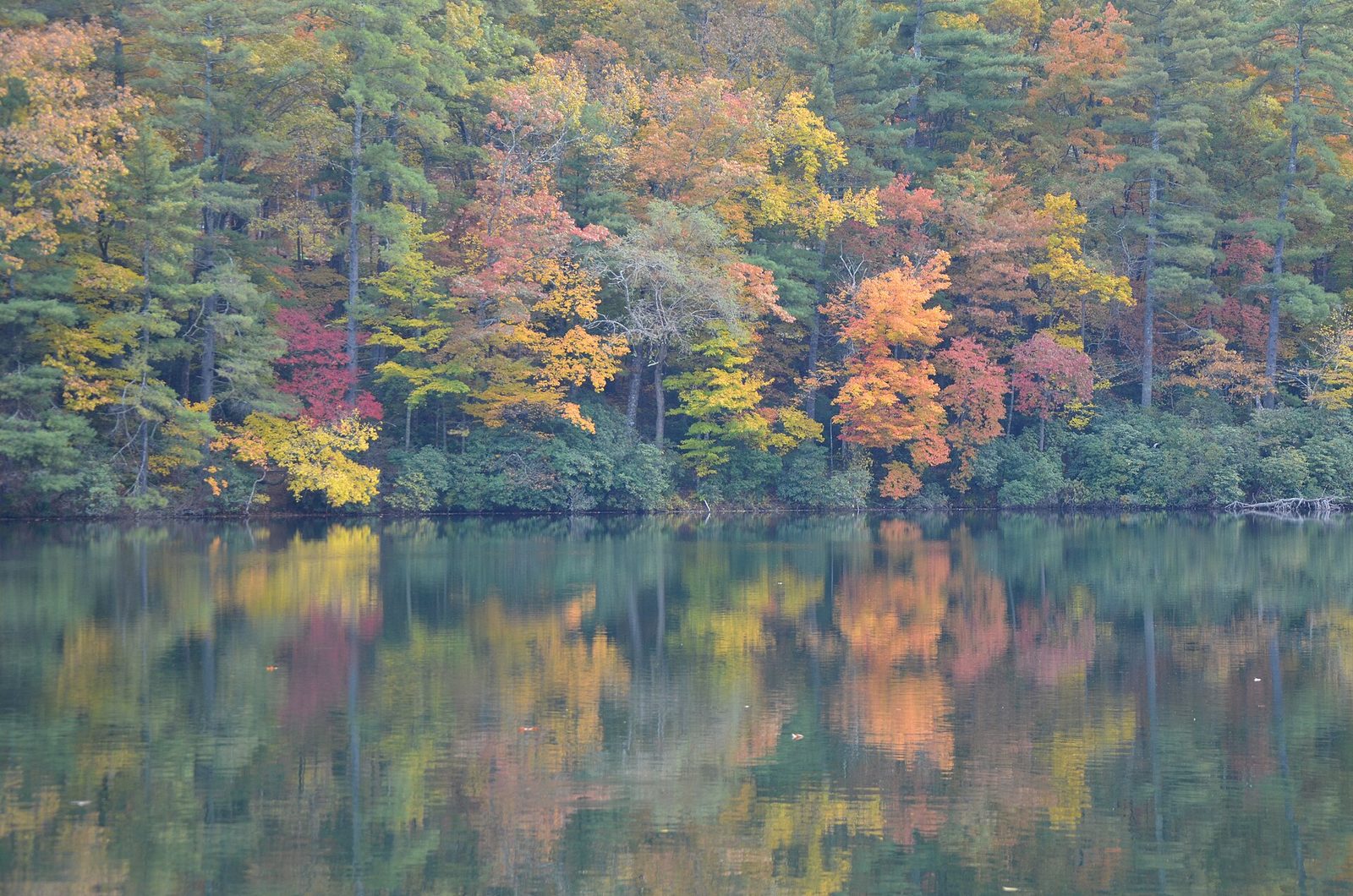
The cabin is most of the trip, which is the point, but two or three anchors stop a weekend from dissolving into scrolling on a sofa you could have scrolled on at home. Two is the right number for a two-night stay. Three is ambitious. Four means you have booked a sightseeing trip and happen to be sleeping in a cabin.
- A short waterfall walk. Anna Ruby Falls near Helen is paved and half a mile. Amicalola is a staircase with a payoff. Our Georgia waterfalls guide ranks them by effort.
- Tasting rooms. The Dahlonega Plateau is the flagship region, though it is small — about 110 planted acres across the whole AVA. Montaluce runs free tours daily, weekdays at 2 p.m. and weekends at noon. See our wineries and agritourism guide.
- A drive rather than a hike. The Richard Russell Scenic Highway over Hogpen Gap is 14 miles of switchbacks and overlooks, and it is a genuinely good hour. Our scenic drives guide has the routes.
- Nothing at all. Buy food in Atlanta or Ellijay on the way up, and do not leave the deck. This is the correct answer more often than guides admit.
If you are planning a proposal: a private proposal by two visitors in a Georgia state park needs no permit. A wedding does need park approval, and commercial photography or filming needs prior approval from the Division Director — which means a hired photographer is not automatically fine. Drone work needs a commercial film request plus FAA registration and certification. Ask the specific park office about fees before you go.
Provisioning
Getting this right is most of the difference between a good weekend and a series of trips to a gas station.
- Shop before the last town. Ellijay, Blairsville, Blue Ridge, Dahlonega and Clayton all have full supermarkets. Beyond them you get convenience stores.
- Check the alcohol rules. Sunday sales and package sales vary by county and city in north Georgia, and a couple of jurisdictions are still dry. Buy on Saturday.
- Assume the kitchen is adequate, not equipped. Most cabins have a stove, a fridge and the basics. Sharp knives, coffee you actually like and a corkscrew are worth packing.
- Firewood. If the cabin has an outdoor fire pit, wood is often sold on site or at a roadside stand. Do not move firewood long distances — Georgia asks you to buy it locally to limit the spread of tree pests.
- Layers and a torch. These elevations run about ten degrees cooler than Atlanta, and the walk from a hot tub to a door is much longer in the dark.
When to book, and when to go
| Season | What it is like | Book by |
|---|---|---|
| Mid-October | Peak color, peak rates, peak traffic | Spring, for anything good |
| Late Oct – Nov | Color fading, rates easing, still lovely | Two to three months |
| December | Fires, lights in the towns, quiet midweek | Six to eight weeks |
| Jan – Feb | Cheapest, bare trees, best long views, ice risk | Two to three weeks |
| March – May | Waterfalls at full flow, wildflowers, mild | Four to six weeks |
| Jun – Aug | Green, humid, afternoon storms; the hot tub is less appealing | Four weeks |
One structural point about booking. October weekends in the best cabins are taken between February and April, by repeat guests who booked on their way home the previous year. If you are planning a first October trip, you are competing with people who have a twelve-month head start, and the honest advice is to either book absurdly early or pick a different fortnight. Late November, when the color has gone but the rates have collapsed and the ridges are visible through bare trees, is genuinely underrated.
Fall color in north Georgia peaks in the third week of October, roughly a fortnight after the Smokies, and it is the one weekend of the year when you will not find anything good at short notice. Winter is the underrated season: rates fall by a third or more, the leafless ridges give views that summer hides, and a hot tub in 35-degree air is the whole experience. Watch the forecast for ice, which is the real winter risk on these roads rather than snow.
If the cabin you want is gone
- Move the dates, not the county. A Sunday-to-Tuesday in the same cabin often costs 40% less than Friday-to-Sunday and is available when the weekend is not.
- Try a state park cottage. Vogel, Unicoi, Black Rock Mountain and Amicalola all take bookings well ahead, and cancellations appear.
- Go one county over. Gilmer is cheaper than Fannin and twenty minutes away. Towns is quieter than Union and no further from the views.
- Consider the Len Foote Hike Inn at Amicalola Falls — a five-mile walk in, no cars, meals provided, and about as memorable as a night in these mountains gets. Rates and booking rules are on the inn’s own site.
- Look south instead. If the mountains are full, our weekend getaways guide has coastal and middle-Georgia alternatives that peak at different times of year.
Frequently asked questions
What is the best area for a romantic cabin in north Georgia?
Union or Towns County for the best long-range views, Fannin County around Blue Ridge if you want to walk to dinner, and Rabun County if seclusion matters more than convenience. Gilmer County is the best value of the four.
How far is cabin country from Atlanta?
Ellijay is about 90 minutes, Blue Ridge and Dahlonega around an hour and three quarters, Blairsville and Clayton closer to two hours. Add time for mountain roads at the end of each — the last ten miles are frequently the slowest.
Do I really need a hot tub?
It is the most-used amenity in these cabins by some distance, particularly between October and March. What matters is privacy rather than presence. A hot tub overlooked by the next cabin is worse than no hot tub, because you have paid for it.
How much should I budget?
For a private one-bedroom cabin with a hot tub, expect $175 to $300 a night in shoulder season and $250 to $450 in peak October, then add roughly a third for the cleaning fee, damage waiver and Georgia’s lodging taxes. A state park cottage weekend can come in under $300 all in.
Is October worth the premium?
For a first visit, yes — the color in these mountains is genuinely spectacular and the third week is reliably good. For a second or third, late November and February deliver a better cabin for considerably less money, and the views off a leafless ridge are longer.
Are cabins pet friendly?
Many are, with a per-pet fee that is taxable along with everything else. Georgia state park cottages have specific pet-designated units rather than a blanket policy, so check the individual park.
What should I bring that the cabin will not have?
Groceries, because the nearest store is often twenty minutes away and closes early. Good torches for the walk from the car. A layer more than you expect — these elevations run roughly ten degrees cooler than Atlanta. And downloaded maps, because navigation apps fail in the hollows.
Are two nights long enough?
Two nights works if you arrive Friday afternoon rather than Friday evening; the drive from Atlanta plus a grocery stop eats most of an evening otherwise. Three nights is the sweet spot, and a Sunday-to-Wednesday costs far less than a Friday-to-Sunday for the same cabin.
Do I need four-wheel drive?
Not in normal conditions. It matters on the steepest gravel drives after heavy rain, and in the occasional winter ice event, when any two-wheel-drive car on a north Georgia mountain road is a problem regardless of the cabin. If a listing recommends it, ask the host how long the unpaved section is.
Which counties have the best food?
Fannin around Blue Ridge has the deepest choice, Rabun around Clayton has the best individual restaurants for its size, and Dahlonega’s square is the most pleasant place to eat outdoors. Union, Towns and the smaller towns thin out quickly, and almost everywhere closes earlier than you expect.
Is there anything new in the rules for 2026?
Yes. From 1 July 2026, Georgia requires short-term rental operators statewide to complete human-trafficking-awareness training. It does not change anything for guests, but it is a reasonable thing to ask a host about if you are booking outside a major platform.
The hot tub is the amenity most couples book around and the one most likely to disappoint, usually because it sits on an open deck thirty feet from the next cabin. Our area-by-area guide to north Georgia cabins with hot tubs goes deeper on placement, cleaning standards, heat-up times and seasonal shutdowns, and on which of the mountain counties has the best of them.
Related Georgia Guides
- Georgia cabins — the full picture, including family cabins, lakes and the coast.
- Romantic getaways in Georgia — ten weekends that work, cabins and otherwise.
- North Georgia mountains — the towns, the geography and what each is for.
- Georgia state parks — cottages, the ParkPass and how booking works.
- Georgia waterfalls — ranked by effort, from roadside to a serious hike.
- Weekend getaways in Georgia — alternatives when the mountains are full.
Photo Credits
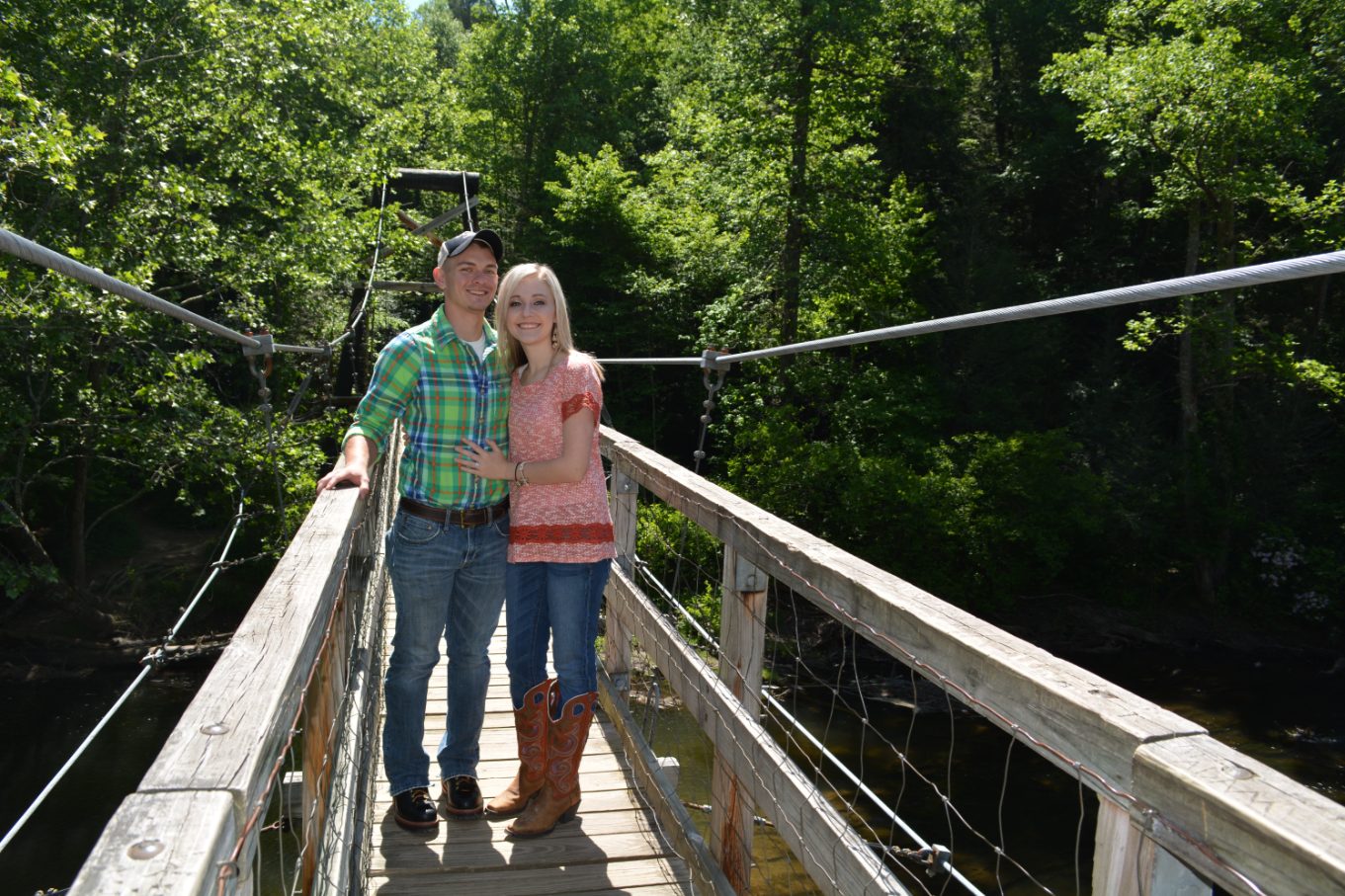
The swinging bridge over the Toccoa River, Chattahoochee-Oconee National Forest: photo by Crystal Thomas/USFWS / Wikimedia Commons (Public domain)
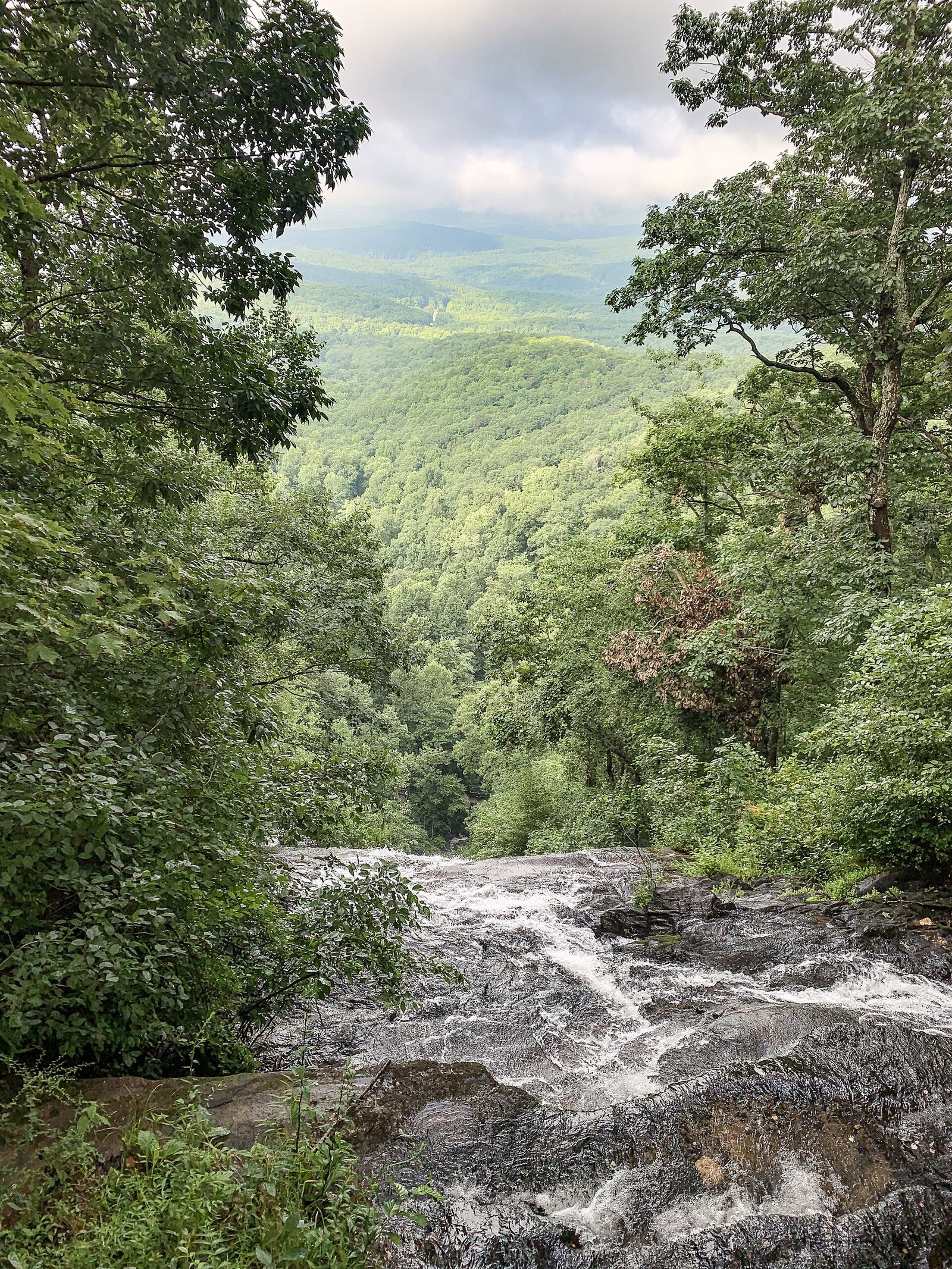
Amicalola Falls State Park: photo by Han Zheng / Wikimedia Commons (CC BY-SA 2.0)
The observation deck at Brasstown Bald: photo by ChattOconeeNF / Wikimedia Commons (CC BY 2.0)
Sources: Georgia Department of Revenue and the Fannin County Chamber for the state hotel-motel fee, state sales tax treatment of cleaning fees and local excise rates; Georgia State Parks for cottage rate bands, ParkPass pricing and the wedding, photography and drone permit rules; operator policy pages for the damage-waiver example; Montaluce Winery for tour times; Georgia’s 2026 short-term rental training requirement. Checked September 2026; nightly rates are operator- and date-dependent, so confirm the total at checkout rather than the headline rate.
Georgia Tourism Guide is an independent publication. We are not affiliated with Explore Georgia, the Georgia Department of Natural Resources, the National Park Service or any attraction listed here.