The first thing visitors notice about Georgia beaches is that the water is brown, and the second is that the beach was twice as wide two hours ago. Neither is a problem, and both are worth understanding before you book, because they explain almost everything else about this coast. The color is suspended sediment and tannin washing out of half a million acres of salt marsh, not pollution. The width is the tide, which on this stretch of the Atlantic runs six to nine feet — the biggest range anywhere south of Cape Cod.
Georgia has only about a hundred miles of coastline, the shortest of any state on the southern Atlantic, and it holds roughly a third of the salt marsh left on the entire eastern seaboard. That trade — less beach, far more marsh — is the defining fact of the Georgia coast, and it is why the fifteen barrier islands here feel nothing like the Carolinas or Florida. Four of them you can drive to. The rest need a ferry, a permit, a tour booking or an invitation, and this page is largely about sorting out which is which.
What follows compares every island a member of the public can actually reach, with 2026 fees, ferry rules, parking rates, dog rules and the water-quality and tide resources that matter more here than most places. Prices were checked in September 2026 and are date-stamped. This is Georgia the US state; its beaches are on the Atlantic, four hours southeast of Atlanta.
The Georgia Coast at a Glance
| Question | Short answer |
|---|---|
| Which islands can I drive to? | Four: Tybee, St. Simons, Sea Island (guests only) and Jekyll. Everything else needs a boat. |
| Best all-round beach | Jekyll for value and variety; St. Simons for facilities and lifeguards; Tybee if you are based in Savannah. |
| Best wild beach | Cumberland Island — 17 miles of it, reachable only by reserved ferry. |
| What does it cost to park? | Tybee $4/hour or a $25 day pass. Jekyll $10 per vehicle per day, free on foot or by bike. St. Simons free at public accesses. |
| Why is the water brown? | Marsh tannin and suspended sediment from a seven-foot tide. It is not dirty, and it is not going to change. |
| Are there lifeguards? | Only on St. Simons, at Coast Guard Station and Massengale, Memorial Day to Labor Day, 11:00–16:00. |
| Best months | Late April to early June, and September into October. Water stays swimmable May through October. |
| Biggest rookie error | Turning up for the Cumberland ferry without a reservation. It books up months ahead and there is no standby worth relying on. |
Why This Coast Is Different
Three physical facts shape every beach day in Georgia, and knowing them turns a disappointing trip into a good one.
The tide is enormous. The coastline curves inward here — geographers call it the Georgia Bight — which funnels and amplifies the tide. The range runs about six to seven feet on an ordinary day and up to nine on a spring tide. At low water on Jekyll or Cumberland the beach is a quarter-mile of hard flat sand you can cycle on; six hours later it is a narrow strip against the dunes. Check a tide chart before you plan a beach walk, a shelling trip or a kayak launch, because getting it wrong costs you the day rather than an hour.
The water is brown and warm. Half a million acres of Spartina marsh drain into these sounds, carrying tannin and fine sediment that the big tides keep in suspension. It looks like weak tea and it is perfectly clean. Visibility is poor, which is why there is no snorkeling and very little diving here, and why so many Georgia beach photos are taken at sunset.
The marsh is the main event. Georgia has a third of the Atlantic coast’s remaining salt marsh, and the best hours on this coast are often spent in it rather than on the sand — a kayak through a tidal creek at high water, a boardwalk at Skidaway, dolphins strand-feeding on a mud bank. If you come expecting Destin and get marsh, you will feel short-changed. If you come for the marsh, the beaches are a bonus.
The Four Islands You Can Drive To
Tybee Island
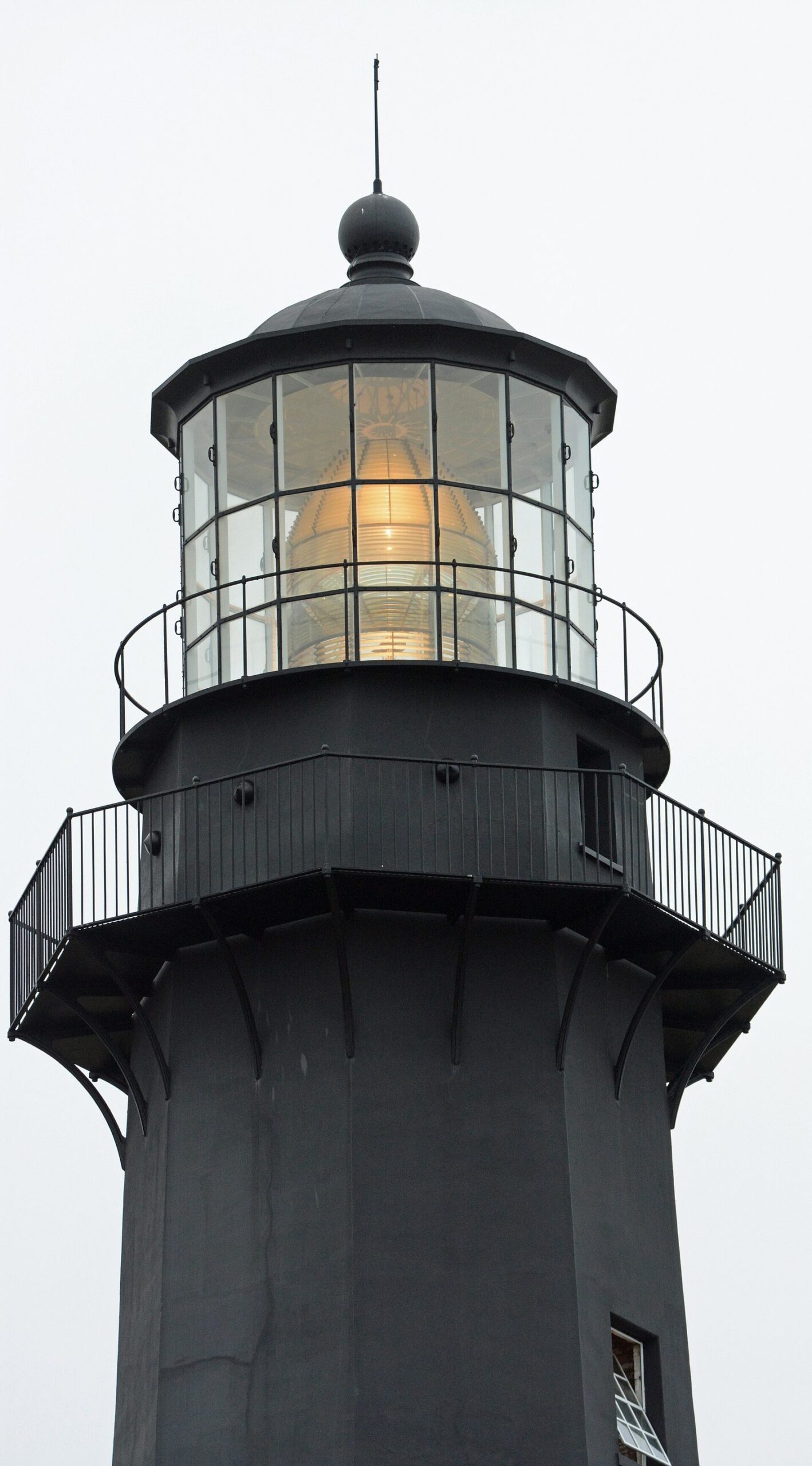
Eighteen miles east of Savannah on US-80, about thirty minutes. Tybee is a small, cheerfully unpolished beach town with a pier, five miles of Atlantic sand, and the best lighthouse on the coast. It is the obvious add-on to a Savannah trip and the least “resort” of the four.
Parking is the whole logistical story: $4 an hour, enforced 08:00 to 20:00 every day, which is $48 if you stay the full period, or a $25 day pass valid to midnight, buyable up to thirty days ahead and extendable to seven consecutive days for $175 (checked September 2026). Any visit over about six hours, buy the pass.
The Tybee Island Light Station is 178 steps to the gallery and worth every one. On the way out, Fort Pulaski National Monument is a genuinely important stop — Union rifled cannon breached its brick walls in thirty hours in 1862 and made masonry fortification obsolete worldwide. Two warnings: US-80 crosses salt marsh on low bridges and floods on king tides and after heavy rain, and summer weekend traffic onto the island is severe. Leave before nine or after three.
St. Simons Island
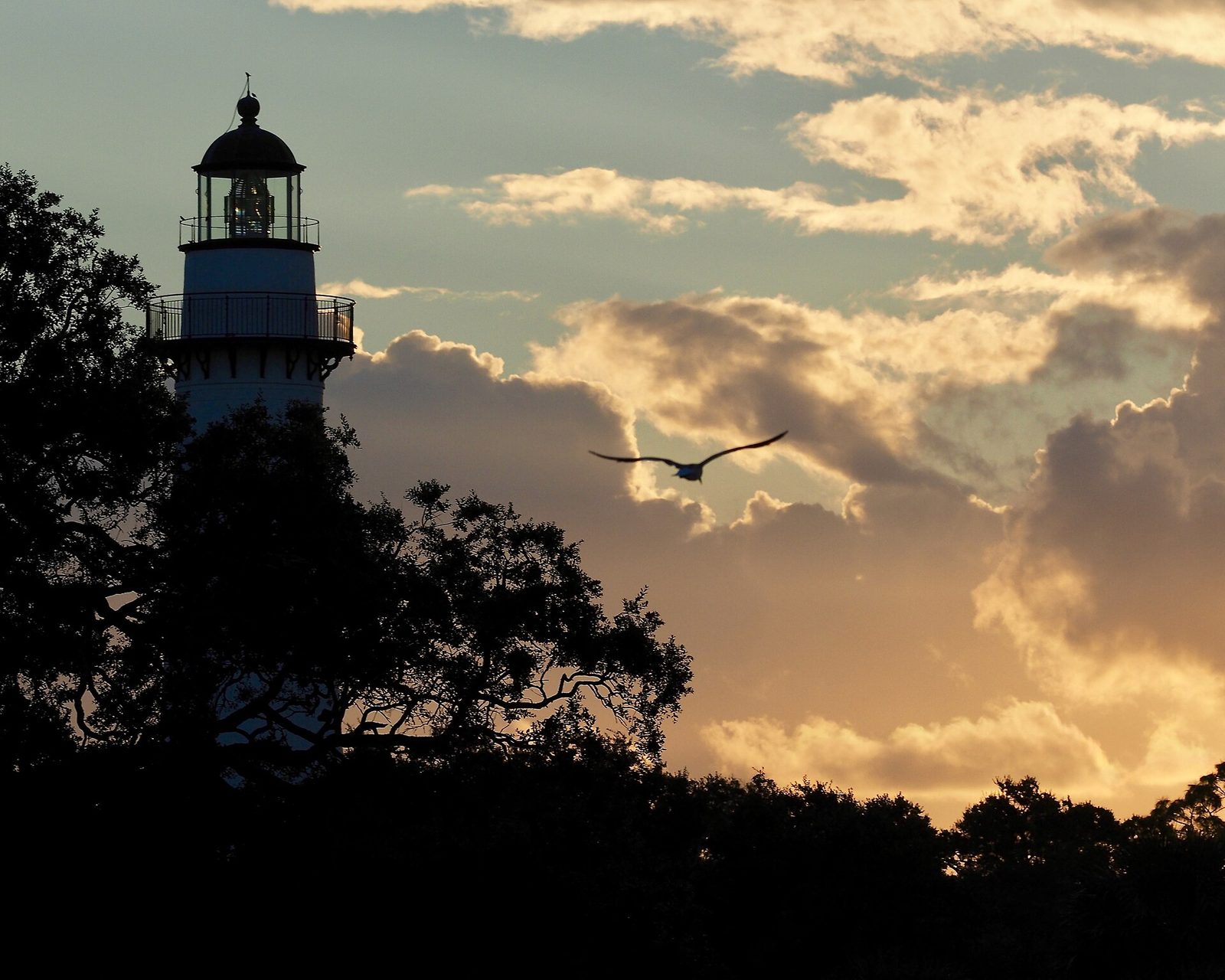
The largest of the Golden Isles, reached from Brunswick over a causeway about an hour and a quarter south of Savannah. St. Simons is a proper island community rather than a beach strip — live oaks, a village with a pier and shops, a lighthouse you can climb, and far more history than its neighbors.
The main public beach is East Beach at the Historic Coast Guard Station, with parking, restrooms and seasonal concessions, plus Massengale Park further along. Note for 2026: the Coast Guard Station area is under construction through the year, with new facilities and parking going in alongside erosion-control work, so expect disruption and check before you rely on it.
St. Simons is the only Georgia island with lifeguards, and only at those two beaches, Memorial Day to Labor Day, 11:00 to 16:00 daily. Everywhere else on this coast, including all of Jekyll, you swim unsupervised.
Beyond the sand: Fort Frederica National Monument preserves Oglethorpe’s 1736 garrison town, the reason Georgia stayed British rather than Spanish; Christ Church Frederica sits under enormous oaks nearby; and the Avenue of the Oaks at the Sea Island Golf Club is the photograph everybody takes. The Tree Spirits — faces carved into living oaks around the island — are a genuinely charming scavenger hunt with children.
Sea Island
Connected by road, and entirely private. Sea Island is guests only: there is no public beach access, and the gate is real. It is a five-star resort island, it hosted a G8 summit in 2004, and if you are not staying there the only part you will see is the causeway. Worth stating plainly, because a surprising number of itineraries list it as a beach.
Jekyll Island
State-owned, managed by the Jekyll Island Authority, and the best-value beach island in Georgia. Entry is $10 per vehicle per day or $100 annually, with vehicles over eight feet tall paying $15 and $150, and an extra $5 on designated event days such as Independence Day, Shrimp & Grits and Holly Jolly Jekyll — daily rate only, not the annual. It is free on foot or by bicycle, which matters because the island has twenty-odd miles of paved bike path and renting a bike is the correct way to see it.
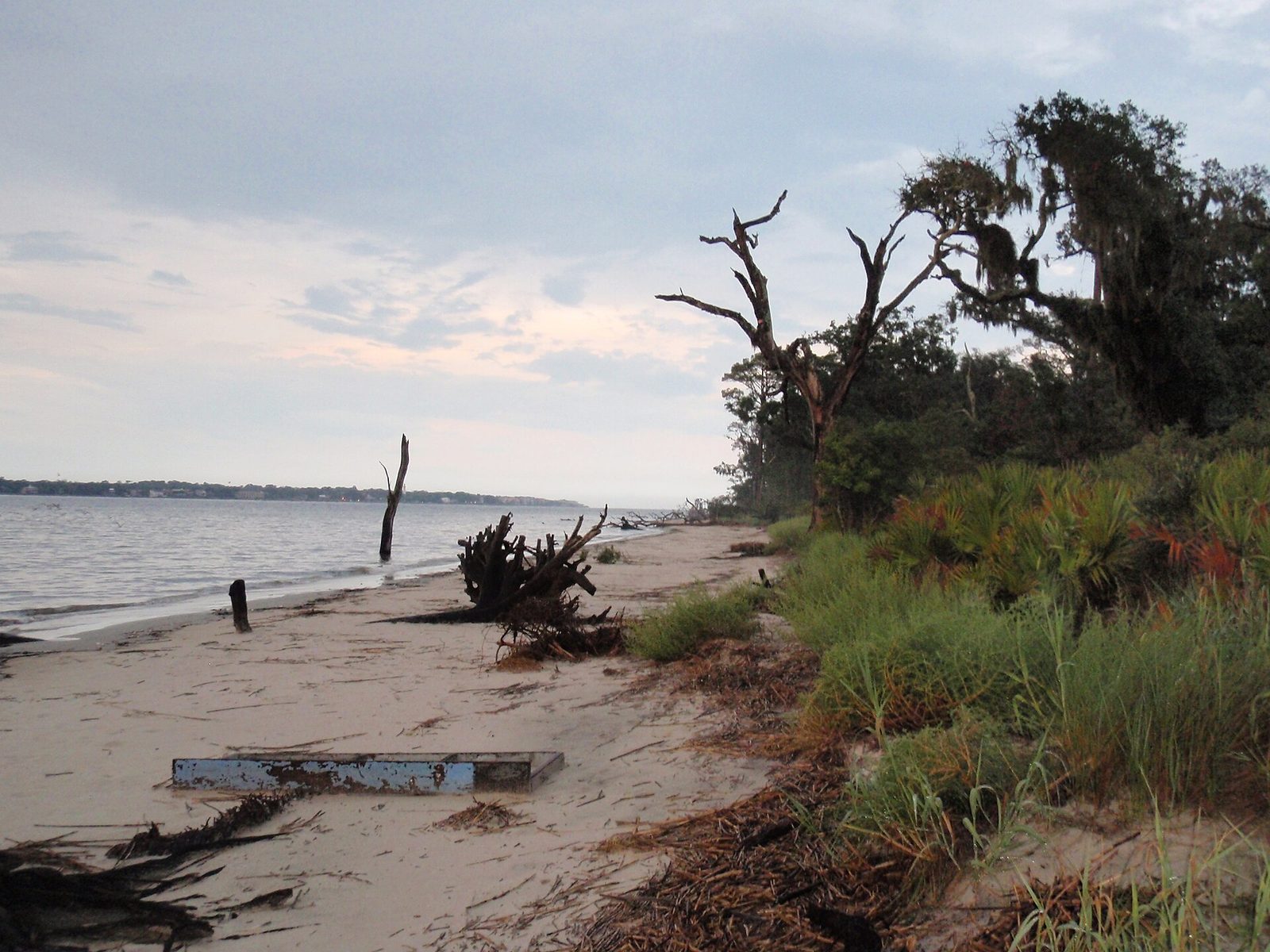
Driftwood Beach, on the north end, is the image that sells the Georgia coast: a forest of bleached, skeletal oak and pine trunks standing where the sea has eaten the shoreline out from under them. It is a working illustration of erosion rather than a landscaped attraction, it is at its best two hours either side of low tide, and it is free.
Great Dunes Beach is the main swimming beach; St. Andrews at the south end is the quiet one and the best for dolphin-watching. The Georgia Sea Turtle Center is the island’s other headline: a working rehabilitation hospital where you can see actual patients, and the best place in the state to understand what nesting season involves.
Jekyll’s history, told straight
Two things happened on this island that are worth knowing and that the brochures handle unevenly.
From 1886 to 1942 the Jekyll Island Club was a private winter retreat for a group of families — Morgan, Rockefeller, Pulitzer, Vanderbilt and others — who at their peak were said to represent a sixth of the world’s wealth. In 1910 a secret meeting on the island drafted the plan that became the Federal Reserve Act, and in 1915 the first transcontinental telephone call was routed through here. The historic district survives, and you can walk or ride through all of it.
And in 1858, at what is now St. Andrews Beach, the schooner Wanderer landed roughly 400 enslaved Africans — one of the last known slave ships to reach the United States, fifty years after the trade was outlawed. There is a memorial at the site. It is a short walk from the picnic area and most visitors drive past it.
The Islands You Cannot Drive To
Cumberland Island
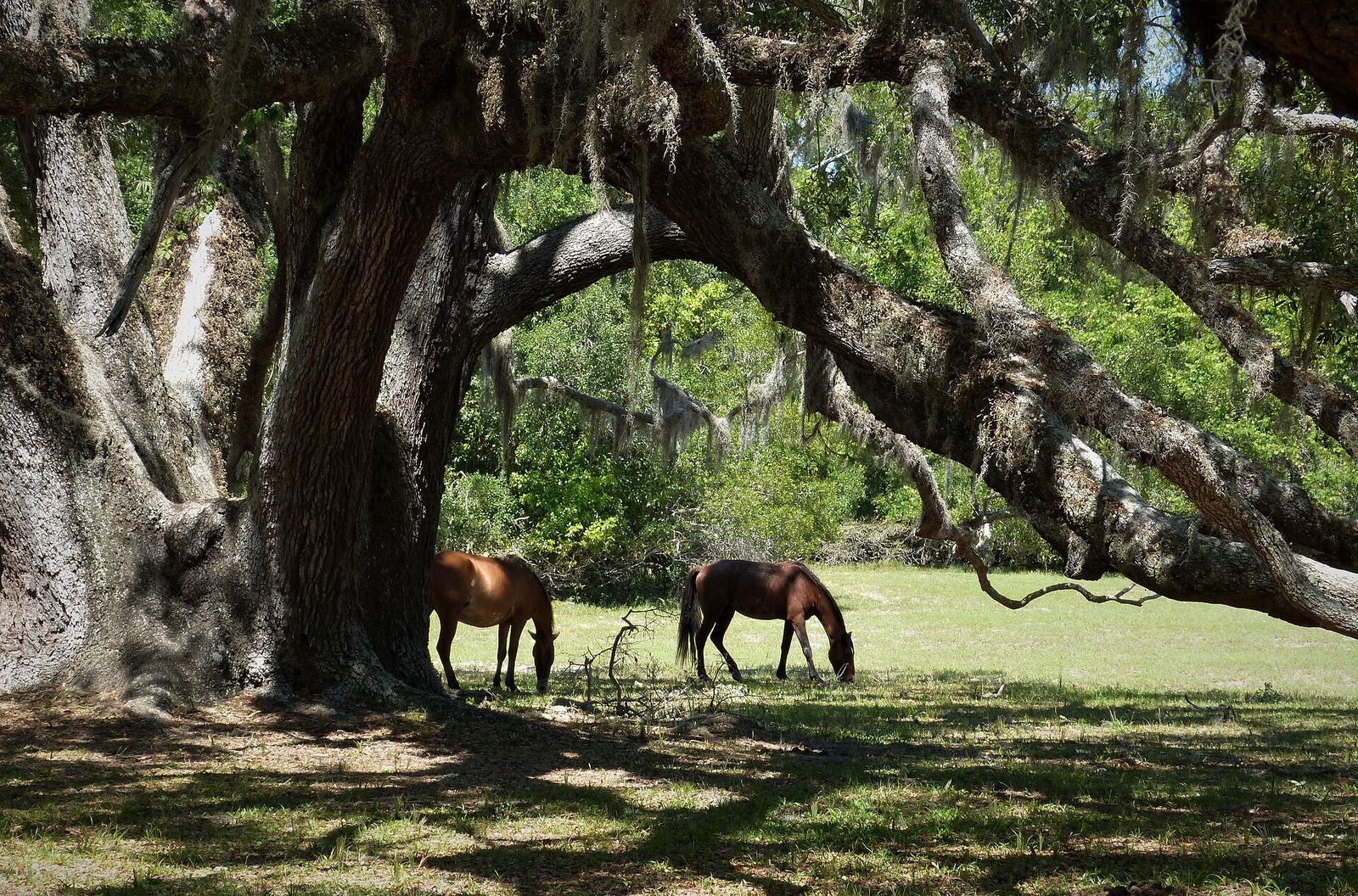
The largest and wildest of Georgia’s barrier islands, a National Seashore, and the best day on this coast for anyone prepared to plan. Seventeen miles of empty beach, a maritime forest of live oaks, the burned ruins of the Carnegies’ Dungeness mansion, and the feral horses that everyone comes for.
The logistics are strict and not negotiable. Entrance is $15 per person for seven days for everyone over 16, or $45 annually. The ferry from St. Marys is $44 plus tax for adults, $42 for seniors 62+, $34 for youth 6–15, with under-5s free, and the crossing takes 45 minutes. Reservations open six months ahead and sell out. The park is cashless. And critically: there is no food, no water and no shop on the island. Everything you will eat and drink has to come across on the boat with you, including more water than you think, because there is no shade on the beach and the walk from the dock to Dungeness and back is several miles.
Keep your distance from the horses. They are genuinely wild, unmanaged and occasionally aggressive, and people get kicked most years.
Sapelo Island
Reached by a short state ferry from the visitor center in McIntosh County — about seven miles and twenty minutes — and governed by a rule most guides omit entirely: you must be on an organized tour or the guest of a resident. You cannot simply buy a ticket and wander. State-run tours run Wednesday 08:30–12:30 and Saturday 09:00–13:00, with Saturday requiring a reservation through the Sapelo Island Visitor Center on 912-437-3224. Private tours with local guides also exist.
What you come for: Hog Hammock, also written Hogg Hummock, a Gullah-Geechee community of roughly forty-five residents and the last of its kind — a direct, living continuation of the culture that formed among enslaved West Africans on the Sea Islands. Tours also take in the Reynolds Mansion, the University of Georgia Marine Institute and the lighthouse.
The island is also where you can see tabby properly: a coastal building material of burnt oyster shell, lime, sand and water, poured in lifts by enslaved laborers, and still standing at the 1809 sugar mill. It is the signature material of this coast and you will notice it everywhere once you have seen it.
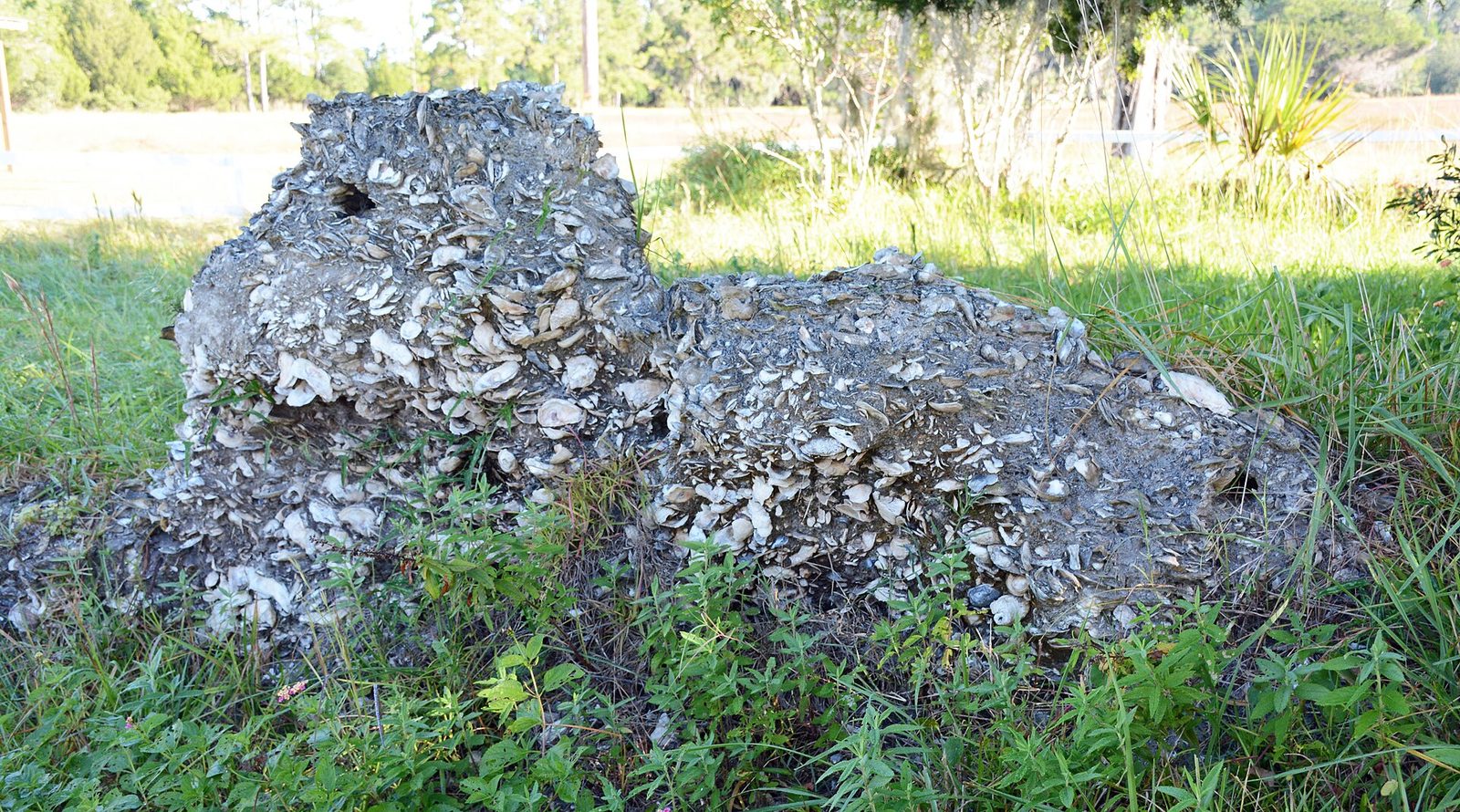
Little St. Simons, Ossabaw, Wassaw, Blackbeard and the rest
Little St. Simons is eleven thousand privately owned acres with seven miles of beach and a small lodge; like Sea Island it is guests only, capped at a few dozen people at a time. Ossabaw is Georgia’s first Heritage Preserve and is open only through organized educational and cultural programs. Wassaw and Blackbeard are national wildlife refuges with boat access only and no facilities of any kind. Little Tybee, confusingly larger than Tybee itself, is undeveloped state land reachable by kayak and is the best wild paddle on the coast for experienced boaters who can read a tide chart.
The honest summary: of fifteen barrier islands, four have road access, two more take a public boat with conditions attached, and the remainder are effectively closed to casual visitors. That is unusual on the American Atlantic, it is the reason the Georgia coast is as intact as it is, and it is worth knowing before you plan an island-hopping trip that cannot happen.
Where to Base Yourself
The Georgia coast splits cleanly into a northern half around Savannah and a southern half around Brunswick, and they are an hour and a half apart on I-95. Trying to do both from one base wastes a day in the car.
Savannah with a Tybee day is the right call if the trip is mostly about the city. You get restaurants, history and walkability, and the beach is a half-hour drive when you want it. The reverse — staying on Tybee and commuting in — works too and costs less, but you will drive US-80 twice a day and it is not a fast road at five in the afternoon.
Tybee itself suits families and anyone who wants a beach holiday with a city attached. Accommodation is mostly rental houses and small motels rather than resorts, and the island empties pleasantly in the evening once the day-trippers have gone.
St. Simons is the best southern base for most people: a real community with restaurants and groceries, plenty of rental houses and inns, and Jekyll twenty minutes away over the causeway. Rates climb steeply from spring break to Labor Day.
Jekyll has a small, deliberately limited set of hotels and a campground, all inside a state-managed island with a cap on development. It is quieter than St. Simons, cheaper day to day, and the best choice if you want to spend the week on a bicycle. The trade-off is that dining options are few and close early.
St. Marys, at the southern end, exists in most itineraries purely as the Cumberland ferry terminal — but it is a pleasant small waterfront town, and staying the night before a morning ferry removes the risk of a three-hour drive going wrong. Darien and Brunswick, both on the way, are working shrimping towns with good seafood and very little tourism.
Eating on the Coast
This is shrimp country, and the distinction worth learning is between wild Georgia shrimp, landed by the boats you can see in Darien and Brunswick, and cheaper imported farmed shrimp. Restaurants that use the local catch say so on the menu, and the difference is obvious. The season for wild-caught runs roughly from late spring into December.
Oysters here are clustered rather than single, growing in the intertidal marsh, and are traditionally served steamed by the bucket at a table with a hole in the middle and a roll of paper towels. Look for an oyster roast rather than a raw bar. Brunswick stew — tomato, corn, lima beans and pulled meat — claims its origin in the town of that name, a claim Virginia disputes energetically and has done since 1898.
Practically: seafood improves the further you get from the beachfront, the boat-to-table places in Darien and on the Brunswick waterfront are better than anything on the sand, and everything books up on summer weekends.
Safety: Water Quality, Rip Currents and Tides
Georgia runs a genuinely useful beach-water program and almost nobody uses it. The DNR’s Coastal Resources Division has tested coastal swimming beaches for bacteria since March 2004, with the Jekyll Island Authority and the coastal health districts. A beach goes under advisory when a sample exceeds 70 colony-forming units of enterococcus per 100 mL, the EPA’s recommended threshold. Current advisories are posted on the Georgia Healthy Beaches pages at coastalgadnr.org. The EPA awarded the state $279,000 for this monitoring in May 2026. Advisories are most common after heavy rain, when runoff reaches the sounds — so check after a storm rather than assuming.
Rip currents are the real hazard, and the National Weather Service issues rip current statements for the Georgia coast regularly through the warm months — several were in force during September 2026 alone. With lifeguards only on two St. Simons beaches and only in summer, you are almost always swimming unsupervised. If you are caught, swim parallel to the shore rather than against the pull.
Tides deserve a third mention because of their size. Sandbars that are walkable at low water become islands on the flood; tidal creeks that look benign run at several knots; and a kayak trip planned against the tide is a different trip entirely. Every marina and outfitter on this coast will hand you a tide table. Take one.
Dogs, Turtles and Beach Rules
Dog rules differ on every island and getting them wrong means a long walk back to the car. St. Simons bars dogs from the beach from Memorial Day to Labor Day between 09:00 and 18:00; outside those hours, and all day from Labor Day to Memorial Day, they are allowed and may be off leash if genuinely under voice control, with a ten-foot leash required otherwise. Jekyll allows dogs at all times on a leash no longer than sixteen feet, but restricts them from a stretch of South Beach between designated picnic areas. Tybee is the strictest of the four and bars dogs from the beach — check the current city ordinance before traveling with one. Across all of them: no glass, no hard plastic containers and no vehicles on the sand.
Sea turtles change the rules from May onward. Loggerheads nest on every Georgia barrier island from roughly May through August, and hatchlings emerge into October. Practically, that means: no white lights on the beach at night, including phone torches and flash photography; fill in any hole you dig, because a hatchling that falls into one does not get out; knock down sandcastles before you leave; and never approach a nesting female or a marked nest. Beachfront lighting ordinances are enforced. The Georgia Sea Turtle Center on Jekyll explains all of it far better than a sign does.
On shelling: take empty shells, leave living animals. If a sand dollar is brown and slightly fuzzy it is alive, and taking live sand dollars and starfish is not permitted. The best shelling is at low tide on Cumberland, Little Tybee and the north end of Jekyll.
Accessibility
Jekyll is the strongest island for access: flat, with paved paths throughout, accessible parking at each beach, boardwalks over the dunes, and beach wheelchairs available to borrow — book ahead. St. Simons has accessible parking and boardwalk access at Coast Guard Station and Massengale, although the 2026 construction there may change specific arrangements. Tybee has dune crossovers at the main accesses and beach wheelchairs through the city.
Cumberland is the hardest. The ferry is boardable, but the island is unpaved, distances are long and there is no shuttle for general visitors, so it is a limited visit rather than a full one; contact the park before booking. Sapelo’s tours involve a bus and some rough ground. As everywhere on this coast, soft sand between the boardwalk and the water is the pinch point, and low tide gives you hard-packed sand that is much easier going.
When to Go
Spring (late March–May) is the best window. Warm without the humidity, water reaching swimmable by mid-May, and the marsh at its greenest. Spring break crowds hit in March, so late April into May is the sweet spot.
Summer (June–August) is hot, humid and busy, with afternoon thunderstorms most days. The water is at its warmest, the lifeguards are on St. Simons, and everything is open. It is also hurricane season — the formal window is 1 June to 30 November, with real risk concentrated from mid-August through October. That is a reason for travel insurance and a flexible booking, not a reason to stay away.
Autumn (September–October) is the locals’ season: warm water, thinning crowds, better rates. Two quirks. King tides in September and October push water over low roads, including US-80 to Tybee. And sand gnats — tiny biting midges that live in the marsh — are at their worst at dawn and dusk in spring and fall. They ignore most repellent; the stuff that works locally contains a skin-softener rather than DEET, and any coastal pharmacy will know exactly what you mean.
Winter (November–February) is mild, empty and excellent for walking, shelling and birdwatching. Too cold to swim, but Driftwood Beach and Cumberland in January are better than in July, and rates fall accordingly.
Itineraries
Three days from Savannah
Two days in the historic district, one on Tybee with Fort Pulaski on the way out and the lighthouse before lunch. Buy the $25 Tybee day pass the night before. This is the trip most people are actually taking.
Five days on the Golden Isles
Base on St. Simons or Jekyll. Day one: settle in, East Beach, the village pier at sunset. Day two: Jekyll by bicycle — Driftwood Beach at low tide, the historic district, the Sea Turtle Center. Day three: Cumberland Island, booked months ahead, with a packed lunch and two liters of water each. Day four: Fort Frederica, Christ Church and the Tree Spirits, with an afternoon on Massengale. Day five: a marsh kayak trip on the outgoing tide.
Seven days, the whole coast
Savannah and Tybee for three nights, then south on I-95 with a stop at Sapelo — booked for a Wednesday or Saturday tour — then the Golden Isles for three nights, finishing at Cumberland from St. Marys before heading home or on into Florida. About 200 miles of driving, spread out, and the only itinerary that takes in all three kinds of Georgia island: developed, ferry-access and preserved.
What the Georgia Coast Is Not
It is not Florida, and the comparison is the source of most disappointment. The water is brown, there is no clear-water snorkeling, and the beach towns are small and low-rise by policy rather than by accident. Anyone whose mental image is emerald water over white sand should book a flight further south rather than arrive and feel cheated.
It is not a string of accessible islands, either. Four of fifteen have road access and the rest are protected, private or both. That is a conservation success and a genuine constraint on your itinerary.
And the Golden Isles are not cheap in season. St. Simons and Sea Island run at resort rates from spring break to Labor Day, and Cumberland’s ferry plus entrance comes to roughly $59 per adult before you have eaten anything. Jekyll, at $10 a car and free on a bike, is the outlier and by some distance the best value on the coast.
Frequently Asked Questions
Why is the water brown at Georgia beaches?
Tannin and fine sediment from the salt marsh, kept in suspension by a six-to-nine-foot tide. It is not pollution and it is not seasonal. It does mean poor underwater visibility, so there is effectively no snorkeling on this coast.
What is the best beach in Georgia?
Jekyll Island for value and variety — $10 a car, free by bike, with Driftwood Beach, a good swimming beach and the Sea Turtle Center. St. Simons has the best facilities and the only lifeguards. Cumberland has the best beach outright, and requires a reserved ferry to reach.
Which Georgia islands can you drive to?
Four: Tybee, St. Simons, Sea Island and Jekyll. Sea Island is private and guests only, so in practice three are open to the public by car. Cumberland and Sapelo take public ferries with conditions; the rest are private, protected or boat-access only.
How do I get to Cumberland Island?
By the passenger ferry from St. Marys — $44 plus tax for adults, $42 for seniors, $34 for youth aged 6 to 15, 45 minutes each way — plus $15 per person entrance for seven days. Reservations open six months ahead and sell out. The park is cashless and there is no food, water or shop on the island.
Can I take my dog to a Georgia beach?
It depends on the island. Jekyll allows dogs year round on a 16-foot leash, with a restricted stretch of South Beach. St. Simons bars them from the beach 09:00 to 18:00 between Memorial Day and Labor Day and allows them otherwise. Tybee is strictest and bars dogs from the beach — confirm the current ordinance before you travel.
Are there lifeguards on Georgia beaches?
Only on St. Simons Island, at the Coast Guard Station and Massengale beaches, Memorial Day to Labor Day, 11:00 to 16:00 daily. Everywhere else you swim unsupervised, so check the rip current forecast.
When is the best time to visit the Georgia coast?
Late April to early June, and September into October. The water is swimmable from May through October. Summer is hot and busy; winter is mild, empty and excellent for walking rather than swimming.
Do I need a tide chart?
Yes, more than on most American coasts. A six-to-nine-foot range changes the width of the beach dramatically, turns sandbars into islands, and makes or breaks a kayak trip. Driftwood Beach and the best shelling both need low tide.
Can I visit Sapelo Island on my own?
No. You must be on an organized tour or the guest of a resident. State tours run Wednesday mornings and Saturday mornings, with Saturday needing a reservation through the Sapelo Island Visitor Center on 912-437-3224. Private tours with local guides are also available.
Which island suits a family depends less on the sand than on the rules: lifeguard hours, the vehicle fee, whether there is shade, and whether you can leave early if the day turns. Our guide to family vacations in Georgia compares Jekyll, Tybee, St. Simons and Cumberland on exactly those terms, alongside the inland bases.
Related Georgia Guides
- Savannah travel guide — the base most coast trips start from, with parking, itineraries and the Tybee add-on.
- Best Georgia state parks — Skidaway Island, Crooked River and Fort McAllister on the coast, plus the ParkPass rules.
- Best places to visit in Georgia — how the coast compares with the mountains, the cities and the south.
- Best things to do in Georgia — the statewide overview, region by region.
Photo Credits
Driftwood Beach, Jekyll Island: photo by XeresNelro / Wikimedia Commons (CC BY-SA 4.0)
St. Simons Island lighthouse (featured image): photo by JStephanMease / Wikimedia Commons (CC BY-SA 4.0)
Tabby ruins of the 1809 sugar mill, Sapelo Island: photo by Bubba73 (Jud McCranie) / Wikimedia Commons (CC BY-SA 4.0)
Wild horses, Cumberland Island: photo by gailhampshire from Cradley, Malvern, U.K / Wikimedia Commons (CC BY 2.0)
Tybee Island Light Station: photo by Jud McCranie / Wikimedia Commons (CC BY-SA 4.0)
Sources and Corrections
Beach water-quality thresholds and the Georgia Healthy Beaches program are per the DNR Coastal Resources Division and the EPA, September 2026. St. Simons and Jekyll dog rules and the St. Simons lifeguard schedule are per the Golden Isles CVB. Tybee Island parking rates are per the City of Tybee Island. Jekyll Island vehicle fees are per the Jekyll Island Authority. Cumberland Island entrance and ferry fares are per the National Park Service and the ferry operator. Sapelo access rules are per the Sapelo Island Visitor Center. Alcohol, bonfire and beach-driving rules vary by island and are not published consistently, so this guide points to posted signage rather than guessing. Little St. Simons and Sea Island rates are not listed. Fees change; if you find something here out of date, we want to know.
Georgia Tourism Guide is an independent publication. We are not affiliated with Explore Georgia, the Georgia Department of Natural Resources, the National Park Service or any attraction listed here.