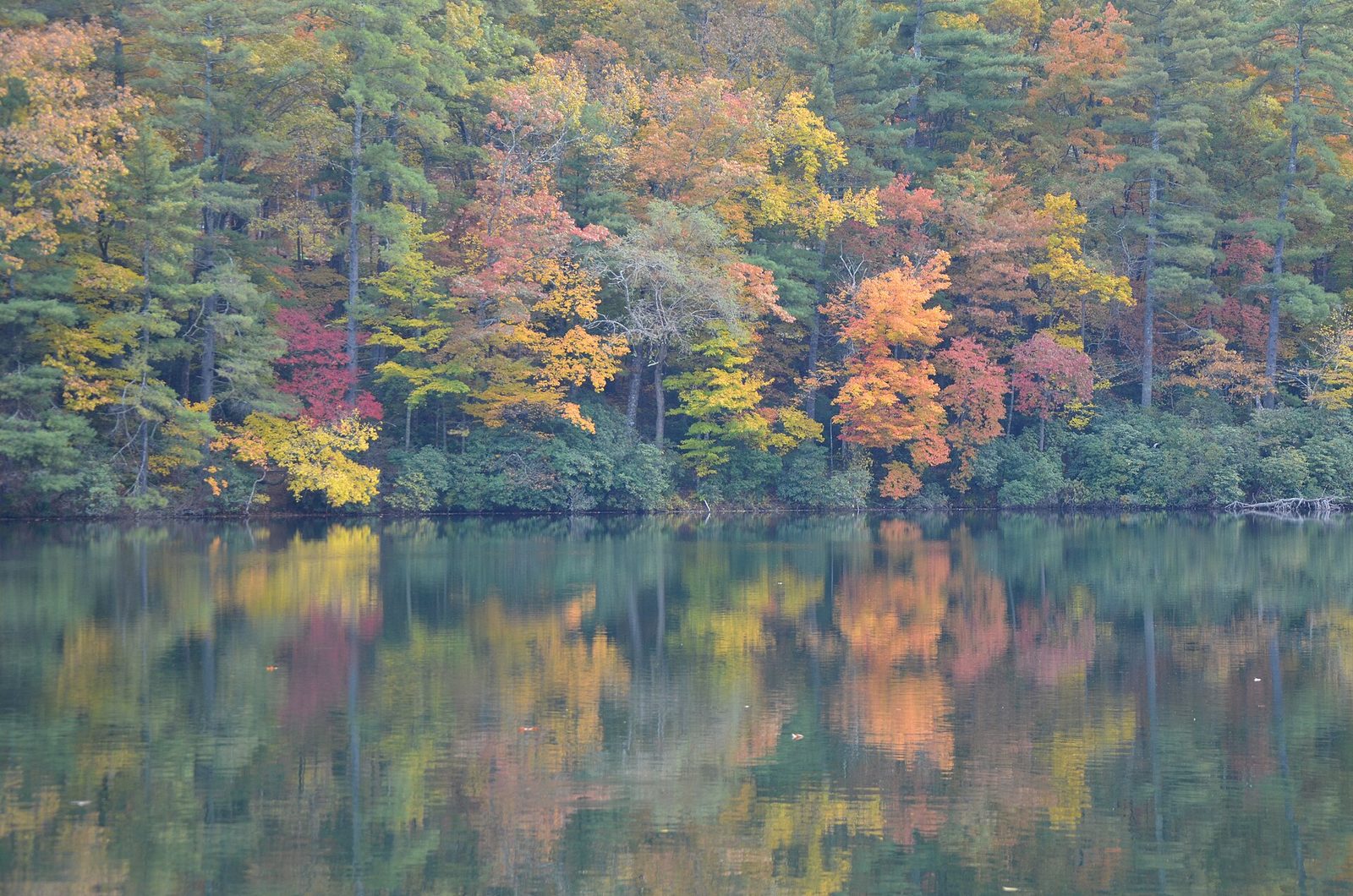
On October 14, 2026, the Georgia Forestry Commission’s foresters reported that about a fifth of the leaves above 3,000 feet in the north Georgia mountains had changed color. Two weeks later the figure was 81%, and by November 4 it was 100%, with the highest ridges already sliding past peak while the trees in the foothills were still catching up. That climb is the real answer to when is peak fall foliage in north Georgia: it depends on how high you are, and it moves a little every year. This guide sets out the timing band by band, from Brasstown Bald down to Atlanta, explains what the weather does to it, and shows how to read the weekly reports so you can pick your weekend. It draws on the Forestry Commission’s 2026 Leaf Watch reports, checked on November 19, 2026.
Georgia here means the US state, where the mountains in question are the southern end of the Blue Ridge, not anywhere near the Caucasus.
The short answer
In its October 14 report, the Forestry Commission expected peak color in the mountains between late October and early November, and the lower you go, the later it comes. Here is how that played out band by band.
| Where | Elevation | 2026 peak, per the Forestry Commission |
|---|---|---|
| The highest peaks: Brasstown Bald, Rabun Bald, Blood Mountain | About 4,450 to 4,784 ft | Moving past peak above 3,500 ft by November 4 |
| Ridges and parks above 3,000 ft, such as Black Rock Mountain | 3,000 ft and up | Halloween weekend to the first weekend of November |
| The foothills: Dahlonega, Dawsonville, Cumming, Gainesville | Mostly well below 3,000 ft | Early to mid-November |
| Northwest Georgia | Cloudland Canyon: about 800 ft at the bottom, 1,980 ft at the park’s high point | Expected within a week of November 4 |
| Atlanta | About 1,050 ft | Not covered by the reports; plan on November |
If you only remember one rule, make it this: go high in late October, go low in early November, and check the latest report before you commit. The calendar shifts by a week or so from one year to the next, which is why a forester’s weekly percentage is worth more than any date printed in a guidebook, this one included.
Why elevation sets the calendar
Leaves turn when the nights get long and cool, and in the mountains the cool nights come to the summits first. Brasstown Bald, the highest point in Georgia, stands at 4,784 feet; Atlanta sits at about 1,050. That difference of more than 3,700 feet is the reason the color starts on the ridgetops and works its way down into the valleys and out toward the city over several weeks.
The Forestry Commission’s reports split the mountains at 3,000 feet, and the gap between the two numbers tells the story. On October 14, 2026, 21% of leaves had changed above that line and 11% below it. By October 28 it was 81% above and 51% below, and on November 4 the figures were 100% and 85%. Frost followed the same pattern: the October 21 report recorded the first frost in the high mountain counties, which the foresters called historically average, while a week later Gainesville and Cumming still hadn’t had one.
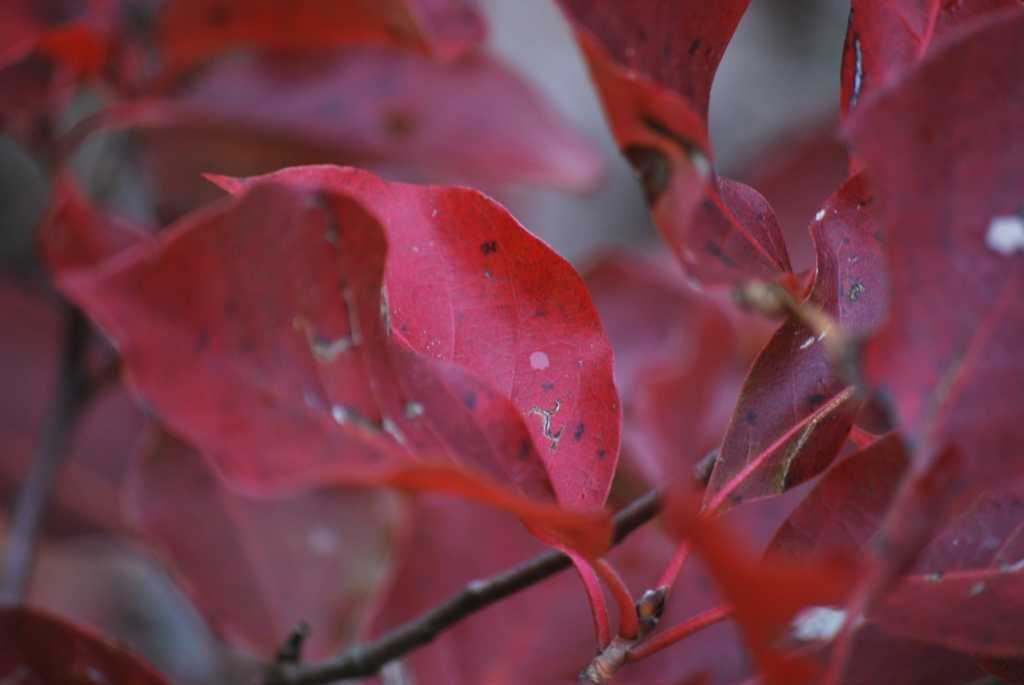
Elevation sets the order; the weather sets the date. A warm September pushes everything later, and a dry summer can bring the change on early and dull it. More on that below.
Which trees turn, and when
Not every tree runs on the same clock, which is why a hillside can look patchy for a week before it fills in. Black gum, dogwood and sourwood tend to be among the first, turning a deep red while the woods around them are still green, which is why a September photo like the one above can show real color weeks before anyone calls a peak. Maples follow with their reds and oranges, tulip poplars and hickories bring the yellows and golds, and the oaks come last, holding their leaves well into November and finishing in russet, brown or red.
The oaks are the reason the lower slopes take so long. They dominate much of the forest below the high ridges, and in 2026 the foresters noted on October 28 that many oaks below 3,000 feet were still green while the high country was at 81%. In a dry year they can surprise you: in drought-stressed northwest Georgia, the November 4 report found oaks skipping their usual yellow and going straight to red.
If you see a red tree in mid-September, enjoy it, but don’t book anything on the strength of it. One early tree is a preview, not a forecast.
What “peak” actually means
Peak isn’t a single day, and it isn’t the moment every leaf has turned. When the foresters call a peak, they mean the point when the most trees on the hillsides are in color at once, before many leaves have come down. How long it lasts depends on the weather. A calm, cool spell holds the color on the trees; a windy front can end it on an exposed ridge in a day or two, as the high terrain found by the November 4, 2026 report. That is the real argument for going a little early rather than a little late: a hillside at 70% is still beautiful, while one stripped by wind is just bare.
The high peaks
The highest ground in the state goes first. Brasstown Bald (4,784 feet), Rabun Bald (4,696 feet) and Blood Mountain (about 4,450 feet) are the places where the color starts, and also where it ends soonest. In 2026, the foresters singled out the SR 180 Spur, the road up to the Brasstown Bald parking lot, as one of the best stretches of color on October 21. By November 4, terrain above 3,500 feet was moving past peak, and high winds had already brought down leaves on the exposed ridges.
The classic way to see this country is the Russell-Brasstown Scenic Byway, a 40.6-mile loop on SR 17/75, SR 180, SR 348 and SR 75 Alternate that climbs through the high country around Brasstown Bald. Our guide to the north Georgia fall foliage scenic drive covers the route in detail. If you plan to go up to the Brasstown Bald summit itself, check the US Forest Service’s page for the visitor center’s current hours, fees and shuttle before you go, since they change with the season.
When to go: aim for the last ten days of October, and check the latest report for the percentage above 3,000 feet. In 2026, the foresters’ Halloween-weekend peak call came in the report that put that number at 81%.
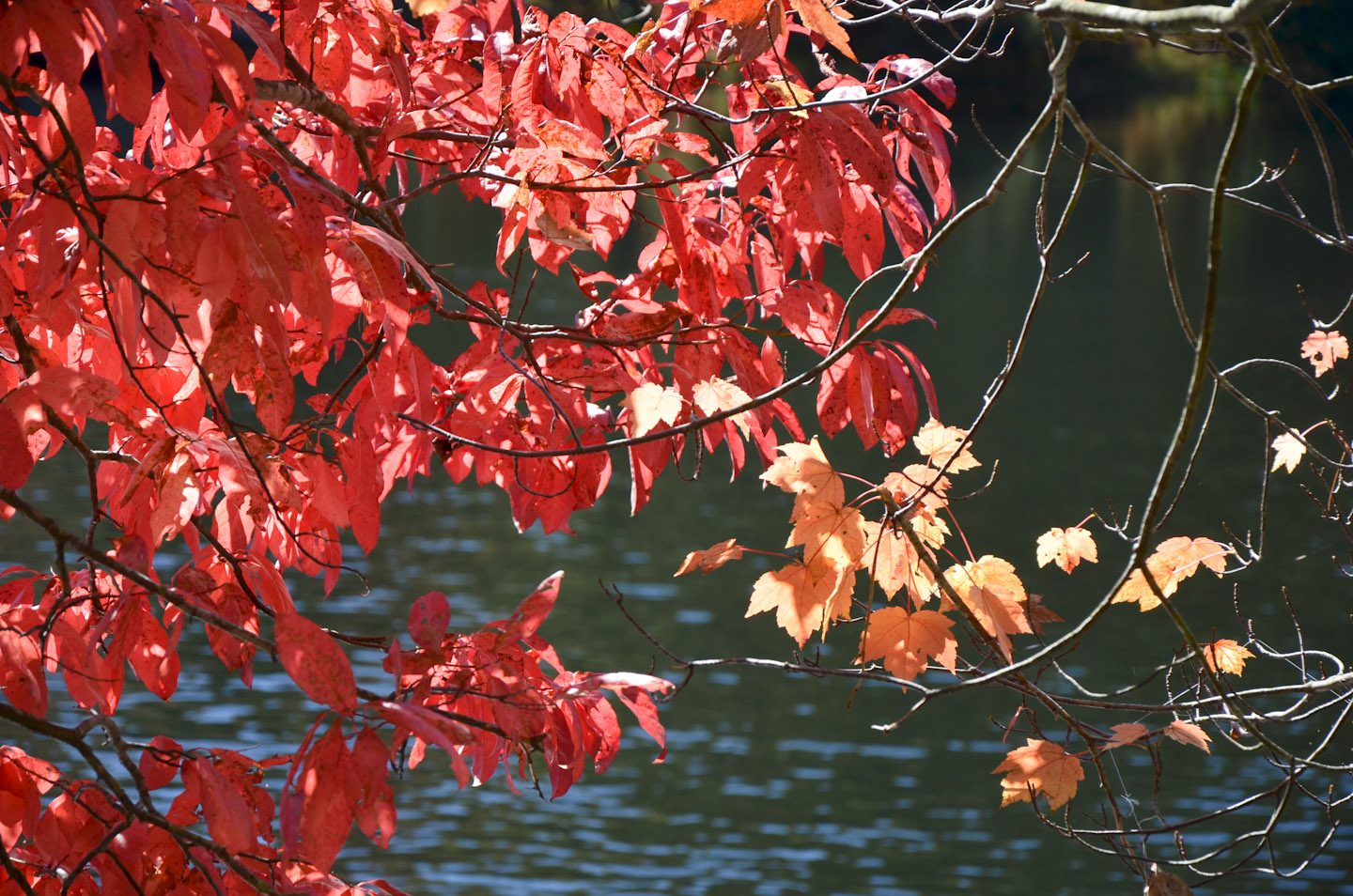
The northeast mountains
Rabun County, in the far northeast corner of the state, has some of Georgia’s highest ground, and its anchor is Black Rock Mountain State Park, which sits on the Eastern Continental Divide at 3,640 feet. In 2026 it ran late. The Forestry Commission’s October 28 report noted that the color there was about a week behind the last few years, and on November 4 the park’s own report said peak was slightly behind schedule because of warmer weather and drought.
That’s a useful reminder of how much a single year can move. A family that booked a cabin near Clayton for the third weekend of October, on the strength of a previous year’s photos, would have found the high ridges well short of peak. Two weeks later, they’d have hit it.
Below the summits, the gorges and lakes of the northeast turn later, with the lower slopes following the foothill timing. For the parks themselves, including how parking and reservations work, see our Georgia state parks guide.
The northwest mountains
Northwest Georgia is a different landscape: long ridges and deep valleys rather than high peaks, with Cloudland Canyon’s walls running from about 800 feet at the bottom to over 1,800 feet, and the park’s high point at 1,980 feet. Lower ground means later color. On November 4, 2026, the Forestry Commission’s northwest report from John’s Mountain Wildlife Management Area put leaf change at 73% on the higher ground and 69% lower down, and expected peak within a week.
The northwest also showed what a dry autumn does. In that same report, the foresters noted that drought-stressed oaks were skipping their usual yellow and going straight to red. The year before, the northwest report of November 6, 2025 found the area at peak, with 95% of leaves changed on the high ground and 85% lower down, and credited adequate summer rain plus October rain for strong color.
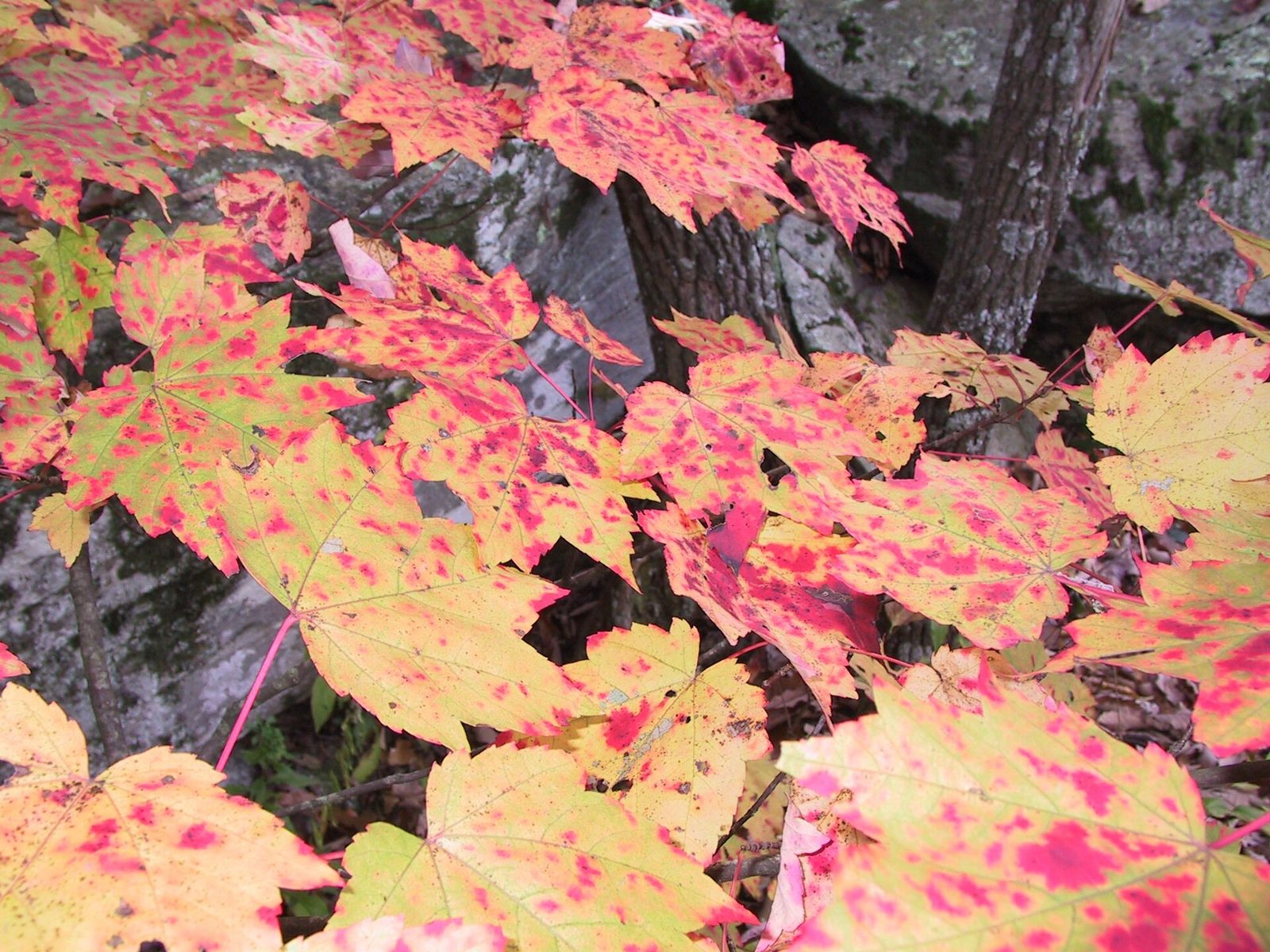
When to go: the first two weeks of November have been the window in the last two seasons’ reports. Cloudland Canyon is the obvious base; our guide to the best hikes in Georgia covers its rim trail.
The valleys and foothills
Most visitors don’t stay on a ridgetop. They stay in the mountain towns, and the towns sit far lower than the peaks: Helen at about 1,444 feet, Dahlonega at about 1,450 and Blue Ridge at about 1,762. Down here, the color runs on the foothill schedule. In 2026, the Forestry Commission put peak for the foothills, naming Dahlonega, Dawsonville, Cumming and Gainesville, in early to mid-November. On October 28, when the high ridges were at 81%, many oaks below 3,000 feet were still green, and by November 4 the foothills and valleys were near peak, with 85% of leaves changed below 3,000 feet.
The practical upshot is good news for anyone with a short window. Stay in a valley town in late October and drive up to the high country for the color, or come in early November and find it in town, on the roadsides and in the hills right outside your cabin. Our guides to Helen, a weekend in Blue Ridge and Dahlonega’s wineries cover what to do once you’re there.
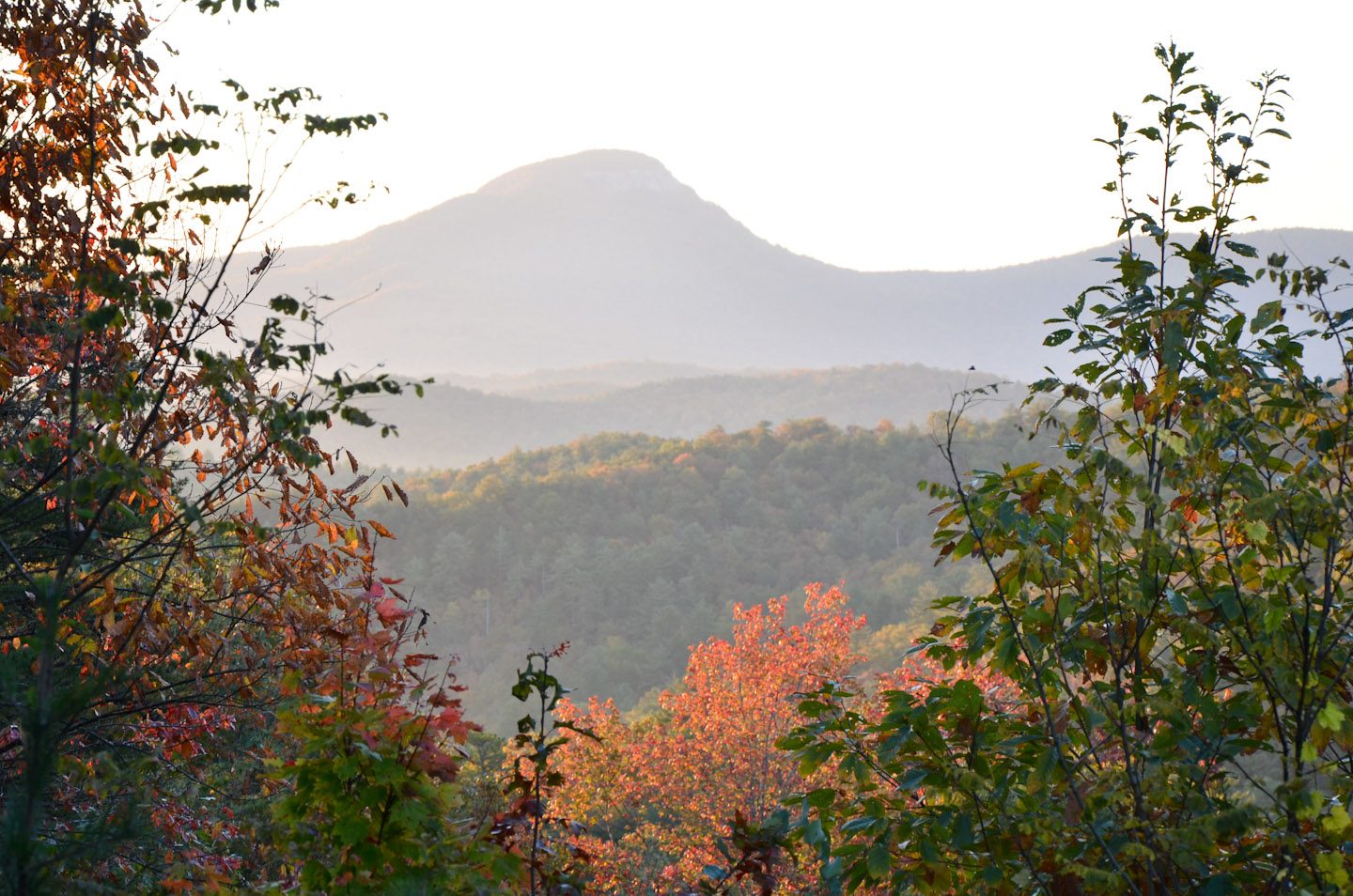
Atlanta and the Piedmont
Atlanta is lower and further south than any of the places the Forestry Commission’s mountain reports cover, so the city’s own color comes later than the mountains’. There’s no official forecast for the city. The closest guide is the foresters’ foothill call, which in 2026 put Cumming and Gainesville, at the top of the metro area, at early to mid-November. Plan on November for Atlanta’s parks and neighborhoods, and treat any trip to the mountains as an October job.
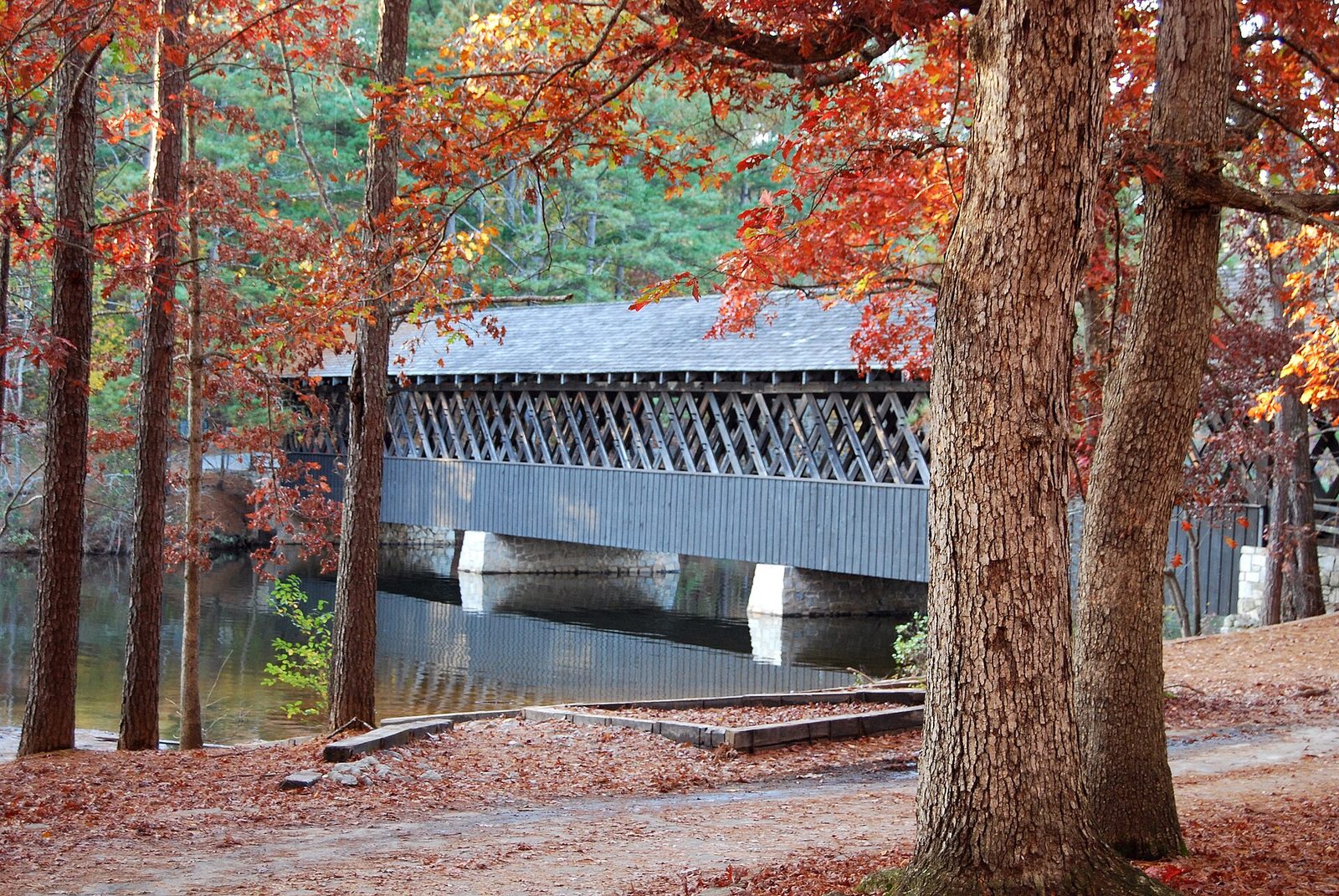
That gap is the reason a fall weekend from Atlanta works so well. On October 28, 2026, the foresters reported many oaks below 3,000 feet still green even in the mountains while the high ridges stood at 81%, so a late-October drive north from the city is a drive into a different season. Our Atlanta travel guide covers the city itself.
What the weather does
A warm September
The single biggest influence on timing may be the month most people aren’t watching. In an October 2026 interview with WFAE, Howard Neufeld, the retired Appalachian State University biologist known for his fall color forecasts, said September temperatures correlate most closely with peak timing, and put the delay at roughly eight to ten days for each degree a September runs above its historical average. He was talking about the North Carolina mountains, which that year were running about a week behind their historical peak; in north Georgia, Black Rock Mountain’s color ran about a week later than in recent years.
Drought
Dry weather works in two directions. The Forestry Commission’s forester told Fox 5 Atlanta that the 2025 drought sped up the change and dulled the color. In 2026, the drought was intensifying by the November 4 report, Black Rock Mountain’s peak was running behind because of warmer weather and drought, and in the northwest, drought-stressed oaks were turning straight to red. In contrast, the foresters credited adequate summer rain plus October rain for the strong color in the northwest in 2025.
Wind and heavy rain
Timing matters more than the storm. On October 14, 2026, the foresters reported that 1.5 to 3 inches of rain and gusts over 45 mph had not hurt the season, and that the rain would help ease drought stress on the forest. By November 4, with the high ridges at or past peak, high winds were bringing leaves down in the high terrain. A windy weekend before peak costs you little; the same wind after peak can strip a ridge in a day or two.
Cold snaps and frost
A cold snap speeds things up. The October 14 report expected a coming cold snap to bring color within five to seven days, and the percentage above 3,000 feet more than doubled over the following week, from 21% to 45%. The first frost in the high mountain counties arrived around October 21, which the foresters called historically average.
Photographing the color
Peak color rewards a little planning with a camera or a phone. Go early or late in the day: the low sun of the first and last hours lights the leaves from the side and warms them, while midday light flattens a hillside into a wash of brown and orange. Don’t write off a gray morning, either. Soft, overcast light often shows the reds and yellows more richly than bright sun, and it suits close-ups of leaves like the ones in this guide.
Water doubles the effect. A still lake at dawn, like Unicoi Lake near Helen, gives you the trees twice, and a creek in shade makes the yellows glow. On an overlook, the best pictures usually come from the ridges behind the color rather than from the color alone, so put a line of hills in the frame. And if the wind has been at work, look down: a carpet of fresh leaves on a trail or a rock can be as good as a full canopy, and it is often what the high ridges offer on the days after peak.
How to use Leaf Watch
The most useful tool for timing a trip is free and updated weekly through the fall. The Georgia Forestry Commission publishes its Leaf Watch reports in the Fall Leaf Watch section of gatrees.org, and each one gives the percentage of leaf change above and below 3,000 feet, a summary of the week’s weather, suggested outings, photos and a link to a color map. Georgia State Parks keeps its own Leaf Watch page at gastateparks.org/leafwatch for planning park visits.
Read the reports as a trend rather than a single number:
- Watch the percentage above 3,000 feet. In 2026 it went 21%, 45%, 81% and 100% across four weekly reports, and the high-elevation peak call came with the 81% report.
- Watch the gap between the two numbers. The bigger it is, the longer you have before the foothills peak.
- Read the weather notes. A cold snap means a jump next week; high wind at peak means the high ridges won’t last.
- Check the date on the report. A week-old report in late October is already out of date.
- Use the named places. When the foresters name a road or a park as one of the best that week, as they did with the SR 180 Spur in 2026, go there.
How the 2026 season went
| Report | Above 3,000 ft | Below 3,000 ft | What the foresters said |
|---|---|---|---|
| October 14 | 21% | 11% | Slow start after a lack of sustained cool weather; peak expected late October to early November |
| October 21 | 45% | 21% | First frost in the high mountain counties, historically average; peak within two weeks |
| October 28 | 81% | 51% | Peak from Halloween weekend to the first weekend of November above 3,000 ft; foothills early to mid-November |
| November 4 | 100% | 85% | Above 3,500 ft moving past peak; foothills and valleys near peak; drought intensifying and high winds bringing leaves down |
In short, 2026 started slowly, caught up fast after mid-October cold, and peaked in the high country around Halloween and the first days of November, with Black Rock Mountain about a week later than in recent years. The foothills followed in early to mid-November. The Forestry Commission’s forester described the season to Fox 5 as near schedule and a little slower than 2025, and called peak timing “a moving target,” which is as good a summary as any.
Three weekends, three elevations
If you want to plan ahead rather than chase the reports, match the weekend to the height of the ground. Based on how 2026 played out, here are three ways to do it.
Late October: the high country
Base yourself in Blairsville or Helen and spend a day on the Russell-Brasstown Scenic Byway, the 40.6-mile loop on SR 17/75, SR 180, SR 348 and SR 75 Alternate. Take the SR 180 Spur up toward Brasstown Bald, which the foresters picked out as one of the best stretches of color on October 21, 2026, and finish at Vogel State Park; its Lake Trahlyta, usually the place to see every tree doubled, was drained for dam repairs in 2026, so check the park before you count on it. This is the weekend for the highest ground in the state, and the one most likely to be past its best if you leave it too late.
Halloween to the first weekend of November: the northeast
Head for Clayton and Black Rock Mountain State Park, on the Eastern Continental Divide at 3,640 feet. In 2026, the foresters called peak above 3,000 feet from Halloween weekend to the first weekend of November, and Black Rock itself ran about a week behind recent years. Spend the days on the park’s overlooks and trails, and come down into Rabun County’s lower valleys, which were still coloring up.
Early to mid-November: the foothills and the northwest
By now the color has come down to the towns. Dahlonega, Helen and Blue Ridge, all between about 1,450 and 1,760 feet, run on the foothill schedule, which in 2026 meant early to mid-November. In the northwest, Cloudland Canyon’s walls, from about 800 feet up to 1,980 at the park’s high point, were in the same window. This is the easiest weekend to plan, because the color is around you rather than up a mountain, and the most relaxed, because the peak crowds in the high country have thinned. For a full plan, see our north Georgia mountains guide.
Planning around peak
- Go midweek if you can. Peak weekends bring heavy traffic to the mountain roads, the scenic byways and the overlooks.
- Book early, and book somewhere central. A base in a valley town lets you chase the color uphill or wait for it to come to you. Our guide to north Georgia cabins with hot tubs covers the options.
- Keep the plan flexible. If you can only commit a month ahead, pick the last weekend of October for the high country or the first week of November for the towns, and adjust with the reports.
- Check fees and hours. Georgia’s state parks charge a daily parking fee, and Brasstown Bald is run by the Forest Service rather than the state, so check each one’s own site before you go.
- Dress for two seasons. A peak-week morning on a ridgetop can be near freezing while the afternoon in the valley is warm, and frost arrives in the high counties in the second half of October.
- Wear something bright on the trails. Fall is hunting season in much of the national forest.
For more on building a trip around the season, see our guide to fall weekend getaways in Georgia and our month-by-month guide to the best time to visit Georgia.
Frequently asked questions
When is peak fall foliage in north Georgia?
The Georgia Forestry Commission’s 2026 guidance was late October to early November in the mountains. The highest elevations peak first, in the last days of October, and the foothills follow in early to mid-November. The exact dates shift by a week or so each year, so check the weekly Leaf Watch reports.
When did the leaves peak in 2026?
The Forestry Commission called peak for many areas above 3,000 feet from Halloween weekend to the first weekend of November 2026, and early to mid-November for the foothills, including Dahlonega, Dawsonville, Cumming and Gainesville. Northwest Georgia was expected to peak within a week of November 4.
Where does the color start first?
On the highest ground: Brasstown Bald, the highest point in Georgia at 4,784 feet, and the ridges above 3,000 feet. In 2026, the foresters named the SR 180 Spur up to the Brasstown Bald parking lot as one of the best stretches of color on October 21.
When is peak fall color in Atlanta?
There’s no official forecast for the city, but plan on November. Atlanta sits at about 1,050 feet, lower and further south than the foothills, and the Forestry Commission put the foothills, including Cumming and Gainesville, at early to mid-November in 2026.
Does drought affect fall color in Georgia?
Yes. The Forestry Commission’s forester said the 2025 drought sped up the change and dulled the color, and in 2026 the foresters reported drought-stressed oaks in northwest Georgia skipping yellow and turning straight to red.
What is Leaf Watch?
It’s the Georgia Forestry Commission’s weekly fall report, published at gatrees.org, giving the percentage of leaf change above and below 3,000 feet, the week’s weather, suggested outings and a color map. Georgia State Parks also keeps a Leaf Watch page for planning park visits.
Is late October or early November better for fall color in Georgia?
It depends on where you’re going. Late October is the time for the high country above 3,000 feet; early to mid-November is the time for the foothills and the mountain towns. In 2026, the high-country peak ran from Halloween weekend to the first weekend of November, and the foothills followed in early to mid-November.
How long does peak color last?
As long as the weather allows. Calm, cool weather holds the color; strong wind at or after peak can strip an exposed ridge in a day or two. In 2026, high winds were already bringing leaves down in the high terrain by the November 4 report.
Is the peak at the same time every year?
No. In 2026, Black Rock Mountain’s color ran about a week later than in recent years because of warmer weather and drought. A warm September tends to delay the whole season, which is why the weekly reports matter more than a previous year’s dates.
Related Georgia Guides
- Best time to visit Georgia: the season-by-season guide this sits inside.
- North Georgia fall foliage scenic drive: the route through the high country, mile by mile.
- Fall weekend getaways in Georgia: two-night plans for color season.
- North Georgia mountains: the towns, parks and peaks compared.
- Georgia state parks: Black Rock Mountain, Cloudland Canyon, Vogel and the rest.
- Best hikes in Georgia: where to walk when the color is in.
- A weekend in Blue Ridge: a valley-town base for a color weekend.
Photo Credits
Autumn colors on Lake Trahlyta, Vogel State Park: photo by ChattOconeeNF / Wikimedia Commons (CC BY 2.0)
Fall color in the Chattahoochee National Forest, with Yonah Mountain from the Dukes Creek area: photo by ChattOconeeNF / Wikimedia Commons (CC BY 2.0)
Early fall color in the Chattahoochee National Forest, September 2011: photo by ChattOconeeNF / Wikimedia Commons (CC BY 2.0)
Black gum and maple at Lake Winfield Scott, October 2012: photo by ChattOconeeNF / Wikimedia Commons (CC BY 2.0)
Maple leaves on Fort Mountain, October 2001: photo by ChattOconeeNF / Wikimedia Commons (CC BY 2.0)
The covered bridge at Stone Mountain Park in fall color: photo by Jody Hamilton from Suwanee, GA, USA / Wikimedia Commons (CC BY 2.0)
Sources: the Georgia Forestry Commission’s Leaf Watch reports for October 14, 21 and 28 and November 4, 2026, and its northwest Georgia report of November 6, 2025 (gatrees.org), for leaf-change percentages, peak calls, frost and weather; Fox 5 Atlanta’s interview with the Commission’s forester on the 2025 and 2026 seasons; WFAE (October 20, 2026) for Howard Neufeld’s comments on September temperatures; Wikipedia’s entries on Brasstown Bald, Rabun Bald, Blood Mountain, Black Rock Mountain State Park, Cloudland Canyon State Park, the Russell-Brasstown Scenic Byway, Helen, Dahlonega, Blue Ridge and Atlanta for elevations and the byway’s length and route numbers. Checked November 19, 2026. Fall color shifts every year, so check the latest Leaf Watch report before you travel.
Georgia Tourism Guide is an independent publication. We are not affiliated with Explore Georgia, the Georgia Department of Natural Resources, the National Park Service or any attraction listed here.